How to Move Forward After Infidelity & Betrayal Trauma
The journey of healing after infidelity is not straightforward, but it can lead to a stronger relationship.
You’ve survived the initial crisis. The shock has worn off, but now you face harder questions: Should I stay or go? Can I ever trust again? How do I rebuild my life when I still feel broken?
Understanding how to heal after infidelity is crucial. Many individuals face challenges when dealing with the emotional aftermath of infidelity.
This is where real healing begins
As you navigate your journey, remember that healing after infidelity is possible and can lead to personal growth.
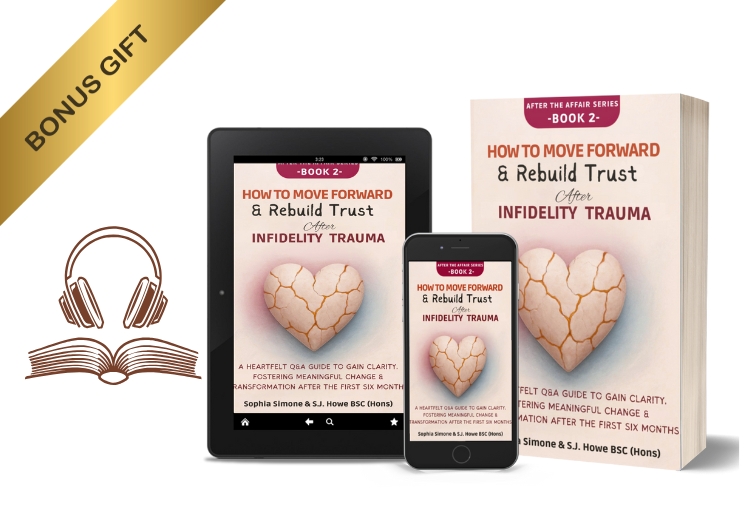
Book 2 guides you through months 6-12 with over 140 comprehensive Q&As addressing the critical questions that emerge after the initial shock fades. You’ll find practical guidance for making the “stay or go” decision, rebuilding trust, communicating effectively, and reclaiming your sense of self.
Frequently Asked Questions
How do I decide whether to stay in the relationship or leave?
The “stay or go” decision is one of the most agonizing choices you’ll face after infidelity. Book 2 provides a comprehensive framework for making this decision, including: key questions to ask yourself and your partner, warning signs that reconciliation may not be possible, factors that predict successful recovery, and how to trust your decision even when you’re still emotionally raw. You’ll learn to distinguish between fear-based decisions and wisdom-based ones, and how to honor both your pain and your hopes for the future.
Can trust ever be rebuilt after infidelity?
Yes, but it requires consistent effort from both partners and realistic expectations. Trust isn’t rebuilt overnight, it’s earned back slowly through transparency, accountability, and time. Book 2 explains the difference between blind trust (which you had before) and earned trust (which is actually stronger). You’ll learn specific strategies for rebuilding trust, including what transparency really looks like, how to handle triggers and setbacks, and how to know if your partner is truly committed to earning back your trust.
What if I still have triggers and bad days months after infidelity discovery?
Triggers and setbacks are completely normal even 6-12 months after discovery. Healing isn’t linear, you’ll have good weeks followed by difficult days. Book 2 helps you understand what triggers are, why they happen, and how to manage them without feeling like you’re “going backward.” You’ll learn to identify your specific triggers, communicate about them with your partner, and develop coping strategies that actually work instead of just suppressing your feelings.
How do I communicate with my partner without constant fighting?
Communication after betrayal is incredibly difficult: emotions run high, old patterns resurface, and every conversation can feel like walking through a minefield. Book 2 provides specific after infidelity communication strategies including: how to express your needs without attacking, how to ask for what you need to heal, how to have difficult conversations without escalating, when to talk and when to take space, and how to rebuild emotional intimacy through vulnerable communication. You’ll also learn what to do when your partner gets defensive or shuts down.
Should we go to couples therapy or individual therapy?
Both can be valuable, but timing matters. Book 2 explains when couples therapy is helpful (when both partners are committed to recovery) versus when it’s premature or even harmful (when the affair is still ongoing or one partner isn’t truly invested). You’ll learn what to look for in a therapist who specializes in infidelity recovery, questions to ask potential therapists, and how to make the most of therapy sessions. The book also addresses why individual therapy for the betrayed partner is often crucial for processing trauma.
How do I rebuild my self-esteem after betrayal?
Infidelity often devastates self-esteem, leaving you questioning your worth, attractiveness, and lovability. Book 2 addresses this painful reality with compassion and practical strategies. You’ll learn why betrayal attacks your sense of self, how to separate your partner’s choices from your worth, strategies for rebuilding confidence, and how to reclaim your identity beyond “betrayed spouse.” The book includes exercises for reconnecting with who you are and what you value, independent of your relationship status.
What if my partner doesn’t seem remorseful enough?
Genuine remorse is essential for healing, but it doesn’t always look the way you expect. Book 2 helps you distinguish between true remorse (which includes empathy, accountability, and changed behavior) and false remorse (which is really just regret about consequences). You’ll learn what genuine remorse looks like in action, red flags that indicate your partner isn’t truly remorseful, and how to communicate what you need to see from them. The book also addresses what to do if your partner is defensive, minimizing, or blaming you.
How do I handle holidays, anniversaries, and special occasions?
Special occasions can be particularly painful after infidelity, especially if the affair occurred during or around meaningful dates. Book 2 provides specific guidance for navigating these difficult times, including how to communicate your needs around holidays, whether to create new traditions or honor old ones, how to handle the first anniversary of discovery, and ways to find meaning in occasions that now feel tainted. You’ll learn to honor both your grief and your desire to move forward.
What if I’m ready to move forward but my partner isn’t (or vice versa)?
Partners often heal at different paces, which can create tension and misunderstanding. Book 2 addresses this common challenge with strategies for: communicating about different healing timelines, what to do when one partner wants to “move on” faster than the other, how to support each other when you’re in different places, and recognizing when different paces indicate incompatible goals. You’ll learn to navigate this delicate balance without pressuring yourself or your partner.
How do I know if we’re making real progress or just going through the motions?
It’s easy to confuse the absence of crisis with genuine healing. Book 2 helps you identify markers of real progress including: increased emotional safety, more authentic communication, ability to discuss the affair without constant fighting, growing trust in specific areas, and reconnection beyond just “getting along.” You’ll learn to recognize both subtle progress and warning signs that you’re stuck in a holding pattern rather than truly healing.
What if I want to leave but feel guilty or afraid?
Choosing to leave after infidelity can bring up intense guilt, fear, and self-doubt—even when it’s the right choice. Book 2 addresses the emotional complexity of leaving, including: how to know when leaving is the healthier choice, managing guilt about “giving up,” addressing fears about being alone or starting over, practical steps for separating or divorcing, and how to maintain your decision when others pressure you to stay. You’ll find validation that leaving can be an act of self-respect, not failure.
How do I start reclaiming my life and sense of self?
Reclaiming your life means rediscovering who you are beyond the betrayal. Book 2 provides guidance for: reconnecting with interests and passions you may have neglected, rebuilding friendships and social connections, setting boundaries that protect your wellbeing, investing in your own growth and goals, and creating a vision for your future whether you stay or go. You’ll learn that healing isn’t just about recovering from betrayal— it’s about building a life you genuinely want to live.
Get the Complete Infidelity Recovery Series
Each book builds on the previous one, creating a comprehensive recovery system that supports you through every stage of healing.