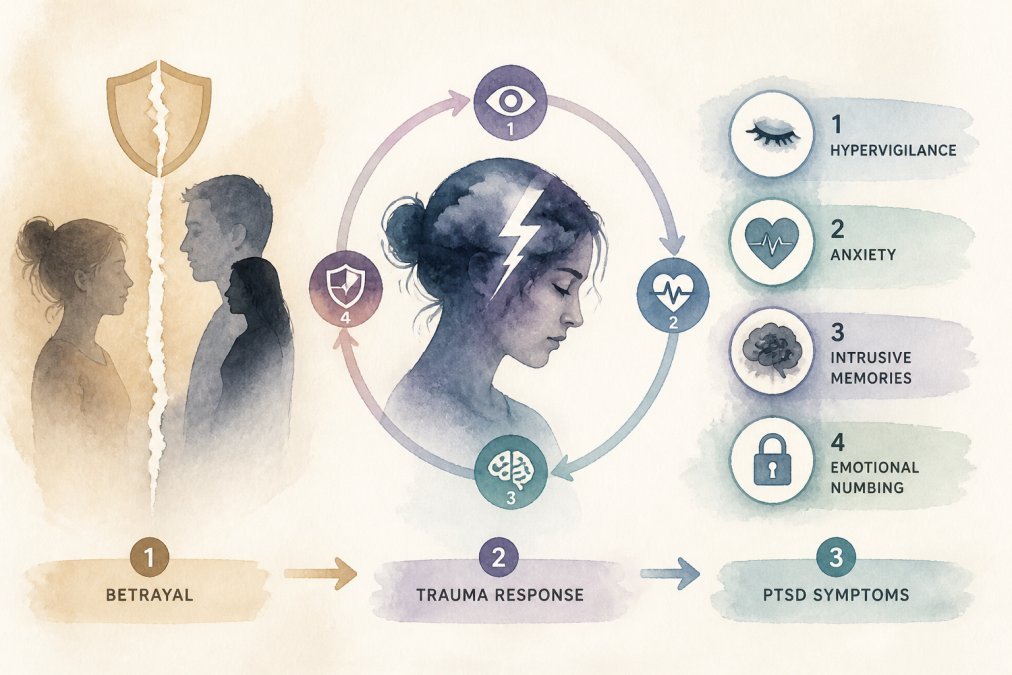
In the aftermath of infidelity, your mind generates an endless stream of questions. You feel a desperate need for every detail: the “what,” the “where,” the “how many times.” This is natural. Your brain is trying to restore a sense of safety by seeking complete information.
The Torture of The Details: Why Every Answer Feels Like More Pain
To move from crisis to clarity, you must learn to filter your questions. You need to distinguish between information that is essential for making a grounded decision (Need-to-Know) and information that is simply fodder for your pain (Nice-to-Know).
Type 1: The ‘Need-to-Know’ Questions(The Healing Data)
These are the essential questions that help you diagnose the affair (the 7 Types of Affairs framework), assess the risk of recurrence, and determine if moving forward is safe and viable. They focus on Commitment and Context, not just explicit acts.
| Focus Area | Example Questions to Ask | Why It Matters for Recovery |
|---|---|---|
| Commitment | “What is your accountability plan? What boundaries are you setting to ensure this never happens again?” | This assesses their willingness to change and to protect the relationship going forward. |
| Safety | “Were there any risks to our financial health or physical safety (STDs, legal issues)?” | This is non-negotiable data required to assess immediate risk to yourself and your family. |
| Context | “What was missing in our relationship/in yourself that created the vulnerability for this to happen?” | This is the root cause question. It pivots the conversation from blame to deeper understanding, necessary for Relationship 2.0. |
| Duration/Depth | “How long did this go on, and who else knew about it?” | This assesses the depth of the deception and helps you classify the affair type (e.g., a long-term Emotional Affair requires different work than an Opportunistic Affair). |
Type 2: The ‘Nice-to-Know’ Questions
(The Trauma Fodder)
These questions are often driven by the trauma brain. They focus on graphic, comparative, or excessive detail. Getting answers to these questions rarely provides peace; it usually just creates new, more vivid trauma images that feed the obsessive cycle.
| Focus Area | Example Questions to Avoid/Delay | Why It Hinders Recovery |
|---|---|---|
| Explicit Detail | “What exactly did you say to them in that text?” or “What position were you in?” | This generates unnecessary mental images that become trauma flashbacks. It satisfies curiosity but destroys peace. |
| Comparison | “Were they better than me?” or “Do you love them?” | These questions force the wayward partner to compare you, which causes unnecessary secondary injury and undermines your self-worth. |
| Excessive History | “What were you doing at 3:17 PM on June 12th?” | Searching for excessive, granular details keeps you stuck in detective mode and prevents you from moving forward. |
Stop Asking Questions That Hurt Your Healing.
Moving forward requires structure. You need a compassionate guide that provides a structured Q&A framework so you can get the answers you need without dwelling in the answers that only cause pain.
Take control of the conversation. [Download Book 2 and the Workbook today].
From Painful Interrogation to Productive Conversation
Learning to filter your questions is a crucial milestone in your recovery. It signals that you are moving from crisis (Phase 1) to active rebuilding and clarity (Phase 2). This shift reclaims your dignity and focuses your energy on creating the Relationship 2.0 you deserve.
The journey from initial trauma to a grounded, final decision is a stage-based process that requires a roadmap. This filtering process is essential for making it through the middle stages successfully.
Where does this step fit into your complete recovery journey?
Use our comprehensive guide to structure your entire decision-making process.