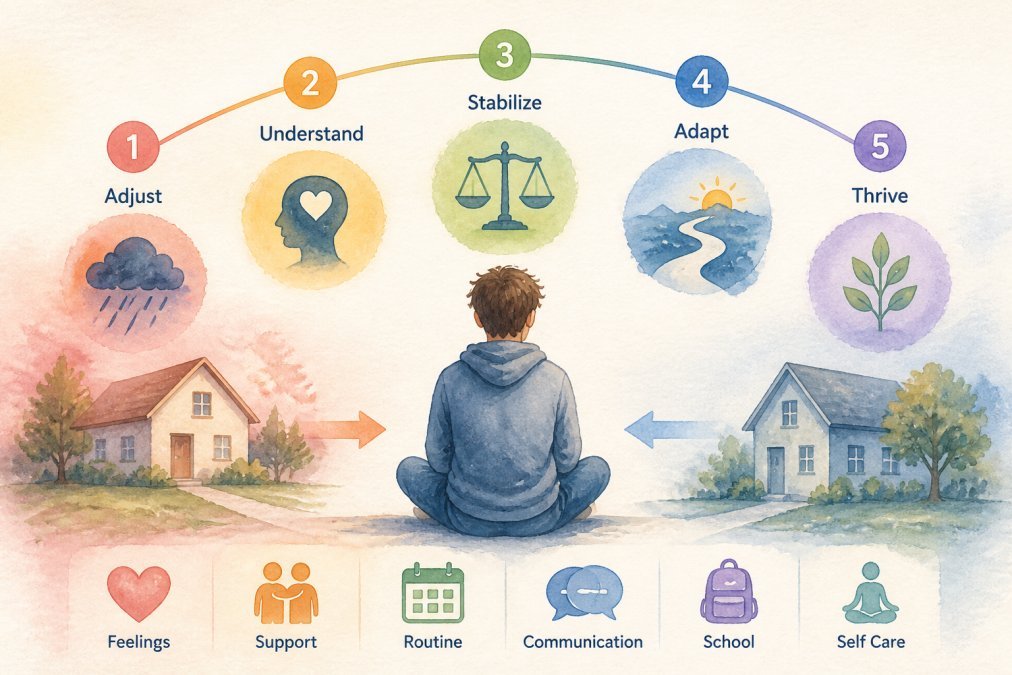
Why Age Matters When Transitioning to Co-Parenting
Not all children understand or respond to family changes the same way.
A toddler feels disruption in routine and separation.
A school-age child feels disruption in security, understanding, and fairness.
A teen feels disruption in trust, identity, and independence.
Children process transitions differently based on developmental stage.
This means:
- The same explanation will NOT work for every child
- The same transition speed is NOT appropriate across ages
- The same emotional signs do NOT mean the same thing
This article breaks down exactly how to prepare kids for the transition from parallel parenting to collaborative co-parenting at every developmental stage.
TODDLERS (Ages 2–5)
How Toddlers Experience Parenting Changes
Toddlers don’t understand “co-parenting” or relationship restructuring.
They understand:
- presence
- tone
- predictability
- rhythm
Their biggest fear is separation, not family structure.
The Child Mind Institute notes that children under five are highly sensitive to routine disruptions and emotional tone in caregivers (childmind.org).
Toddler Stress Signs
- clinginess
- disrupted sleep
- tantrums
- separation anxiety
- regressions (potty training, speech, independence)
How to Prepare Toddlers
1. Start With Routine Stability
Even if you begin transitioning to collaborative co-parenting, keep toddler routines nearly identical:
- same bedtime
- same wake time
- same nap rhythm
- same feeding schedule
- same transition times
Toddlers need rhythm more than explanations.
2. Use Simple, Reassuring Language
Use short, predictable phrases:
“Mommy and Daddy are working together to make things calm for you.”
“You will always be safe.”
“You will see Mommy and Daddy just like usual.”
3. Keep Transitions Calm and Predictable
Toddlers misinterpret emotional tone.
Keep transitions soft, simple, and silent if needed.
SCHOOL-AGE KIDS (Ages 6–12)
How School-Age Children Experience Parenting Changes
This age is emotionally complex because children:
- understand conflict
- feel guilt
- notice fairness
- personalize tension
- try to solve adult problems
The American Psychological Association emphasizes that kids ages 6–12 are uniquely vulnerable to blaming themselves for family conflict (apa.org).
School-Age Stress Signs
- stomachaches
- school decline
- trying to “fix” parents
- irritability
- emotional withdrawal
- bedtime resistance
How to Prepare School-Age Kids
1. Explain the Transition Clearly
Avoid vagueness.
Kids this age crave clarity.
Use a script like:
“We are going to start working together more so things feel easier for you. You are not responsible for any adult problems. This is our job, not yours.”
2. Prepare Them for Small Changes First
Do not introduce big shifts abruptly.
Start with:
- aligned homework rules
- shared bedtime
- predictable schedules
This age group thrives on stability.
3. Encourage Questions — Without Oversharing
School-age kids often worry silently.
Use phrases like:
“It’s okay to ask me anything.”
“Nothing you say will upset me.”
“You don’t have to take care of anyone’s feelings.”
Give them space without adult details.
TEENS (Ages 13–18)
How Teens Experience Parenting Changes
Teens understand betrayal, loyalty conflicts, and emotional tension.
They often:
- take sides
- feel protective
- seek independence
- resent instability
- demand honesty
- expect respect
Teens have the strongest reactions to parenting changes — supportive or negative.
Teen Stress Signs
- anger
- withdrawal
- sarcasm
- skipping transitions
- sleep changes
- academic decline
How to Prepare Teens
1. Give Honest, Calm Context (But No Adult Details)
Teens know when you’re hiding information.
Use a script like:
“We had serious problems, and we’re working on improving how we parent together. We won’t share adult details, but we’ll always be honest with you about what affects you.”
2. Invite Their Perspective (But Don’t Give Them Control)
Say:
“I want to hear your thoughts.”
“Your feelings matter, but you don’t have to decide any adult choices.”
Teens want autonomy, not responsibility.
3. Expect Emotional Pushback
It’s normal for teens to:
- be skeptical
- be angry
- test boundaries
- resist changes
Your steadiness reassures them.

How to Pace the Transition (All Ages)
1. Start With Micro-Challenges
A single shared routine is enough.
2. Stabilize Before Adding Anything New
Don’t add unless the child is adapting smoothly.
3. Watch Your Child’s Behavior, Not Their Words
Kids often mask stress.
Behavior tells the truth.
4. Pause the Transition if Needed
A pause is not failure.
It is child-centered parenting.
The Most Important Thing to Tell Your Child
No matter their age:
“You do not have to fix anything. We love you. You are safe.”
This message, repeated often, protects long-term emotional health more than any routine or structure.
FAQ: Age-Specific Co-Parenting Transition