navigating infidelity – the First Six Months After Betrayal
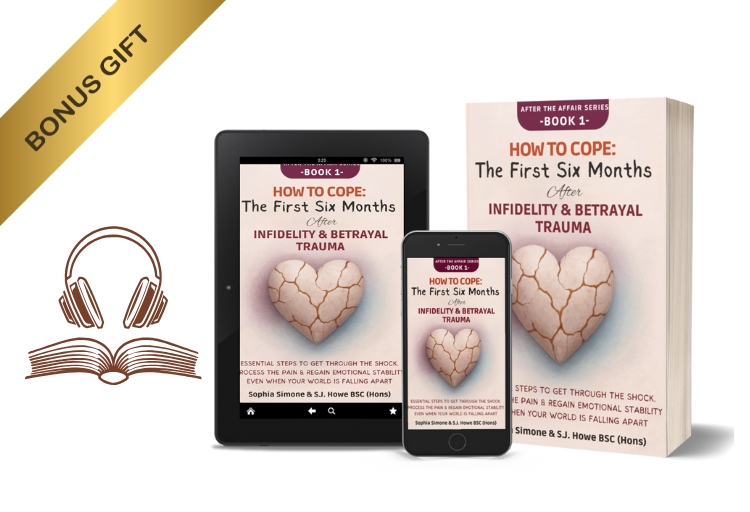
When you discover an affair, everything changes in an instant. The world you trusted collapses. You can’t think straight, sleep, or eat. One moment you’re angry; the next, numb. You replay every detail, searching for answers that don’t seem to exist.
You are not alone—and you are not broken.
This compassionate guide is your lifeline through the first six months after discovering infidelity. Instead of pushing you to “get over it” or forgive too soon, it gently helps you survive the emotional storm and begin to make sense of your situation.
In summary, this book provides essential insights and coping strategies for anyone facing the harrowing experience of navigating infidelity. Understanding the emotional upheaval, establishing a support network, and recognizing the importance of self-care are vital steps in your healing process.
By taking it one day at a time, you can begin to rebuild your life. Healing is a journey, and you are not alone on this path. Ultimately, this is about navigating infidelity, acknowledging your feelings, and empowering yourself to move forward. For those navigating infidelity, these insights can be a stepping stone towards healing and recovery.
Navigating infidelity requires patience and self-compassion during this process.

navigating infidelity FAQ
How do I survive the first days after discovering an affair?
The first few days are mainly about basic survival. Concentrate on fulfilling your essential needs: eat small amounts of food, even if you’re not feeling hungry. Rest as much as you can, even if sleep eludes you. Reach out to at least one trusted person for support. Book 1 offers a variety of daily survival strategies for navigating infidelity, including techniques to calm panic attacks, manage intrusive thoughts, and establish emotional safety during chaotic times.
What is betrayal trauma and why do I feel so broken?
Betrayal trauma is a legitimate psychological response to discovering infidelity. Your reactions—such as difficulty sleeping, obsessive thoughts, emotional ups and downs, and physical symptoms—are normal responses to an abnormal situation. You are not overreacting or being dramatic. Book 1 explains the science behind betrayal trauma. It helps you understand that what you are experiencing is trauma, not a sign of weakness, as you navigate the effects of infidelity.
What are the 7 types of affairs and why does it matter?
It’s important to acknowledge that not all affairs are the same. Each one can deeply impact those involved in different ways. There are seven types to consider: emotional affairs, physical affairs, online affairs, opportunistic affairs, serial affairs, exit affairs, and combination affairs.
Understanding the specific type of affair you’re dealing with can be a crucial step towards healing. Each type requires its own tailored approach for recovery. For instance, the path to recover from an emotional affair stands apart from that of a serial or exit affair. Book 1 offers compassionate insights and detailed explanations on how to navigate the complexities of infidelity for each type. This provides you with specific guidance that resonates with your unique situation. You can avoid the frustration of one-size-fits-all advice that may not serve your needs during such a challenging time.
How do I stop the obsessive thoughts and constant replaying of events?
Obsessive thoughts are one of the most common and distressing symptoms of betrayal trauma. Book 1 provides practical techniques for managing intrusive thoughts, including grounding exercises, thought-stopping strategies, and ways to redirect your mind when it spirals. You’ll learn why your brain keeps replaying events (it’s trying to make sense of the incomprehensible) and how to gently interrupt the cycle without suppressing your legitimate need to process.
Should I forgive immediately or is it okay to be angry?
You don’t have to forgive right now. In fact, premature forgiveness often backfires, leaving unprocessed pain that resurfaces later. Your anger is valid and protective; it’s your psyche’s way of defending your boundaries.
Book 1 helps you understand the difference between healthy anger, which protects you, and destructive rage, which harms you. It provides navigating infidelity strategies for processing anger without letting it consume you. Forgiveness, if it comes, will be authentic only after you’ve fully acknowledged the depth of the betrayal.
How do I know if I should stay or leave the relationship?
Obsessive thoughts are one of the most common and distressing symptoms of betrayal trauma. Book 1 provides practical techniques for managing intrusive thoughts. These include grounding exercises, thought-stopping strategies, and ways to redirect your mind when it spirals.
You’ll learn why your brain keeps replaying events—it’s trying to make sense of the incomprehensible. You’ll also learn how to gently interrupt the cycle without suppressing your legitimate need to process.
What are the biggest mistakes people make in the first six months?
Common mistakes include: trying to “get over it” too quickly, making major decisions while in crisis, isolating yourself completely, sharing details with too many people, demanding immediate answers your partner may not have, and suppressing your emotions to appear “strong.”
Book 1 identifies these pitfalls and provides alternative approaches that support genuine healing rather than creating additional problems you’ll have to address later.
How do I protect my mental and physical health navigating infidelity?
Betrayal trauma takes a serious toll on both mental and physical health. Book 1 provides practical daily strategies for self-care that go beyond generic advice. You’ll learn how to manage sleep disruption, handle appetite changes, recognize when you need professional help, create emotional safety, and build a support system.
The book includes specific techniques for calming your nervous system, managing panic attacks, and maintaining basic functioning when everything feels overwhelming.
When should I tell others about the affair?
Deciding who to tell, when, and how much detail to share is crucial. Book 1 provides guidance on creating your support circle wisely. Identify who will truly support you versus who might make things worse with judgment or gossip.
You’ll learn how to talk to your children, if applicable, in age-appropriate ways. It addresses when to involve family members and how to protect your privacy while still getting the support you need. The book also discusses whether and when to tell the affair partner’s spouse.
What if my partner won’t end the affair or answer my questions?
If your partner is still in the affair or refuses to provide basic information, you’re dealing with an ongoing betrayal, not just recovery from a past one. Book 1 addresses this painful scenario with specific guidance.
Learn how to set boundaries, protect yourself emotionally and practically, and decide what you’re willing to tolerate while your partner makes their choice. You’ll also learn how to create safety for yourself even when your partner isn’t cooperating with navigating infidelity recovery.
How long will I feel this terrible?
The acute crisis phase typically lasts 2-6 months, though everyone’s timeline is different. You won’t feel this intensely terrible forever. However, healing isn’t linear—you’ll have good days and setbacks.
Book 1 helps you understand the typical phases of early recovery. This knowledge allows you to know what to expect, recognize progress even when it doesn’t feel like progress, and avoid the trap of thinking you “should” be further along than you are. The book provides realistic timelines while honoring that your journey is unique.
Can I really heal from this or will I always be broken?
Yes, you can heal. While you may never “get over” the betrayal completely, you can move through it to a place of genuine peace, strength, and even growth. Book 1 introduces the concept of post-traumatic growth.
This is the possibility that you can emerge from this crisis not just intact, but in some ways stronger and wiser than before. You’ll read case studies about real people navigating infidelity who have walked this path and found not just survival, but transformation. Right now, focus on surviving. Thriving will come later, but it will come.
Get the Complete Infidelity Recovery Series
Each book builds on the previous one. This creates a comprehensive recovery system that supports you through every stage of healing.