Surviving a Physical Affair:
How to Manage Intrusive Images and Fears

- Surviving a Physical Affair: How to Manage Intrusive Images and Fears
- The Visceral Shock: Why Physical Betrayal Triggers Fight, Flight, or Freeze
- Managing the Invasion: Practical Techniques to Stop Intrusive Mental Images
- Health & Safety First: Navigating the Necessary Steps for STD Testing and Disclosure
- Beyond the Bedroom: Reclaiming Your Sense of Self and Attractiveness After the Violation
- Steps to Reclaim Your Connection to Self
- When Sex Returns: A Roadmap for Reintroducing Intimacy After Physical Trauma
- FAQ-Intrusive images, health fears & immediate trauma response
The betrayal is undeniable. It is concrete, physical, and terrifying. Unlike an emotional affair, there is no “gray zone” here-the line was crossed, and the proof of infidelity is brutally clear. But the discovery of a physical affair unleashes a trauma that is unique in its visceral intensity: you are haunted by vivid, intrusive mental images you cannot erase, and crippled by the terrifying fear of physical contamination and health risk.
You are not just dealing with emotional pain; your body is in full fight-or-flight mode. The betrayal has triggered a biological alarm, leading to physical symptoms like nausea, a racing heart, and crippling anxiety. You may feel disgusted by your partner, violated by the knowledge they risked your health, and overwhelmed by the sheer volume of trauma.
This immediate, paralyzing response is often referred to as Post-Infidelity Stress Disorder (PISD), and it requires a targeted, structured response. This guide will provide you with the immediate, practical techniques needed to manage the devastating intrusive images, address all critical health and safety concerns, and begin the long, delicate process of healing the core physical violation.
Your first 72 hours are about triage-stabilizing your physical and mental health. This critical stage demands clear, precise action. Our book, “How to Cope – the First Six Months After Infidelity & Betrayal Trauma” offers the specific Immediate Crisis Response protocols for Type 2 Betrayal that will help you move from paralyzed victim to purposeful survivor.
The Visceral Shock: Why Physical Betrayal Triggers Fight, Flight, or Freeze
When you discover a physical affair, your body doesn’t register it as an emotional disagreement; it registers it as a life-threatening event. This is why you feel so physically ill-you are in a state of visceral shock. Your nervous system has initiated the fight, flight, or freeze response, designed to protect you from harm.
The betrayal is a profound break in the contract of safety. It introduces literal physical risk (STDs) and emotional danger (abandonment), causing your body to flood with stress hormones like cortisol and adrenaline.
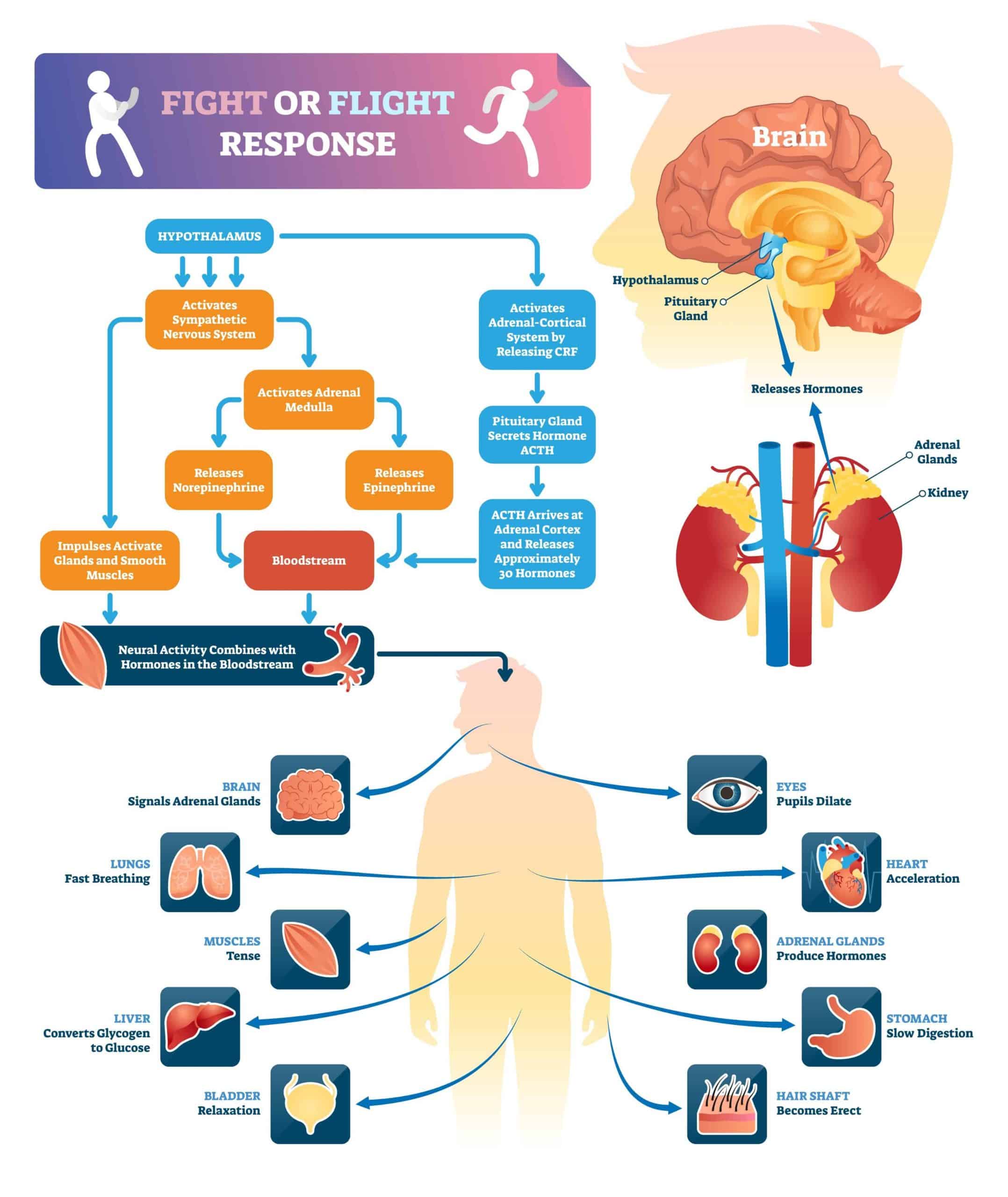
This biological response manifests in debilitating physical symptoms:
- Racing Thoughts and Hyper-vigilance: Your brain is constantly scanning your environment and your memories for further threats, making sleep nearly impossible.
- Physical Ailments: You may experience nausea, digestive issues, dizziness, chest tightness, or a sudden inability to eat. These are all physical manifestations of extreme emotional stress.
- The Freeze: You might feel paralyzed, unable to make simple decisions, or unable to move forward. This is your body’s survival mechanism overriding your logical mind.
Most devastatingly, the shock manifests as Intrusive Mental Images. This is a core symptom of Post-Infidelity Stress Disorder (PISD). Your mind, in an attempt to process or make sense of the trauma, keeps forcing vivid, often horrific images of the affair onto your internal screen. These images are relentless, uncontrollable, and profoundly paralyzing. The more you try to suppress them, the stronger they often become.
To survive the first 72 hours, your goal must be triage-stabilizing your mind and body. When a trauma loop starts (like the images or the racing heartbeat), you must use immediate grounding techniques to pull yourself back to the present moment. A simple technique is the 5-4-3-2-1 Method: name 5 things you can see, 4 things you can feel, 3 things you can hear, 2 things you can smell, and 1 thing you can taste. This simple sensory exercise breaks the trauma cycle and reconnects you to the safety of the present.
Managing the Invasion: Practical Techniques to Stop Intrusive Mental Images
The intrusive mental images that plague you after discovering a physical affair are not a sign of weakness; they are a hallmark of trauma. Your brain is desperately trying to process an unthinkable violation. However, allowing these images to run rampant will prevent you from moving forward. The goal is not to permanently erase them, but to manage their invasion and regain control over your mental landscape.
Here are practical, therapeutic techniques you can begin using immediately:
- The Mental Stop Sign (Thought-Stopping): This technique gives you an immediate tool to interrupt the trauma loop.
- The moment an unwanted image or thought flashes into your mind, mentally (or even physically, if you’re alone) shout “STOP!”
- Immediately follow this with a physical action: snap a rubber band on your wrist, firmly tap your thigh, or clench your fist.
- Then, consciously redirect your focus to a neutral, positive, or present-day image: the pattern on your shirt, the taste of a mint, the feeling of your feet on the floor. This interruption creates a break in the neural pathway.
- Image Containment (The Mental Vault): This technique creates a sense of control over when and how you engage with the painful images.
- Visualize a strong, impenetrable container: a steel safe, a locked box, or a sealed vault.
- When an intrusive image appears, consciously imagine “placing” it into this container.
- Lock the container, knowing that you hold the key and you decide when to open it (perhaps with a therapist in a safe setting). This allows you to say, “Not now. I will address this later, when I am ready.”
- The Unfaithful Partner’s Role: Controlled Disclosure: It’s vital for your partner to understand their role in managing your images. They should never offer unprompted details about the affair, no matter how much they think it helps them “confess.” Their role is to answer your specific, direct questions with honesty, but to resist the urge to feed your mind with unnecessary information. Their active participation in managing your triggers is part of their accountability.
This journey is exemplified by cases like David’s. After discovering Sarah’s six-month physical affair, David was tormented by visualizations. His recovery required not only Sarah’s complete cessation of the affair but also a period of no sexual contact while they actively worked on these mental retraining techniques. He had to learn to put those images in their place, not to ignore the pain, but to control when he confronted it. By diligently practicing these techniques, you can begin to reclaim your mind from the constant invasion of betrayal.
Health & Safety First: Navigating the Necessary Steps for STD Testing and Disclosure
The discovery of a physical affair introduces a devastating layer of anxiety that is unique to this betrayal type: the profound fear of physical contamination and health risk. This fear is valid, and addressing it immediately is a non-negotiable step toward both physical and psychological safety.
The trauma of this betrayal must be set aside for a brief moment to focus on triage-the critical health steps that protect you.
The Mandatory Protocol for Type 2 Betrayal
- Mandatory, Immediate Testing for Both Partners: Regardless of what the unfaithful partner is told by the affair partner, both you and your partner must undergo a complete panel of sexually transmitted infection (STI) testing. This is a non-negotiable demand for any path forward. This testing should cover the most common infections, including but not limited to HIV, Syphilis, Chlamydia, and Gonorrhea.
- Understanding the Window Period: Testing immediately can sometimes result in a false negative, as many infections have a “window period”-the time between exposure and when the infection is detectable by a test. You must consult your doctor about the appropriate timing for different types of tests. This often requires an initial test immediately, and a mandatory re-test three to six months after the last date of exposure to ensure accuracy.
- The Psychological Impact: Acknowledge the deep sense of violation and disgust that accompanies this medical necessity. You may feel rage at your partner for forcing you into this situation. It is critical to communicate these feelings to a therapist or trusted support system, as this fear is often one of the strongest barriers to rebuilding intimacy later on.
The full guide provides a discreet, detailed checklist to help you navigate the necessary medical conversations and appointments, ensuring you prioritize your physical health during this emotionally overwhelming time.
Beyond the Bedroom: Reclaiming Your Sense of Self and Attractiveness After the Violation
The discovery of a physical affair attacks more than just your relationship; it attacks your self-worth. You may find yourself obsessively comparing yourself to the affair partner or internalizing the betrayal, asking, “Was I not attractive enough? Was I lacking in bed?” The unfaithful partner’s actions trigger a crisis of self-esteem, making you feel physically undesirable and emotionally flawed.
It is absolutely crucial to recognize that the affair was never about your worth. Physical affairs are primarily driven by the unfaithful partner’s needs:
- Ego Boost and Validation: A desire for external validation of their own attractiveness or sexual prowess, often stemming from personal insecurity.
- Thrill and Novelty: A craving for the excitement of risk and the novelty of a new experience, which is about the newness and not the superiority of the affair partner.
- Escape: A temporary escape from the pressures and responsibilities of real-life commitment.
To reclaim your sense of self, you must consciously separate your partner’s actions from your intrinsic value. Your worth, your attractiveness, and your capability as a partner are not defined by their failure to remain faithful.
Steps to Reclaim Your Connection to Self
The goal is to reconnect with your own body and identity, separate from the betrayal narrative:
- Focus on Solo Pleasure: Engage in activities that make you feel strong and capable. This could be intense exercise, a new hobby, or focused self-care. The goal is to feel powerful in your own skin again.
- Positive Self-Talk: Consciously counter negative, comparative thoughts with affirmations about your strength and resilience. When the intrusive images come, pivot your focus to the fact that you are a survivor managing a crisis.
- Physical Re-engagement: Re-engage with touch that is purely for comfort, not intimacy. Simple things like getting a massage, seeking a gentle hug from a trusted friend, or even just appreciating the feeling of warm water in the shower can help dissociate touch from trauma and violation.
This recovery is about shifting your focus from the shame your partner inflicted onto your strength as an individual. You must heal yourself first before you can even consider healing the relationship.
When Sex Returns: A Roadmap for Reintroducing Intimacy After Physical Trauma
For the betrayed partner, the thought of reintroducing sexual intimacy after a physical affair can range from paralyzing fear to outright disgust. Sexual betrayal rewires the brain to associate your partner’s body, and even your own shared spaces, with danger and violation. Rushing this process can lead to long-term sexual dysfunction and destroy any chance of reconciliation.
The Rules of Re-Engagement
The process must be slow, intentional, and entirely focused on the betrayed partner’s emotional readiness:
- The Betrayed Partner Sets the Pace: This is the most critical rule. The unfaithful partner must relinquish all expectations and accept that the timeline for sexual re-engagement is determined solely by the person who was hurt. Sex should never be used as a sign of forgiveness, a tool to “save the marriage,” or a proof of healing.
- Focus on Connection, Not Performance: Initial steps must exclude intercourse and focus on rebuilding emotional safety through non-genital touch. This is about establishing new, safe memories: holding hands, extended cuddling, back rubs, and deep kissing. The goal is to separate touch from trauma and re-associate your partner’s touch with comfort and care, not risk.
- Complete Communication Required: Before and during any intimacy, partners must be able to openly discuss fears, triggers, and visualizations without judgment. The betrayed partner must be able to say, “I’m having an intrusive image right now,” and the unfaithful partner must stop immediately, comfort them, and validate their feelings.
- The New “Script”: You may need to consciously create a new sexual narrative, avoiding locations, positions, or times that trigger specific, painful memories. This is about building a future free of the affair’s shadow.
Rebuilding sexual trust is often the final frontier of recovery. It demands patience and commitment to the delicate process outlined in Chapter 8 of the book, Rebuilding Trust for Each Type, where we provide the detailed plan necessary to move beyond violation to connection.
Conclusion: Your Recovery is a Marathon, Not a Sprint
You have survived the most acute pain-the initial shock, the intrusive images, and the terrifying health fears. Surviving a physical affair is a profound trauma, but you have begun the process of reclaiming your body and your peace. You can move past the violation, but it requires relentless commitment to structure and healing protocols.
Your first 72 hours demand triage: stabilization, managing intrusive images, and mandatory health checks. Our guide, “How to Cope – the First Six Months After Infidelity & Betrayal Trauma” gives you the immediate, Type 2 specific protocols to get you through this initial crisis.
However, the journey does not end there. In the next six months, you will face the grueling work of managing rage, navigating communication without exploding, and wrestling with the enormous questions of “Can Trust Really Be Rebuilt?” and “Should I Stay or Should I Go?” The first 6 months are too early for true “recovery,” but they are essential for building the foundation that makes long-term healing possible.
Your next critical step is preparing for that long road.
➡️ Secure Your Copy of The First 72 Hours Today: Stabilize the crisis now and prepare for the long-term work ahead.
➡️ THEN, continue your journey with our follow-up guide, 6 Months After the Affair, which provides the structured plan for navigating rage, rebuilding communication, and making the ultimate decision on your path forward!
FAQ-Intrusive images, health fears
& immediate trauma response