Discovering a partner’s betrayal can trigger a wave of anger, confusion, and heartbreak that feels impossible to manage. Untangling these powerful emotions matters deeply, as research shows the distress tied to infidelity often begins well before the truth comes out, reflecting patterns seen in both European and American couples. This guide offers actionable steps for emotional recovery and rebuilding trust after facing infidelity, including insights on how to cope after infidelity, combining professional strategies and trauma-informed approaches to support your journey toward genuine healing.
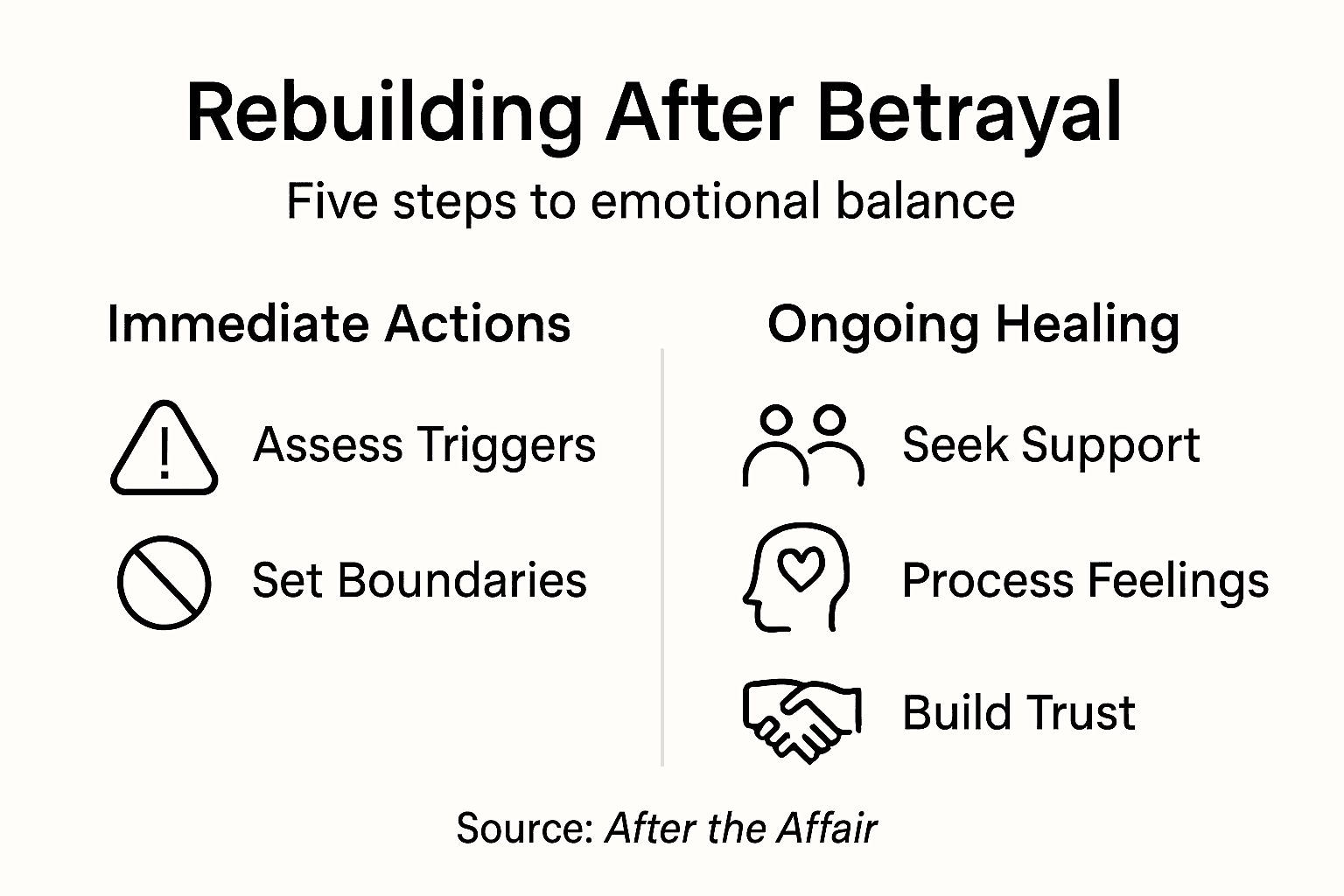
- Step 1: Assess Emotional Triggers and Immediate Needs
- Step 2: Establish Boundaries and Safe Spaces
- Step 3: Seek Support and Professional Guidance
- Step 4: Process Feelings and Build Self-Awareness
- Step 5: Rebuild Trust and Foster Personal Growth
- Find Strength and Healing After Betrayal with Expert Guidance
- Frequently Asked Questions
- Recommended
Quick Summary
| Key Insight | Explanation |
|---|---|
| 1. Recognize and Document Emotions | Acknowledge primary emotions and physical triggers to better understand your emotional responses following betrayal. |
| 2. Establish Healthy Boundaries | Create clear personal boundaries to protect your emotional well-being and promote safe spaces for healing. |
| 3. Seek Professional Support | Look for qualified therapists with experience in infidelity trauma to guide your healing process effectively. |
| 4. Practice Mindful Self-Reflection | Engage in self-awareness through journaling and reflection to process complex emotions and promote personal growth. |
| 5. Rebuild Trust Gradually | Focus on consistent communication and mutual accountability to rebuild trust and foster personal growth in relationships. |
Step 1: Assess Emotional Triggers
and Immediate Needs
Undertaking an honest and structured assessment of your emotional landscape after experiencing betrayal is crucial for healing. Understanding your immediate psychological needs helps create a strategic path forward and prevents getting lost in overwhelming emotions.
Research reveals that infidelity often emerges from a gradual decline in relationship functioning, which means your emotional responses are valid and complex. Relationship trauma patterns demonstrate that betrayal triggers profound psychological reactions requiring careful navigation.
To effectively assess your emotional triggers, consider these critical steps:
- Recognize your primary emotions – anger, hurt, grief, confusion
- Identify specific situations that provoke intense emotional responses
- Track your physiological reactions (rapid heartbeat, tension, stomach knots)
- Document triggering memories or interactions
Your immediate psychological needs will likely include:
- Creating emotional safety
- Processing shock and disbelief
- Establishing personal boundaries
- Seeking supportive environments
Your emotional experience is valid, and there is no “correct” way to feel after betrayal.
Professional therapeutic support becomes essential in managing these complex emotional landscapes. Clinical trauma responses indicate that targeted interventions can significantly help individuals navigate post-betrayal psychological challenges.
Learning how to cope after infidelity is essential for achieving emotional balance and moving forward with your life.
Pro tip: Keep a dedicated journal to track your emotional triggers and reactions, which will provide valuable insights for your healing journey and potential therapeutic discussions.
Step 2: Establish Boundaries and Safe Spaces
After experiencing betrayal, creating clear personal boundaries becomes essential for emotional recovery and self-protection. This step involves intentionally designing psychological and physical spaces that support your healing journey and prevent further emotional harm.
Establishing healthy boundaries requires understanding your emotional limits and communicating them effectively. Relationship recovery strategies emphasize the importance of setting firm yet compassionate boundaries that protect your emotional well-being.
Key strategies for creating safe personal boundaries include:
- Communicate your needs clearly and directly
- Define acceptable and unacceptable behaviors
- Set realistic expectations for interactions
- Practice saying “no” without feeling guilty
Physical boundary establishment might involve:
- Creating personal spaces in your home
- Limiting contact with individuals who trigger distress
- Controlling communication channels
- Protecting your privacy
Boundaries are not walls to push people away but healthy guidelines that maintain your emotional integrity.
Practical boundary-setting techniques require consistent practice and self-compassion. Different scenarios might demand unique approaches, so remain flexible while staying true to your core emotional needs.
Pro tip: Consider writing down your boundaries in a personal journal to help clarify and reinforce them during challenging emotional moments.

Step 3: Seek Support and Professional Guidance
Navigating the emotional aftermath of infidelity requires professional support that can help you process complex feelings and develop healthy coping strategies. This step involves actively seeking therapeutic resources and creating a comprehensive support network to guide your healing journey.
Professional counseling approaches demonstrate the critical importance of specialized guidance in managing the intricate emotional landscape following betrayal. Individual and couples therapists can provide structured frameworks for understanding and healing from infidelity.
Key strategies for seeking professional support include:
- Research qualified therapists specializing in infidelity trauma
- Schedule initial consultations with multiple professionals
- Consider individual and couples counseling options
- Verify therapist credentials and therapeutic approaches
Support options to explore:
- Individual psychotherapy
- Couples counseling
- Support groups for betrayal survivors
- Online therapeutic resources
Seeking help is not a sign of weakness but a courageous step toward healing and personal growth.
Additional support resources might include LGBTQ+ affirming counseling for individuals needing specialized understanding and compassionate guidance.
The therapeutic process requires patience, openness, and commitment to personal healing. Different approaches work for different people, so remain flexible and prioritize your emotional well-being.
Pro tip: Create a list of specific emotional goals and questions before your first therapy session to maximize your therapeutic experience.
Step 4: Process Feelings and Build
Self-Awareness
Healing from infidelity demands a profound journey of emotional exploration and personal understanding. This step focuses on developing deep self-awareness and creating a compassionate framework for processing the complex emotions triggered by betrayal.
Emotional recovery mechanisms highlight the critical importance of understanding how negative experiences impact mental health and self-perception. By developing emotional intelligence, you can transform pain into an opportunity for personal growth and resilience.
Strategies for emotional processing and self-awareness include:
- Acknowledge all emotional experiences without judgment
- Practice mindful self-reflection
- Identify underlying emotional patterns
- Challenge negative self-narratives
Key components of emotional healing:
- Validate your emotional experience
- Separate your self-worth from the betrayal
- Develop emotional regulation techniques
- Create a compassionate inner dialogue
Your feelings are valid, and healing is a nonlinear journey of self-discovery.
By exploring the pain caused by an affair, you can transform your emotional landscape and rebuild a stronger sense of self. Understanding the psychological impact helps you move from victim to survivor.
Pro tip: Commit to a daily journaling practice that allows you to explore your emotions without censorship or self-criticism.
Step 5: Rebuild Trust and Foster Personal Growth
Rebuilding trust and nurturing personal growth after infidelity requires intentional effort, vulnerability, and a commitment to healing. This step focuses on transforming pain into an opportunity for profound personal transformation and relational renewal.
Trust restoration mechanisms reveal that rebuilding trust involves complex psychological processes of risk identification, predictability, and mutual commitment. By understanding these dynamics, you can create a pathway toward genuine healing and authentic connection.
Strategies for rebuilding trust and personal growth include:
- Practice radical honesty with yourself and your partner
- Develop transparent communication
- Demonstrate consistent, reliable behavior
- Create mutual accountability
Key components of trust restoration:
- Establish clear relationship expectations
- Implement robust emotional transparency
- Engage in mutual healing practices
- Recognize individual growth opportunities
Trust is not rebuilt overnight but through consistent, intentional actions that demonstrate genuine transformation.
By exploring rebuilding trust after cheating, you can develop a nuanced understanding of healing pathways that honor both individual and relational needs.
Pro tip: Schedule regular check-in conversations to openly discuss progress, challenges, and mutual growth throughout your healing journey.
This table compares common emotional challenges after betrayal with effective solutions:
| Challenge | Common Response | Recommended Solution |
|---|---|---|
| Overwhelming anger | Suppressing feelings | Journaling for clarity |
| Difficulty trusting | Withdrawal | Honest communication |
| Self-blame | Negative self-talk | Self-compassion practice |
| Confusion | Repetitive rumination | Guided therapy support |
Here’s a concise overview of each step’s primary focus and the main benefit for recovery:
| Step | Main Focus | Primary Benefit |
|---|---|---|
| 1 | Emotional assessment | Greater self-understanding |
| 2 | Boundary setting | Enhanced emotional safety |
| 3 | Seeking support | Access to expert guidance |
| 4 | Self-awareness | Lasting emotional resilience |
| 5 | Rebuilding trust | Renewed personal growth |
Find Strength and Healing After Betrayal
with Expert Guidance
Coping with infidelity feels overwhelming and confusing as you navigate intense emotions and the challenge of rebuilding trust. This article highlights how emotional assessment, boundary setting, and professional support play vital roles in regaining balance after betrayal. You are not alone in facing these complex feelings of anger, grief, and confusion, and there are compassionate, evidence-informed solutions to help you regain control of your healing journey.
Take the next step today to transform pain into personal growth. Visit our Resource Library for comprehensive resources tailored to survivors of infidelity. Explore practical strategies for rebuilding trust after cheating and gain insights into the pain caused by an affair. Start your empowered recovery now by connecting with expert guidance designed specifically for this difficult journey.
Frequently Asked Questions
How can I assess my emotional triggers after infidelity?
To assess your emotional triggers after infidelity, start by recognizing your primary emotions such as anger, hurt, and confusion. Keep a dedicated journal to track these emotions and specific situations that provoke them. This practice will give you valuable insights into your emotional landscape within a few weeks.
What are some effective ways to establish personal boundaries after betrayal?
Effective ways to establish personal boundaries include clearly communicating your needs and defining acceptable behaviors in your relationships. Write down your boundaries to clarify them and refer back to them when needed to maintain your emotional integrity.
How do I find support after experiencing infidelity?
Finding support after infidelity can involve researching qualified therapists or support groups that specialize in dealing with betrayal trauma. Schedule initial consultations to discuss your needs and ensure the support network aligns with your healing goals, ideally within the next month.
What should I focus on during emotional processing after betrayal?
During emotional processing after betrayal, focus on acknowledging and validating all your feelings without judgment. Engage in mindful self-reflection daily, as this practice helps you identify emotional patterns and can significantly aid your healing process over time.
How can I rebuild trust in my relationship after infidelity?
Rebuilding trust requires practicing radical honesty and transparent communication with your partner. Set clear relationship expectations and demonstrate consistent behavior that showcases your commitment to the healing process, aiming for noticeable improvements within three to six months.
What steps can I take to foster personal growth after infidelity?
To foster personal growth after infidelity, commit to self-awareness practices like journaling and emotional reflection. Identify and challenge negative self-narratives regularly to promote a positive self-image and resilience, ideally dedicating a few minutes each day to these activities.
Recommended
- Trauma of an Emotional Affair-Why Emotional Affairs Hurt?
- After Cheated: Now What? – After the Affair Series
- Understanding Betrayal: How Does a Man Feel After Being Cheated On
- Recovery Strategies – After the Affair Series
- Couples Therapy – ReviveHealthTherapy
- 7 Empowering Relationship Tips For Women To Thrive
- How to Cope with Emotions during Divorce or Separation – Forms.Legal