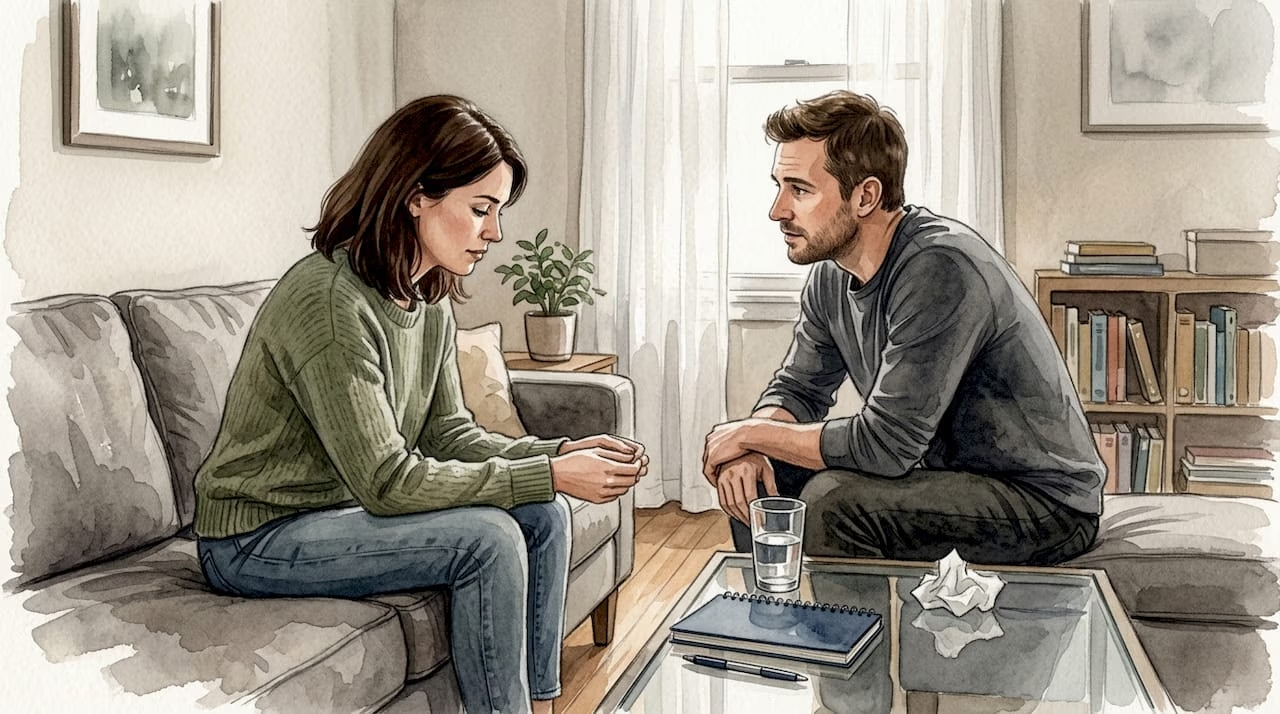
When Co-Parenting Happens After Betrayal, Everything Changes
Co-parenting after infidelity isn’t just “regular co-parenting with more emotions.”
It’s co-parenting inside a landscape of:
- broken trust
- grief
- anger
- power imbalance
- emotional triggers
- unpredictable communication
- trauma responses
- guilt, shame, or defensiveness
When trust collapses between parents, the structure that once held the family together fractures. The relationship becomes transactional, not emotional, and yet you still share what matters most: your children.
What Healthy Co-Parenting Looks Like After Betrayal
Healthy co-parenting after infidelity is calm, consistent, low-conflict, and child-focused, even when there’s emotional pain underneath.
1. Communication Is Short, Clear, and Predictable
Healthy co-parents communicate:
- briefly
- factually
- without emotional commentary
- through predictable channels
Most communication is through:
- text
- co-parenting apps
- short emails
Tone: neutral, businesslike, respectful.
📚 Navigate co-parenting with a cheating spouse.
Our Comprehensive Resource Library provides everything from daily survival protocols to complete separation planning guides—all focused on protecting your children’s wellbeing.
2. Boundaries Are Firm, Not Flexible
Healthy co-parenting after betrayal includes boundaries like:
- no late-night emotional conversations
- no relationship processing during exchanges
- no discussing the affair in front of children
- using written communication for all logistics
- respecting parenting schedules
- consistency between households when possible
Boundaries help keep the parenting relationship from getting tangled in the romantic rupture.
3. The Cheated-On Parent Is Not Pressured to “Forgive Fast”
Healthy co-parenting understands that:
- forgiveness is a process
- trust is gone
- safety must be rebuilt
- emotional neutrality takes time
You do not have to heal quickly to be a good co-parent.
You do need stability, predictability, and self-regulation.
4. The Unfaithful Parent Takes Accountability
This does not mean rehashing details or emotional confessions.
It means:
- acknowledging harm happened
- respecting boundaries
- honoring routines
- avoiding defensiveness
- behaving reliably
- supporting the child’s emotional needs
Accountability is shown through consistent behavior, not speeches.
5. Both Parents Keep the Children Out of Adult Conflict
Healthy co-parents:
- never weaponize the children
- never share inappropriate details
- do not pressure kids to choose sides
- avoid criticizing the other parent
- protect the child’s loyalty to both homes
Children need space to maintain connection with each parent — not carry emotional weight.
What Unhealthy Co-Parenting Looks Like After Betrayal
Your article identifies the danger signs of toxic co-parenting after infidelity Article_CoParenting_After_Infid…. Here are the most common ones:
1. Conversations Turn Into Fights
Even quick texts become:
- arguments
- defensiveness
- blame
- emotional jabs
This escalates child stress dramatically.
📚 Get the tools to parent effectively through crisis.
Download proven scripts, separation roadmaps, and child-protection strategies from our Resource Library designed for parents living through affair fog.
2. Oversharing With the Child
Happens when parents are hurt or dysregulated:
- “Your father cheated on us — that’s why we’re here.”
- “Ask your mom why she broke the family.”
- “He’s lying to you, you know that?”
This is harmful… even when parents think they’re “telling the truth.”
3. Using Children to Deliver Messages
Like:
- “Tell your mom I’ll be late.”
- “Ask your dad why he didn’t pay support.”
This puts kids in the middle and forces them to carry emotional burdens.
4. Inconsistent Parenting or Rule Wars
Parents “compete” instead of collaborate:
- one becomes the “fun parent”
- the other becomes the “strict parent”
- schedules constantly change
- routines collapse
Children feel confused and unsafe.
5. Emotional Outbursts During Exchanges
Pickup and drop-off become trauma zones when parents:
- cry
- yell
- glare
- slam doors
- make passive-aggressive comments
Children absorb this conflict like toxins.
So… What’s the Goal?
Not:
- friendship
- forgiveness
- emotional closeness
- a smooth relationship
Those things may come later — but they’re NOT the goal right now.
The goal is:
A calm, predictable, child-centered relationship where the parents behave like teammates even if they are not emotionally close.
You don’t have to like your co-parent.
You DO have to protect your child’s stability.
📚Protect your kids while protecting yourself
Our Resource Library offers complete guides on co-parenting after betrayal, managing emotions, and raising resilient children through family crisis.