- Why Co-Parenting After Infidelity Isn’t “Normal” Co-Parenting
- 1. Keep Communication Short, Structured, and Predictable
- 2. Establish Firm, Clear Boundaries
- 3. Focus on Stability, Not Unity
- 4. Protect Your Kids From Adult Emotions
- 5. Create Consistent Routines (Even If Homes Differ)
- 6. Use “Business Tone” Communication
- 7. Regulate YOUR Emotional State Before Responding
- 8. Handle Transitions With Calm Neutrality
- 9. Treat Co-Parenting as a Partnership — NOT a Friendship
- 10. Rebuild Trust Through Predictability, Not Emotion
- FAQ: Co-Parenting After Infidelity
Why Co-Parenting After Infidelity Isn’t
“Normal” Co-Parenting
Infidelity changes everything:
- trust collapses
- communication becomes triggering
- emotions run high
- routines break
- children sense emotional shifts
- both parents feel vulnerable
Trying to co-parent as if nothing happened only leads to conflict, confusion, and emotional spillover.
Co-parenting after infidelity requires a completely different approach; one built on structure, boundaries, and emotional regulation
And yes, it is absolutely possible.
This is exactly what healthy looks like.

1. Keep Communication Short, Structured, and Predictable
After betrayal, communication can trigger:
- defensiveness
- resentment
- anger
- guilt
- protectiveness
- anxiety
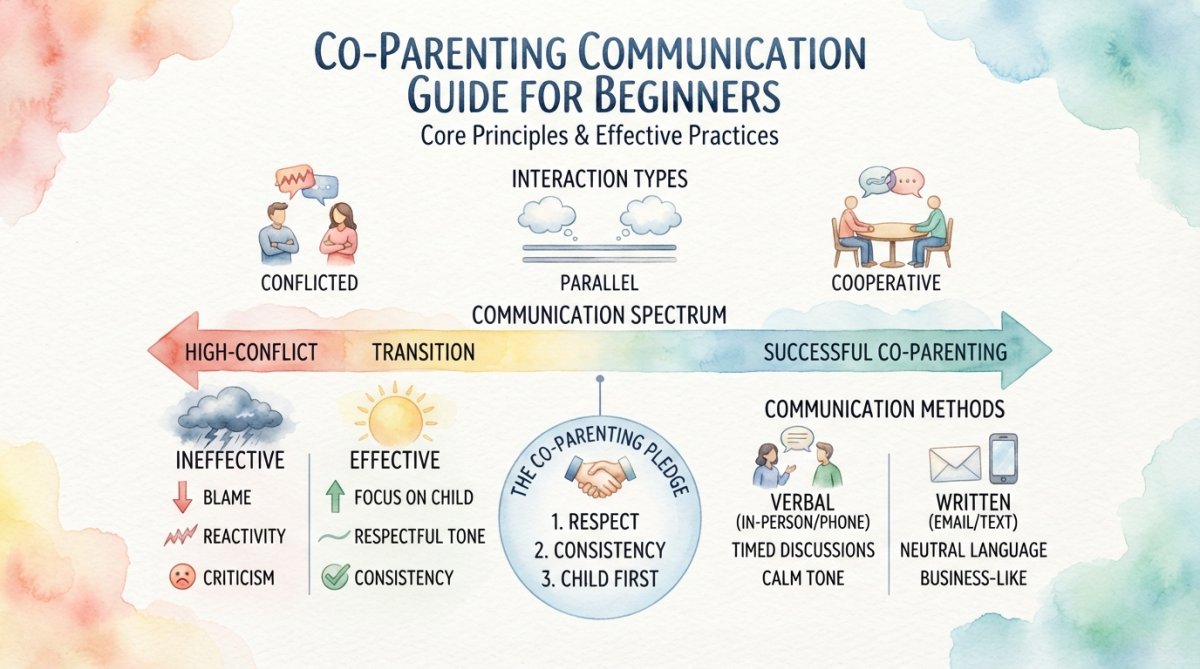
To reduce conflict, communication should be:
- neutral
- brief
- written
- factual
- scheduled
Best channels:
- co-parenting apps (OurFamilyWizard, TalkingParents)
- text for urgent matters
- email for longer items
The American Psychological Association emphasizes that clear, structured communication reduces child stress by lowering parental conflict (apa.org).
Examples of healthy co-parent communication:
✔ “Pickup at 3 pm at school.”
✔ “He has a dentist appointment at 10 am. Details attached.”
✔ “Please send the inhaler in his backpack.”
No comments.
No emotional tone.
No unnecessary discussion.
2. Establish Firm, Clear Boundaries
Boundaries protect both parents’ emotional wellbeing.
Healthy boundaries include:
- no late-night communication
- no relationship discussions
- no arguing during transitions
- no surprise schedule changes
- no unannounced drop-ins
- no sharing personal life updates
- no expectations of emotional closeness
These protect the co-parenting relationship from slipping back into old patterns or unresolved wounds.
3. Focus on Stability, Not Unity
You do not need:
- friendship
- emotional closeness
- forgiveness
- alignment on everything
- perfectly matched parenting styles
You do need:
- consistent routines
- predictable schedules
- calm transitions
- emotional neutrality
- respect for boundaries
Children do not need their parents to get along; they need their parents not to fight.
4. Protect Your Kids From Adult Emotions
Children should never witness:
- arguments
- emotional breakdowns
- blame
- anger
- passive-aggressive comments
- adult details about the affair
- being asked to choose sides
- being used as messengers
The Child Mind Institute stresses that parental conflict is one of the most damaging experiences for a child’s emotional development (childmind.org).
Healthy scripts for kids:
“Grown-ups are working through some private problems.
It’s not your fault, and you are safe.”
5. Create Consistent Routines (Even If Homes Differ)
You do not need identical homes.
You need aligned priorities.
Key routines to stabilize:
- bedtime
- school schedule
- homework rhythm
- screen time limits
- transition times
- medical care follow-up
Kids thrive on rhythm, not uniformity.
6. Use “Business Tone” Communication
This is one of your strongest insights:
Co-parent communication after infidelity should sound like workplace communication:
- calm
- neutral
- respectful
- factual
- emotion-free
- focused on the task
Example:
✘ “You always forget things. Can you please try harder?”
✔ “He needs his school folder for tomorrow. It’s in the kitchen drawer.”
Tone matters more than length.
7. Regulate YOUR Emotional State Before Responding
The biggest predictor of co-parenting success?
Your ability to self-regulate.
Healthy co-parents practice:
- pausing before responding
- writing drafts and deleting them
- deep breathing
- walking away from the phone
- responding only when calm
- choosing clarity over speed
Children mirror your emotional stability.
8. Handle Transitions With Calm Neutrality
To protect kids:
- keep transitions under 2 minutes
- avoid emotional conversations
- stay off your phone
- make eye contact with your child, not your co-parent
- keep your tone soft and predictable
- never argue during handoffs
The quieter the exchange, the safer a child feels.
9. Treat Co-Parenting as a Partnership — NOT a Friendship
A healthy co-parenting relationship after infidelity looks like:
- teammates
- not buddies
- not confidants
- not emotional supports
- not therapists
- not friends (unless later, slowly, naturally)
Do not force closeness.
Do not force warmth.
Do not force forgiveness.
Focus on function, not feelings.
10. Rebuild Trust Through Predictability, Not Emotion
Trust will NOT return through:
- apologies
- emotional conversations
- promises
- tears
- “closing the chapter” talks
Trust rebuilds through:
- following the schedule
- being on time
- responding calmly
- respecting boundaries
- predictable routines
- consistent behavior over months
Trust is a byproduct, not the goal.