- Why Long-Term Impact Matters More Than Short-Term Conflict
- The Positive Long-Term Impacts (Often Overlooked)
- The Challenges: What Children Feel Over Time
- The Most Important Protective Factor: How Parents Respond
- How Parents Can Reduce Long-Term Risk
- The Bottom Line: Parallel Parenting Is Not the Problem: Unattuned Parenting Is
- FAQ: Long-Term Impact of Parallel Parenting
Why Long-Term Impact Matters More
Than Short-Term Conflict
Parallel parenting is often used when communication is too tense, emotional, or volatile for co-parenting. Many parents assume it’s simply a “temporary solution.”
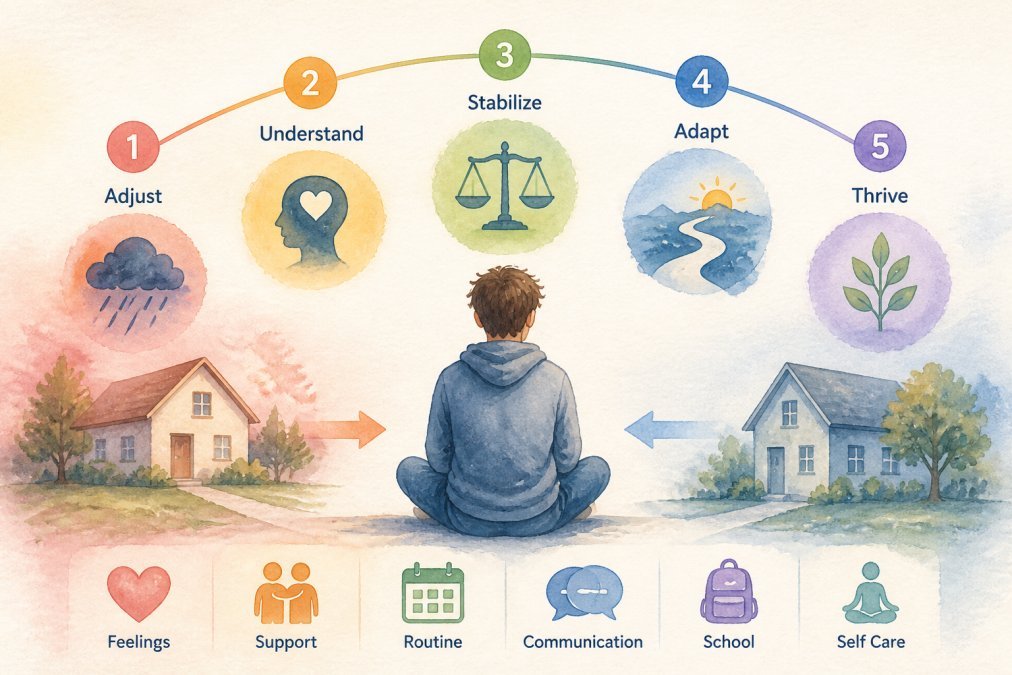
Parallel parenting has measurable long-term effects on children — both positive and negative.
This isn’t about parents “getting along.”
It’s about children growing up in a system that either:
- protects them from conflict, or
- exposes them to quiet emotional instability
This post summarizes research-backed insights into what children experience emotionally, socially, and developmentally when parallel parenting continues long-term, and what parents can do to support healing.
The Positive Long-Term Impacts
(Often Overlooked)
While parallel parenting is sometimes portrayed negatively, the research makes it clear:
1. Children Are Protected from High-Conflict Emotional Damage
The American Psychological Association (APA) emphasizes that exposure to parental conflict is one of the strongest predictors of child anxiety and long-term emotional difficulties (apa.org).
Parallel parenting dramatically reduces:
- fighting
- emotional explosions
- criticism between parents
- triangulation
- loyalty conflicts
Kids grow up with less emotional contamination.
2. Children Experience Emotional Predictability
Even when homes differ, predictability of when they see each parent:
- reduces anxiety
- increases secure attachment
- lowers stress hormones
- improves sleep
- builds resilience
The structure itself becomes a “safety container.”
3. Kids Learn Diverse Coping Skills
Different routines in each home help children learn:
- flexibility
- problem-solving
- emotional adaptability
These skills benefit them into adulthood.
The Challenges: What Children Feel Over Time
Parallel parenting protects children from conflict — but it also creates distinct emotional experiences they must navigate.
These are the long-term challenges outlined in your article.
1. Emotional Compartmentalization
Children learn to “switch” between households.
Over years, this can become:
- hyper-independence
- emotional masking
- “shifting identities”
As the Child Mind Institute notes, kids who adapt too intensely may struggle with emotional transitions later in life (childmind.org).
2. Confusion Around Rules and Structure
Long-term differences between homes can lead to:
- frustration
- inconsistency stress
- testing boundaries
- feelings of unfairness
Kids may say:
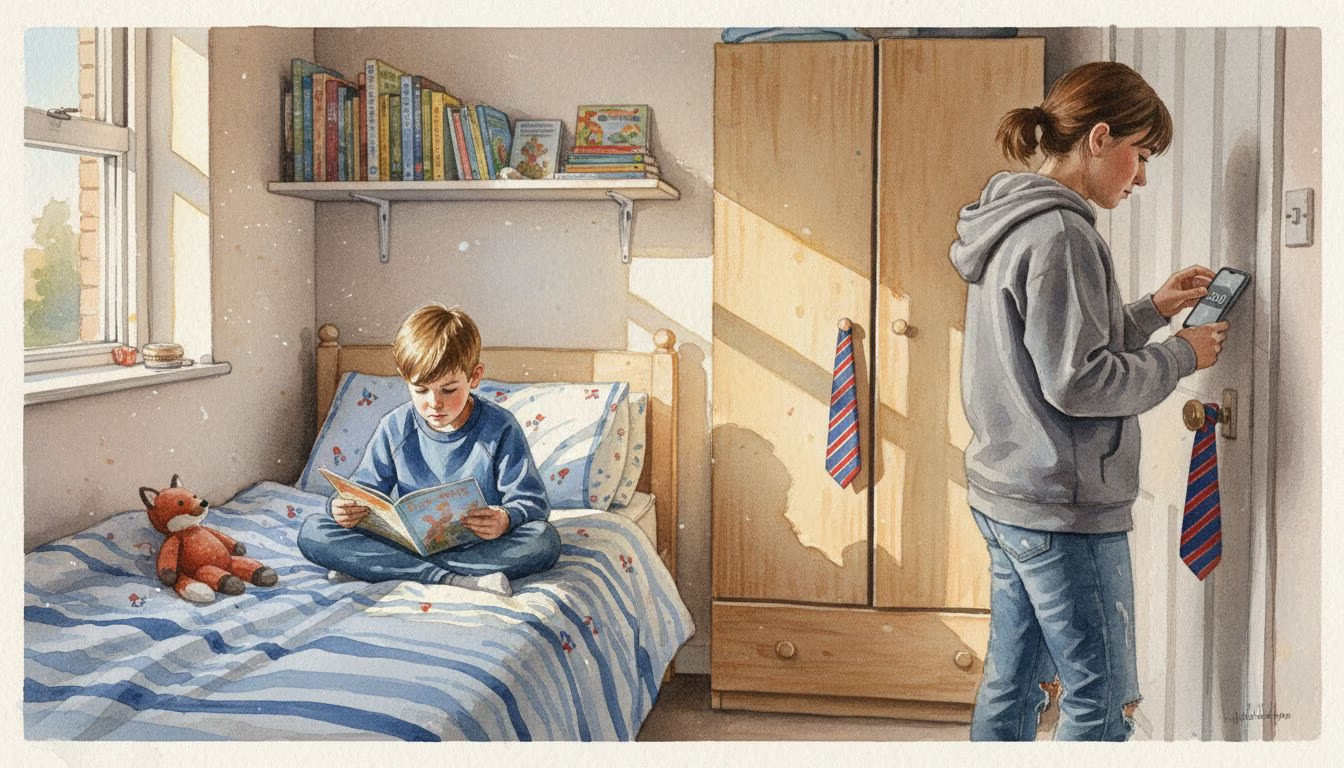
- “Why is bedtime different here?”
- “Why does Dad let me do this but Mom doesn’t?”
Without emotional guidance, they internalize inconsistency as instability.
3. Emotional Distance Between Parents May Feel Like Distance in the Family
Children interpret low parental communication as:
- “My parents can’t talk because of me.”
- “Our family is broken.”
- “It’s unsafe to express feelings.”
Kids personalize silence.
4. Kids May “Perform” Emotional Stability
Children often try to:
- keep the peace
- avoid conflict
- carry adult emotions
- appear “fine”
Over years, this becomes:
- people-pleasing
- perfectionism
- emotional suppression
The burden builds silently.
5. Teens May Feel Caught Between Two Worlds
Long-term parallel parenting sets teens up for:
- loyalty conflicts
- taking sides
- secrecy
- emotional exhaustion
Teens interpret parental distance as unresolved tension, even if things are calm.

The Most Important Protective Factor:
How Parents Respond
Parallel parenting itself is not the predictor of long-term success.
This article emphasizes repeatedly:
Children thrive when the emotional climate is calm and nurturing, regardless of structure.
This means:
- stable routines
- warm presence
- predictable transitions
- emotional validation
- no exposure to conflict
- no use of children as messengers
- consistent boundaries
- child-centered communication
YOU, not the parenting structure, are your child’s strongest resilience factor.
How Parents Can Reduce Long-Term Risk
1. Offer Emotional Coaching
Teach children to name emotions:
- “Are you feeling confused?”
- “Does it feel different between our homes?”
- “Tell me what felt hard today.”
Normalize feelings instead of avoiding them.
2. Maintain Routines Within Your Own Home
Even if the other home differs:
- bedtime
- homework
- screen time
- meals
- morning routines
Consistency creates emotional anchors.
3. Reassure Children Often
Repeat:
“You did nothing wrong.”
“You don’t have to choose sides.”
“You are safe in both homes.”
Kids need repetition, not one-time conversations.
4. Let Your Child Open Up Without Judgment
If they say:
- “Dad lets me stay up later.”
- “Mom’s house feels calmer.”
- “I get confused switching.”
Respond with calm, not defensiveness.
5. Revisit Parenting Approach Over Time
Parallel parenting may work well for years, but as triggers and tension ease, you may shift toward:
- cooperative updates
- shared expectations
- co-parenting
Staying flexible protects your child’s long-term emotional health.
The Bottom Line: Parallel Parenting Is Not the Problem: Unattuned Parenting Is
Children don’t need their parents to be close.
They need:
- low conflict
- emotional safety
- stable routines
- reassurance
- time
- predictable homes
Parallel parenting CAN provide all of this, if one or both parents stay emotionally attuned.
Your child’s resilience is not determined by the structure, but by the safety within it.
FAQ: Long-Term Impact of Parallel Parenting