Table of Contents
- Understanding Separation Anxiety and Custody Transitions
- Recognize the Signs of Emotional Distress in Your Child
- Establish a Consistent Routine Around Custody Exchanges
- Using Co-Parenting Scripts for Custody Exchanges
- Managing Child Refusal to Visit the Other Parent
- Reducing High-Conflict Custody Transitions
- When to Seek Professional Support
- Conclusion
- Frequently Asked Questions
Last Updated: October 3, 2026
Understanding Separation Anxiety and Custody Transitions
Managing child anxiety during custody transfers is essential, as separation anxiety during custody transfers is common. Your child may feel stressed moving between homes, worried about separation, or anxious about unpredictability.
This anxiety is a normal response to change. Children thrive on consistency; chaotic or tense exchanges build anxiety.
Structured approaches work. Parents using clear frameworks and consistent routines see measurable improvements in their children’s emotional responses during transitions.
What makes transitions hard for children:
- Uncertainty about what comes next
- Exposure to parental conflict or tension
- Lack of a clear routine or ritual
- Feeling caught between two parents
The first step to reducing anxiety is understanding what’s happening. Then you can build a plan that works.
Recognize the Signs of Emotional Distress in Your Child
Children show distress differently: some cry or cling, others withdraw, act out, or develop physical complaints.
Watch for these signs:
- Sleep problems or nightmares
- Changes in eating habits
- Behavioral regression (thumb-sucking, baby talk, accidents)
- Increased clinginess or separation anxiety
- Stomach complaints or headaches
- Withdrawal from friends or activities
- Anger or irritability that wasn’t there before
- Difficulty concentrating at school
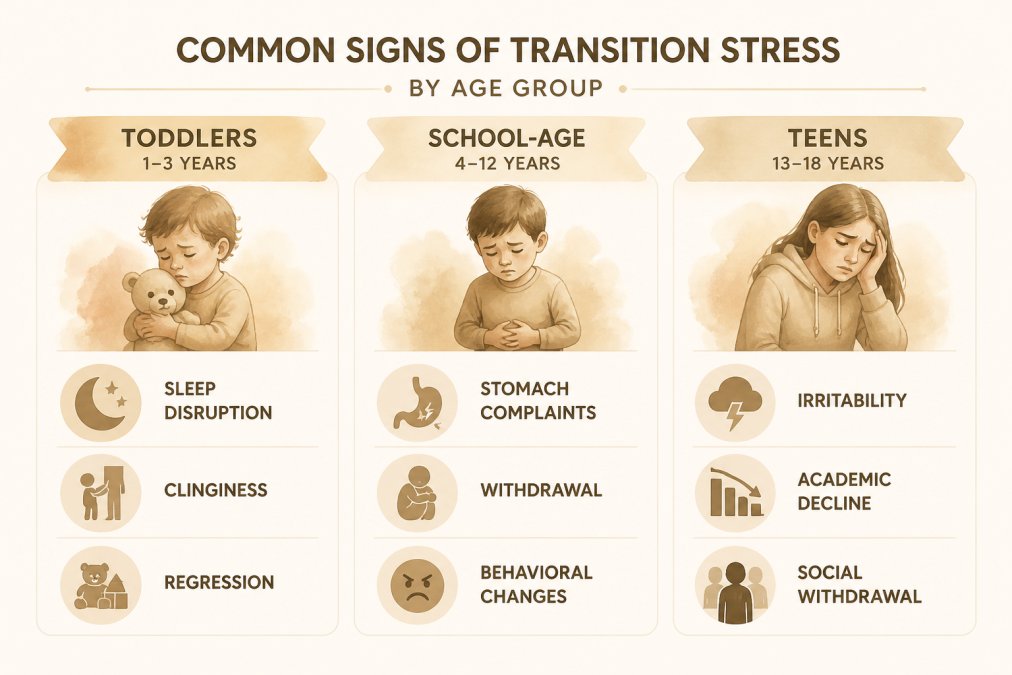
Age matters: toddlers may regress, school-age children develop stomach complaints, teens become withdrawn or irritable. Notice patterns, consistent distress around exchanges signals the need to act.
Establish a Consistent Routine Around Custody Exchanges
Consistency is your most powerful tool. Children feel safer knowing what to expect. The specific ritual depends on your child’s age and developmental stage.
Repeated, predictable sequences activate the parasympathetic nervous system. When a child knows what happens next, their brain stops scanning for threat. Predictability quiets the amygdala (fear center). A transition ritual is a clinical intervention.
Age-specific transition rituals:
For toddlers (ages 2-4):
Toddlers live in the present moment and fear abandonment.
- Use a comfort object that travels with them (stuffed animal or blanket in both homes)
- Create a goodbye phrase that’s identical every time (e.g., “Bye-bye, see you soon, I love you to the moon”)
- Keep goodbyes under 30 seconds
- Have the receiving parent do something immediately calming: read a book, sit quietly, or offer a snack
- Use a visual transition object: a photo book or special toy that only appears during exchanges
- Let the toddler see the other parent arrive; avoid handing off from inside the house
For school-age children (ages 5-11):
School-age children understand time and worry about missing things and loyalty to each parent.
- Use a visual calendar marking exchange days in advance
- Create a transition checklist: pack backpack, pick comfort item, eat snack, say goodbye
- Use a consistent goodbye phrase: “I love you. Dad is excited to see you. I’ll see you on Friday”
- Let the child bring a memory item from the other home to show connection to both places
- Have a brief pre-exchange call (30 seconds) so the child hears the other parent’s voice
- Establish a first activity at the receiving home the child looks forward to (cooking, playing a game)
For teens (ages 12+):
Teens need autonomy and may resist babyish rituals.
- Involve them in designing the ritual: “What would make transitions easier?”
- Use text-based check-ins instead of face-to-face rituals
- Respect their privacy; don’t make the exchange a production
- Acknowledge the awkwardness and involve them in timing and location decisions
- Create a low-pressure handoff at school or a friend’s house if possible
The core ritual framework (all ages):
Regardless of age, every transition ritual should include these elements:
- Preparation (the night before or morning of): Child knows what’s happening. Use words, pictures, or a calendar.
- Grounding activity (10-15 minutes before): Calm activity with the departing parent (not rushing, not conflict).
- The goodbye (under 2 minutes): Same words, same tone, every time. Confidence matters. If you’re anxious, they feel it.
- The handoff (under 1 minute): Brief, neutral, child-focused. No adult conversation.
- The arrival ritual (first 10 minutes at the other home): Predictable, calming activity. Not interrogation, not high-energy games.
Maintain the same schedule. Exchanges at the same time on the same days create safety. If a change is necessary, give at least two weeks’ notice and explain it to your child.
What NOT to do:
- Don’t ask your child to report on the other parent
- Don’t discuss parenting decisions or child behavior during exchanges
- Don’t make the child responsible for your emotions
- Don’t change the ritual without warning
Keep a simple log for two weeks: exchange time, how your child seemed before/during/after. Small adjustments, arriving 5 minutes earlier, changing the goodbye phrase, can make a measurable difference. Consistency beats elaborateness.
Using Co-Parenting Scripts for Custody Exchanges
What you say during exchanges matters enormously. Keep exchanges brief, neutral, and child-focused, you’re managing a handoff, not having a conversation.
Script 1: The neutral greeting
Instead of: “How was she this week? Did she eat properly?”
Use: “Hi. [Child’s name] is ready to go. Have a good week.”
This keeps the focus on the child and avoids opening a conversation that could escalate.
Script 2: Reassuring your child
Instead of: “You have to go with Dad now. Be good.”
Use: “You’re going to have a great time with Dad. I’ll see you on Friday. I love you.”
This is warm, confident, and doesn’t make the child feel like they’re being sent away as punishment.
Script 3: If your child refuses to go
Instead of: “Stop being difficult. Just go.”
Use: “I know transitions are hard. Dad is excited to see you. Let’s get in the car together.”
This validates their feeling while still moving forward.
Script 4: If your ex is late or disruptive
Instead of: “Your mom is always late. This is ridiculous.”
Use: “We’re waiting. Let’s sit in the car and listen to a song.”
This keeps your child out of the conflict and doesn’t make them feel responsible for the other parent’s behavior.
Keep exchanges under five minutes. Discuss the child’s behavior, health, or schedule via text or email, not during handoff.

Managing Child Refusal to Visit the Other Parent
Some children refuse to visit the other parent. Refusal usually signals anxiety, but can also signal a legitimate concern. Your job is to determine which, and respond appropriately.
Refusal falls into three categories: (1) transition anxiety, fear of separation or unpredictability; (2) environmental concern, something at the other home is uncomfortable (new partner, rule change, sibling conflict); (3) safety concern, the child experienced or witnessed something unsafe.
Your first job is to determine which category you’re dealing with. Your response depends on the answer.
Step 1: Investigate without judgment.
Avoid shaming responses like “Stop being difficult,” “You’re hurting your dad’s feelings,” or “What’s wrong with you?” These make children less likely to talk. Instead:
For toddlers (ages 2-4):
Get down to eye level, use simple words, offer choices, and validate feelings. Don’t ask “why”, watch their behavior instead.
For school-age children (ages 5-11):
Sit down in a calm moment and use open-ended questions: “I noticed you didn’t want to go to Dad’s last week.
For teens (ages 12+):
Approach privately and be direct. Acknowledge their autonomy, listen without defending, ask clarifying questions, and take their concerns seriously.
Step 2: Distinguish between anxiety and legitimate concern.
Ask: Is the child describing a feeling (“I feel scared”) or a fact (“Mom yells at me”)? Is the refusal new or ongoing? Does the child have other anxiety symptoms? Is the other parent’s behavior documented?
If it’s transition anxiety:
Validate and move forward: “I know transitions are hard. You’ll be okay at Dad’s.
Don’t force the child into the car, shame them, bribe them, make it a power struggle, or leave them in distress.
Work with the other parent to address the specific issue. Use this script: “I heard that [specific thing] is hard for you at Dad’s. That’s important. Let’s talk to Dad about it together.” Most environmental concerns resolve in 1-2 weeks with cooperation.
Take safety concerns seriously. Document what the child says, ask clarifying questions without leading, contact a family therapist or child psychologist, and if you believe there is abuse, contact child protective services or law enforcement. Consult a family law attorney before withholding custody.
Step 3: Create a graduated re-entry plan.
If refusal persists beyond a few days, use gradual re-entry. Week 1: 2-hour visits from neutral locations. Week 2: 4-hour visits with meals. Week 3: Return to regular schedule while maintaining the transition ritual.
Involve a professional if refusal persists beyond two weeks, the child shows trauma signs, expresses hopelessness, or you suspect abuse. A family therapist can assess clinical anxiety or trauma, teach coping skills, help parents understand the child’s needs, and facilitate conversations.
Key principle: Refusal is a signal, not a behavior problem. Your job is to decode the signal and respond appropriately. Sometimes that means addressing anxiety. Sometimes it means fixing an environmental issue. Sometimes it means protecting the child’s safety. Listen first. Act second.
Reducing High-Conflict Custody Transitions
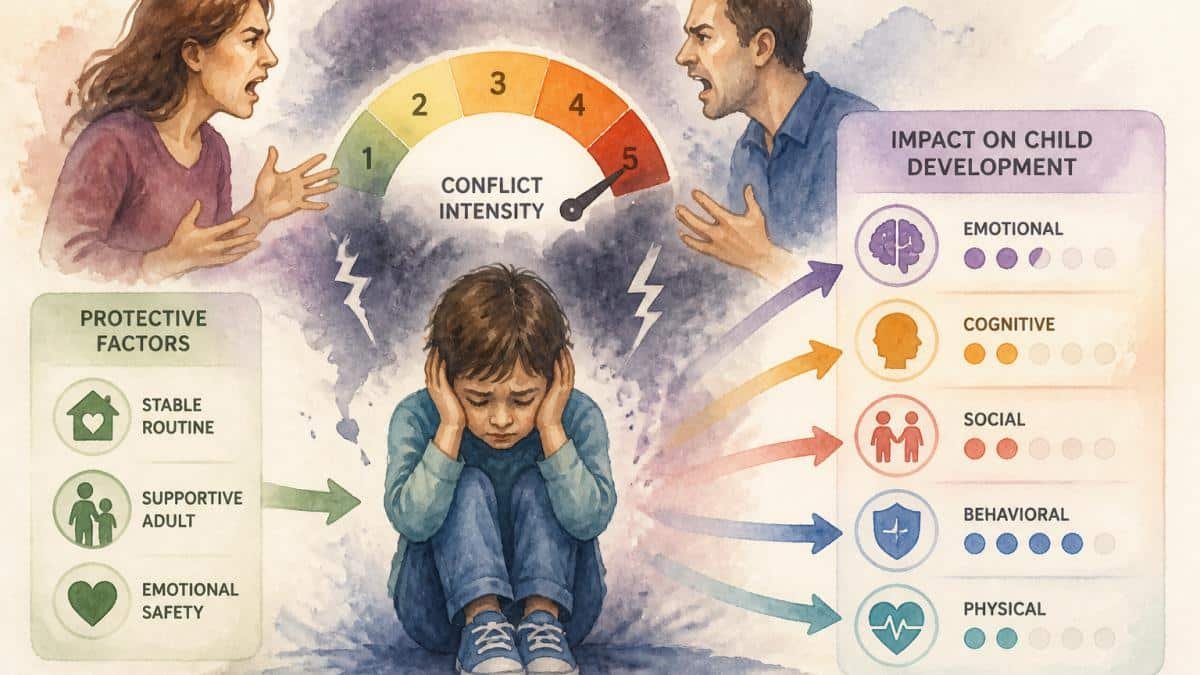
High-conflict transitions happen when parents are tense or argumentative. Your child absorbs this. Remove yourself from the equation as much as possible.
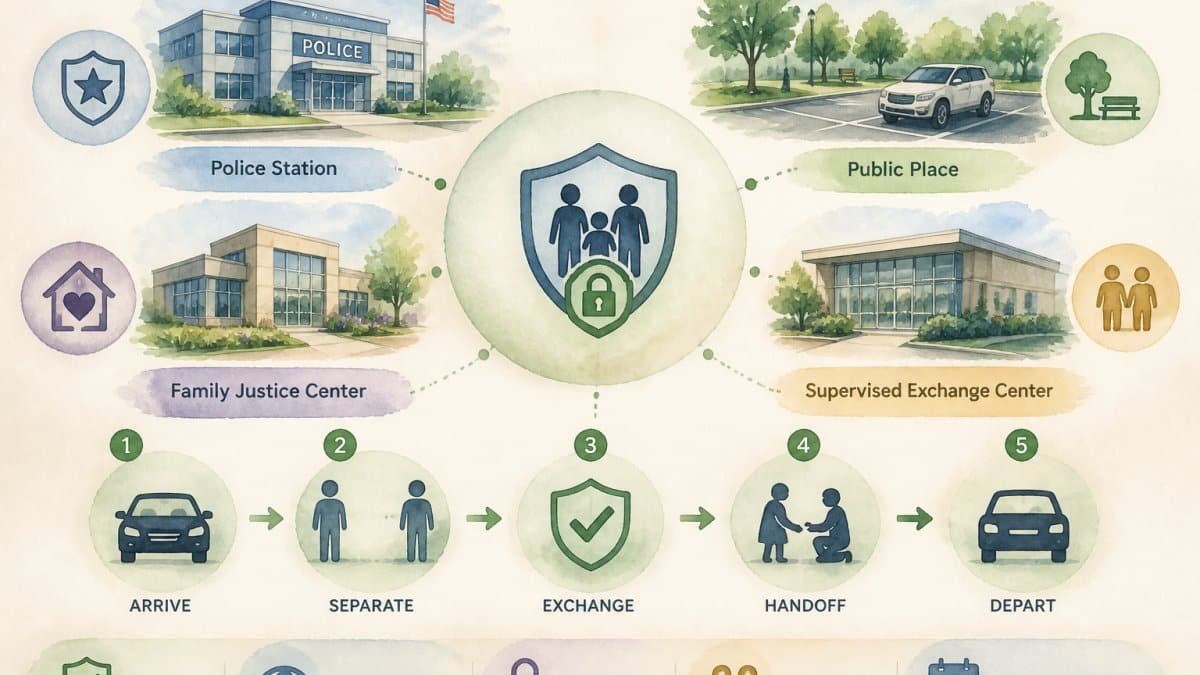
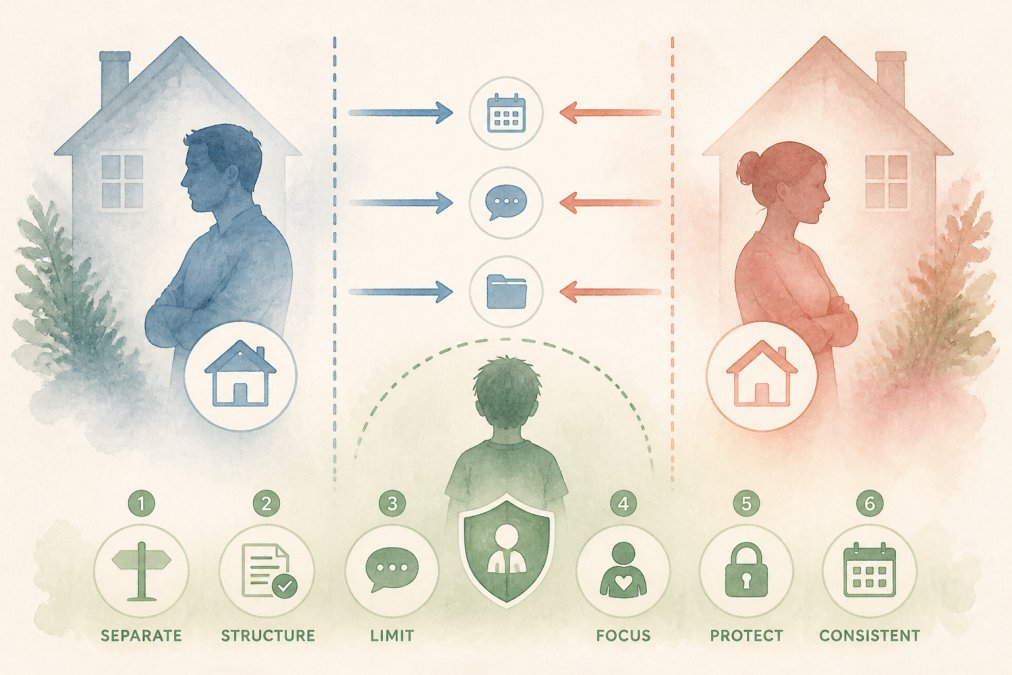
Meet at a public, neutral location. Keep communication in writing (text or email). Use a co-parenting app if possible. Agree on basic rules: no discussing the other parent in front of the child, no adult topics during exchanges, no new partners present, exchanges within 10 minutes of agreed time. If your ex is hostile, bring a support person. Document everything. The goal is to protect your child from conflict.
When to Seek Professional Support
Seek a therapist if your child shows anxiety or depression unresponsive to routine changes, refuses visits for more than two weeks, has nightmares or panic attacks, shows behavioral changes, talks about self-harm, or if the other parent is abusive. A family therapist can assess clinical anxiety or trauma, teach coping skills, and create a transition plan. Contact a family law attorney if your child is in danger or if one parent interferes with custody. Professional support is a sign you’re taking your child’s wellbeing seriously.
Conclusion
Managing child anxiety during custody transfers takes intention and structure. The framework is simple: establish routines, use clear communication scripts, reduce conflict, and seek help when needed.
Your child’s emotional wellbeing depends on feeling safe during transitions. When both parents work together, or at minimum, stay neutral, anxiety decreases. Consistency matters more than perfection.
If you’re navigating high-conflict co-parenting, remember that structured tools work. After the Affair Series offers frameworks and scripts designed specifically for these situations. The goal isn’t to eliminate all stress. It’s to give your child the predictability and safety they need to thrive during transitions.
Frequently Asked Questions
How can I help my child cope with anxiety during custody exchanges?
Create predictable rituals around the exchange (same time, same place, same goodbye routine). Use reassuring language that acknowledges the transition without minimizing feelings. Stay calm yourself, children absorb parental stress. Prepare your child in advance with simple, age-appropriate explanations. Use co-parenting scripts that keep exchanges brief and focused on the child’s needs rather than adult conflict. Consistency across both households reduces uncertainty and anxiety.
What are the signs of transition stress in children during custody transfers?
Watch for behavioral changes 24-48 hours before or after exchanges: sleep problems, appetite changes, clinginess, withdrawal, irritability, regression (thumb-sucking, accidents), or physical complaints like stomach aches. Older children may express anxiety directly or show resistance to visits. Some children display conflicting loyalties or emotional shutdown. These signs indicate your child is experiencing the cognitive dissonance of splitting time between two households. Document patterns and discuss them with the other parent using neutral communication.
How do I handle a child who refuses to go to the other parent’s house?
First, listen without judgment, refusal signals real distress, not manipulation. Identify the root cause: fear of abandonment, loyalty conflict, or specific concerns about the other parent’s home. Use calm, matter-of-fact language that normalizes the visit while validating feelings. Avoid bribing or punishing; instead, problem-solve together. If refusal persists, involve a child therapist to address underlying anxiety. Document the refusal and your response; genuine child anxiety requires therapeutic intervention.
Should I involve a therapist if my child is anxious about custody transfers?
Yes, if anxiety persists beyond the initial adjustment period, interferes with daily functioning, or escalates over time. A therapist helps your child develop coping mechanisms, process the reality of two homes, and build emotional regulation skills. Therapy also provides a neutral space to address loyalty conflicts or fears about either parent. Work with both parents to ensure therapeutic goals align with the custody arrangement. Therapeutic support can be beneficial for a child’s wellbeing.