Table of Contents
- What Is Parallel Parenting and When It Becomes Necessary
- Parallel Parenting vs. Co-Parenting: Key Differences
- Creating High-Conflict Co-Parenting Boundaries That Hold
- Parallel Parenting Communication Scripts for Difficult Exchanges
- Building Your Parallel Parenting Plan Template
- Protecting Children From Parental Conflict and Alienation
- Managing Your Emotional Triggers and Maintaining Detachment
- Legal Enforcement and Documentation for Parallel Parenting Orders
- Frequently Asked Questions
Last Updated: September 19, 2026
What Is Parallel Parenting and When It Becomes Necessary
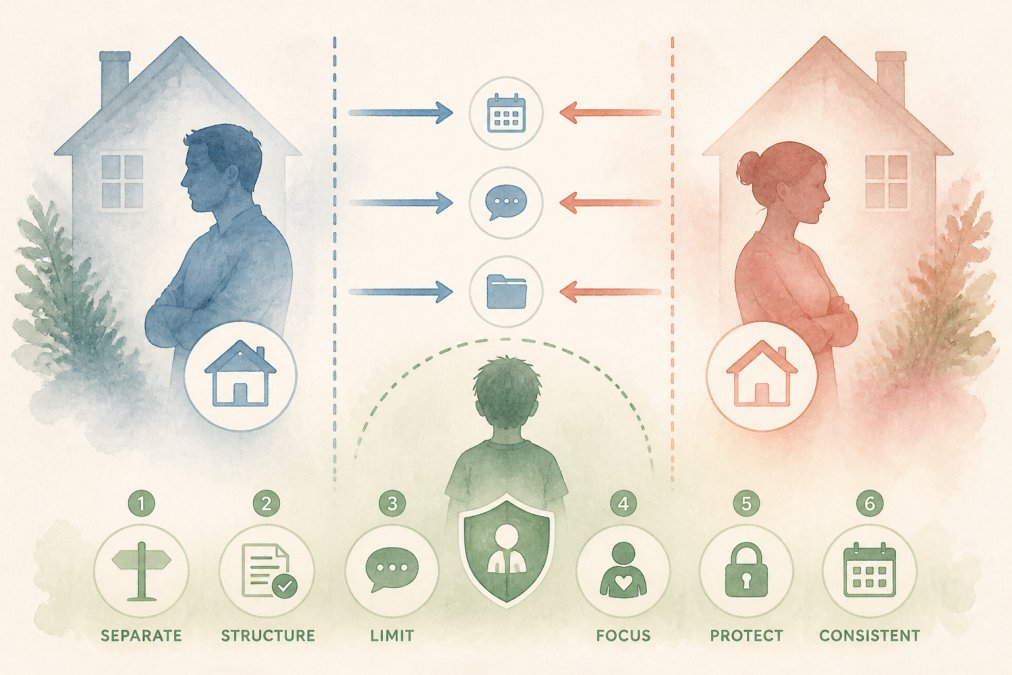
Parallel parenting is a structured co-parenting approach where separated parents minimize direct interaction and operate independently in their children’s lives. Learning how to parallel parent with a narcissist works best when traditional co-parenting breaks down due to high conflict, manipulation, or abuse. Instead of coordinating every decision together, each parent makes choices within their own custody time while following a detailed parenting plan.
The key difference is intentional disengagement. You’re not trying to build a friendly co-parenting relationship. You’re protecting your peace and your children’s emotional safety by creating clear boundaries that reduce opportunities for conflict.
When do you need parallel parenting? Consider this approach if:
- Your ex uses communication as a weapon to provoke, manipulate, or gaslight you
- Every conversation escalates into conflict regardless of your tone or approach
- Your ex refuses to respect boundaries or honor agreements
- You’re dealing with narcissistic behaviors like constant criticism, blame-shifting, or playing the victim
- Co-parenting apps and mediation haven’t worked
Parallel parenting isn’t failure. It’s a practical recognition that some relationships are too damaged for traditional cooperation. This framework, used by many separated parents navigating high-conflict situations, gives you permission to stop trying to make something work that fundamentally can’t.
Parallel Parenting vs. Co-Parenting: Key Differences
Co-parenting requires ongoing communication, shared decision-making, and a willingness to work together. Parallel parenting eliminates the expectation of cooperation entirely. You operate as separate parents in separate households, each making decisions independently.
Here’s where they diverge:
| Aspect | Co-Parenting | Parallel Parenting |
|---|---|---|
| Communication | Frequent and collaborative | Minimal and business-only |
| Decision-Making | Joint decisions on major issues | Each parent decides for their time |
| Conflict Level | Low to moderate | High or escalating |
| Emotional Engagement | Friendly or neutral | Deliberately detached |
| Best For | Respectful separations | Narcissistic or abusive dynamics |
Co-parenting assumes both parents prioritize the children’s needs over personal conflict. Parallel parenting assumes one or both parents cannot do this, so the structure protects children by limiting exposure to that conflict.
The emotional toll matters here. Co-parenting requires you to manage your feelings about your ex and stay collaborative. Parallel parenting lets you stop managing their behavior and focus only on your own parenting. Many parents find this shift deeply relieving.
Creating High-Conflict Co-Parenting Boundaries That Hold
Boundaries fail when they’re vague or when you enforce them inconsistently. Parallel parenting demands crystal-clear boundaries written into your parenting plan and enforced without exception.
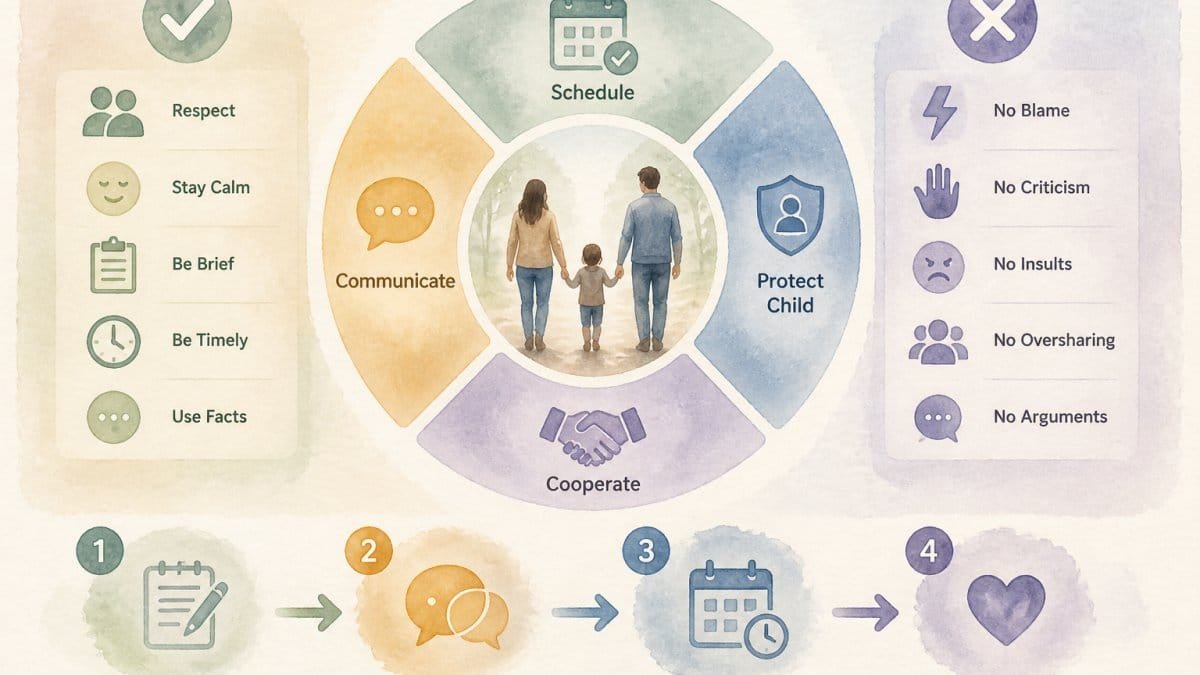
Start by defining what communication is and isn’t allowed:
- What counts as urgent: Medical emergencies only. A soccer game cancellation is not urgent.
- Communication method: Email or court-approved app only. No phone calls, texts, or surprise visits.
- Response time: Within 24 hours for non-urgent matters. Emergency responses within 2 hours.
- Topics allowed: Child-related logistics only. No discussion of finances, new relationships, or past grievances.
Write these into your custody agreement if possible. A court-ordered boundary is harder to violate than a verbal agreement.
Then enforce them without explanation or debate. Your ex will test your boundaries repeatedly, especially if they’re used to controlling you through conflict. When they try to pull you into an argument about why you won’t discuss something, you don’t explain. You simply don’t respond to that part of the message. Maintaining this silence preserves your peace and serves as a vital practice for setting healthy boundaries that eventually extend to all your difficult interpersonal relationships.
This feels cold. It is. That’s the point. Narcissists feed on emotional reactions. Remove the reaction, and you remove their power.
Parallel Parenting Communication Scripts for Difficult Exchanges
Most communication with a narcissistic ex will feel unnatural at first. You’re trained to explain, defend, and justify. Parallel parenting communication does none of those things.
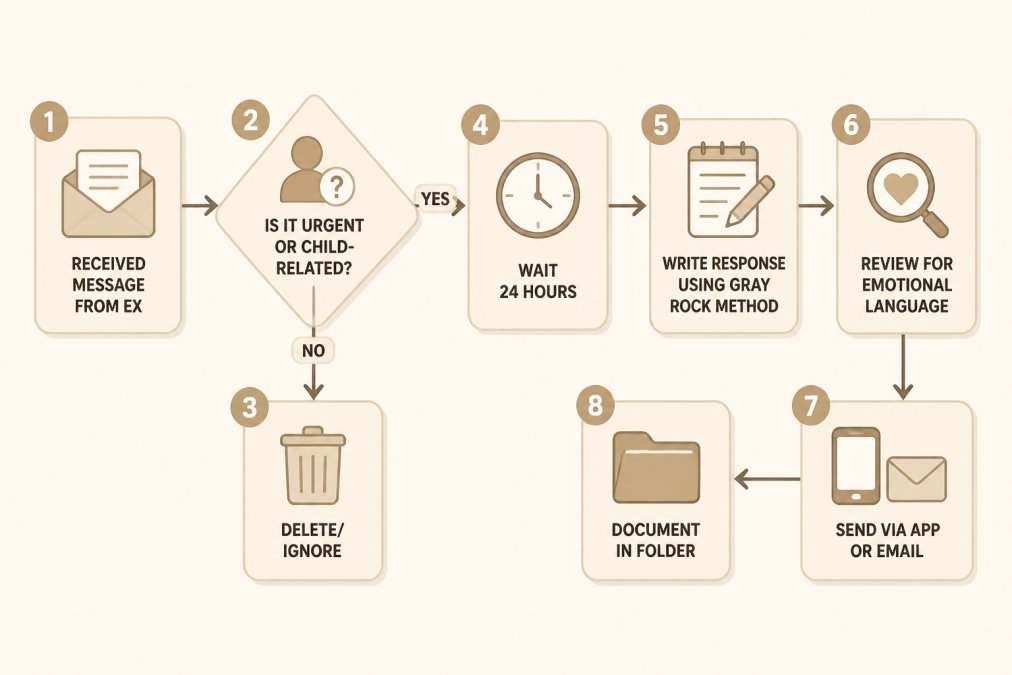
The Gray Rock Method in Practice
Apply it like this:
- Keep responses short: one to three sentences maximum
- Use neutral, flat language: “Understood” or “Noted” instead of “I disagree” or “That’s unfair”
- Never explain your reasoning or defend your choices
- Avoid emotional words: don’t say “I’m upset” or “You hurt me”
- Don’t ask questions that invite dialogue
- End the conversation: “I’ll handle this on my time. No further discussion needed.”
Example exchange:
Your ex: “You’re poisoning the kids against me. You told them I’m irresponsible.”
Written Communication Only: Documentation as Protection
Written communication only means every exchange is documented. This protects you legally and emotionally. You can’t be misquoted in an email. You have proof of what was said and when.
Benefits of written-only communication:
- You have time to craft responses instead of reacting in the moment
- You can consult your support system before responding
- Your ex can’t claim you said something you didn’t
- A judge can review the entire conversation history if needed
- You naturally write less emotionally than you speak
Building Your Parallel Parenting Plan Template
A parallel parenting plan is more detailed than a standard custody agreement. It removes ambiguity that narcissists exploit.
Your plan should include:
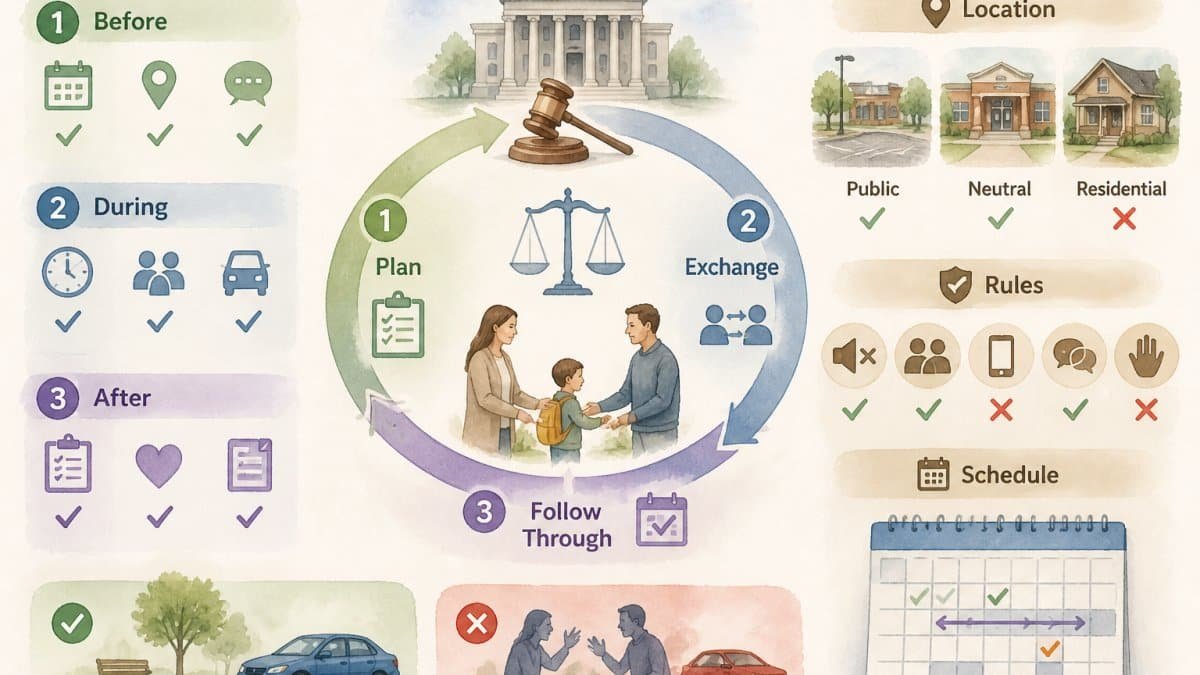
- Custody schedule: Exact dates, times, and pickup/drop-off locations with no flexibility
- Decision-making authority: Who decides about school, medical care, activities, religion for each parent’s time
- Communication protocol: Methods allowed, response times, topics off-limits
- Financial arrangements: Child support, medical expenses, activity costs, how disputes are resolved
- Conflict resolution: If disagreements arise, go straight to mediation or court, no negotiation between parents
- Special occasions: Exactly how holidays, birthdays, and vacations are split
- Parental alienation clause: Specific language prohibiting badmouthing, limiting discussion of the other parent, or using children as messengers
Protecting Children From Parental Conflict and Alienation
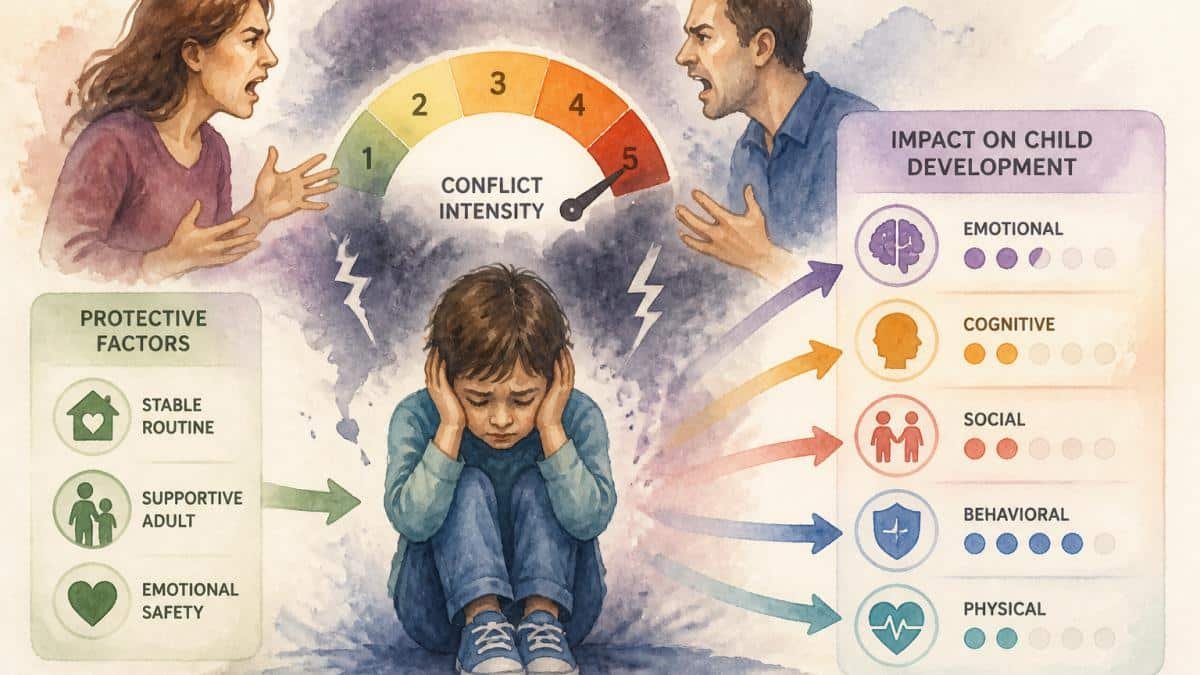
Children caught between warring parents experience real trauma. They feel responsible for the conflict, guilty for loving both parents, and anxious about which parent will be angry next. Parallel parenting reduces this exposure by keeping conflict away from them.
Implement these protections:
- Never discuss your ex with your children. Not their flaws, not the divorce, not why you separated. Children need to form their own relationship with both parents without your interference.
- Don’t use children as messengers. “Tell your dad…” or “Your mom said…” puts them in the middle. Use the app or email instead.
- Keep your home a safe space. No venting about your ex to friends while kids are present. No angry rants. No subtle criticism disguised as a joke.
- Validate their feelings about both parents. If they say “Dad yelled at me,” don’t agree. Say: “That sounds frustrating. What happened?”
- Don’t interrogate them. Asking detailed questions about the other parent’s house, relationships, or activities teaches kids to spy and report. It damages their trust in both parents.

Managing Your Emotional Triggers and Maintaining Detachment
Understanding how to parallel parent with a narcissist only works if you stay detached. The moment you engage emotionally, you’ve lost the structure. Your ex will sense it and escalate to pull more reactions from you.
- Criticism of your parenting
- Lies or distortions about what happened
- Threats to take the children
- Dismissal of your feelings or experiences
- Comparisons to a new partner
- Reminders of past betrayals
Use these coping strategies:
- Remind yourself of the goal: You’re protecting your children and your peace, not winning an argument.
- Reframe the message: Your ex’s words say nothing about you. They reveal what your ex is thinking and feeling.
- Use the “so what” test: If your ex is right about the criticism, does it change what you’re doing? If not, it doesn’t matter.
- Practice detachment: Imagine your ex’s words bouncing off you like rain on a window. They’re not sticking.
Legal Enforcement and Documentation for Parallel Parenting Orders
A parallel parenting plan without legal teeth is just a suggestion. Your ex can ignore it whenever they want. A court-ordered parallel parenting plan is enforceable.
Work with a family law attorney to:
- Get the plan in writing as part of your custody order, not just a handshake agreement
- Include specific violation consequences: What happens if your ex violates the communication protocol or decision-making boundaries?
- Build in enforcement mechanisms: If disputes arise, the plan should specify mediation or court intervention, not negotiation between parents
- Document everything: Keep records of every violation, missed pickups, boundary violations, inappropriate communication, breaches of the agreement
Frequently Asked Questions
What is the difference between co-parenting and parallel parenting?
Co-parenting assumes both parents can communicate effectively and prioritize the child’s needs together. Parallel parenting is used when high-conflict or narcissistic behavior makes joint decision-making impossible. In parallel parenting, each parent makes independent decisions during their custody time, minimizes direct communication, and uses written-only exchanges. This approach reduces conflict exposure to children and removes the narcissist’s ability to manipulate conversations in real time.
How do I set boundaries with a narcissistic co-parent using parallel parenting communication scripts?
Use the gray rock method: keep responses short, emotionless, and factual. Scripts should focus on logistics only (pickup times, medical appointments, school events) without engaging in arguments or explanations. Example: Instead of ‘You’re always late and it’s unfair to the kids,’ write ‘Pickup is at 6 PM on Fridays. Please confirm receipt.’ Document all communication in writing through email or a co-parenting app. This removes opportunities for the narcissist to twist your words or escalate emotionally.
What should I include in a parallel parenting plan template to protect my children?
A parallel parenting plan template should specify: custody schedule with exact times, each parent’s decision-making authority during their time, communication method (email only, no phone calls), response time expectations (24-48 hours), financial responsibilities, school and medical decision rights, and consequences for violations. Include a clause requiring court-ordered mediation or arbitration before either parent changes the plan. This structure removes ambiguity, prevents manipulation, and gives you legal grounds to enforce compliance if the narcissist violates the agreement.
How can I protect my children from the effects of a narcissistic parent while parallel parenting?
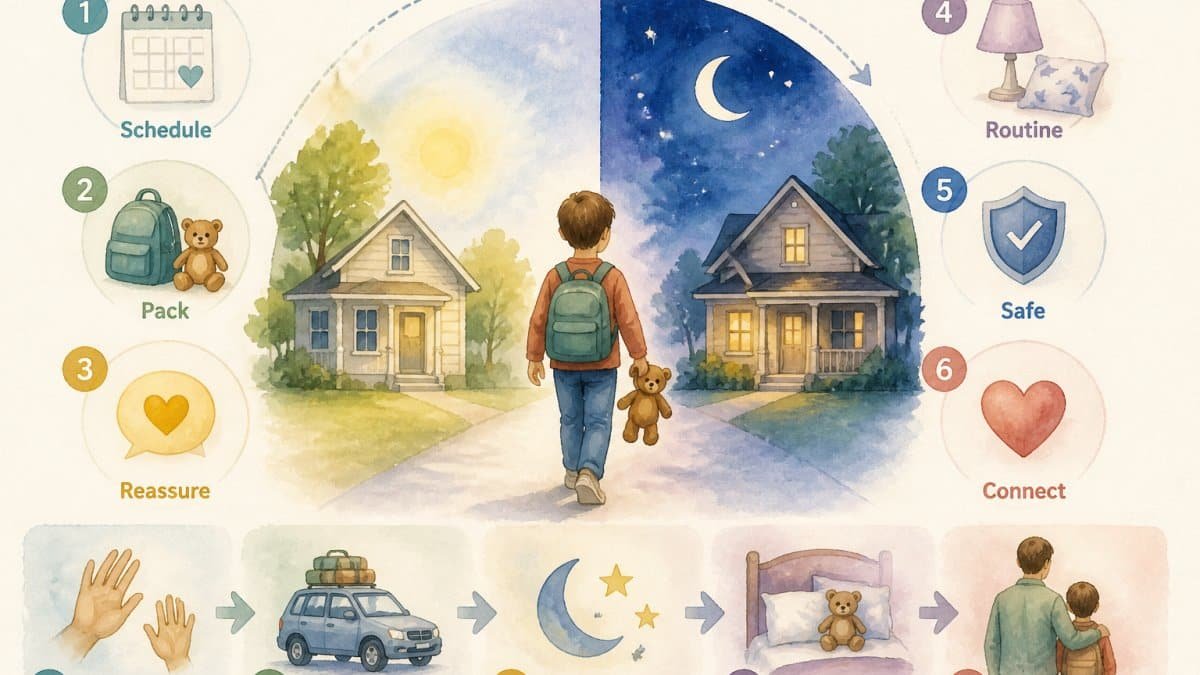
Maintain emotional neutrality about the other parent in front of your children, even if you’re angry. Never discuss the custody conflict or the other parent’s behavior with your child. Focus on validating their feelings (‘It’s okay to feel confused’) without blaming either parent. Use age-appropriate language to explain why parallel parenting exists (‘We make separate decisions now to keep things calm’). Provide consistent routines, emotional safety, and reassurance that the conflict is not their fault. Consider family therapy to help your child process the situation.