Last Updated: October 4, 2026
Table of Contents
What Is a Safe Custody Exchange and Why It Matters
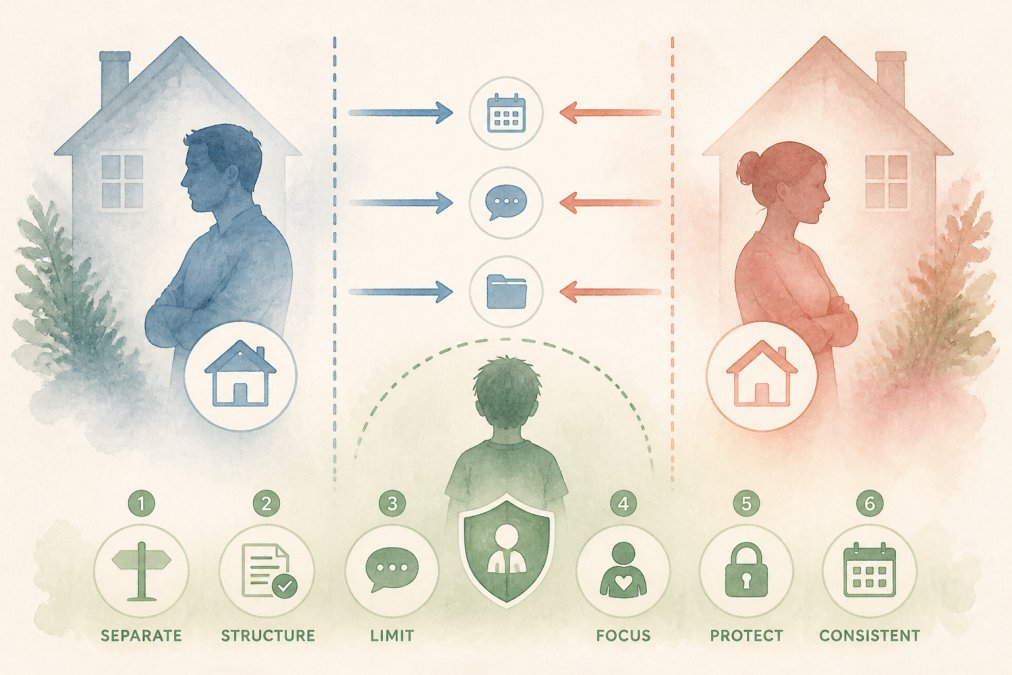
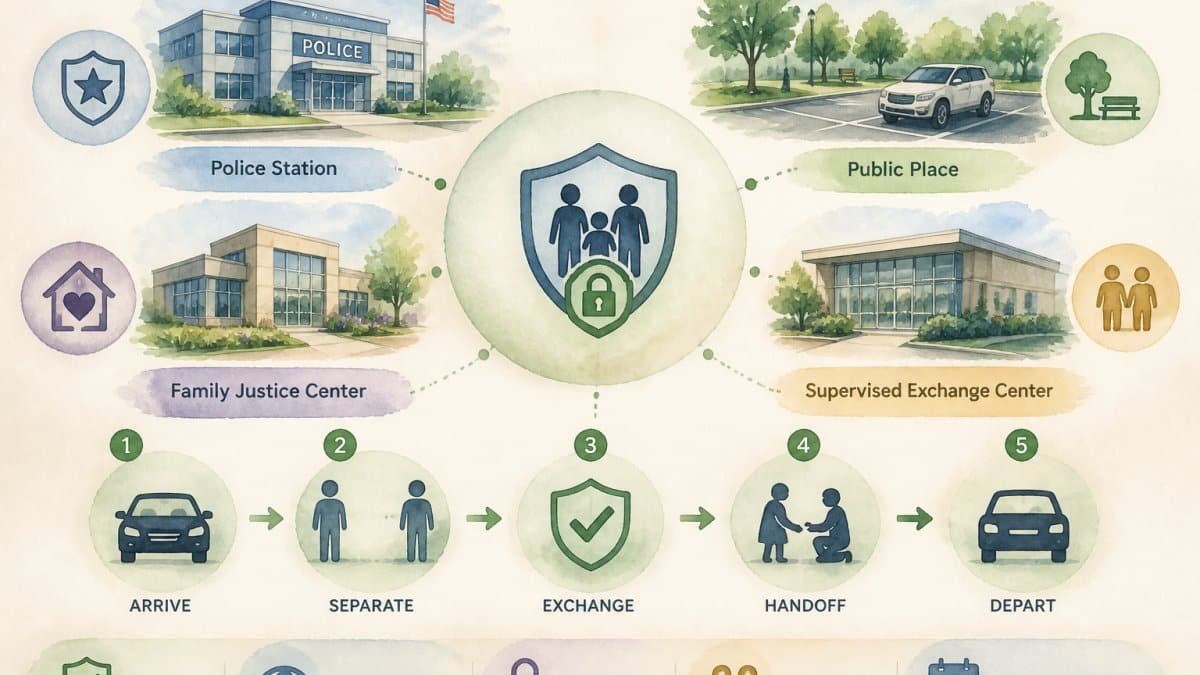
A safe custody exchange is a structured, supervised process where parents transfer parenting time with their child in a secure location without direct contact.
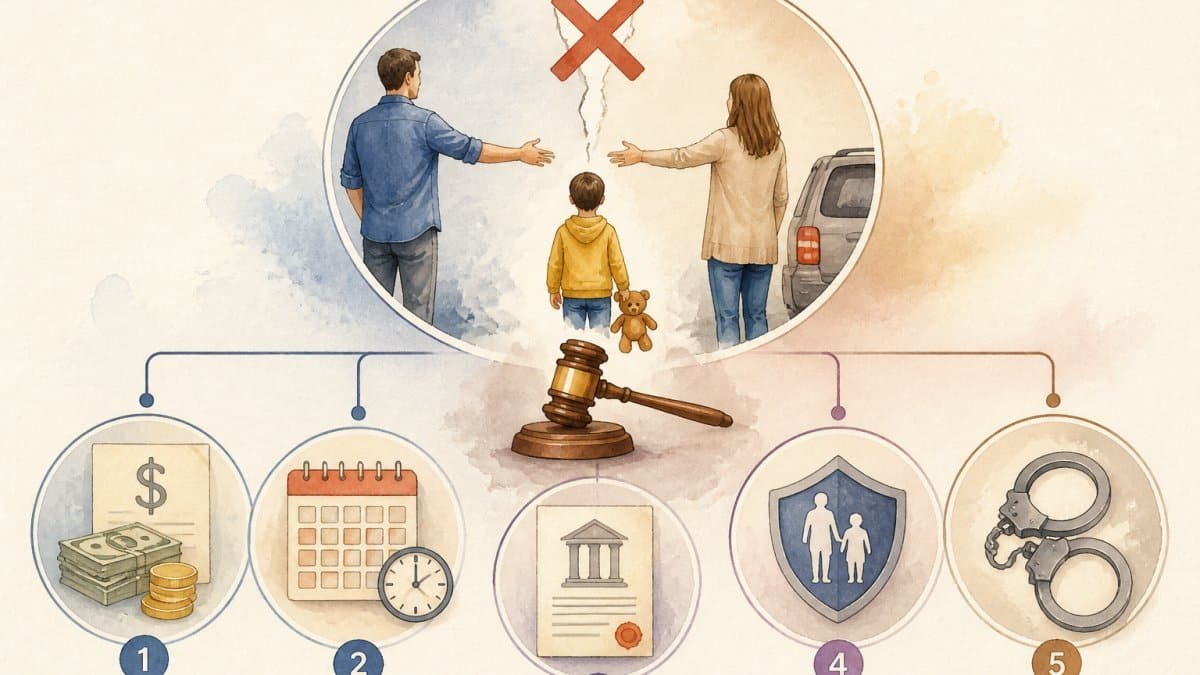
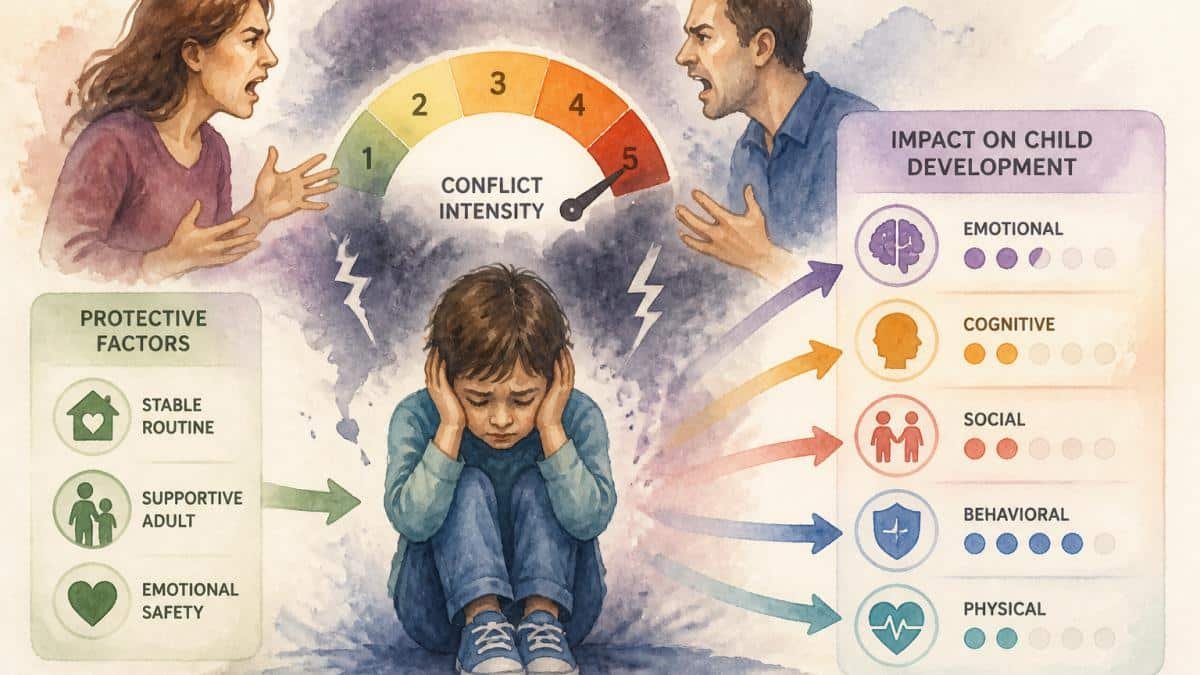
When domestic violence or high-conflict situations exist, a standard custody exchange can become dangerous. One parent may use the handoff as an opportunity for intimidation, verbal abuse, or physical confrontation. Children witness this tension and absorb the stress.
The purpose is simple: keep everyone safe. For the noncustodial parent, it means you can exercise parenting time without fear. For the custodial parent, it means your child transfers to the other parent’s care in a controlled environment.
Many families don’t realize this option exists until they’re already in crisis. The sooner you know about safe custody exchange services in your area, the sooner you can reduce stress for everyone involved.
How Supervised Visitation and Safe Exchange Centers Differ
These terms are sometimes used interchangeably, but they serve different purposes.
Supervised visitation means a trained monitor is present during the entire visit between parent and child. The monitor observes the interaction, takes notes, and ensures the child’s safety throughout.
A safe exchange center focuses only on the transfer. The child arrives with one parent, spends a few minutes in a neutral space, and leaves with the other parent. Staff ensure both parents stay separated and the exchange happens smoothly.
Which one you need depends on your situation. If you’re concerned about what happens during visits, supervised visitation is appropriate.
Many people use both. A court might order supervised visitation for the actual parenting time and also require use of a safe exchange center for all transfers. This layered approach addresses both the handoff and the visit itself.
How to Find Safe Child Custody Exchange Services in Your Area
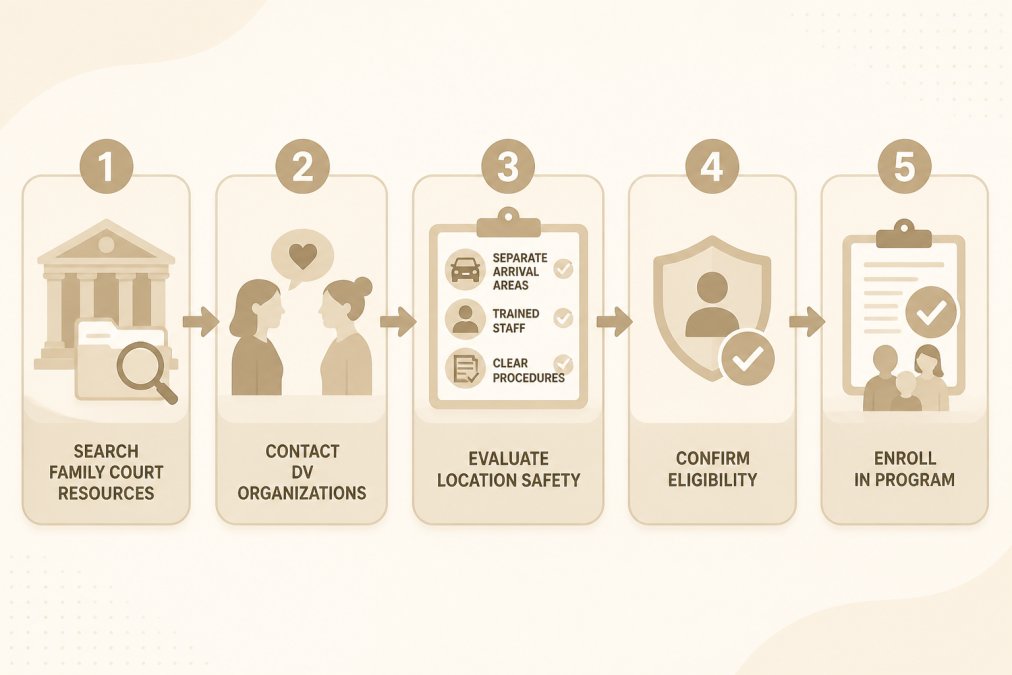
Finding a safe custody exchange location takes effort, but the process is straightforward. Here’s how to search systematically.
Step 1: Search Local Family Court Resources
Start with your county or district family court. Most courts maintain directories of local services, including safe exchange programs.
Call the family court clerk’s office and ask: “Do you have a list of safe custody exchange programs or visitation centers in this county?” Many courts have printed directories or online listings. Some staff can direct you to the specific program that serves your area.
If your court doesn’t have a list, ask for the contact information for the family court judge’s office or the court’s social services coordinator. They often know which programs operate locally.
Step 2: Contact Domestic Violence Organizations
Domestic violence agencies almost always know about safe exchange services. They work with families in crisis and maintain current referral lists.
Search online for domestic violence organizations in your state or county. Call the main number and ask to speak with someone who handles custody or safety planning. Explain your situation briefly, you need a safe place for child custody exchanges. They’ll point you to programs in your area.
Many domestic violence hotlines also have this information. If you call the National Domestic Violence Hotline at 1-800-799-7233, staff can provide referrals specific to your location and help you think through safety planning (Careers at The Hotline).
Step 3: Evaluate Location Safety and Services
Not every program is the same. Before enrolling, evaluate what the center actually offers.
Ask these questions:
- Does the center have separate waiting areas so parents don’t see each other?
- What happens if a parent arrives late or doesn’t show up?
- Can you request a specific staff member to supervise the exchange?
- What is the cost, and are sliding-scale fees available?
- How long is the typical exchange process?
- Are there restrictions on what the child can bring between homes?
- What happens if a parent violates the safety procedures?
Visit the location in person if possible. Walk through the space. Does it feel safe? Are there clear exits? Is staff present and alert? Your gut instinct matters here.
Creating a Domestic Violence Custody Exchange Safety Plan
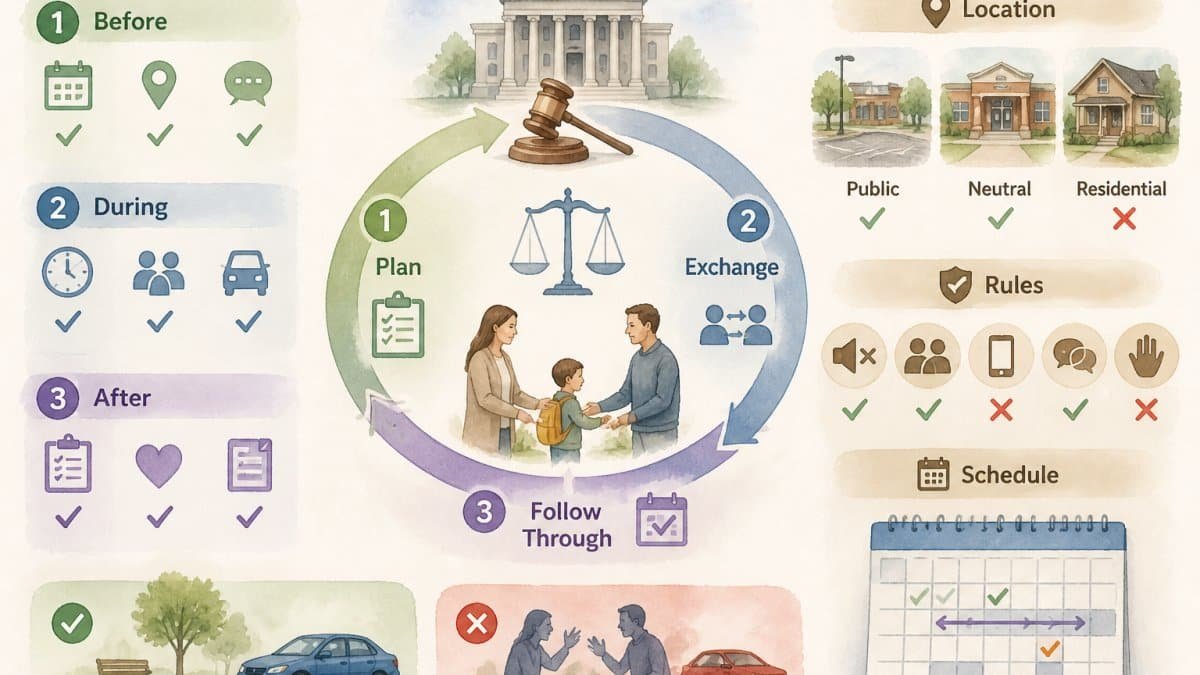
A safety plan for custody exchanges goes beyond just using a center. It covers what you do before, during, and after the handoff.
Before the Exchange
Prepare your child emotionally and logistically before you arrive.
- Tell your child what to expect in age-appropriate language: “We’re going to meet at a safe building. You’ll spend time with Mom/Dad there, and then come back with me.”
- Pack only what your child needs for the visit. Avoid sending expensive items or anything that could become a point of conflict.
- Arrive 10-15 minutes early so you’re not rushed or flustered.
- Check your emotional state. If you’re angry or anxious, your child will sense it. Take a few deep breaths before entering.
- Have your phone charged and accessible in case you need to contact staff or emergency services.
- Wear neutral clothing, nothing that might provoke the other parent or distract from the exchange itself.
During the Exchange
Stay focused on the child’s safety and the process.
- Greet staff and follow their instructions exactly. They’ve done this hundreds of times and know what works.
- Keep conversations with the other parent minimal and neutral. Use the Gray Rock Method if needed, respond in short, boring sentences with no emotion.
- Don’t hand the child directly to the other parent. Let staff facilitate the transition.
- If the other parent becomes aggressive or violates the rules, step back and alert staff immediately. Don’t escalate.
- Keep the exchange brief. The longer you’re in the same space, the higher the risk of conflict.
- Document the exchange time and any unusual behavior. Many centers do this automatically, but you should keep your own notes.
After the Exchange
The work doesn’t stop when the exchange ends.
- Don’t interrogate your child about the visit. Let them settle in first.
- If your child seems distressed, comfort them but don’t ask leading questions like “Did Mom/Dad say anything mean?” Let them share what they want to share.
- Save any observations about your child’s emotional state or physical condition in a secure location. If safety concerns arise later, you’ll have a record.
- Don’t use the exchange as an opportunity to pass messages to the other parent. Use email or a co-parenting app instead.
- Stick to the schedule. Arriving on time and picking up on time shows respect for the process and reduces tension.

Custody Exchange Documentation and Legal Considerations
Courts care about documentation. If you ever need to modify custody or prove that exchanges are happening safely, you’ll need a record.
Keep a log of every exchange. Include the date, time, who was present, any unusual behavior, and how your child seemed before and after. Many safe exchange centers provide this documentation automatically.
If the other parent violates the exchange procedures, arriving intoxicated, becoming aggressive, arriving late repeatedly, document it. Save emails, text messages, and notes. Take photos of anything relevant (bruises, damage to property, etc.).
Court orders that require safe custody exchange services are legally binding. If either parent refuses to use the center or violates the rules, it’s a violation of the court order.
Never modify the exchange arrangement without court approval, even if the other parent agrees. A casual agreement can create legal ambiguity later. Get any changes in writing through the court.
What to Do When No Dedicated Exchange Program Exists Nearby
Some areas don’t have formal safe exchange centers. If you’re in a rural location or a county with limited services, you have options.
Use a public location with staff present. A police station lobby, library, or courthouse is neutral ground with witnesses and authority figures nearby.
Ask a trusted third party to supervise. A family member, friend, or mediator can facilitate the exchange in a neutral location.
Use a co-parenting app with timestamped exchanges. Apps like OurFamilyWizard document all communication and can include notes about exchanges. While this doesn’t replace in-person supervision, it creates a record and encourages accountability.
Request a court-ordered modification. If no safe exchange program exists and the situation is genuinely unsafe, ask your attorney to petition the court for a modification.
The key is that you have options. Don’t assume that because a formal program doesn’t exist, you’re stuck with unsafe exchanges.
Eligibility, Court Orders, and Getting Started
Not everyone qualifies for a safe exchange center, though most people in high-conflict or domestic violence situations do.
Typical eligibility includes:
- A history of domestic violence or abuse in the relationship
- High-conflict co-parenting with a documented pattern of hostility
- A protective order or restraining order in place
- A court order specifically requiring safe exchanges
- Situations where direct contact between parents creates safety concerns
Some centers accept self-referrals. You can call and request services without a court order. Others require a referral from a family court judge, a domestic violence agency, or an attorney.
If you have a court order requiring safe custody exchange, bring it to the center. The staff will understand the legal requirement and ensure compliance. If you don’t have a court order but believe you need services, ask the center about their self-referral process.
Getting started typically involves:
- Completing an intake form with basic information
- Providing contact details for both parents
- Explaining the safety concern briefly
- Reviewing the center’s policies and fees
- Scheduling your first exchange
Be honest about the situation. The more staff understands, the better they can support you.
Conclusion
A safe custody exchange removes one major source of conflict from an already difficult situation. Whether you use a formal center, a public location, or a trusted third party, the goal is the same: keep your child and yourself safe during the handoff.
Start by calling your family court or a local domestic violence organization. They know what services exist in your area and can guide you through the enrollment process. If no formal program exists nearby, you still have options, public locations, trusted supervisors, and documented exchanges all create safety and accountability.
The exchange itself is just a few minutes long, but those minutes matter. They set the tone for your child’s visit and protect everyone involved from conflict and harm. Taking the time to arrange a safe process is one of the most important decisions you can make for your family’s wellbeing.
Frequently Asked Questions
What is the difference between supervised visitation and a supervised custody exchange?
Supervised visitation involves a trained monitor overseeing the entire visit between a parent and child in a safe facility. A supervised custody exchange is limited to the transfer of the child between parents, with staff ensuring safe arrival and departure but not monitoring the visit itself. Exchange services typically take 15-30 minutes, while supervised visitation can last several hours. Both prioritize child safety and prevent direct contact between parents in high-conflict or domestic violence situations.
How can I find a safe location for a custody exchange when domestic violence is a concern?
Start by contacting your family court clerk’s office for a list of approved exchange centers in your area. Local domestic violence organizations, women’s shelters, and victim advocacy groups often operate or can recommend safe exchange programs. Call ahead to confirm they serve your county, check their hours and eligibility requirements, and ask about their safety protocols, including separate arrival times and staff supervision. Many programs are free or low-cost for families affected by domestic violence.
Can a court order parents to use a supervised exchange center?
Yes. Family courts frequently include supervised custody exchange or supervised visitation requirements in custody orders when domestic violence, child abuse, or safety concerns are documented. The court may specify which facility to use or leave the choice to parents. If your situation involves safety risks, you can request this accommodation from the judge. A court order typically strengthens your ability to enforce the arrangement and may qualify you for free or subsidized services.
What should I do if I feel unsafe during a custody exchange?
If you feel threatened or unsafe during an exchange at any location, alert staff immediately. Designated exchange centers have protocols for this, including separating parents and contacting law enforcement if needed. Document the incident in writing with dates, times, and details. If the unsafe behavior continues, report it to the court and request a modification to your custody order. If you’re in immediate danger, call 911. Never attempt to prevent a scheduled exchange without a court order; instead, work with your attorney to seek legal protection.