Table of Contents
- Why Activities Help Reduce Child Anxiety After Divorce
- Activities for Children Dealing With Divorce: An Age-Banded Plan
- How to Reassure a Child After Divorce: Scripts and Daily Habits
- Routines for Children After Separation That Calm the Nervous System
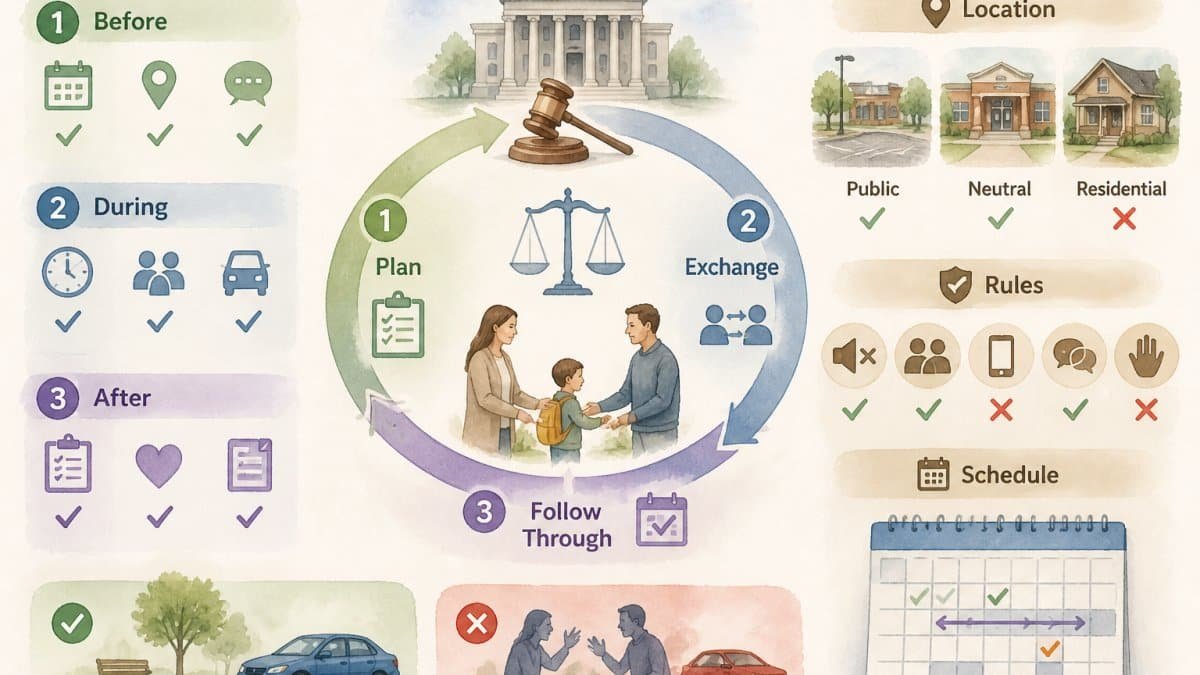
- Handoff Activities That Ease Separation Anxiety Between Two Homes
- When Activities Are Not Enough: Therapy for Children of Divorce
- Keeping Activities Consistent Across Both Households
- Conclusion
- Frequently Asked Questions
Last Updated: October 17, 2026
Why Activities Help Reduce Child Anxiety After Divorce
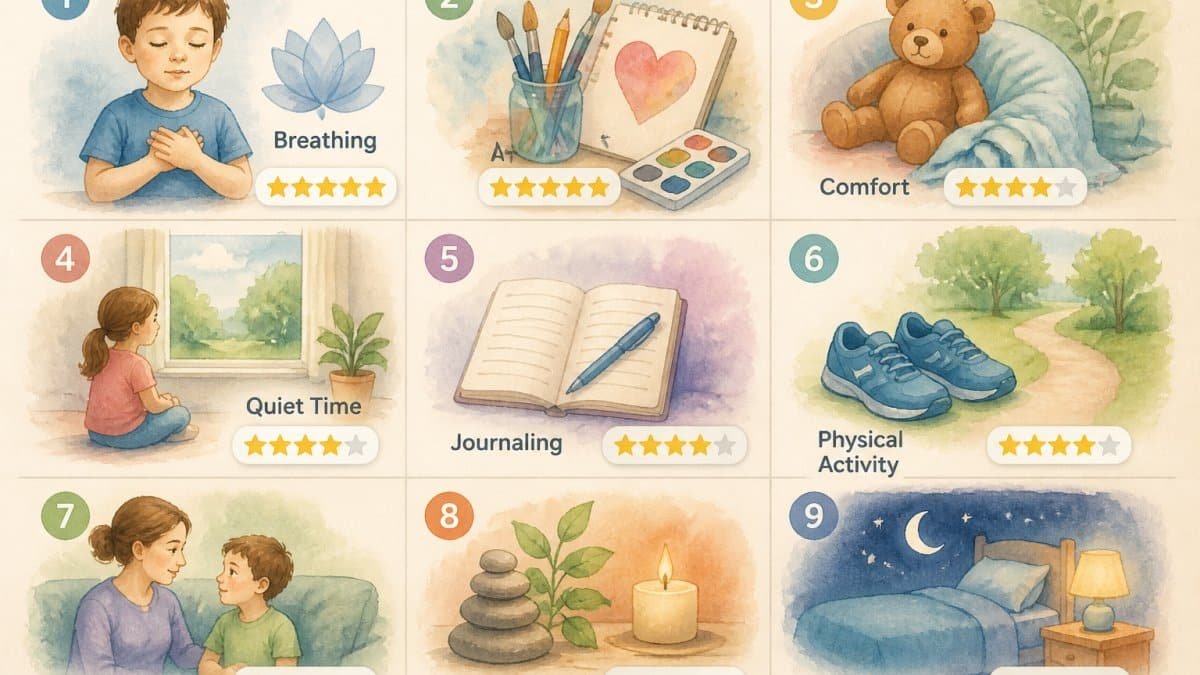
Children often can’t put big feelings into words. Activities to reduce child anxiety after divorce work best here: play, drawing, and routine give a child a safe outlet when talking feels too hard.
At After the Affair Series, we build scripts and tools for parents in high-conflict separations.
Child anxiety after a split is normal, not a sign you failed, but a sign your child needs steady, repeated reassurance. Structure, predictability, and small moments of connection help.
Activities work best when they’re repeated, not perfect. Ten minutes of the same calming routine each night beats one big “talk” about the divorce.
Signs Your Child Is Struggling With the Separation
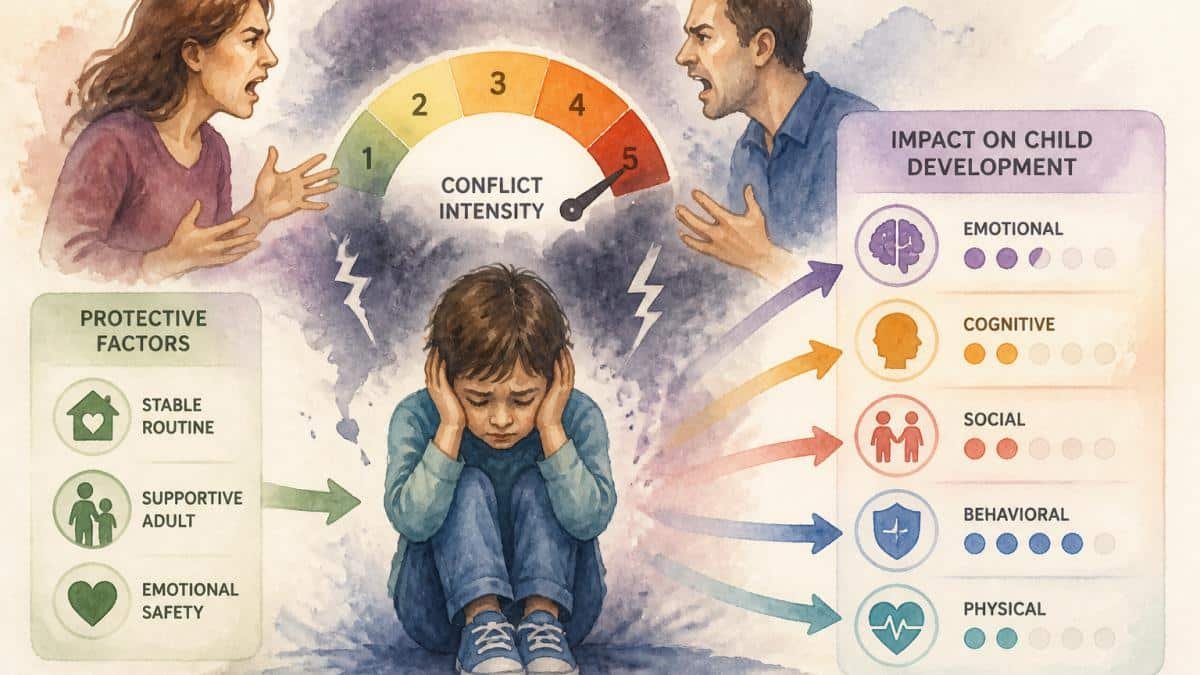
Watch for changes, not drama. Most kids show distress through behavior, not words.
Common signs include:
- Trouble sleeping or new bedtime fears
- Stomachaches or headaches before school
- Clinginess at handoffs
A common mistake is waiting for a child to “bring it up.” Most won’t; they show you with their body and behavior. If several signs stack up and last more than a few weeks, take them seriously, we cover professional support later.
Activities for Children Dealing With Divorce: An Age-Banded Plan
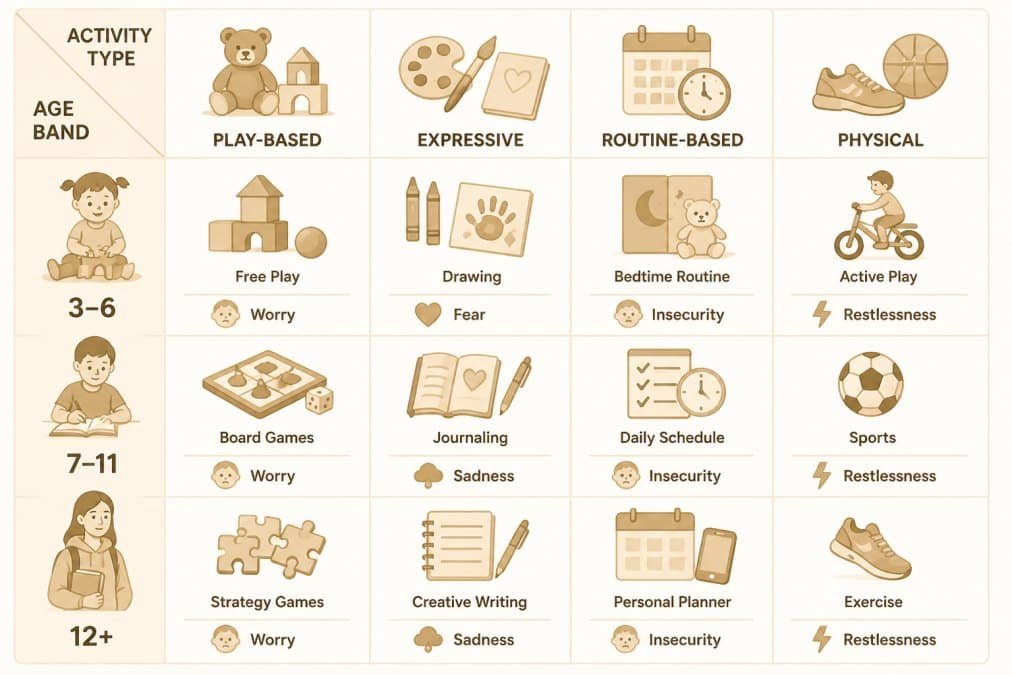
Match the activity to the child’s age, not the parent’s comfort level. Each activity below lists materials, time, steps, and the anxiety symptom it targets.
Here’s the quick map we use:
| Age Band | Best Activity Types | Targets This Symptom |
|---|---|---|
| Ages 3-6 | Play, puppets, predictable routines | Separation anxiety, bedtime fear |
| Ages 7-11 | Feelings charts, shared journals, team sports | Worries, withdrawal, low mood |
| Ages 12+ | Choice, control, low-pressure check-ins | Anger, control battles, isolation |
Ages 3-6: Play, Puppets, and Predictable Comfort
Young children process big changes through play. Give them a puppet or two stuffed animals and let them act out a “mommy bear goes away and comes back” story.
1. The Reunion Puppet Story
- Materials: two stuffed animals or hand puppets, a blanket for a “house”
- Time: 10 minutes, same time each day
- Steps:
- Set up the blanket as the home.
- Have one animal leave for “work” and say goodbye.
- Let your child make the other animal feel sad, mad, or scared.
- Bring the first animal back and say the same line every time: “And she always comes back.”
- Let your child repeat the story as many times as they want.
2. Draw the Two Homes
- Materials: crayons, two sheets of paper
- Time: 15 minutes
- Steps:
- Draw a simple house on each sheet.
- Ask your child to put the people and pets they love in each house.
- Hang both drawings where your child can see them.
3. The Comfort Object That Travels
- Materials: a small blanket, toy, or photo keychain
- Time: ongoing
- Steps:
- Let your child pick the object.
- Pack it in the bag for every handoff.
- Say the same line at drop-off: “Your bear goes with you, and so does my love.”
Keep sessions around 10 minutes. The goal is repetition, not a breakthrough.
Let your child lead the puppet play. If the story gets dark or angry, stay calm and follow along. The play is the release valve.
Ages 7-11: Feelings Charts, Shared Journals, and Team Sports
School-age kids can name feelings but rarely volunteer them. Give them a tool instead of an interrogation.
1. The Nightly Feelings Chart
- Materials: a printed grid with faces or words (happy, worried, angry, calm, tired), a marker, a sticker
- Time: 2 minutes at bedtime
- Steps:
- Post the chart on the fridge or bedroom door.
- Each night, ask your child to point to one face.
- Say only: “Thanks for telling me.” No follow-up questions.
- Add a sticker for each night completed.
2. The Shared Journal
- Materials: one notebook, two pens
- Time: 5 minutes, two or three times a week
- Steps:
- You write a short note first, two or three sentences.
- Leave the journal on your child’s pillow.
- Your child writes back when ready.
- Never demand a response; the journal is an invitation, not homework.
3. The Worry Box
- Materials: a shoebox, paper, a slot cut in the lid
- Time: 10 minutes to set up, 1 minute per use
- Steps:
- Decorate the box together.
- When a worry shows up, write it on paper and drop it in.
- Once a week, open the box together and decide which worries need action and which can stay in the box.
4. Team Sports or Martial Arts
- Materials: sign-up for one activity your child chooses
- Time: one practice or class per week
- Why it works: physical activity burns off adrenaline, and a team gives a predictable social routine outside the family conflict.
Ages 12+: Control, Choice, and Low-Pressure Check-Ins
Teens need a sense of control. Anxiety after divorce often shows up as anger or shutdown, not tears.
1. The Choice Menu
- Materials: a short written list of choices
- Time: 5 minutes to set up
- Steps:
- Write down choices that are truly yours to give: which nights to call the other parent, how to set up their room in each home, whether to join a family dinner or eat later.
- Offer two options at a time, not an open-ended question.
- Honor the choice unless it is unsafe.
2. The Side-by-Side Check-In
- Materials: none
- Time: 10 minutes in the car or on a walk
- Steps:
- Invite your teen on an errand or a walk.
- Ask one open question: “Do you want to talk, or do you want company while you scroll?”
- Accept either answer.
- Keep the conversation side-by-side, not face-to-face.
3. The Two-Week Worry Log
- Materials: a notes app or a small notebook
- Time: 3 minutes a day
- Steps:
- Ask your teen to jot one worry and one thing that helped.
- Review it together every two weeks, only if they agree.
- Use the log to spot patterns, such as worries that spike before school or before handoffs.
One activity, repeated for two weeks, beats five activities tried once. Pick the one that matches your child’s age and the symptom you see most, and let it become routine before adding another.
How to Reassure a Child After Divorce: Scripts and Daily Habits
Reassurance is a habit, not a single conversation. Kids need to hear the same calm message many times before it sticks.
Use short, clear scripts:
- “Both of us love you. That will never change.”
- “The divorce is about us, not about you.”
- “You can ask me anything, anytime.”
Pair words with daily habits:
- A hug and a specific compliment each morning
- One shared meal without phones
- A two-minute check-in at bedtime
After the Affair Series offers 50+ age-appropriate scripts for children, built for exactly these moments, taking the pressure off you when your own emotions are running high.
Routines for Children After Separation That Calm the Nervous System
Predictability is the antidote to anxiety. When home life feels chaotic, routines tell a child’s brain: you are safe here.
Protect these anchors in both homes:
- Bedtime: same wind-down order every night (bath, book, lights out)
- Meals: regular times, even if the menu is simple
- Discipline: consistent rules and consequences across households
A common mistake is loosening routines out of guilt. Kids read that as instability. Keep the structure, and add extra warmth inside it.

Handoff Activities That Ease Separation Anxiety Between Two Homes
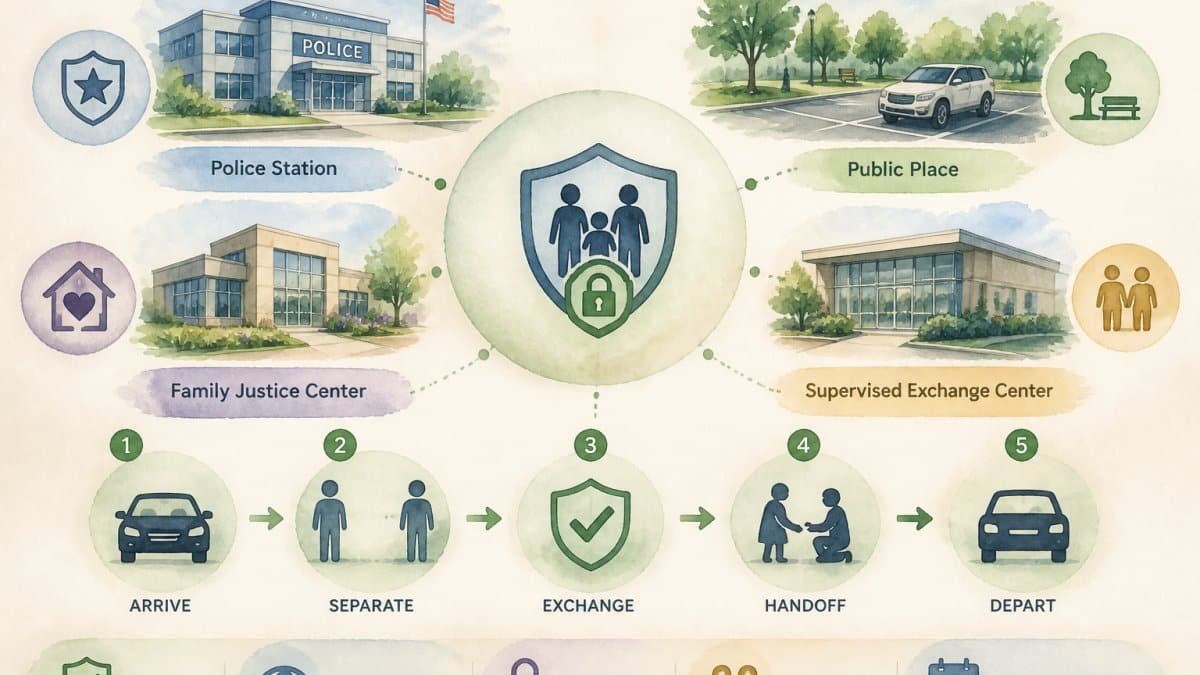
Handoffs are the hardest moment of the week for many kids. The fix is a short, repeatable ritual at every exchange, making the goodbye predictable enough that your child’s nervous system stops treating it as a threat.
Use the same sequence every time, in this order:
- The two-minute warning. Say: “We leave in two minutes. Say your goodbyes when the timer rings.” Predictability lowers the startle of separation.
- The goodbye script. Use the same warm words every time, no lingering: “I love you. I’ll see you on Thursday. Call me if you need me.”
- The handoff activity. Give your child a small job to do with the arriving parent, so attention shifts forward instead of back.
- The short exit. The leaving parent walks away within 60 seconds. Long, tearful exits teach a child that transitions are dangerous.
Handoff activities to try:
- The two-minute walk: the arriving parent takes your child on a brief walk before the other parent leaves. Materials: none. Time: 2 minutes. Targets: clinging, crying at drop-off.
- The comfort kit: a small bag with a favorite snack, a photo, and a note from the other parent. Materials: a zip pouch. Time: 5 minutes to pack. Targets: separation anxiety, bedtime fear in the first night.
- The countdown calendar: a paper calendar showing the next visit, marked with stickers. Materials: printed calendar, stickers. Time: 2 minutes a day. Targets: fear of forgetting the other parent, worry about the next visit.
Never argue or trade barbs during a handoff, even quietly. Kids pick up tension instantly, and it turns every exchange into a threat.
Adapting the ritual to the symptom you see:
- Clinging and crying: shorten the goodbye and add the two-minute walk.
- Anger or refusal to leave: give a choice inside the ritual, such as “Do you want to carry the comfort kit or the calendar?”
- Silence or shutdown: use the handoff question and accept a one-word answer.
If distress at handoffs lasts more than a few weeks or escalates, seek professional support, covered next.
When Activities Are Not Enough: Therapy for Children of Divorce
Some children need more than routines and play. Therapy for children of divorce is a smart next step when symptoms persist or worsen.
Consider professional support if your child:
- Stops eating or sleeping well for weeks
- Talks about self-harm or says they don’t want to exist
- Refuses school or withdraws from all friends
Look for a licensed child therapist trained in Cognitive Behavioral Therapy (CBT), widely used for childhood anxiety.
The American Academy of Pediatrics mental health guidance is a solid starting point for parents weighing therapy. School counselors can also help you find local referrals.
Keeping Activities Consistent Across Both Households
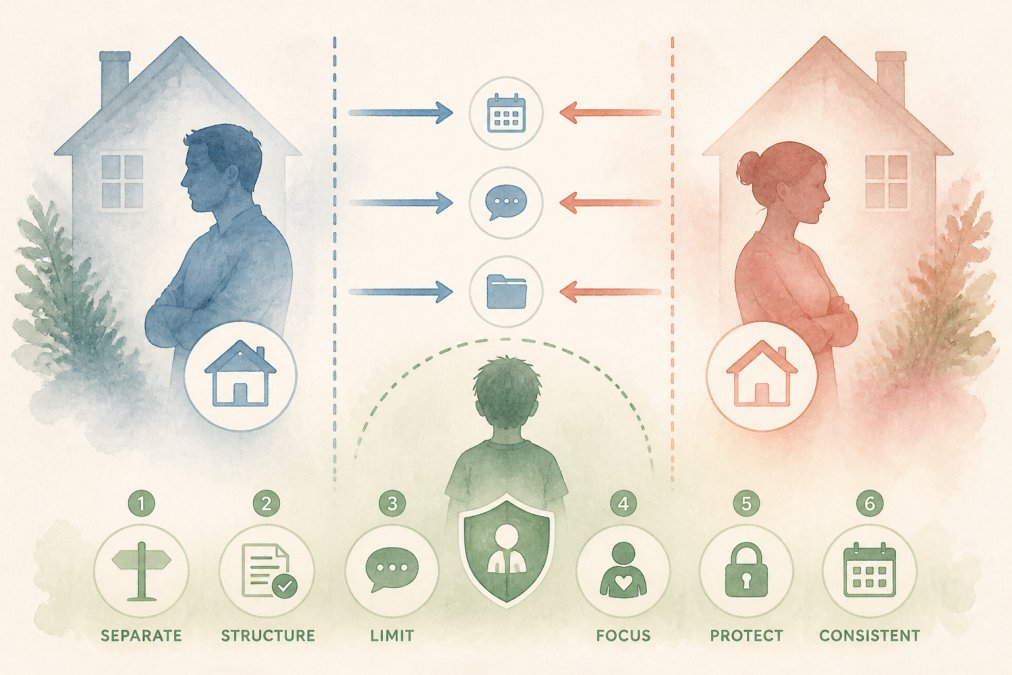
Consistency across two homes is the difference between progress and ping-pong. Kids calm down when both houses feel familiar.
Agree on a short shared list:
- The same bedtime window in both homes
- The same feelings chart or journal format
- The same handoff ritual
Keep communication with your ex structured and neutral: stick to facts, skip the commentary, and use written messages when conversations spiral.
If your ex refuses to cooperate, run the routine in your own home anyway. One steady household still helps. Consistency is a gift you can give alone.
Put the shared plan in writing and keep it short, one page at most. Long co-parenting agreements collect dust; a simple checklist actually gets used.
Conclusion
Your child doesn’t need a perfect parent or a perfect split. They need steady routines, honest reassurance, and small activities repeated often enough to feel safe.
Start with one thing this week: a bedtime ritual, a feelings chart, or a calmer handoff. Add the next piece once the first feels normal.
And if the signs of distress don’t ease, bring in a professional early. That’s not failure. That’s good parenting.
Frequently Asked Questions
What activities help children cope with divorce?
The most effective activities match your child’s age and give them a sense of control. For younger children, puppet play and predictable bedtime routines work well. For ages 7-11, feelings charts, a shared journal, and team sports like soccer provide both emotional expression and structure. Teens respond better to activities that offer choice, such as planning their own room setup in each home. The common thread is consistency: the same calming activity in both households reduces child anxiety because your child knows what to expect.
How do I reassure my child during a separation without overpromising?
Reassurance works best when it is specific and repeatable. Tell your child plainly that both parents love them and that the divorce is not their fault, then back it up with daily habits: a consistent bedtime, a family dinner check-in, and one-on-one time each week. Avoid promises you cannot keep, like saying everything will go back to how it was. Instead, promise what you control: “I will always come back for you on Tuesday.” Repetition of small, kept promises builds the secure relationship your child needs more than any single conversation.
When should a child see a therapist after divorce?
Consider therapy for children of divorce when symptoms persist beyond a few months or interfere with daily life: school refusal, sleep problems, withdrawal from friends, frequent stomachaches, or regression in younger children. A therapist trained in Cognitive Behavioral Therapy (CBT) can teach coping skills that go beyond what activities at home provide. If your child talks about self-harm or shows signs of emotional distress that do not ease with routine and reassurance, seek professional support promptly. A pediatrician can also help you decide whether a referral makes sense.
How can parents help children adjust to two homes?
Adjustment to two households improves when both homes share predictable routines: similar bedtimes, meals at consistent times, and the same discipline approach. Let your child keep duplicate comfort items, like a favorite blanket or book, in each home so transitions feel less like loss. Handoff activities, such as a shared journal that travels between houses, give children a sense of continuity. Keep parental conflict away from handoffs entirely. Children adjust faster when they are not asked to manage adult tension, and consistency across households does more for child anxiety than any single activity.