
Reeling after infidelity leaves many adults feeling untethered, overwhelmed by emotions that affect every part of life. When trust is shattered and self-worth shaken, knowing where to begin healing can feel impossible. Understanding the core concepts of self-care after betrayal helps transform confusion into clarity, offering a clear path toward stability and renewed trust through targeted strategies that foster emotional resilience and personal growth.
Key Takeaways
| Point | Details |
|---|---|
| Emotional Healing is Essential | Acknowledge that healing requires addressing emotional trauma through intentional self-care practices. |
| Holistic Self-Care Approach | Incorporate emotional, physical, and spiritual self-care strategies to foster overall wellness. |
| Avoid Common Pitfalls | Be aware of mistakes like rushing healing or neglecting personal self-care that can hinder recovery. |
| Reframe Self-Care | Understand self-care as a necessary component of recovery rather than a luxury or selfish act. |
Self-care after infidelity: Core concepts
Infidelity represents a profound emotional trauma that triggers complex psychological responses in betrayed partners. Attachment injury dynamics demonstrate that the betrayal experience can generate symptoms remarkably similar to post-traumatic stress, requiring deliberate and structured healing approaches.
The core of self-care after infidelity involves recognizing and addressing multiple interconnected emotional dimensions. These dimensions include:
- Emotional stabilization
- Personal boundary reconstruction
- Psychological safety restoration
- Self-worth reaffirmation
- Trauma processing
Effective self-care demands a holistic approach that acknowledges the intense emotional disruption caused by betrayal. Relationship healing strategies emphasize the importance of creating intentional space for individual healing before attempting relationship reconciliation.
Individuals navigating post-affair recovery must prioritize mental health through structured interventions. This includes professional counseling, personal reflection, establishing clear emotional boundaries, and developing robust coping mechanisms that promote psychological resilience.
Pro tip: Create a daily self-care ritual that focuses exclusively on your emotional recovery, independent of your partner’s actions or responses.
Types of self-care for affair recovery
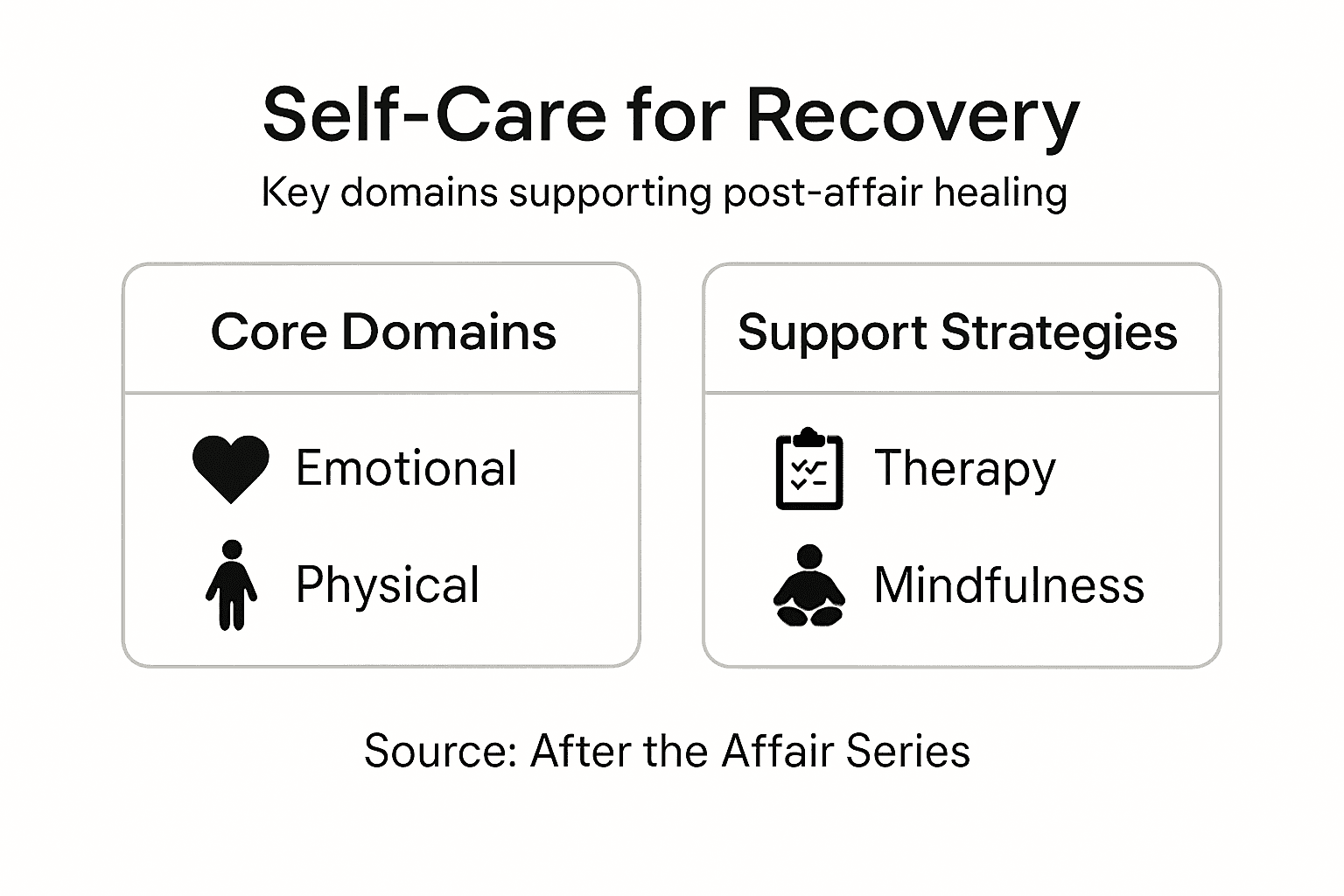
Healing from infidelity requires a comprehensive approach to self-care that addresses multiple dimensions of personal wellness. Holistic recovery strategies emphasize the importance of nurturing the spirit, body, and mind simultaneously.
The primary types of self-care for affair recovery include:
Emotional Self-Care
- Journaling personal experiences
- Attending individual therapy
- Processing feelings without judgment
- Developing emotional intelligence
Physical Self-Care
- Maintaining regular exercise routines
- Prioritizing nutritious meals
- Establishing consistent sleep patterns
- Managing stress through relaxation techniques
Spiritual Self-Care
- Connecting with supportive faith communities
- Practicing meditation or mindfulness
- Exploring personal values and beliefs
- Finding meaning through personal reflection
Each dimension of self-care plays a crucial role in rebuilding personal resilience and emotional stability. Professional counseling can help individuals navigate these complex healing pathways, providing structured guidance for processing betrayal trauma and reconstructing personal identity.
Here’s how the main self-care domains support affair recovery differently:
| Self-Care Domain | Primary Focus | Typical Benefit |
|---|---|---|
| Emotional | Feelings management | Lowers anxiety and emotional pain |
| Physical | Health and wellness | Improves sleep, energy, and vitality |
| Spiritual | Finding meaning | Enhances inner peace and direction |
These domains each play distinct roles in supporting comprehensive healing.
Pro tip: Create a personalized self-care checklist that includes activities from emotional, physical, and spiritual domains to ensure comprehensive healing.
Key self-care strategies and techniques
Healing from infidelity requires intentional and strategic self-care approaches that address psychological and physiological recovery. Mental health recovery techniques emphasize establishing consistent routines that support emotional stabilization and personal resilience.
Key self-care strategies for affair recovery include:
Emotional Regulation Techniques
- Deep breathing exercises
- Cognitive reframing methods
- Emotional trigger identification
- Stress management practices
Psychological Recovery Strategies
- Professional counseling engagement
- Support group participation
- Personal boundary reinforcement
- Narrative reconstruction of personal experience
Physical Wellness Approaches
- Regular cardiovascular exercise
- Balanced nutritional planning
- Consistent sleep schedule maintenance
- Mindfulness and relaxation techniques
Successful self-care demands a multifaceted approach that integrates emotional processing, physical health maintenance, and psychological resilience building. Developing personalized coping mechanisms helps individuals transform traumatic experiences into opportunities for profound personal growth and self-understanding.
Pro tip: Create a daily self-care checklist with specific, measurable activities from each recovery strategy domain to track your healing progress.
Common misconceptions about self-care
Self-care after infidelity is frequently misunderstood, leading to ineffective healing approaches. Debunking self-care myths reveals critical insights into what genuine self-care truly entails for individuals recovering from betrayal trauma.
Common misconceptions about self-care include:
Myth of Selfishness
- Believing self-care is narcissistic
- Feeling guilty about prioritizing personal healing
- Thinking personal needs are less important than others’
- Viewing self-care as a luxury
Time and Resource Misconceptions
- Assuming self-care requires significant financial investment
- Believing only people with abundant free time can practice self-care
- Thinking self-care must involve expensive activities
- Overlooking simple, no-cost healing practices
Complexity and Performance Myths
- Believing self-care must be complicated
- Expecting immediate, dramatic results
- Thinking self-care is a one-time event
- Misunderstanding self-care as a performance metric
Understanding self-care as a fundamental necessity rather than an optional indulgence is crucial for genuine healing. Professional ethical practices emphasize that self-care is not selfish but essential for sustainable emotional recovery and personal resilience.
Here’s a comparison of common self-care myths versus actual facts:
| Misconception | Reality |
|---|---|
| Self-care is selfish | Self-care is essential for recovery |
| Requires lots of money | Many practices are free and accessible |
| Needs much free time | Can be done in short daily rituals |
| Produces instant results | Progress is gradual and sustainable |
Addressing these myths helps build a healthier perspective on self-care.
Pro tip: Reframe self-care as a fundamental act of personal survival and healing, not a luxury or optional activity.
Mistakes to avoid during healing
Healing from infidelity is a complex journey fraught with potential missteps that can derail emotional recovery. Critical reconciliation mistakes can significantly impede personal growth and relationship restoration if not carefully navigated.
Common mistakes individuals make during healing include:
Emotional Processing Errors
- Suppressing genuine feelings
- Rushing the healing timeline
- Avoiding professional emotional support
- Minimizing the impact of betrayal
Relationship Reconstruction Mistakes
- Making impulsive reconciliation decisions
- Failing to establish clear boundaries
- Weaponizing past infidelity during conflicts
- Expecting immediate trust restoration
Personal Recovery Pitfalls
- Neglecting individual self-care
- Focusing exclusively on partner’s actions
- Losing personal identity in recovery process
- Comparing healing journey to others’
Successful healing requires acknowledging these potential mistakes and developing intentional strategies to avoid them. Understanding that recovery is a nuanced, individual process helps prevent common pitfalls that can prolong emotional trauma and hinder personal resilience.
Pro tip: Create a personal accountability journal to track emotional triggers, healing progress, and potential recovery obstacles.
Embrace Your Healing Journey with Expert Guidance on Recovery Strategies
Recovering from the emotional trauma of infidelity requires more than just time. This article emphasized the critical role of self-care in stabilizing emotions, rebuilding self-worth, and processing trauma effectively. If you are struggling with emotional regulation, setting boundaries, or restoring psychological safety—understanding these core concepts is the first step toward sustained healing. The pain of betrayal can feel isolating but you do not have to navigate this road alone.

Discover tailored support through Recovery Strategies – After the Affair Series, where compassionate, evidence-informed guidance helps you develop personalized self-care rituals and coping mechanisms proven to aid infidelity recovery. Explore resources that bridge emotional, physical, and spiritual wellness, all designed to help you build resilience and reclaim your identity after betrayal. Begin your transformation today by visiting https://aftertheaffair.uk and accessing essential tools that support your healing journey from start to finish. For a deeper understanding of the dynamics involved, also explore Affair Types & Signs – After the Affair Series and prepare yourself with knowledge and strategies found in Essential Crisis Guides – After the Affair Series. Your path to recovery deserves expert care and practical solutions. Take the next step now.
Frequently Asked Questions
What is the importance of self-care after infidelity?
Self-care after infidelity is crucial as it helps individuals stabilize their emotions, rebuild self-worth, and process trauma, ultimately fostering personal healing and resilience.
What types of self-care should I focus on after an affair?
You should focus on emotional self-care (such as journaling and therapy), physical self-care (including regular exercise and nutrition), and spiritual self-care (like mindfulness and personal reflection) to support comprehensive recovery.
How can I effectively process my emotions after betrayal?
Utilize emotional regulation techniques such as deep breathing exercises, cognitive reframing, and identifying emotional triggers to assist in processing your feelings without judgment.
What common mistakes should I avoid during the healing process?
Avoid suppressing your feelings, rushing your healing, neglecting personal self-care, and making impulsive reconciliation decisions. Recognizing these pitfalls is essential for successful recovery.
Recommended
- Steps for Healing After Betrayal – After the Affair Series
- Relationship Healing Process – After the Affair Series
- Why Couples Relapse After Affairs – After the Affair Series
- How to Cope After Infidelity – After the Affair Series