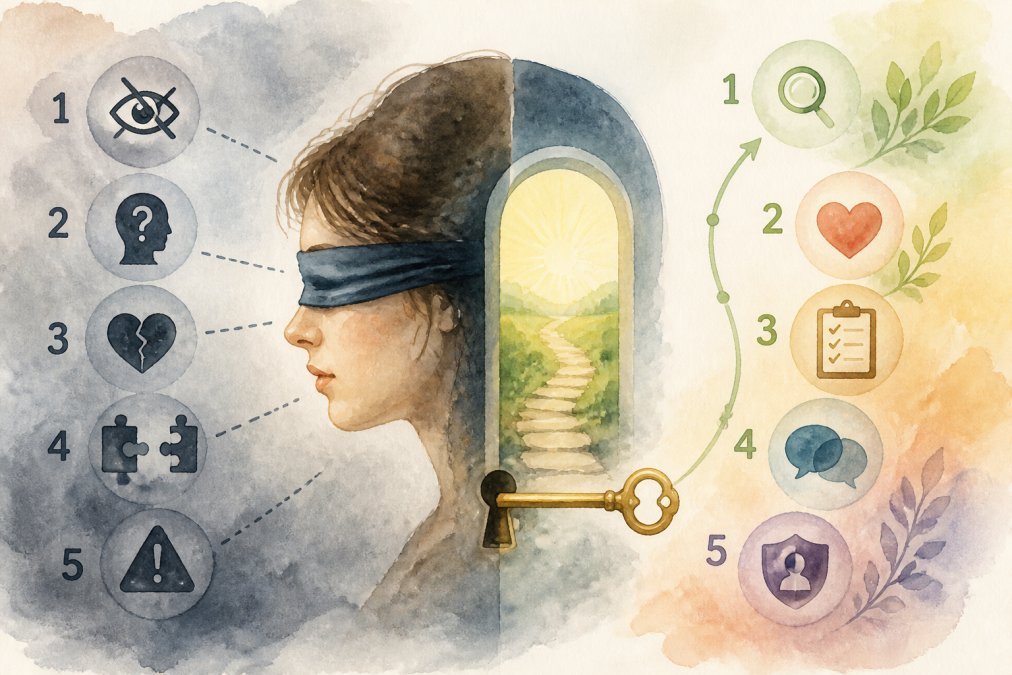
TL;DR:
- Genuine change in a spouse’s behavior, such as accountability and transparency, indicates lower future cheating risk.
- Patterns of consistent, coordinated behaviors reveal more than isolated red flags, especially regarding emotional and digital boundaries.
Whether your spouse will cheat again depends far less on the original act than on what has genuinely changed since. Past behavior increases risk, but it does not determine the future. A one-time incident in a long-term relationship carries a different weight than a pattern repeated across multiple relationships. What actually predicts the future is the quality of change happening right now. Consider the question: will your spouse cheat again?
Knowing how to read that change is the hard part. Here are the clearest indicators to watch:
- Accountability without excuses: Does your spouse own the decision, or do they frame it as something that “just happened”?
- Consistent transparency over time: Not a week of openness, but months of it, unprompted.
- Genuine internal motivation: Are they choosing monogamy, or simply complying with what you need to hear?
- Behavioral coherence: Do their actions match their words across different situations, including stressful ones?
- Willingness to sit with your pain: Do they stay in hard conversations, or do they push you to move on?
No single answer settles this question permanently. But patterns, observed honestly over time, tell you more than any promise ever will.
How to know if your spouse will cheat again: warning signs to watch
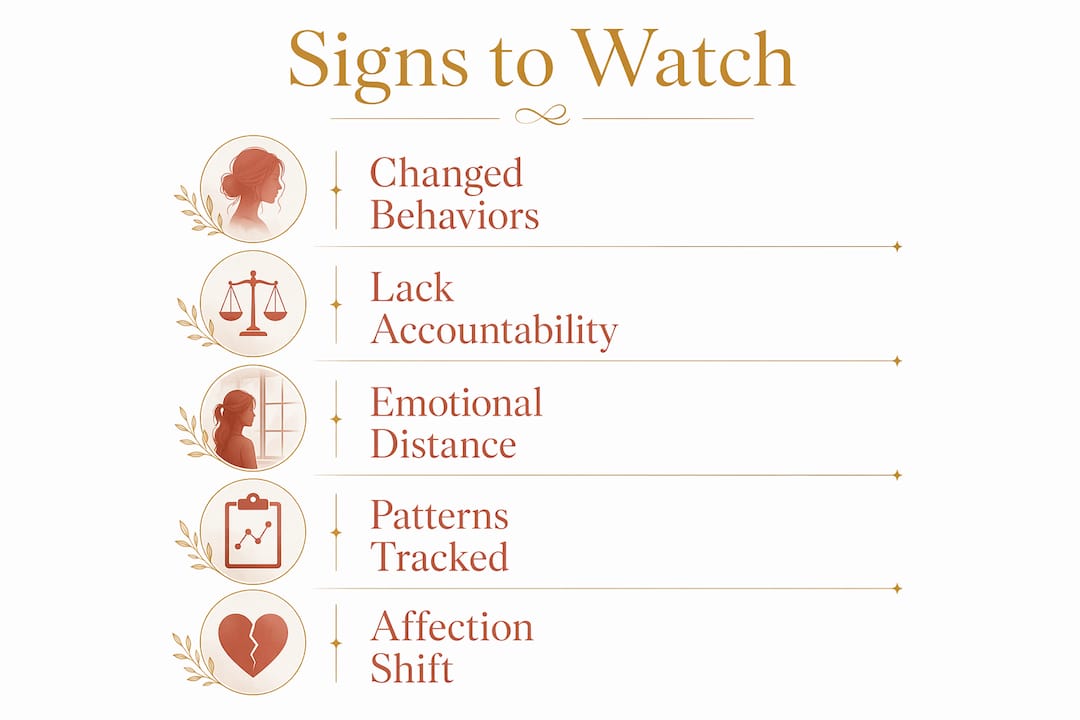
Clusters of changed behaviors are far more telling than any single red flag. Therapist Benjamin Watkins put it plainly: the biggest thing to look for is not one isolated behavior, but a pattern of change. A phone left face-down means little on its own. Combined with vague explanations, new passwords, and sudden defensiveness, it describes something else entirely.
As you reflect on this, it’s crucial to ask yourself, ‘Will Your Spouse Cheat Again?’ This question may guide your observations of their behavior.
Clinically, pattern coherence outweighs the sheer quantity of suspicious signs. Two highly specific behaviors pointing in the same direction carry more weight than five vague ones with multiple alternative explanations.
Common behavioral clusters worth tracking:
- Digital secrecy: New passwords on previously open devices, a phone that never leaves their hand, cleared message threads, or notifications silenced when you are nearby.
- Unexplained absences: Vague accounts of time, stories that shift slightly on retelling, or “work” that never quite adds up.
- Defensiveness over simple questions: Irritation at reasonable requests for clarity is avoidance, not privacy.
- Sudden appearance changes: New cologne, gym visits that started without explanation, or noticeably upgraded clothing when none of that was their pattern before.
- Continued contact with the affair partner: If that connection is still active, the boundary that was crossed has not been fully closed.
Research from a 2022 study published in Personality and Individual Differences found that cheaters use seven or more concealment strategies simultaneously. That level of coordination leaves traces. You are not imagining things when the pieces feel like they fit together too neatly.
Pro Tip: Track patterns in writing rather than in your head. A pattern documentation tool helps you see whether behaviors are clustering or whether your anxiety is filling in gaps that are not really there.
One more signal that often gets misread: a sudden increase in affection or sexual frequency after discovery can be a calculated reassurance tactic rather than genuine intimacy. Psychologists observe this as a common strategy to divert suspicion. Warmth that appears on cue, then fades once the pressure lifts, is worth noticing.
Why emotional infidelity is often the more dangerous sign
Emotional infidelity is the most frequent form of cheating and the most frequently dismissed. It involves a significant emotional bond with someone outside the relationship, often without any physical component, and it is damaging precisely because the emotional investment it represents is what the primary relationship was supposed to contain.
The signs of emotional infidelity are distinct from physical cheating, and they tend to appear earlier:
- Talking about a specific person constantly, then suddenly not mentioning them at all
- Becoming protective or secretive about phone conversations with that person
- Emotional withdrawal from you paired with obvious emotional energy directed elsewhere
- Comparing you unfavorably to someone else, directly or through implication
- Sharing relationship problems with that person before, or instead of, you
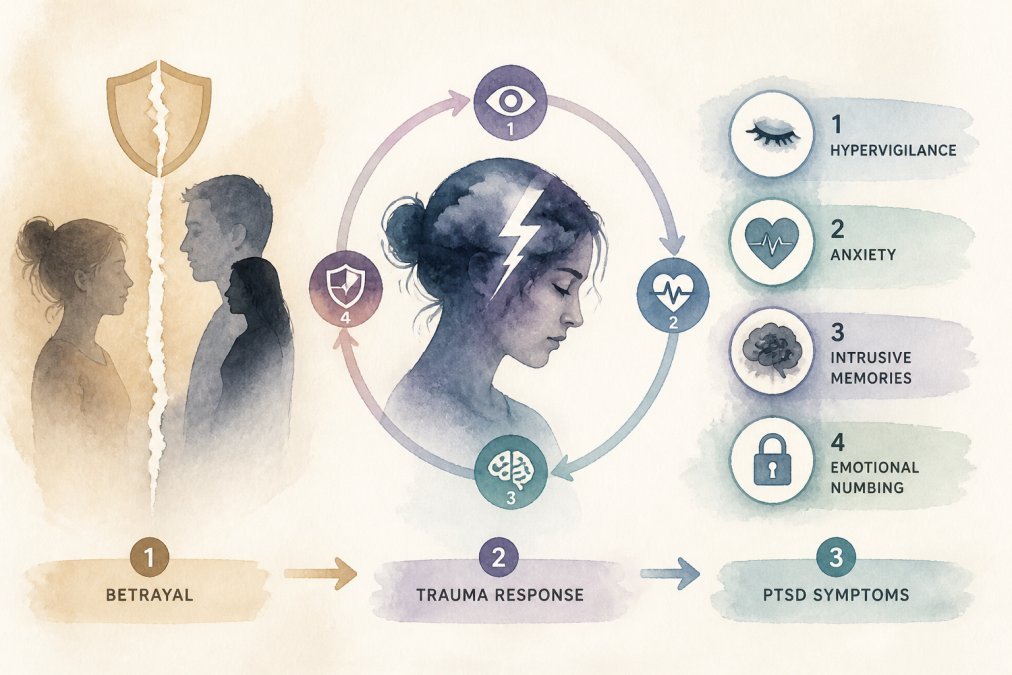
Emotional affairs often precede physical ones. Addressing them at the emotional stage is considerably more viable than addressing them after the physical has followed. If your spouse is investing emotional resources outside the relationship, that is not a minor concern to revisit later. The clinical significance of emotional infidelity is not reduced by the absence of physical contact. You can also learn to recognize the subtle signs of emotional trauma this kind of betrayal leaves behind, which helps you distinguish protective fear from chronic anxiety.
What genuine change actually looks like after infidelity
Real transformation after infidelity tends to show up quietly, consistently, and sometimes uncomfortably. It does not look like grand gestures or dramatic apologies. Those often fade once the crisis energy settles, creating emotional whiplash rather than actual repair.
Authentic internal motivation for exclusivity is the most critical and most overlooked indicator. Many people verbally commit to monogamy because it is expected, not because they have genuinely examined their own desires and made a conscious choice. A spouse who is choosing faithfulness from the inside behaves differently than one who is complying to keep the peace.
Clinical markers of authentic change include:
- Consistent accountability: They own the decision without minimizing it, and they do not revisit blame when the conversation gets uncomfortable.
- Transparency that does not require prompting: They share where they are and who they are with before you ask.
- Willingness to explore their own emotional triggers: They can discuss what drove the behavior, not just apologize for it.
- Patience with your timeline: A partner genuinely working toward repair understands that trust rebuilds in layers, first physical and logistical safety, then emotional predictability, and only later deep vulnerability.
- Therapy engagement that is willing, not performative: Therapy focused on emotional regulation, attachment patterns, and boundary-setting is most effective when the cheating partner engages because they want to change, not to satisfy a condition you set.
“A partner who is genuinely working toward being safe again usually doesn’t rush your healing. They understand that trust has a timeline they don’t control.” — from clinical observations on infidelity recovery
Guilt alone does not protect a relationship. A spouse can feel deep remorse and still repeat the same behavior if they have not developed new coping skills or emotional awareness. The more telling question is not “Do they feel bad?” but “What are they doing differently when things feel uncomfortable now?”
Recovery from betrayal is a gradual, multi-stage process requiring consistent transparency and sustained behavioral change, not declarations. For many people, meaningful trust repair takes months, not weeks. Trying to force yourself to trust before your body feels ready often backfires. Pay attention to whether your fear is slowly decreasing as your spouse shows consistency, or whether it stays constant despite time and effort. Healing should feel imperfect but directional. You can find structured guidance on rebuilding trust after betrayal to help you track that direction with clarity.

Aftertheaffair: structured support for the road ahead
Recovering from infidelity without a clear framework is exhausting. Most people cycle through the same fears, the same questions, and the same conversations without getting closer to clarity.
Aftertheaffair offers a structured recovery series built specifically for this stage: evidence-informed books covering survival, decision-making, transformation, and growth, alongside practical tools like the infidelity recovery checklist and the Partner Accountability Conversation Guide. These resources are designed to complement therapeutic work, not replace it, giving you a way to track real behavioral change rather than relying on reassurances that may not hold. If you are trying to assess whether what you are seeing is genuine progress or a temporary performance, the Clarity Accelerator journal gives you 21 days of guided evidence-gathering to find out.
Key Takeaways
Past behavior raises risk but does not determine the future; genuine internal motivation for monogamy, consistent transparency, and sustained behavioral change are the most reliable indicators of whether a spouse will cheat again.
| Point | Details |
|---|---|
| Past behavior raises risk, not certainty | A history of cheating across multiple relationships increases statistical risk, but a single incident does not guarantee repetition. |
| Behavioral clusters matter most | Multiple specific behaviors pointing in the same direction are more clinically significant than any single red flag in isolation. |
| Emotional infidelity is a serious warning | Emotional investment outside the relationship is the most common form of cheating and often precedes physical affairs. |
| Authentic change is quiet and consistent | Real transformation shows up in unprompted transparency and patience with your healing timeline, not grand gestures. |
| Aftertheaffair provides structured tools | Resources like the infidelity recovery checklist and evidence journal help you track real change rather than guessing. |
FAQ
Does past cheating mean my spouse will cheat again?
Not necessarily. Past behavior increases statistical risk but is not a determinant. A one-time incident is less predictive than a repeated pattern across relationships, especially when underlying causes have been genuinely addressed.
What is the single strongest sign that my partner may cheat again?
Lack of accountability is the clearest indicator. If your spouse minimizes what happened, deflects blame, or pressures you to move on quickly, the conditions that led to the affair remain unchanged.
Can trust actually be rebuilt after cheating?
Yes, but it takes months, not weeks, and requires consistent transparency and behavioral change from the cheating partner. Trust rebuilds in layers, starting with physical safety and moving gradually toward emotional vulnerability.
How is emotional infidelity different from physical cheating?
Emotional infidelity involves a significant emotional bond with someone outside the relationship, often without physical contact. Clinically, it is as damaging as physical cheating and frequently precedes it.
How can I tell if my spouse’s change is real or performative?
Real change is consistent across situations, including stressful ones, and does not require your prompting. Performative change tends to peak during the crisis period and fade once the immediate pressure lifts.
Recommended
- Is Your Partner a Serial Cheater? Signs and Next Steps
- Spotting the signs of infidelity: Key patterns and how to cope
- Will a Married Partner Leave Their Spouse? A Realistic Guide – After the Affair Series
- Why Do Cheating Men Still Sleep With Their Wives