You’ve been told countless times that your married partner will leave their spouse, yet months or even years pass with little change. The emotional toll of waiting while watching promises fade into excuses creates a unique kind of heartbreak. Research shows that relationships beginning as affairs have a 75% higher failure rate than average relationships, yet hope persists. This guide provides evidence-based steps to assess your situation realistically, recognize genuine intention versus empty promises, and make empowered decisions about your future.
Table of Contents
- Understand the reality: What the data shows
- Emotional dynamics: Why married partners stay or leave
- Preparation: Questions to honestly ask yourself before waiting
- The process: How to seek clarity (step-by-step)
- Verifying intentions: Signs of truth vs. false hope
- Supporting your recovery and next steps
- Frequently asked questions
Key Takeaways
| Point | Details |
|---|---|
| Affairs rarely last | Less than 2% of relationships that start as affairs survive beyond two years. |
| Actions matter most | Trust clear, observable actions over words when evaluating your partner’s intentions. |
| Protect your well-being | Prioritize self-care and set boundaries regardless of your partner’s promises. |
| Therapy aids clarity | Professional support can help process emotions and guide decision-making in complex situations. |
Understand the reality: What the data shows
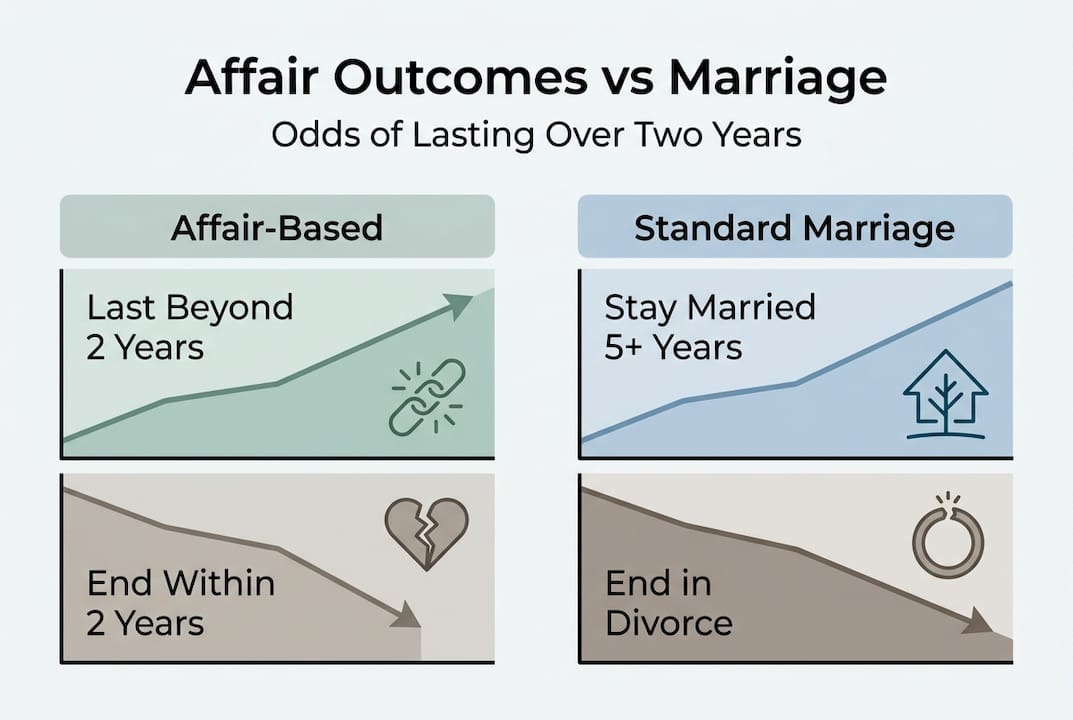
With the challenging question posed, it’s critical first to understand what the numbers and research really say about such relationships. The statistics paint a sobering picture. Less than 2% of relationships starting as affairs last more than 2 years, and post-infidelity divorce rates reach 45% within 5 years, rising to 75% if the affair partner is pursued again. These numbers reflect deep structural challenges that go beyond simple relationship difficulties.
Outcome Comparison: Affairs vs. Standard Relationships
| Metric | Affair-Based Relationships | Standard Relationships |
|---|---|---|
| Failure rate increase | 75% higher | Baseline |
| Survival beyond 2 years | Less than 2% | 65-70% |
| Divorce within 5 years | 45-75% | 20-25% |
| Trust foundation | Compromised from start | Built over time |
Several factors influence whether a married partner actually leaves their spouse:
- Financial entanglement: Shared assets, mortgages, and joint accounts create powerful deterrents to separation
- Children and family pressure: Concerns about custody, child wellbeing, and extended family judgment weigh heavily
- Social and professional reputation: Fear of being labeled as the person who destroyed their family
- Emotional attachment: Despite the affair, genuine feelings for the spouse often persist
- Practical inertia: The sheer difficulty of dismantling an established life creates paralysis
Key Statistic: Only 2% of affair-based relationships survive beyond two years, highlighting the fundamental instability of relationships built on betrayal.
Understanding the effects of infidelity helps contextualize why these relationships face such steep odds. The foundation of secrecy and deception creates lasting trust issues that most couples cannot overcome.
Emotional dynamics: Why married partners stay or leave
Numbers only tell part of the story. The deeper emotional dynamics also shape the outcome. Married partners face competing loyalties that create what psychologists call “double loyalty,” where they genuinely care for both their spouse and affair partner simultaneously. This emotional compartmentalization allows them to maintain both relationships without fully committing to either.
Psychological and financial barriers often prove insurmountable:
- Loss aversion: The fear of losing what they already have outweighs the potential gain of a new relationship
- Guilt and responsibility: Feelings of obligation toward their spouse and children
- Lifestyle preservation: Reluctance to sacrifice financial security, social standing, or comfortable routines
- Uncertainty about the affair partner: Doubts about whether the relationship will survive outside the affair context
Common excuses and rationalizations include:
- “I need to wait until the kids are older”
- “The timing isn’t right with work/finances”
- “My spouse is going through a difficult time”
- “I’m working on it, just be patient”
- “You don’t understand how complicated my situation is”
Research Finding: 89% of men who cheated reported still loving their spouse during the affair, revealing the complex emotional reality behind their hesitation.
Pro Tip: Watch for concrete actions, not just words. Genuine intention shows up as legal consultations, financial planning, and transparent communication with family. Repeated delays with shifting justifications signal stalling.
Understanding these dynamics through processing emotional trauma and exploring the benefits of therapy can provide clarity during this confusing time.
Preparation: Questions to honestly ask yourself before waiting
Once you understand why married partners may hesitate, it’s vital to reflect honestly on your own readiness and boundaries. Self-assessment prevents you from investing years in a situation that may never materialize.
Key questions to consider:
- Values alignment: Do your core values about honesty and commitment match this relationship’s foundation?
- Future vision: Can you genuinely build the life you want with someone who maintains deception?
- Emotional cost: Is the waiting period damaging your mental health, self-esteem, or other relationships?
- Time investment: How long are you willing to wait before requiring concrete action?
- Alternative opportunities: What relationships or life experiences are you sacrificing while waiting?
Behavioral red flags and timeline inconsistencies:
- Promises that consistently shift to future dates without explanation
- Increased secrecy rather than growing transparency
- No visible steps toward separation (legal consultation, financial planning)
- Blame shifting when you request clarity or timelines
- Isolation from their “real life” with no integration of you into their world
- Defensive reactions when you mention specific deadlines
Pro Tip: Set a firm personal deadline, share it clearly with your partner, and commit to honoring it regardless of their response. This boundary protects your wellbeing and forces honest conversation.
Edge cases like short affairs or therapy improve original marriage survival, but not affair partner success. Recognizing this reality helps you make informed choices. Explore emotional healing tips and consider therapy after infidelity to support your decision-making process.
The process: How to seek clarity (step-by-step)
After you’ve clarified your own position, use the following steps to navigate your next moves and open the conversation.
- Initiate a clarity conversation: Request a specific, uninterrupted discussion about concrete plans and timelines, not vague future promises.
- Establish measurable milestones: Define what actions constitute progress (legal consultation within 30 days, separation within 90 days, filing within 6 months).
- Build independent support: Connect with a therapist, trusted friends, or support groups who can provide objective perspective.
- Monitor for double life patterns: Track whether secrecy increases or decreases, and whether you’re being integrated into their broader life.
- Recognize the decision point: If milestones aren’t met or excuses multiply, acknowledge that their choice has been made through inaction.
Clear Signals vs. Red Flags
| Clear Signals of Genuine Intent | Red Flags of Indefinite Stalling |
|---|---|
| Consulting divorce attorneys | Vague “soon” promises with no dates |
| Transparent communication | Increased secrecy and compartmentalization |
| Introducing you to close friends/family | Keeping you completely separate from their life |
| Financial planning for separation | No practical steps toward independence |
| Consistent timeline updates | Shifting goalposts and new obstacles |
Therapy or counseling serves as both verification and support. A qualified professional can help you recognize patterns you might miss and provide tools for navigating this emotionally charged situation. The role of therapists in infidelity recovery extends beyond couples work to individual clarity and healing.
Remember that post-infidelity divorce rates reach 45% within 5 years, rising to 75% if the affair partner is pursued again, underscoring the importance of realistic expectations. Following structured infidelity recovery steps can guide you through this challenging period.
Verifying intentions: Signs of truth vs. false hope
Even after following the steps, it’s crucial to objectively evaluate whether your partner’s actions support their words. Observable behavior reveals true intention far more reliably than promises.
Positive behaviors indicating real action:
- Legal steps: Actual consultation with divorce attorneys, not just “thinking about it”
- Financial separation: Opening individual accounts, dividing assets, creating independent budgets
- Transparent communication: Honest updates about conversations with spouse, no hidden phone calls
- Social integration: Introducing you to important people in their life, not hiding the relationship
- Consistent timeline: Meeting agreed-upon milestones without constant renegotiation
- Emotional availability: Investing in your relationship’s future, not just maintaining the present
Red flag behaviors signaling indefinite stalling:
- Broken promises: Repeatedly missing self-imposed deadlines with new excuses
- Blame shifting: Making you feel unreasonable for wanting clarity or commitment
- Increased secrecy: More careful about phone usage, whereabouts, and communication
- Defensive reactions: Anger or withdrawal when you mention specific timelines
- Compartmentalization: Keeping you completely separate from family, friends, and normal life
- Minimizing your needs: Dismissing your emotional pain or requests for concrete action
The 2% affair relationship survival statistic exists because most people in this situation eventually recognize that actions speak louder than words. Trust what you observe over what you’re told. If someone genuinely wants to leave their spouse, they take visible, verifiable steps toward that goal.
Your intuition often recognizes truth before your conscious mind accepts it. Resources for coping after infidelity can support you whether you choose to continue waiting or to move forward independently.
Supporting your recovery and next steps
Whatever your partner decides, your own healing can begin today. These expert resources can support your path forward. Clarity and healing are possible regardless of relationship outcome, and taking control of your recovery process empowers you to make decisions from strength rather than desperation.
Whether your married partner ultimately leaves their spouse or not, you deserve support through this emotionally complex situation. The uncertainty itself creates trauma that requires attention and care. Our structured resources provide evidence-based guidance for navigating infidelity’s aftermath, helping you process emotions, set healthy boundaries, and rebuild your sense of self.
Access our comprehensive infidelity recovery checklist for practical steps you can take immediately, regardless of your partner’s choices. Explore how relationship growth after infidelity happens when both people commit fully to transparency and healing. Our resource library offers guided support, real transformation stories, and professional insights to help you move from confusion to clarity.
Frequently asked questions
How long do people usually wait for a married partner to leave their spouse?
Most people wait between a few months and two years, but only a small fraction see their partner actually leave. The waiting period often extends indefinitely without concrete action.
What are clear signs my married partner will not leave their spouse?
Repeated broken promises, increased secrecy, and no visible changes to their marriage indicate they are unlikely to leave. Watch for actions, not words.
Do affairs ever turn into healthy long-term relationships?
Affairs rarely last long term, with about a 75% higher failure rate than other relationships. The foundation of deception creates lasting trust issues.
Why do married partners stay even if they say they love the affair partner?
Many have strong ties to their spouse, family, or lifestyle, and 89% report still loving their spouse during the affair. Competing loyalties create genuine emotional conflict.
Can therapy help me cope if my partner won’t leave their spouse?
Yes, individual or couples therapy can support healing and clarity in uncertain situations. Professional guidance helps you recognize patterns and make empowered decisions.
Recommended
- Stay or Leave After Cheating – After the Affair Series
- Top 6 SurviveYourPartnersAffair.com Alternatives in 2026 – After the Affair Series
- THE COMPLETE AGE-BY-AGE QUESTION & ANSWER GUIDE – After the Affair Series