Last Updated: October 10, 2026
Table of Contents
Create a Predictable Overnight Visitation Schedule for Young Children
An overnight custody visit works best when your child knows what to expect. Predictability reduces anxiety and helps kids adjust emotionally to moving between two homes. The key is starting small and building up to full overnight stays.
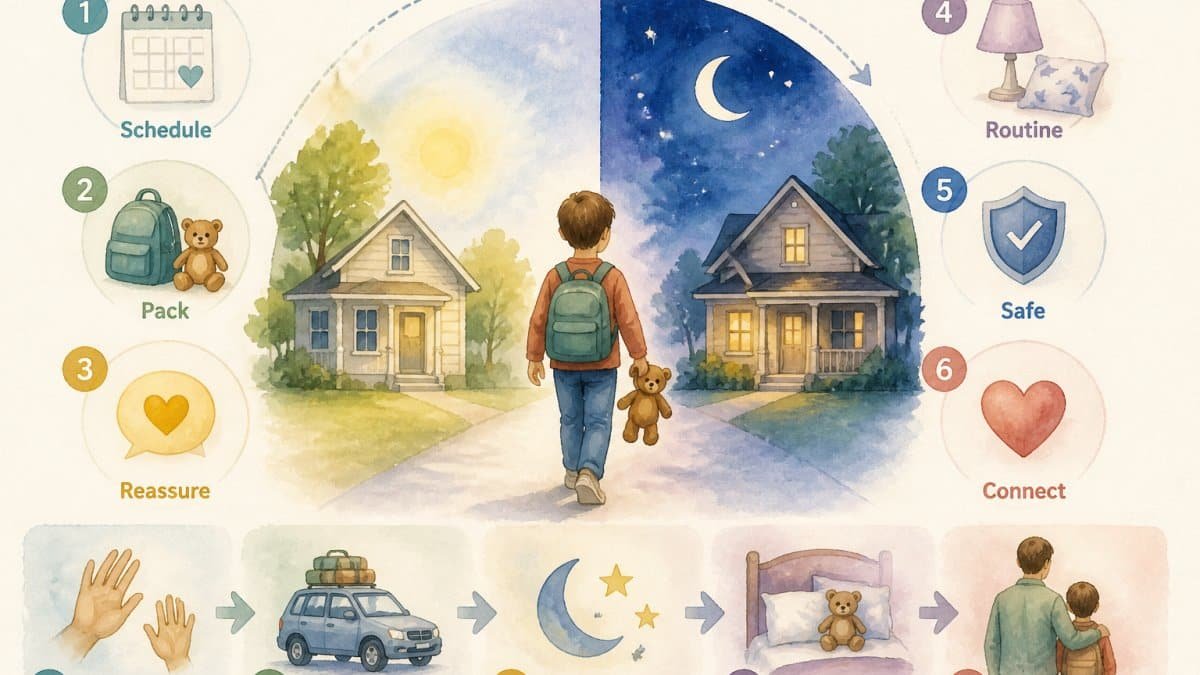
Start with shorter visits before full overnights
Begin with daytime visits before moving to overnight stays. A child who has never spent the night away from their primary caregiver needs time to build comfort and trust. Most experts recommend a gradual approach.
Start with 1-2 hour visits in a neutral or familiar space. Then move to 3-4 hour afternoon visits at the other parent’s home.
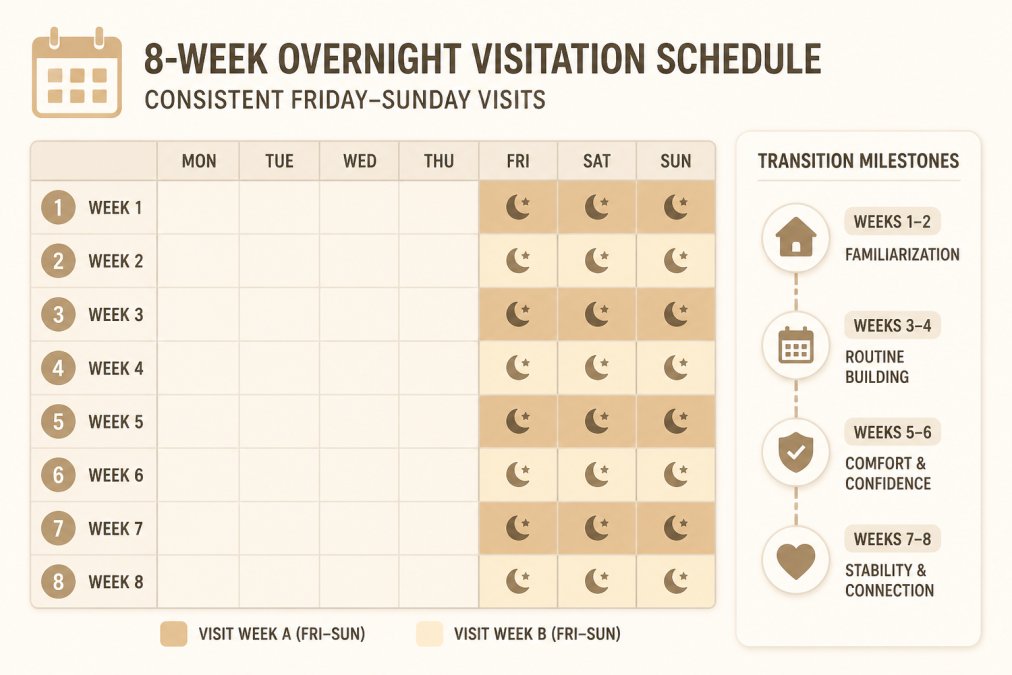
This gradual process typically takes 4-8 weeks, depending on your child’s age and temperament. A child who resists or shows signs of distress needs more time at the current stage, do not rush forward.
Establish consistent visit days and times
Children thrive on predictability. Set specific days and times for overnight custody visits and stick to them.
A consistent overnight visitation schedule tells your child’s brain what to expect. They know Friday afternoon means packing a bag. They know Sunday morning means getting ready to return home.
Write the schedule down and post it where your child can see it. Use a calendar with pictures for younger children.
Address Your Child’s Nervousness About Overnight Visitation
Your child’s anxiety about overnight stays is normal. Fear of the unknown, worry about the other parent, or concern about missing their primary home are common. Your job is to normalize the experience and validate their feelings.
Normalize the overnight stay through conversation
Talk openly about what overnight visitation will look like. Describe the other parent’s home, the bedroom setup, the bedtime routine, and what activities you’ll do together. Use simple, concrete language.
Say things like: “You’ll sleep in your own bed at Dad’s house. We’ll have breakfast together in the morning.
Read books about visiting both parents. Many children’s books normalize two-household families. Seeing characters navigate overnight visits helps your child feel less alone.
Answer your child’s questions honestly. If they ask, “Will Mom be there?” say yes.
Manage bedtime anxiety and homesickness
Bedtime is the hardest part of overnight custody visits for many children. They’re tired, away from their primary home, and facing the reality of separation.
Establish a consistent bedtime routine at the other parent’s home. Bath, story, cuddle time, and lights out should follow the same pattern every visit.
If your child calls or texts asking to come home, take it seriously. Dismissing their distress teaches them their feelings don’t matter.
For older children, agree on a check-in time. They might text goodnight or have a brief call before bed. This small connection often prevents escalating homesickness.
What to Pack for a Custody Visit: A Practical Checklist
Packing for overnight custody visits can feel overwhelming. The goal is ensuring your child has everything they need without overpacking. Some items stay at each home. Others travel with your child.
Essential items that stay at each home
Duplicate essential items at both homes. This reduces packing stress and ensures your child always has what they need. Duplicates also prevent forgotten items from derailing a visit.
Items to keep at both homes:
- Full sets of clothing (underwear, socks, pants, shirts, pajamas)
- Toothbrush and toothpaste
- Hairbrush or comb
- Medications (if applicable)
- Glasses or contacts (if needed)
- Favorite comfort item (stuffed animal, blanket)
- Bedding or pillows if the child prefers their own
- Basic toiletries (soap, shampoo, deodorant for older kids)
Duplicates eliminate the “I forgot my medicine” or “I have no clean clothes” problems that can derail a visit. They also reduce the mental load on both parents.
Items to pack for each overnight stay
Some items travel with your child for each overnight custody visit. Pack these in a small bag your child can help prepare.
Items to pack for overnight visits:
- Change of clothes for the next day
- Undergarments and socks
- Pajamas
- Medications needed during the visit
- Phone charger (for older children)
- Any schoolwork or materials needed
- Favorite toy or book
- Sports equipment if there’s a practice or game
- Special items for a planned activity
Let your child help pack. Giving them ownership reduces resistance and helps them remember what they need. A 5-year-old can help choose clothes. A 10-year-old can pack their own bag with guidance.
Maintain Familiar Routines Across Two Households
Routines are anchors. They tell your child’s nervous system that life is stable and predictable, even when they’re moving between two homes. Coordinating key routines between households is one of the most powerful things you can do.
Coordinate bedtime and meal routines
Bedtime at 8 p.m. at home but 9 p.m. at the other parent’s house confuses a child’s body and mind. Align bedtime across both homes. The same applies to mealtimes and wake times.
This doesn’t mean everything must be identical. But major routines, bedtime, breakfast time, homework time, should stay consistent.
Share routines with the other parent in writing. Describe your child’s typical bedtime: bath at 7:30, story at 7:45, lights out at 8. Include any special requests or needs.
Keep comfort items consistent
Your child’s comfort items should be available in both homes. A favorite blanket, stuffed animal, or pillow that travels between houses provides continuity.
If your child has a specific bedtime ritual, a song, a prayer, three kisses goodnight, share that with the other parent. Consistency in these small moments reduces nighttime anxiety.
Decorate both bedrooms similarly if possible. Same color scheme, similar posters, familiar photos. Your child’s brain recognizes these cues and relaxes.
Use Co-Parenting Communication Scripts About Visitation
High-conflict communication between parents directly impacts how your child experiences overnight custody visits. Scripts help you stay calm, focused, and child-centered when discussing visitation.
Scripts for discussing schedule changes
Schedule changes happen. Work conflicts, illness, or special events require flexibility. Use these scripts to propose changes respectfully.
Script for requesting a schedule change:
“I need to request a change to this weekend’s overnight visitation.
This script is specific, non-blaming, and offers a solution. It invites collaboration rather than demanding.
Script for responding to a change request:
“I received your request to shift this weekend. Let me check my plans and get back to you by Wednesday.
This response is calm and considers your child’s needs, not just logistics.
Scripts for addressing child concerns before visits
Your child may express worry or reluctance about an upcoming overnight custody visit. Use these scripts to validate and problem-solve.
Script when your child says they don’t want to go:
“I hear that you’re worried about the visit. That’s okay.
Listen without judgment. Your child may fear a specific activity, worry about the other parent’s mood, or simply miss you.
Script to reassure without dismissing:
“I know you’re nervous about staying overnight. That feeling makes sense.
This validates the emotion while building confidence. It also gives your child agency in solving the problem.
Prepare the Child’s Personal Space at the Other Home
A child’s bedroom at the other parent’s home should feel like theirs, not like a guest room. Personal space matters for emotional adjustment.
Give your child input on their bedroom setup
Ask your child what they want in their room. What color should the walls be? Where should the bed go? What posters or decorations do they want? A child who has a voice in their space feels more welcome.
For younger children, ask simple questions: “Do you want your bed by the window or by the wall?” For older children, discuss paint colors, furniture arrangement, and decor together.
This doesn’t require expensive renovations. Even small touches, a favorite poster, a shelf for their books, a rug they chose, signal that this space belongs to them.

Make the space feel welcoming and personalized
Include items that reflect your child’s interests. A bookshelf with their favorite books. A bulletin board for artwork or photos. A desk if they do homework there.
Add a photo of your child with their primary parent. This keeps the relationship present without making the space feel divided. It acknowledges that your child belongs to both homes.
Stock the room with things your child actually uses and enjoys. A comfortable chair for reading. Games or art supplies. A lamp they can control. These details say, “This room is for you.”
Help Your Child Adjust Emotionally to Overnight Visits
Emotional adjustment takes time. Your child is learning to love two homes, trust two parents, and navigate separation. This is developmental work.
Validate feelings without judgment
Your child may cry at drop-off. They may say they hate the other parent. They may seem withdrawn after returning home. These are normal responses to the stress of overnight custody visits, not signs of failure.
Respond with empathy: “I see you’re sad about leaving. That makes sense. You love both homes and both parents. Sadness is okay.” Avoid minimizing (“You’ll be fine!”) or criticizing (“Stop being so dramatic”).
Avoid asking your child to spy or report on the other parent. Questions like “Did Dad have his girlfriend over?” or “Was Mom drinking?” put your child in an impossible position.
Create a transition ritual for drop-off and pickup
Rituals ease transitions. They mark the shift from one home to the other in a way that feels safe and predictable.
A drop-off ritual might be: hug goodbye, wave from the porch, watch the car drive away.
These small ceremonies help your child’s brain process the transition.
Your child’s ability to adjust to overnight custody visits depends heavily on how you and the other parent communicate and coordinate.
The After the Affair Series provides structured frameworks and communication scripts specifically designed for high-conflict co-parenting situations.
Frequently Asked Questions
How do I prepare my child for their first overnight custody visit?
Start with conversations weeks before the visit, using simple, age-appropriate language. Explain what will happen, who will be there, and when they’ll return home. Read books about two homes or visitation if your child is young. Visit the other parent’s home during the day first so the space feels familiar. Pack a comfort item like a favorite stuffed animal or blanket. Keep your tone calm and positive, children pick up on parental anxiety. Practice the bedtime routine at that home before the first full overnight if possible.
What should I do if my child is nervous about an overnight custody visit?
Acknowledge their feelings without dismissing them: ‘I know this feels big and scary, and that’s okay.’ Avoid forcing reassurance or minimizing concerns. Instead, problem-solve together: ‘What would help you feel safer?’ Maybe they need a nightlight, a phone call before bed, or a photo of you. Maintain your own composure, your child’s anxiety often reflects parental tension. If anxiety is severe or persistent, consult a child therapist. Gradual exposure (starting with shorter visits) helps more than pushing through resistance.
What should I pack for a custody visit?
Duplicate essentials at each home: clothing sets (underwear, socks, pajamas, seasonal outfits), toiletries (toothbrush, toothpaste, soap, shampoo), medications, and comfort items. For each visit, pack a bag with: a comfort item, any school materials needed, special snacks if approved, a favorite book, and a recent photo of the custodial parent. Avoid overpacking, it signals anxiety. Work with the other parent to agree on what stays where to reduce confusion and forgotten items. Label items clearly if your child is young.
How can co-parents keep a child’s bedtime routine consistent between homes?
Agree on a specific bedtime and wind-down routine (bath, story, lights out) that both homes follow. Write it down and share it. Use the same bedtime story or song if possible. Coordinate on screen time rules, caffeine restrictions, and any comfort rituals. If the child takes medication or has a medical routine, ensure both parents follow the same protocol. Consistency reduces anxiety and helps the child feel secure. Text or email reminders before visits if communication is difficult, keep messages focused on the child’s needs, not parental conflict.