Last Updated: October 10, 2026
Table of Contents
Set Clear Communication Boundaries with Your Ex
Clear boundaries are your foundation for managing co-parenting communication with a toxic ex. Without them, you’ll find yourself drawn into arguments, personal attacks, and emotional spirals that have nothing to do with your children.
Define What Topics Are Off-Limits
Your ex doesn’t need to know about your personal life, your finances, your dating, or your therapy. The only topics that matter in co-parenting communication are those directly affecting the children. Maintaining these strict boundaries serves as a foundation for improving communication with others, ensuring that your interactions remain focused and productive for the sake of your family.
On-limits topics:
- School schedules and performance
- Medical appointments and health concerns
- Extracurricular activities and costs
- Custody exchanges and timing
- Child support or shared expenses
Off-limits topics:
- Your dating life or new relationships
- Your work stress or personal problems
- Your ex’s parenting choices when kids aren’t affected
- Money matters unrelated to the children
- Criticisms of your ex’s character or behavior
When your ex brings up something off-topic, redirect with: “That’s not something we need to discuss. Let’s focus on the kids’ schedule.”
Establish Response Time Expectations
A clear response window protects you from constant demands and gives you space to think before reacting.
Set a realistic response time:
- Within 24 hours for routine messages
- Within 48 hours for non-urgent topics
- Immediate only for genuine emergencies (injury, hospital, safety threat)
Write this expectation directly in your first message to your ex: “I’ll respond to co-parenting messages within 24 hours on weekdays. For emergencies, call me directly.”
Use Co-Parenting Communication Scripts to Stay Factual
Scripts keep you from improvising under stress and help you stay brief, factual, and child-focused.
Scripts for Schedule Changes
For schedule change requests, use a factual script instead of negotiating emotionally.
Script for a schedule change request:
“I received your request to change pickup to 6 PM on Friday. I can accommodate that. New pickup time: Friday 6 PM, same location.”
Script for a request you can’t meet:
“I can’t move Friday pickup to 6 PM. I’m available at 5 PM as scheduled. If that doesn’t work, we’ll need to discuss alternatives in writing.”
Script when your ex tries to negotiate via emotion:
“I understand this is frustrating. Let’s focus on what works for the kids’ schedule. What time works for you?”
Scripts for Disagreements About Parenting Decisions
For parenting disagreements, state the decision and its rationale tied to the child’s wellbeing without defending your reasoning.
Script for a parenting decision you’ve made:
“I’ve decided to enroll [child] in soccer this fall. This supports their interest in sports and physical activity. I’ll handle registration and costs.”
Script when your ex objects:
“I hear your concern. I’ve made this decision based on what I believe is best for [child]. We can discuss it further if needed, but the enrollment is moving forward.”
Script when your ex demands input they don’t have:
“This decision is within my parenting time. I’m informing you as a courtesy. If you have concerns about [child’s] safety or wellbeing, I’m open to discussing those.”
Scripts for Setting Boundaries When Your Ex Escalates
Your ex sends hostile messages, uses insults, or tries to provoke you. A boundary script stops the cycle.
Script for a hostile message:
“I won’t engage with this tone. I’m available to discuss the kids’ needs. Please resend your message in a respectful way, or I’ll consider this resolved.”
Script when your ex brings up the past:
“I’m not going to relitigate what happened. We’re focused on co-parenting now. What do you need from me regarding the kids?”
Script when your ex threatens legal action:
“If you have concerns, contact your attorney. I’m available to discuss the children’s needs and our parenting plan.”
How to Communicate with a Difficult Co-Parent
Communication style matters as much as what you say. A difficult co-parent will test every boundary and look for ways to draw you into conflict. Your job is to make that as hard as possible.
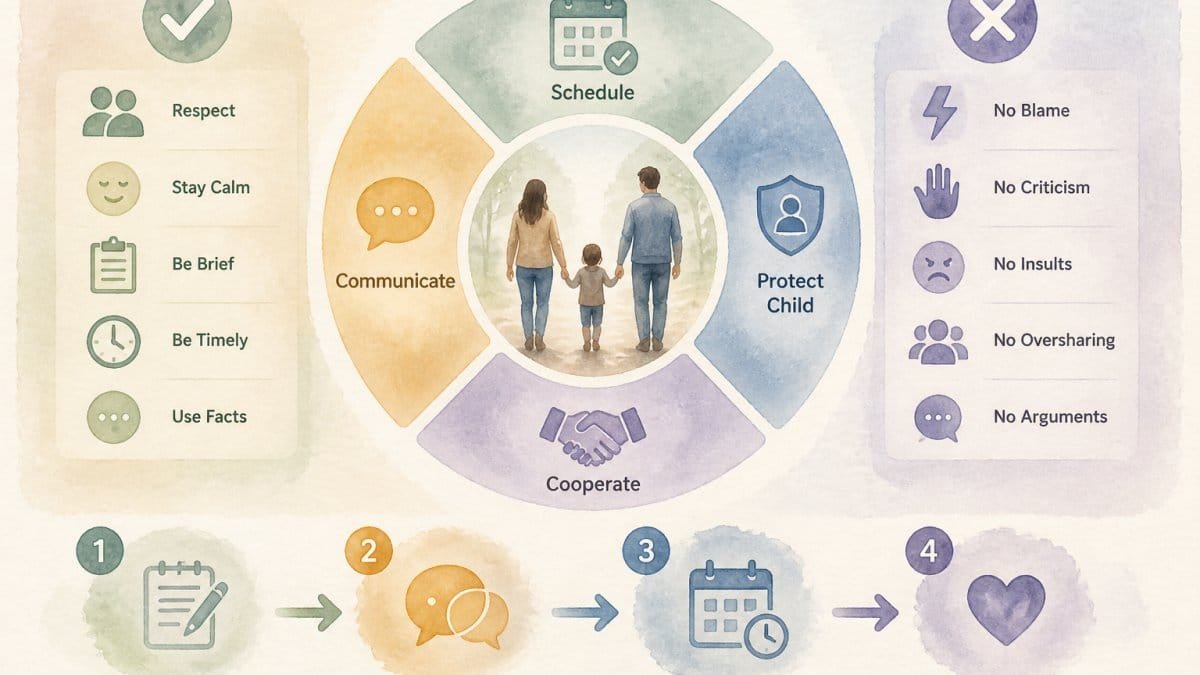
Keep Messages Brief, Factual, and Child-Focused
Short messages leave nothing to misinterpret; long messages give a hostile ex ammunition.
What to include:
- One specific fact about the child
- One clear decision or request
- One deadline or next step
What to avoid:
- Explanations or justifications
- Emotional language or tone
- Questions that invite debate
- Anything personal or unrelated to the child
Example of a good message:
“[Child] has a dentist appointment Tuesday at 2 PM. I’m taking him. He’ll be back by 4 PM.”
Example of a bad message:
“I’m taking [child] to the dentist on Tuesday because you never take him to his appointments and his teeth are getting worse. You should be more responsible about his health. I’ll be back at 4, and I expect you to be on time for pickup because I have plans.”
Choose Written Communication Over Calls or In-Person Meetings
Written communication gives you time to compose a response and creates a record; calls and in-person meetings let a toxic ex manipulate you in real-time.
Use written communication for:
- Schedule changes
- Disagreements about parenting decisions
- Setting boundaries
- Anything that might escalate
Reserve phone calls or in-person meetings for:
- True emergencies only
- Court-ordered mediation
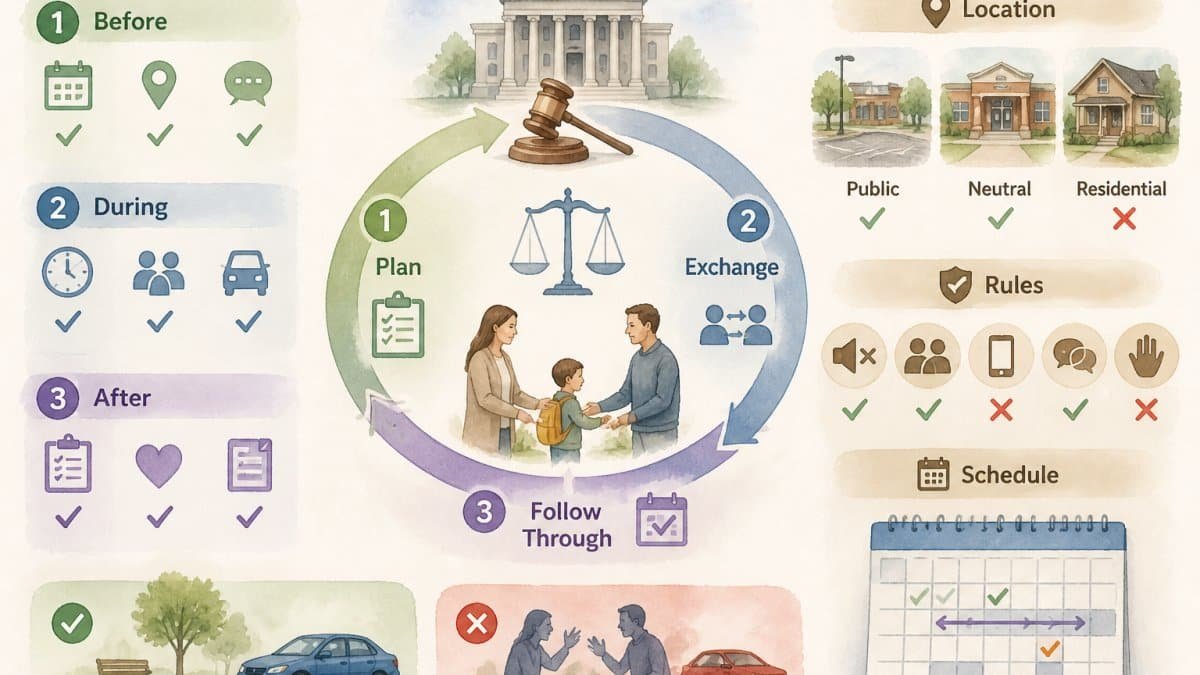
- Exchanges with a neutral third party present
Respond Calmly to Hostile or Emotional Messages
Wait at least one hour before responding to an angry message. Ask yourself: “Does this require a response, or is my ex just venting?”
If you need to respond:
Use the Gray Rock Method. Be boring, factual, and emotionless. Respond to the logistics, ignore the hostility.
Example:
Your ex writes: “You’re a terrible parent and [child] hates coming to your house. You’re ruining his life with your selfishness.”
Your response: “I received your message. [Child] has soccer practice Saturday at 9 AM. I’ll pick him up Friday at 5 PM as scheduled.”
Parallel Parenting with a Toxic Ex When Cooperation Fails
When cooperation fails, use parallel parenting: you and your ex parent separately with minimal communication and no shared decision-making.
Accept What You Cannot Control
You can’t control how your ex parents during their time. The harder you try, the more conflict you’ll create, and your children will feel it.
What you can control:
- How you parent during your time
- What boundaries you enforce with your ex
- How you respond to their hostility
- What you model for your children
Let go of the rest.
Minimize Communication to Logistics Only
In parallel parenting, communicate only about logistics: schedules, pickups, medical appointments, and school information.
What to communicate about:
- Pickup and drop-off times
- School schedules and events
- Medical appointments
- Shared expenses for necessities
- Changes to the parenting plan
What NOT to communicate about:
- How the other parent is parenting
- Disagreements about rules or discipline
- Your ex’s personal life
- Anything not directly tied to logistics
Document Interactions and Keep Detailed Records
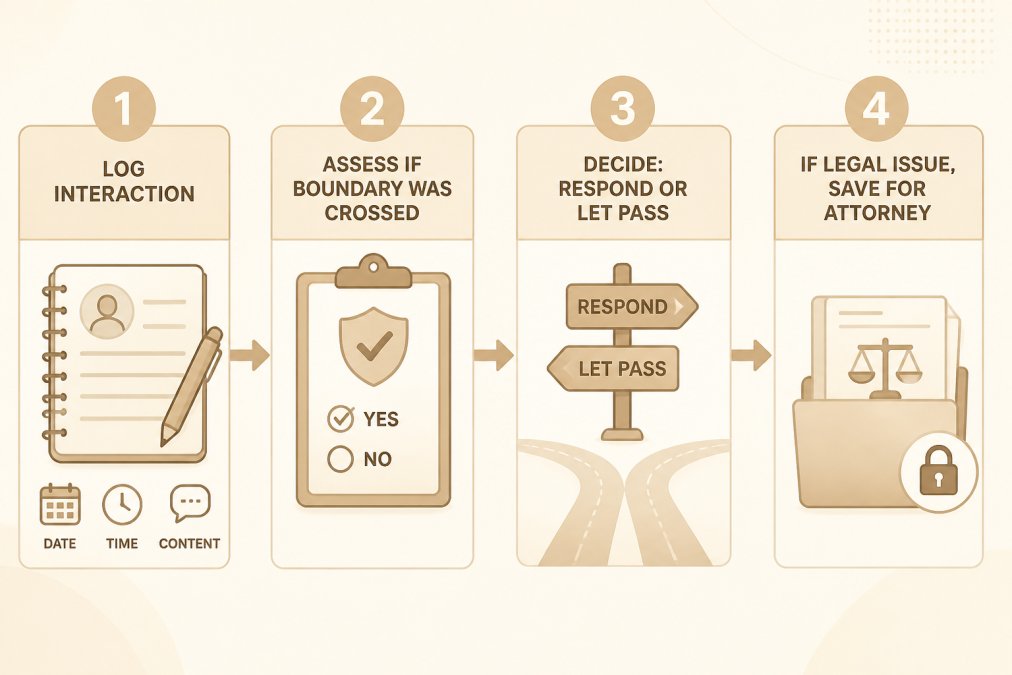
Documentation protects you in legal disputes. Document hostile messages, boundary violations, missed pickups, and concerning behavior.
What to Document and How
Create a log with these details:
- Date and time of the interaction
- What happened (message content, conversation, behavior)
- Who was present
- Any impact on the children
- Your response
Example entry:
“October 5, 2026, 7:15 PM. Ex sent message saying I’m ‘ruining [child]’s life’ and threatening to take me to court. Message was hostile and included personal attacks. I did not respond. No children present.”
What to save:
- All text messages and emails (screenshot them with dates visible)
- Photos or videos of concerning behavior
- Records of missed pickups or late returns
- Medical or school records
- Receipts for expenses you paid
Store these in a secure location your ex can’t access. Use cloud storage or a locked folder on your computer.
Using a Co-Parenting App for High-Conflict Parents
A co-parenting app creates an automatic record. Every message is timestamped, stored, and accessible. Many apps are designed specifically for high-conflict situations.
According to research on co-parenting tools for conflict reduction, apps reduce hostile communication by creating a structured, monitored environment where parents know interactions are documented.
Apps like these offer:
- Automatic message logging
- Shared calendars for schedules
- Expense tracking for shared costs
- Communication reminders to stay factual
- Optional third-party monitoring
Using a co-parenting app can be beneficial when your ex is hostile or unpredictable. It removes the temptation to communicate off-platform, and it gives you a clear record if you ever need to show a court how the conflict has escalated.

Protect Your Children from Conflict
Your children are learning about boundaries and conflict resolution by watching you. Protecting them from your conflict with your ex is essential.
Age-Appropriate Communication with Your Children
Don’t use your children as messengers, criticize their other parent, or ask them to report back on the other household.
What to tell your children:
“Your mom and I are not together anymore, but we both love you. We’re going to parent you separately, and that’s okay. You don’t have to manage our relationship.”
What not to tell them:
- Details of why you separated
- Criticism of their other parent
- Financial stress or legal problems
- Your feelings about your ex
- Requests to spy or report back
Keep explanations simple and age-appropriate. Young children need to know they’re safe and loved.
Model Healthy Conflict Resolution
Model healthy conflict resolution: stay calm, use words instead of anger, focus on solutions, and know when to end a conversation. Let your children see that you can disagree respectfully.
Common Mistakes to Avoid in High-Conflict Co-Parenting
Most parents make the same mistakes when co-parenting with a toxic ex.
Mistake 2: Responding to every message. Not every hostile message deserves a response.
Mistake 4: Sharing too much information. The less your ex knows about your life, the less ammunition they have.
Mistake 6: Documenting in the moment. Don’t send angry messages or threaten to “document” behavior. Document quietly.
Mistake 8: Involving your children in legal matters. Don’t tell them about court dates, custody disputes, or legal threats.
Co-parenting communication with a toxic ex is exhausting.
Research from the American Academy of Pediatrics on parental conflict and child outcomes shows that children fare better when parents can manage conflict respectfully and keep it away from them.
The goal isn’t to fix your ex or change how they parent.
Frequently Asked Questions
What are some tips for co-parenting with a manipulative ex?
Set firm boundaries on what topics you discuss, use written communication only to create a record, and keep responses brief and factual. Don’t engage with emotional manipulation or personal attacks. If your ex tries to pull you into arguments about the relationship or your character, redirect to the child’s needs: ‘I’m here to discuss Sarah’s soccer schedule.’ Use a co-parenting app to document interactions automatically. When your ex escalates, respond with the same neutral tone each time, this consistency removes the reward for hostile behavior.
How do you set boundaries with a high-conflict co-parent?
Define your boundaries in writing and communicate them clearly once. Examples: ‘I respond to messages within 24 hours on weekdays,’ ‘We discuss parenting decisions only,’ and ‘Schedule changes require 2 weeks’ notice.’ Enforce these boundaries consistently, if your ex sends personal attacks, do not respond to that part. Reply only to the parenting-related content. If your ex refuses to respect boundaries, move to parallel parenting: minimize contact and make decisions independently within your custody time.
Should co-parents use a parenting communication app?
Yes, especially in high-conflict situations. Co-parenting apps create a timestamped record of all communication, which protects you legally and reduces misunderstandings. They also filter out emotional language and keep conversations focused on logistics. Many apps include shared calendars, expense tracking, and message templates that help you stay neutral. If your ex refuses to use an app, you can still document your own communications by saving emails and text messages in a dedicated folder with dates and context.
How can you keep children out of conflict between co-parents?
Never discuss adult conflicts, custody disputes, or your ex’s behavior with your children. Keep conversations age-appropriate and reassure them that both parents love them and that the separation is not their fault. Do not ask children to relay messages to your ex or report back on the other household. Model calm, respectful behavior even when angry. If your ex involves children in conflict, document it and consult your custody agreement or a family law attorney, involving children in adult disputes can violate court orders and harm their wellbeing.