Last Updated: October 13, 2026
Table of Contents
How to Explain Separation to Children Without Blaming the Other Parent
Explaining separation to children without blaming means telling them the truth while keeping every reason about the adults, never about who is at fault, and explaining separation this way keeps the focus on safety rather than blame.
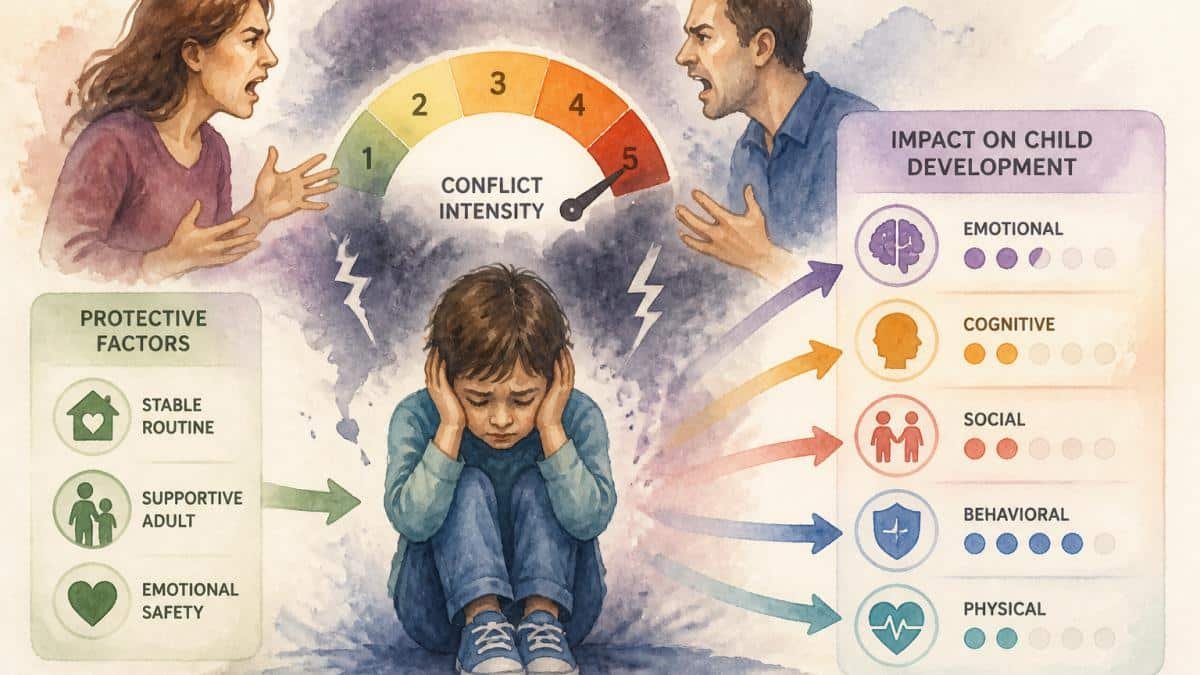
Researchers who study family stress find that ongoing hostility between parents predicts worse outcomes for children than the separation itself.
Your child’s question is almost never “why did you split up.” It is “am I safe, and do you both still love me.” Answer that first, every time.
What to Say to Kids When Parents Separate: Core Message Principles
The core message has four parts: this is not your fault, both parents love you, the adults made this decision, and your life will keep some steady anchors. Say all four in the first conversation.
Keep the explanation short. Kids process in small pieces, so give one clear paragraph and then stop talking.
- Not your fault. Say it plainly and repeat it in later talks.
- Both parents love you. Use the other parent’s name, not “your father” or “your mother.”
- Adult decision. “We decided” beats “he left” or “she chose to go.”
- What stays the same. School, friends, pets, bedtime routines.
Children often test the “not your fault” message by asking again weeks later. Treat the repeat question as normal, not as a sign the first talk failed. Answer it the same way every time.
Words and phrases to avoid
Cut these phrases entirely: “your father ruined our family,” “she broke our home,” “he doesn’t want to be with us,” and “this is between you and me, don’t tell your mom.” Each forces a child into a loyalty conflict. Also avoid adult details: money problems, infidelity, court dates, and new partners are issues children cannot process, and they often blame themselves for information they were never meant to hold.
Age-Appropriate Separation Conversation Scripts by Age and Situation
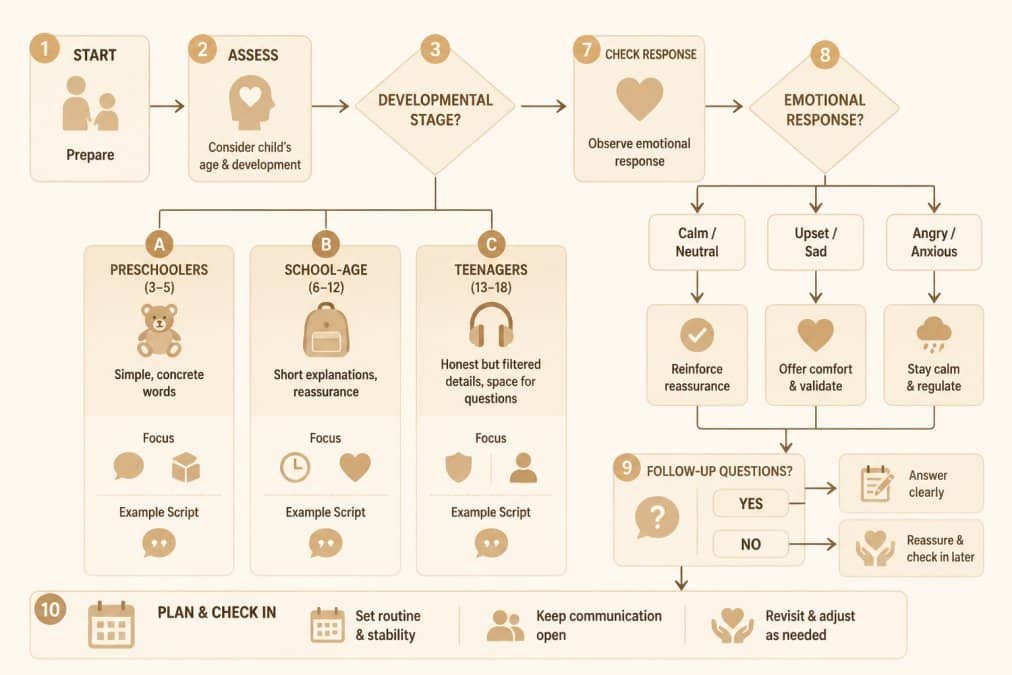
Age changes everything about how you deliver the message. A preschooler needs one sentence; a teenager needs honesty plus space. Match your words to your child’s developmental stage, not to your own need to explain.
(https://www.healthychildren.org/English/ages-stages/toddler/toilet-training/Pages/Regression.aspx)). A good sleeper may start waking at night.
- Keep drop-off and pick-up routines identical.
- Let them take a comfort object between homes.
- Say “both homes” instead of “Mom’s house” and “Dad’s house.”
- Avoid introducing a new partner during this early window.
Helping a Child Cope with Parents’ Separation: Follow-Up and Support
One conversation is never enough. Helping a child cope with parents’ separation is an ongoing process of check-ins, routine, and watching for signs they need more than you can give.
A simple check-in cadence
Most child therapists suggest a predictable rhythm rather than waiting for a crisis:
- First two weeks: a short check-in every day or two. Five minutes is enough. Ask about the day, not the separation.
- First three months: one scheduled check-in per week. Put it on the calendar so it is not tied to a problem.
- After three months: one check-in per month, plus any time your child brings it up.
- Around every transition: a move, a new school, a new partner, a holiday schedule change. Transitions are when old feelings resurface.
Ask open questions instead of “are you okay,” which invites a one-word answer. Try:
- “What has been on your mind lately?”
- “What is the best and worst part of your week?”
- “Is there anything you have been wondering about that no one has explained?”
- “If you could change one thing about how things work right now, what would it be?”
Listen without correcting feelings, even angry or unfair ones. Validate the feeling without agreeing with the conclusion: “It makes sense that you are angry. I would be too.”
Keeping routines steady across two homes
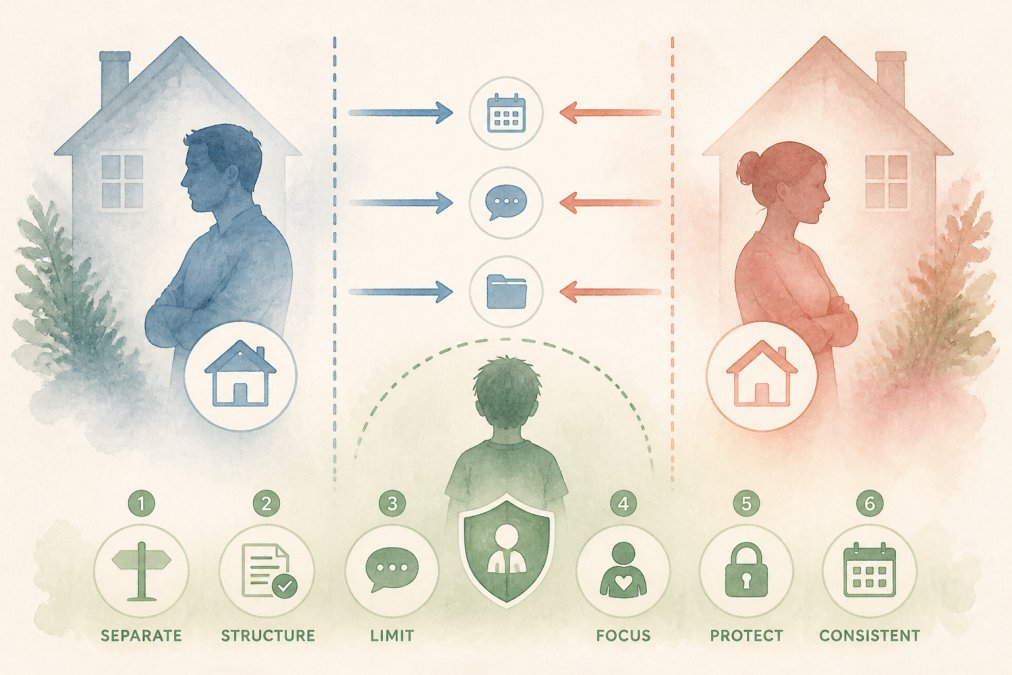
Children feel safer when the two homes feel like one family with two addresses. Bedtimes, homework rules, and screen limits should match as closely as possible. Where they cannot, tell your child what to expect so the difference is predictable rather than surprising.
- Keep the same bedtime window in both homes.
- Keep the same morning routine order: wake, dress, eat, pack, go.
- Keep the same rules about homework and screens.
- Let the child take a comfort object back and forth.
Signs a child needs more support
Watch for changes that last more than a few weeks:
- Withdrawal from friends or activities they used to love
- Falling grades or refusal to go to school
- Frequent stomachaches or headaches with no medical cause
- Sleep problems, nightmares, or bedwetting after age six
- Anger outbursts or aggression toward siblings
If you see several of these together, or any statement about self-harm, contact a pediatrician or a licensed child therapist right away. Asking for professional support is not a failure.
When and how to get professional help
A few situations call for a referral rather than more time:
- Any talk of self-harm or not wanting to be alive. Call or text 988 (the Suicide & Crisis Lifeline) right away.
- Symptoms that last more than four to six weeks or get worse.
- A child who stops functioning at school or with friends.
- A child who takes on a caretaker role for a parent or sibling.
- A child caught in the middle of ongoing conflict between parents.
Start with the pediatrician, who can rule out medical causes and refer to a child therapist. School counselors can also provide short-term support at no cost. If cost is a barrier, community mental health centers and university training clinics often offer sliding-scale fees.

Follow-up is not a single conversation. It is a rhythm of predictable check-ins, steady routines, and a low threshold for asking for help. The parent who keeps showing up calmly, month after month, is the one who protects the child. This consistency extends to the practical stability of the household, where managing accounting during divorce ensures that the financial foundations supporting your children remain secure and transparent.
When One Parent Caused Harm or Safety Is a Concern
Safety changes the script. When one parent has caused harm, the goal shifts from shared reassurance to honest, age-appropriate truth plus protection.
Do not lie about the other parent’s absence. Children usually know something is wrong, and lies erode trust.
Get legal guidance before you change custody, move, or restrict contact. Family law varies by state, and a family law attorney or your local court’s self-help center can tell you what is allowed where you live.
Never tell a child to keep a secret from the other parent, even for their protection. Secrets create anxiety and can put a child in danger if they are later asked about it in a legal setting.
If your child has witnessed violence or abuse, ask the pediatrician for a referral to a trauma-informed therapist. Children who witness harm often need specialized support that a parent cannot provide alone.
Co-Parenting When You Cannot Agree on a Shared Explanation
When parents cannot agree on what to tell the children, the fallback is a short, neutral shared message both parents can live with.
Write it down and keep it to three or four sentences. If your ex refuses to participate, deliver the message yourself and stay neutral.
Keep adult conflict away from the children. Arguments about money, custody, or the past belong in a lawyer’s office, not the kitchen.
You cannot control what the other parent says to your child. You can control what you say, how often you say it, and whether you stay calm. That consistency is what protects your child.
Conclusion
Children do not need the full story of your separation. They need the truth stripped to its safest form: this is not your fault, both parents love you, and your daily life will stay as steady as you can make it. If you are navigating high-conflict co-parenting or betrayal, After the Affair Series offers structured frameworks and age-appropriate scripts to help you have these talks with confidence.
Frequently Asked Questions
How do I explain separation without blaming the other parent?
Focus on the decision, not the person. Use neutral language like ‘We decided to live in different homes’ rather than ‘Your dad left us.’ Avoid listing reasons that point to one parent’s faults. If you slip, correct yourself calmly. The goal is to protect your child’s relationship with both parents while being honest that the separation is final.
What should I say to a child when explaining a separation?
Start with the basics: ‘We have something important to tell you. We are going to live in separate homes, but we both love you and will always be your parents.’ Keep it short and simple. Give them time to ask questions. Reassure them it is not their fault and that they did nothing to cause this. For age-appropriate separation conversation scripts, tailor your words to their developmental stage.
How do I explain separation to a preschooler?
Use very simple, concrete words. Say something like: ‘Mommy and Daddy are going to live in different houses. You will have two homes. We both love you very much.’ Avoid abstract concepts like ‘marriage’ or ‘divorce.’ Preschoolers need repetition and physical reassurance. Expect them to ask the same questions again; answer calmly each time.
How can I help my child cope with parents’ separation?
Maintain routines, validate their feelings, and keep conflict away from them. For helping a child cope with parents’ separation, create a predictable schedule, listen without fixing, and reassure them of your love. Watch for signs they need more support, like withdrawal, aggression, or regression. Consider a child therapist if symptoms persist beyond a few weeks.