Last Updated: August 14, 2026
- Recognize the Conflict Cycle Before It Escalates
- Use Conflict Resolution Scripts for Couples
- How to Disengage From an Argument
- Apply De-Escalation Techniques for Relationships
- Set Firm Boundaries and Ground Rules
- Manage Your Emotional Regulation and Self-Awareness
- Repair and Protect Your Children After Conflict
- Frequently Asked Questions
Recognize the Conflict Cycle Before It Escalates
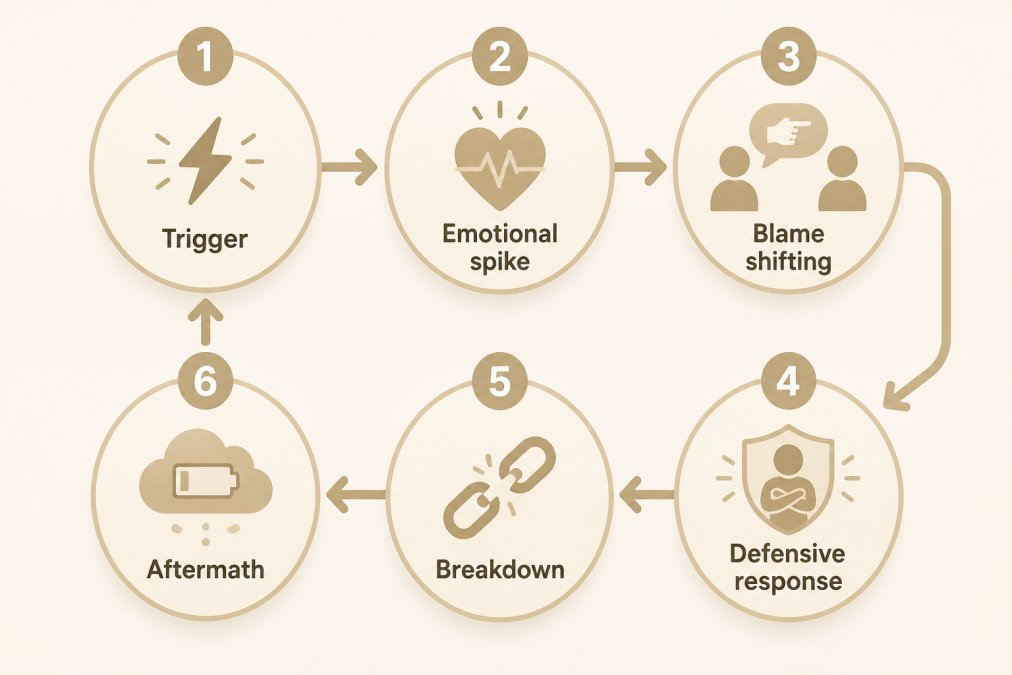
High-conflict arguments follow a predictable pattern: a trigger activates an emotional response, blame follows, defensiveness escalates, communication breaks down, and aftermath creates the next trigger. Understanding this cycle lets you interrupt it before momentum takes over. It is essential to learn strategies to stop high-conflict arguments effectively.
Identifying high-conflict patterns and recurring cycles
By implementing these strategies, you can work towards healthier communication and ultimately stop high-conflict arguments from dominating your interactions.
Most high-conflict couples can predict their arguments with accuracy. The same topics resurface, the same accusations get made, the same defensive responses follow. This predictability is your diagnostic tool.
Common patterns include the pursue-withdraw cycle (one partner pursues resolution while the other withdraws), the blame-defend cycle (accusations trigger counteraccusations), and the catastrophize-minimize pattern (one person amplifies seriousness while the other dismisses it). Recognizing these patterns creates distance from the conflict and opens space for choice.
Spotting your personal triggers
Your triggers are the specific events, words, or behaviors that activate your stress response. Common triggers include feeling dismissed, perceiving broken promises, sensing betrayal, being blamed unfairly, or feeling controlled. In co-parenting situations, triggers might include parenting decisions made without consultation or negative comments about you to the children.
Write down your specific triggers. “When my ex says I’m a bad parent” is more useful than “parenting criticism.” Understanding your triggers lets you anticipate them and choose a response rather than react automatically.
Use Conflict Resolution Scripts for Couples
Scripts give your nervous system structure when your impulses would otherwise take over. They’re guardrails for moments when you don’t have access to your full intelligence.
After the Affair Series provides specific frameworks and conflict resolution scripts designed for high-conflict situations.
The Gray Rock Method script
The Gray Rock Method is a de-escalation technique where you become as unresponsive and uninteresting as a gray rock. Provide factual information without emotion or engagement.
Use this script when the other person tries to provoke you:
“I understand you’re upset. Here’s what I can do: [specific action]. Here’s what I can’t do: [specific boundary]. Let me know if that works for you.”
Example: “I understand you’re frustrated about the pickup time. Here’s what I can do: I’ll text you 30 minutes before I arrive. Here’s what I can’t do: I can’t change the scheduled time without going through our agreement. Let me know if the text reminder helps.”
This removes emotional hooks and the reward the other person might seek from conflict.

Matter-of-fact communication templates
Matter-of-fact communication delivers information without emotional charge, sounding calm and neutral.
Use this template for difficult conversations:
“[Situation]: [What happened]. [Impact]: [How it affects the agreement/children]. [Action]: [What needs to happen next].”
Example: “Situation: You picked up the kids 45 minutes late last Thursday. Impact: This made me late for work and created stress for the children. Action: Going forward, if you’ll be more than 10 minutes late, please text me immediately.”
These scripts work because they remove interpretation and stick to observable facts.
How to Disengage From an Argument
Disengagement is not avoidance. It means recognizing that a conversation is no longer productive and choosing to pause it.
When to recognize it’s time to step back
Disengage when voices are raised and staying raised, the same points repeat without new information, blame escalates, or either person becomes dysregulated. Other signs include your own escalation, the other person clearly not listening, character attacks replacing problem-solving, or repeating arguments you’ve made before.
A useful rule: if you’ve made your point twice and the other person hasn’t acknowledged it, you won’t win them over in this conversation.
Exit statements that work
Use language that signals you’re stepping back without being dismissive:
“I can see we’re not going to agree on this right now. I’m going to step away so we both have time to cool down. We can talk about this later.”
“This conversation isn’t going anywhere productive. I’m going to pause here. Let’s pick it up when we’re both calmer.”
“I’m noticing I’m getting too activated to think clearly. I need to take a break. I’ll text you tomorrow when I’ve had time to think.”
The pattern: name what’s happening, state your action, offer a time to reconnect. Don’t apologize for leaving or explain why they’re wrong.
Apply De-Escalation Techniques for Relationships
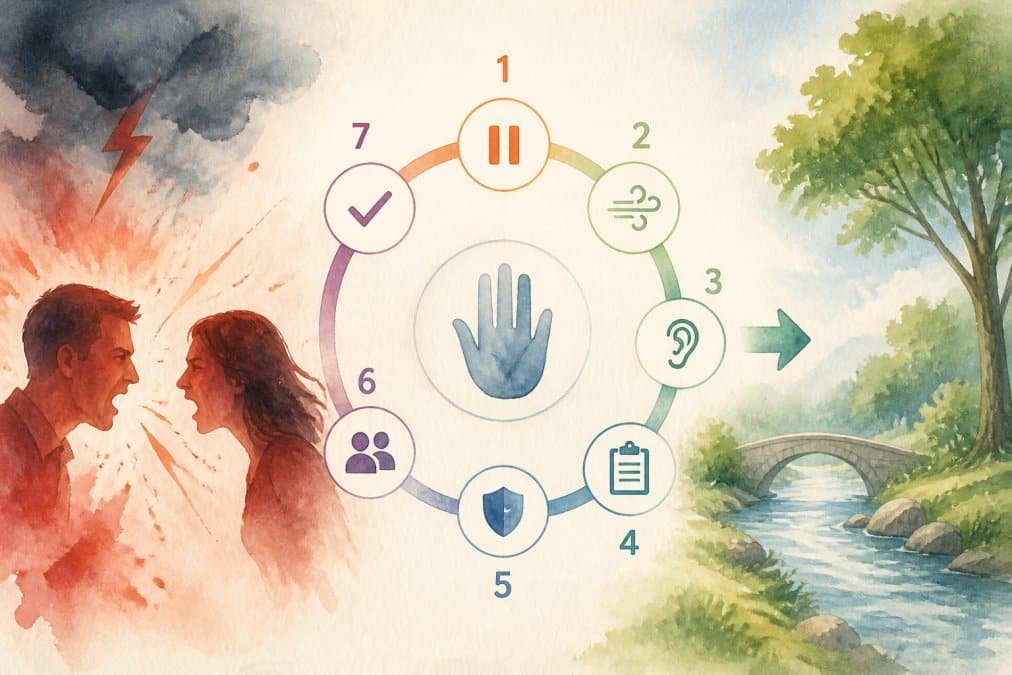
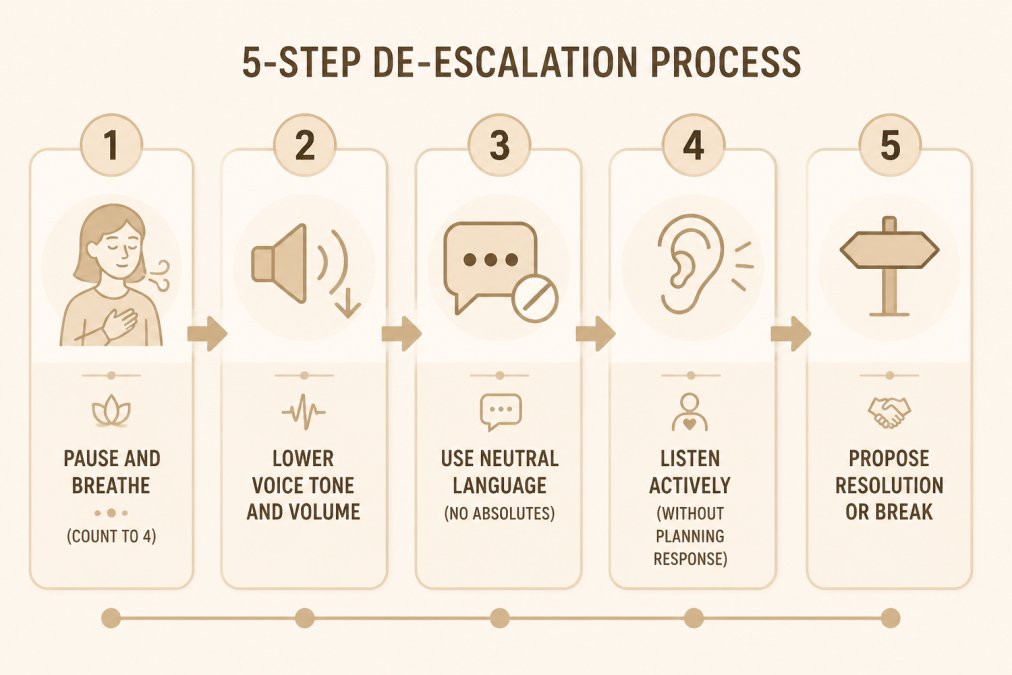
De-escalation reduces tension in real time by bringing both people’s nervous systems back to a state where actual communication becomes possible.
Physiological regulation in the moment
When activated, your heart rate is elevated, breathing is shallow, and your thinking brain is offline. Regulate your physiology first.
Try this: breathe in for a count of 4, hold for a count of 4, breathe out for a count of 6. The longer exhale activates your parasympathetic nervous system. Do this three to five times.
Pause before responding. When the other person says something inflammatory, take 10 seconds of silence to breathe and access your thinking brain. Physical grounding helps too: feel your feet on the floor, notice the room’s temperature, identify five things you can see.
Active listening and neutral tone
Active listening means listening to understand, not to respond. Reflect back what you heard: “So what I’m hearing is that you felt excluded when I made the decision without asking.” Avoid interrupting, even if you disagree.
Neutral tone means speaking without anger, sarcasm, or contempt. Avoid absolutes like “You always do this.” Instead use specific language: “When you interrupt me, I feel unheard.”
The combination of active listening and neutral tone creates psychological safety and dramatically reduces defensiveness.
Set Firm Boundaries and Ground Rules
Boundaries protect both of you by creating predictability and mutual respect. Without them, conflict spreads endlessly.
Establishing non-negotiable limits
Identify behaviors you will not tolerate and consequences you will enforce:
- No name-calling or personal attacks
- No discussing the other parent negatively in front of the children
- No unscheduled contact during work hours (text only, phone calls for emergencies)
- No bringing up past betrayals in current arguments
- No making parenting decisions unilaterally without consultation
For each boundary, define what it looks like when crossed and the consequence:
- “If you speak negatively about me to the children, I will reduce your phone time with them by 50% for one week.”
- “If you call me repeatedly during work hours, I will not answer. We’ll communicate by text only until you respect my work schedule.”
The consequence must be something you can actually enforce and should be a natural consequence that protects you and your children.
Digital communication etiquette
Most high-conflict interactions happen over text or email. Digital communication removes tone and body language, making misinterpretation and escalation faster.
Establish ground rules:
- Use email for important matters needing documentation. Keep text for logistics only.
- No messages after 9 PM or before 8 AM unless it’s an emergency.
- No venting or emotional content. Keep communication factual and brief.
- If a message feels emotionally charged, wait 24 hours before sending.
- Use “I” statements: “I need the kids home by 6 PM” not “You’re always late.”
Use this template:
[Name], [specific information needed]. [Proposed action]. [Timeline]. Let me know.
Example: “Sarah, the kids need new soccer cleats. I’ll purchase them this week and send you the receipt. Please reimburse me by Friday. Let me know if you want to handle this instead.”
Manage Your Emotional Regulation and Self-Awareness
You cannot control the other person’s behavior. You can only control your response to it. Emotional regulation means experiencing emotions without being controlled by them.
Understanding your impulse control patterns
When triggered, your impulses push toward fight, flight, or freeze. Recognize your pattern: Do you escalate and push back hard? Do you withdraw and shut down? Do you go numb?
Once you know your pattern, you can anticipate it and choose differently. If you’re a fighter, pause before responding. If you’re a flyer, practice staying present. If you’re a freezer, notice when you’re shutting down and gently bring yourself back.
Stress reduction before conflict starts
Build stress reduction into your routine: exercise regularly, sleep adequately, practice meditation or deep breathing daily, spend time in nature, maintain social connection, and limit caffeine and alcohol.
Before a scheduled difficult conversation, do something calming first. You’re building your capacity to stay regulated when things get hard.
Repair and Protect Your Children After Conflict
Once an argument ends, repair means acknowledging the impact and rebuilding safety.
Post-conflict repair conversations
Within a few hours of significant conflict, have a brief conversation with your children:
“Earlier today, your mom and I had a disagreement. We were both upset. That wasn’t okay for you to see/hear, and I’m sorry. This disagreement is between us. It has nothing to do with you or how much we love you. We’re working on communicating better.”
Key elements: acknowledge what happened, apologize for the impact, clarify it’s not the child’s responsibility, and show you’re taking action to improve.
Shielding children from high-conflict dynamics
Never speak negatively about the other parent in front of them. Don’t ask them questions about what the other parent is doing. Don’t use them as messengers. Keep transitions calm and predictable. If conflict is happening, remove the children from the space. Maintain consistent routines across both homes.
Research consistently shows that children exposed to chronic parental conflict experience anxiety, depression, behavioral problems, and long-term relationship difficulties. Protecting children from high-conflict dynamics is one of the most important things you can do for their wellbeing.
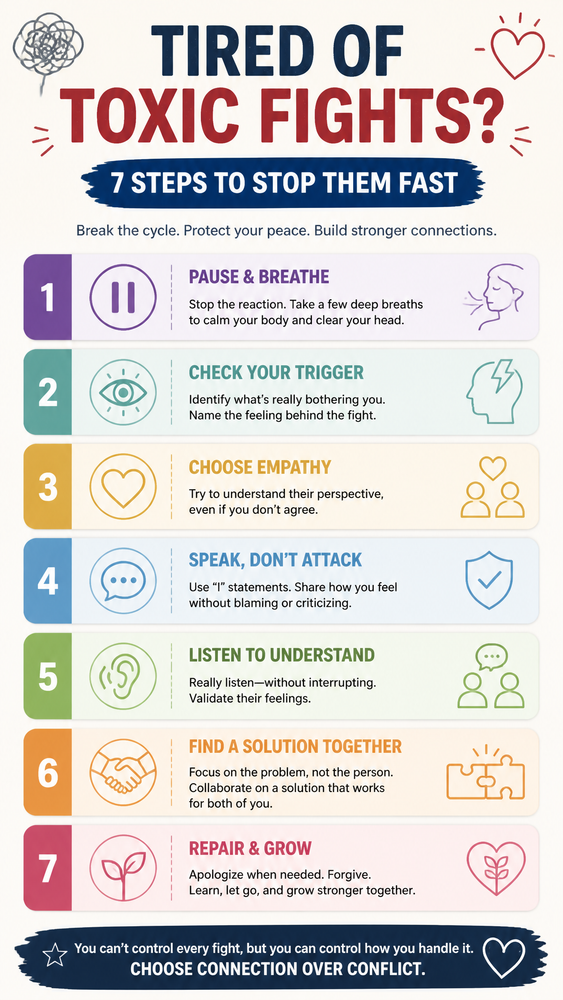
High-conflict arguments feel inevitable once they start, but they’re not. Each follows a pattern with points where it can be interrupted. Recognizing the cycle, using scripts, disengaging strategically, de-escalating in the moment, setting boundaries, regulating yourself, and protecting your children are the tools that make interruption possible.
What makes the difference is practice. These are skills, not instincts. They improve with repetition.
After the Affair Series provides structured frameworks and 50+ age-appropriate scripts designed specifically for high-conflict situations and co-parenting after separation. Rather than offering general advice, the toolkit delivers immediate, practical solutions for moments when communication breaks down. Take the free 23-point assessment to understand your specific conflict patterns and get personalized guidance on which strategies will work best for your situation.
Frequently Asked Questions
What should I do when my ex refuses to communicate reasonably during high-conflict arguments?
When someone is unwilling to engage constructively, your goal shifts from resolution to protection. Use the Gray Rock Method: respond in a flat, matter-of-fact tone with minimal emotional content. Keep replies brief, factual, and non-reactive. If the conversation escalates despite your efforts, disengage immediately using a pre-planned exit statement like ‘I’m not able to continue this conversation right now.’ Document the interaction and return to communication when both parties are calmer. This approach works because it removes the emotional fuel hostile people often seek.
How do I know when to walk away from a high-conflict argument?
Walk away when you notice any of these signs: your heart rate is elevated, you’re raising your voice, you feel the urge to blame or defend, or the conversation is repeating the same points. These are signals that de-escalation has failed and continuing will only deepen the conflict. Set a personal rule: if either person raises their voice or repeats the same accusation twice, the conversation ends. A simple statement like ‘I need to step away’ is sufficient. The conflict won’t be resolved in that moment anyway, and disengaging protects both your emotional regulation and the relationship dynamic with your children.
Can conflict resolution scripts actually work with someone who is genuinely hostile?
Scripts work differently with hostile individuals than with cooperative partners. With truly hostile people, scripts aren’t designed to create dialogue, they’re designed to create distance and predictability. The Gray Rock Method and matter-of-fact communication templates prevent you from being drawn into blame cycles or emotional traps. They also establish a pattern that hostile people recognize: you won’t engage emotionally. Over time, this reduces their motivation to escalate because there’s no emotional payoff. Scripts also protect you legally by creating a documented pattern of calm, reasonable communication.
What’s the difference between these techniques and just going to therapy or using a co-parenting app?
Therapy addresses the underlying emotional wounds and helps you process betrayal or relationship breakdown, essential work. Co-parenting apps document communication but don’t teach you how to stay calm in real-time conflict. These de-escalation and boundary-setting techniques fill the gap: they give you immediate, actionable tools for the moments when conflict is happening right now. They’re not a replacement for therapy; they’re the tactical toolkit you use between therapy sessions and during crisis moments. Many people benefit from all three: therapy for healing, apps for documentation, and these scripts for in-the-moment management.