- How the Family Impact of an Affair Ripples to Children
- Age-Specific Impact of an Affair on Children
- Telling Children About an Affair: What to Say at Each Stage
- Children Coping With Infidelity: Signs to Watch and When to Seek Help
- Parenting After Infidelity: Practical Strategies for Both Partners
- Supporting Kids Through Betrayal: The Road to Family Recovery
The impact of an affair on children is rarely direct. Most children never hear a word about what happened, yet they feel it anyway. They notice a parent crying behind a closed door, mealtimes eaten in silence, or a mum or dad who is physically present but emotionally somewhere else. Understanding how that invisible damage works, and what parents can do about it, is one of the most important steps in any family’s recovery.
The good news is clear: the harm is real but not inevitable. How parents behave during and after the crisis matters more to children’s long-term wellbeing than the affair itself. That makes parental choices in the coming weeks and months genuinely powerful.
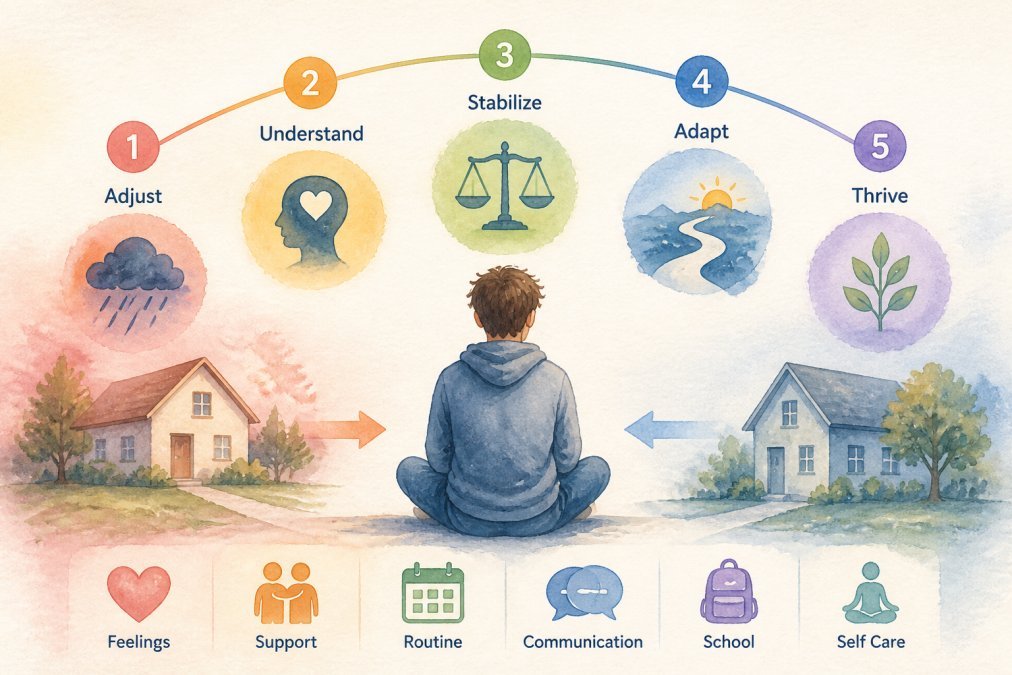
How the Family Impact of an Affair Ripples to Children
Children are remarkably sensitive to parental emotional states. Child development specialists, drawing on decades of attachment research from John Bowlby and Mary Ainsworth, consistently note that even infants register stress through changes in caregiving behaviour, tone of voice, and physical availability, long before they can name what they feel. An affair disrupts the emotional weather of a home, and children live inside that weather every day.
The family impact of an affair reaches children through three main channels: changed routines, reduced parental availability, and the ambient tension that accompanies secrecy or ongoing conflict. None of these require a child to know what happened for the effects to land.
Research into family transitions shows consistently that it is the level of ongoing parental conflict, not the structural change of separation or staying together, that most predicts children’s long-term psychological adjustment. A couple who separate but co-parent calmly tend to raise children who adjust better than a couple who stay together but fight constantly. This finding, replicated across decades of family-dissolution research, applies directly to affair-related stress. It places responsibility firmly on parental behaviour, which is exactly where parents can focus their energy.
Age-Specific Impact of an Affair on Children
Children process family disruption differently depending on where they are developmentally. The impact of an affair on children shifts in character, not in seriousness, across age groups.
Toddlers and Pre-schoolers (0–5): Sensing Without Understanding
Very young children cannot understand infidelity, but they are exquisitely tuned to the emotional state of their primary caregivers. When a parent is distressed, preoccupied, or withdrawn, a toddler loses reliable emotional signalling. This disrupts secure attachment, the foundation children need to explore the world confidently.
Common signs in this age group include increased clinginess, sleep disturbance, regression in toilet training or speech, and heightened separation anxiety. These children are not reacting to a narrative; they are reacting to a shift in the emotional climate. Restoring warmth, predictability, and physical closeness is the most direct intervention available.
Primary-Age Children (6–11): Magical Thinking and Loyalty Conflicts
A primary-school child who overhears a heated argument about infidelity may not understand what an “affair” is, but they will often construct an explanation that centres on their own behaviour, wondering whether they caused the problem. This magical thinking is developmentally normal, rooted in the self-referential reasoning that psychologists from Piaget onwards have documented in this age group. Without direct reassurance, it can calcify into persistent guilt.
Children in this stage also experience sharp loyalty conflicts. If one parent is visibly hurt and the other is cast as the cause, a child can feel that loving one parent is a betrayal of the other. They may become anxious, people-pleasing, or clingy with the more distressed parent. School performance can dip as emotional bandwidth gets consumed at home.
The single most important message for this age group: nothing that happened between the adults is your fault.

Teenagers (12–18): Identity, Betrayal, and Acting Out
Adolescence is already a period of identity formation and testing the reliability of adult relationships. An affair can land on that developmental task like a grenade. Teenagers are old enough to understand what infidelity means, and to feel genuinely betrayed by a parent who modelled behaviour that conflicts with the values they were taught.
Adolescents are also particularly vulnerable to what researchers call parentification, when a distressed parent leans on a teenager for emotional support. This inverts the caregiving hierarchy and can disrupt the teen’s own identity development and future attachment patterns. A parent sharing affair details, seeking reassurance, or asking a teenager to relay messages to the other parent is placing an adult burden on a developing mind.
Behavioural responses in teens include withdrawal, anger (sometimes directed at the unfaithful parent, sometimes at both), risk-taking, academic decline, and, at the more serious end, substance use or early sexual activity. Their distress is real and deserves direct acknowledgment, not minimisation.
Telling Children About an Affair: What to Say at Each Stage
The Disclosure Decision: Less Is Usually More
Most families find that what to do after discovering a partner’s affair becomes urgent almost immediately, and the question of what to tell the children follows close behind. The core principle is straightforward: children need enough truth to make sense of the visible changes in their family, but they do not need adult detail.
Clients supported through aftertheaffair.uk consistently report that children’s most pressing need was not an explanation of what happened, but a credible reassurance that both parents still love them and that family life will remain predictable. The explanation children need is about them, not about what one adult did to another.
Both parents should agree on what will be said before anyone speaks to the children. Contradictory accounts, or one parent filling in gaps the other left, create confusion and erode children’s sense of safety.
Age-Appropriate Language and Boundaries
Under 5s rarely need any direct disclosure. If routines change, a simple explanation, “Mum and Dad are having some difficult feelings right now, and grown-ups are helping us sort it out”, is usually sufficient.
Ages 6–11 benefit from a little more honesty about the fact that a problem exists: “Mum and Dad have had a serious disagreement. We are working on it together. You did nothing wrong, and we both love you.” Avoid the word “affair” with this age group unless they ask directly; even then, an honest but brief response (“One of us did something that hurt the other’s trust, and we are trying to fix it”) protects them from adult complexity without lying.
Teenagers can be told more plainly that trust was broken, without graphic detail. “Dad/Mum made a choice that hurt our relationship. We are getting help to work through it” acknowledges reality without weaponising it. Do not use a teenager as a confidant, messenger, or emotional support. Redirect those needs to adult friends, a counsellor, or a therapist.
Children Coping With Infidelity: Signs to Watch and When to Seek Help
Children coping with infidelity express distress in behaviour more often than in words. Knowing the signs at each stage helps parents respond early, before short-term distress becomes entrenched.
Under 5s: regression (bedwetting, thumb-sucking, baby talk), sleep disruption, clinginess, reduced appetite, unexplained crying.
Ages 6–11: complaints of stomach aches or headaches with no medical cause, drop in school performance, becoming a “fixer” or excessively good, tearfulness, withdrawal from friends, or conversely, aggressive behaviour.
Teenagers: persistent withdrawal, falling grades, new friendship groups associated with risky behaviour, unexplained anger, disrupted sleep, loss of interest in previous hobbies, or statements about not caring about the future.
Short-term distress following a family crisis is normal and expected. Concern is warranted when symptoms persist beyond six to eight weeks, intensify rather than ease, or significantly impair a child’s functioning at school or socially. At that point, a school counsellor is a low-barrier first step. A child or adolescent therapist is appropriate when distress is deeper, more entrenched, or the family situation remains highly volatile. A GP or paediatrician can rule out physical causes and refer on. Seeking help early is not an overreaction, it is sound parenting.
Parenting After Infidelity: Practical Strategies for Both Partners
Protecting Children from Parental Conflict
The single most protective thing both parents can do is keep adult conflict out of children’s earshot and direct experience. Arguments, tearful phone calls, and hostile silences all register. Disagree in private, behind closed doors, via text when the children are at school, or with a counsellor present.
Neither parent should speak negatively about the other to the children. This is hard when trust has collapsed, but understanding betrayal trauma and its psychological effects helps explain why the betrayed partner may find this especially difficult, the injury is real, and managing it alone is a lot to ask. Building personal support outside the co-parenting relationship (therapy, trusted friends, a support group) makes it possible to hold firm boundaries with the children without suppressing everything.
The unfaithful partner carries a specific responsibility here: visible remorse directed at the children’s other parent, shown through calm and cooperative co-parenting, is one of the most stabilising things they can do for the family.
Maintaining Routine and Emotional Safety
Routine is not a small thing for children, it is the structure through which they experience predictability and safety. Mealtimes, bedtimes, school drop-offs, weekend rituals: maintain them wherever possible, even when everything feels like it is falling apart internally.
Both parents need to remain emotionally available to the children, which means managing their own distress actively rather than in front of them. Coping strategies for the betrayed partner are directly relevant here, a parent who is better supported emotionally is a better-functioning parent, full stop.
Wherever the couple lands, together or separated, specialist co-parenting support after infidelity can help establish ground rules that protect the children regardless of how adult relationships evolve.
Supporting Kids Through Betrayal: The Road to Family Recovery
Supporting kids through betrayal is a parallel process to adult recovery, not an afterthought. The couple works on their own relationship, whether that means rebuilding or separating, while simultaneously keeping children’s security as a non-negotiable priority.
Family or co-parenting counselling is valuable whether the couple stays together or not. A skilled family therapist can help children find words for their experience, help parents hear what their children actually need, and establish communication patterns that protect the whole family going forward. Rebuilding closeness as a couple after infidelity and rebuilding children’s sense of safety are complementary goals, not competing ones.
The evidence from family resilience research is clear: children can and do recover fully from family disruption caused by an affair, when parents prioritise their wellbeing, manage conflict actively, and provide consistent reassurance. The affair is one event in a child’s life. Parental love and reliability, maintained through and beyond the crisis, are what define the longer story.
The broader affair recovery journey takes time for every member of the family, adults and children alike. Understanding where your family is in that process, and what each person needs right now, is a practical first step. If you are unsure where to start, a structured assessment tool can help you identify your family’s specific pressure points and find the right support, for your children, for yourself, and for the relationship, whatever form it takes next.