Table of Contents
Last Updated: September 27, 2026
Building a Parallel Parenting Structure for School and Activities
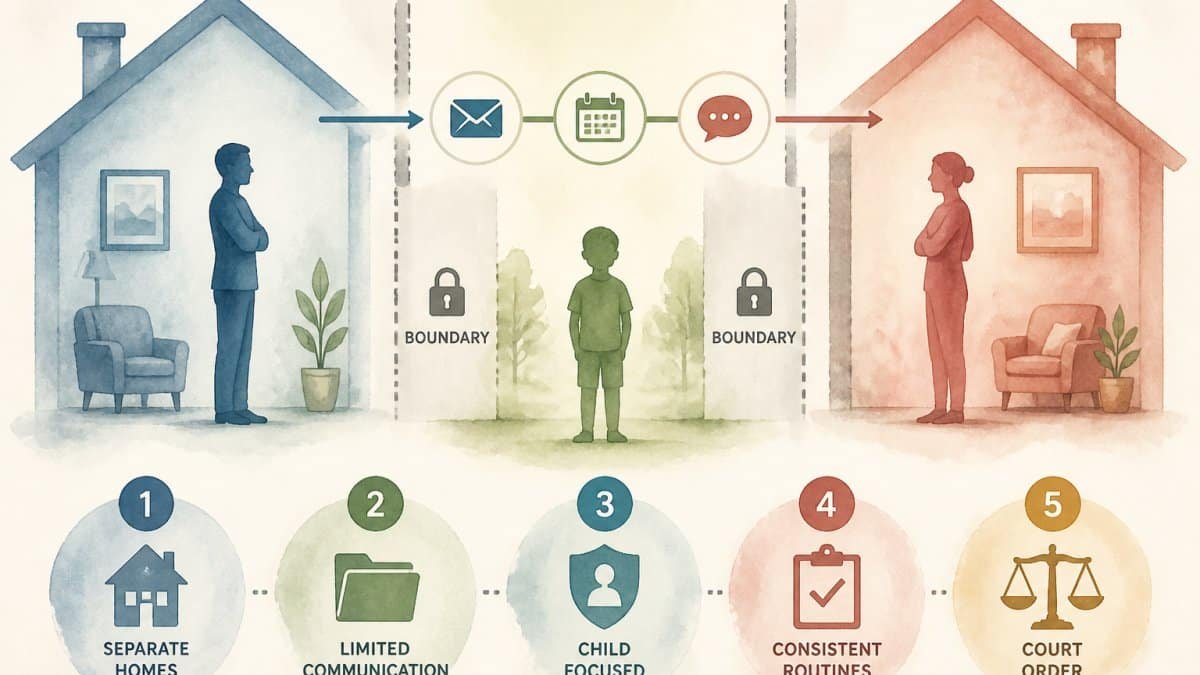
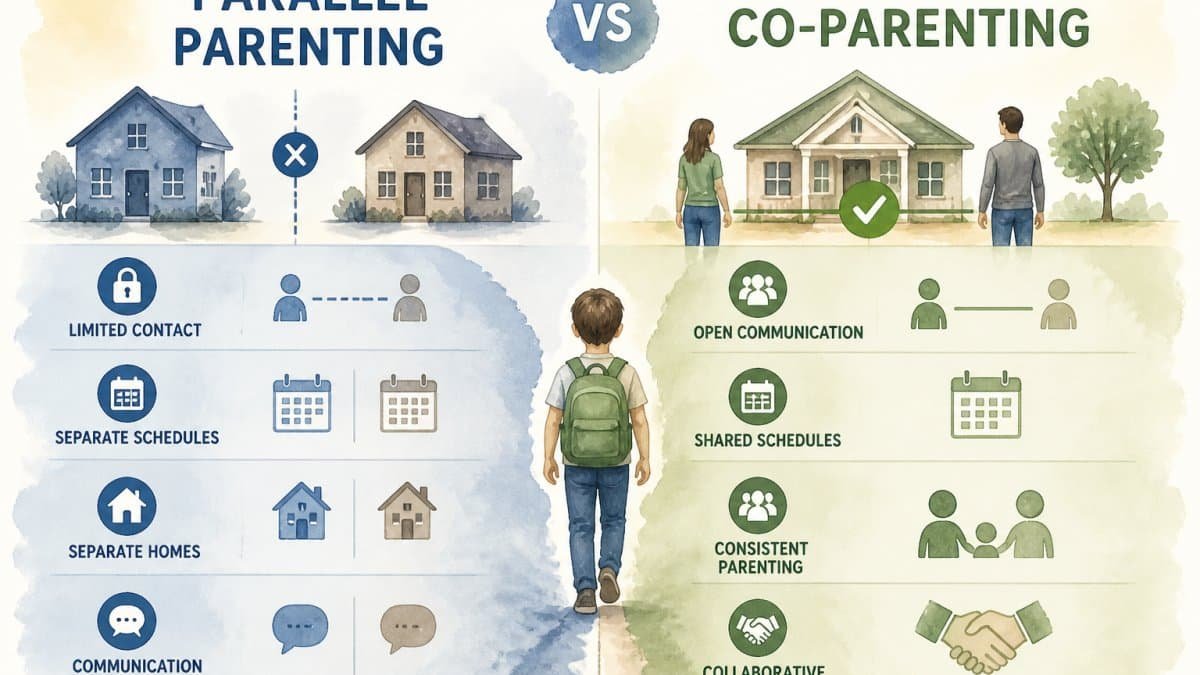
Parallel parenting is a structured way for high-conflict parents to raise a child together while keeping direct contact to a minimum. Each parent runs their own household, follows the same written rules, and coordinates only through documented, businesslike channels.
A few things make that work:
- A written parenting plan that covers school and activities in detail
- Fixed communication channels and response windows
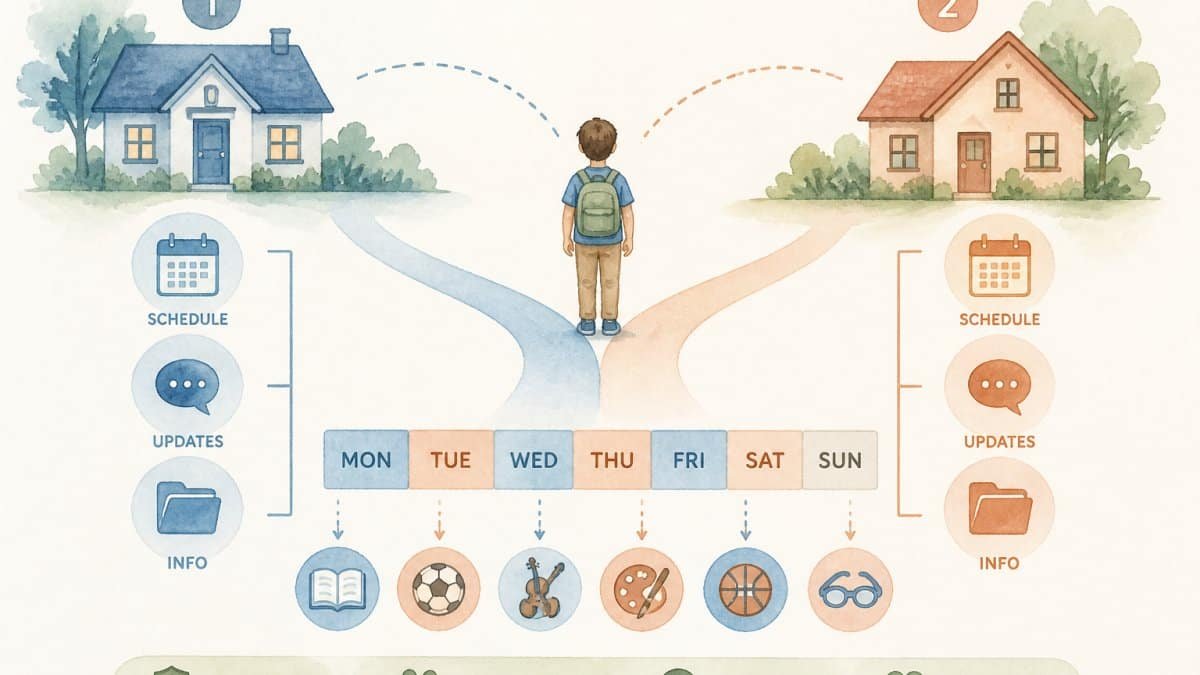
- A shared calendar both parents can see
- Clear rules for who pays, who drives, and who decides
Parallel Parenting Communication Scripts for School and Activity Coordination
Communication scripts are short, pre-written messages you send instead of reacting in the moment. They keep your tone neutral, your requests clear, and your records clean.
Scripts for Requesting Schedule Changes
Use a short, factual format: what changed, what you need, and a deadline for a reply.
Three rules make this script work:
- State the change, not the reason you’re annoyed by it
- Ask one clear question
- Give a specific reply date
Scripts for Handling Last-Minute Cancellations
Last-minute cancellations are where parallel parenting tips for school and extracurriculars earn their keep. A cancellation is not a crisis if you have a written fallback.
Send cancellation messages through the same channel every time, such as email or your co-parenting app. A consistent channel creates a clean record and removes the “you never told me” argument before it starts.
Drafting a Parenting Plan Extracurricular Activities Clause
A parenting plan extracurricular activities clause spells out how activities get chosen, scheduled, and paid for. Vague clauses create disputes; specific clauses prevent them.
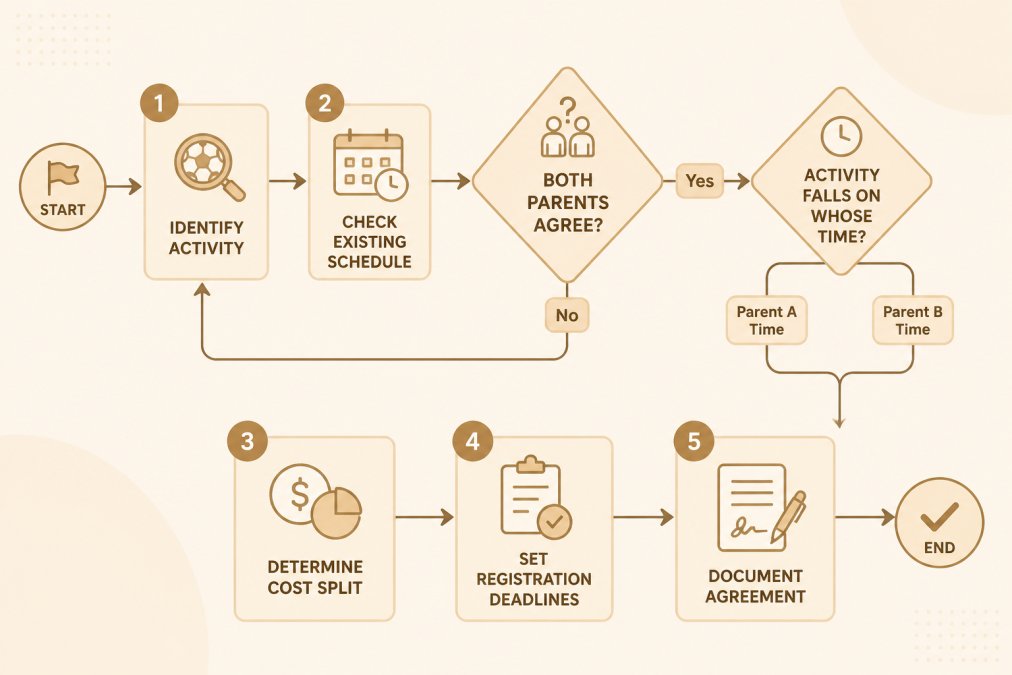
A strong clause answers five questions:
- Who chooses the activity, and does the other parent get a say
- How many activities per season each parent can enroll the child in
- How costs are split, and what happens if one parent disagrees
- Which parent handles registration and permission slips
- How schedule conflicts get resolved
Using Parallel Parenting Apps for Scheduling and Documentation
Parallel parenting apps for scheduling solve one problem better than anything else: they create a timestamped record of every message, request, and schedule change. The useful question is which app, and how to configure it so activity logistics do not fall through the cracks.
The Main Platforms and What They’re Built For
A few names come up repeatedly among family law attorneys and co-parenting coaches:
- OurFamilyWizard, The most widely referenced in court contexts. Strong message logging, expense tracking with receipts, and a calendar that both parents can see. Often the default when a judge orders a communication tool.
- TalkingParents, Similar record-keeping focus, with a tone meter on messages and a shared calendar. Frequently used when documentation is the priority.
- Cozi, A general family calendar and list app, not built for legal documentation, but useful if you mainly need a shared schedule both households can view.
- Google Calendar or Apple Calendar, Free and familiar. No message log or expense tracking, but a shared calendar with color-coded entries works well for activity schedules alone.
OurFamilyWizard official site
Configuring the App for Activity Tracking
A shared calendar only prevents conflict if both parents enter information the same way. Agree on a format before the season starts:
- Title format: Child name, Activity, Location. Example: “Ava, Soccer practice, Northside Field.”
- Responsible parent: Put the pickup parent’s name in the event title or description, not in a separate message.
- Recurring entries: Enter the full season schedule at once so both parents see every practice and game on day one.
- Color coding: One color per parent’s time, one for neutral events like school functions.
- Expense logging: Log every activity fee as an expense the moment you pay it, with the receipt attached.
A practical setup for the school year:
- Enter every school event, practice, and game as a calendar entry
- Tag each entry with the parent responsible for pickup
- Log all activity fees as expenses the moment you pay them
- Export the record monthly and save it to a folder you control
What the App Does and Does Not Fix
The app does not fix the relationship. It fixes the paper trail. When your ex disputes what was agreed, you have a dated record instead of a memory.
Do not use the app’s messaging feature for emotional conversations. Every message can be read later by a judge or mediator. Keep it to logistics only, times, places, costs, and confirmations.
Export your app record on the same day each month and save it outside the app. If you ever switch platforms or lose access to an account, the exported record is what remains.
When the Other Parent Won’t Use the App
This is common, and it does not break the system. If your ex refuses to use the agreed platform, keep using it yourself and send the same information through your plan’s fallback channel, usually email. The point is not that both parents use the same tool, but that you have a consistent, dated record of what you sent and when.

Handling School Events and Extracurricular Attendance
School events are the hardest part of parallel parenting because both parents often want to attend. The fix is a written attendance rule, agreed in advance.
Other rules that reduce friction:
- Agree who talks to the teacher, or agree to both email separately
- Decide in advance who leaves first at pickup
- Keep greetings brief and neutral if you cross paths
- Never discuss custody issues at a school event
Resolving Financial Disputes Over Activity Fees
Activity fees are one of the most common sources of post-separation conflict, because they arrive suddenly and often come with a registration deadline. Most guides stop at “split it 50/50 and keep receipts.” That advice collapses the moment one parent refuses to pay, which is the scenario you actually need a plan for.
- What percentage each parent pays for agreed activities
- Who pays upfront and how they get reimbursed
- What counts as an “agreed” activity
- What happens if one parent refuses to pay
- A per-season cap that triggers written approval before registration
The Reimbursement Mechanism That Prevents Most Disputes
The fight is rarely about the money. It is about who pays first and whether they get paid back. Fix the sequence, not the amount:
- The parent who registers pays the fee in full and saves the receipt.
- That parent sends a single reimbursement request through the agreed channel within 48 hours, stating the activity, the total, the other parent’s share, and the due date.
- The other parent reimburses within a set window (14 days is a common choice) or disputes the charge in writing with a specific reason.
- If no payment and no written dispute arrive by the deadline, the amount is treated as owed and documented as such.
When One Parent Refuses to Pay
Refusal is common and not the end of the process. Work the escalation ladder in order, documenting each rung:
- First request: Restate the amount, the deadline, and the clause in your plan that covers it. No emotion, no history.
- Second request: Note that the deadline has passed and ask for a written response by a new date. Reference the first message.
- Mediation: If your plan requires mediation before court, file the request. Bring the receipts, the messages, and the plan clause.
- Court enforcement: If the plan is court-ordered, unpaid activity fees can often be raised as a violation. This is where the paper trail you built in steps one and two does the work.
Do not withhold the child from the activity, or from the other parent’s time, as leverage over an unpaid fee. That converts a financial dispute into a custody dispute, and it usually hurts your position.
What Counts as an “Agreed” Activity
- An activity is “agreed” when both parents confirm it in writing through the agreed channel before registration.
- An activity registered by one parent without the other’s written confirmation is that parent’s financial responsibility unless the plan says otherwise.
- Emergency or school-mandated costs (a required uniform, a field trip tied to a grade) can be handled under a separate, faster rule.
The parent who documents everything holds the stronger position. Receipts, dated messages, and a clear written agreement settle most fee disputes before they reach a mediator, and when they don’t, that same record is what a mediator or judge relies on.
For age-appropriate autonomy, let older children weigh in on which activities they want before you commit to a fee. A teenager forced into an activity they did not choose is more likely to quit, restarting the whole dispute, and the whole expense.
Conclusion: Protecting Your Child’s Experience
The school year will always create friction between high-conflict parents. What you control is how much of that friction reaches your child.
Frequently Asked Questions
What should be included in a parenting plan regarding extracurriculars?
A parenting plan extracurricular activities clause should specify how activities are chosen (mutual agreement or one parent decides), who pays for fees and equipment, how transportation is split, and what happens if an activity falls on the other parent’s time. Include registration deadlines, permission slip procedures, and a process for resolving disagreements. Written agreements reduce conflict by removing ambiguity. For high-conflict situations, consider using a parallel parenting approach where each parent manages activities during their own parenting time without needing the other’s approval.
How do you handle scheduling conflicts in parallel parenting?
When a scheduling conflict arises, rely on your written agreement first. If the conflict isn’t covered, use a business-like communication script: state the issue, propose two solutions, and ask for a response by a specific date. For example: ‘Emma’s soccer tournament is on your Saturday. I can swap that day for the following Sunday, or we can arrange for my sister to take her. Please let me know by Wednesday.’ Keep emotions out and focus on the child’s best interest. If the other parent refuses to cooperate, document the conflict and consider mediation.
What are the downsides of parallel parenting?
Parallel parenting can feel rigid and may limit spontaneous cooperation. Children might sense the emotional distance between parents and feel caught in the middle during transitions. It also requires significant documentation and strict adherence to schedules, which can be exhausting. However, for high-conflict situations, the structure reduces exposure to conflict and protects children from parental battles. Over time, as conflict decreases, some families gradually shift toward more cooperative co-parenting. The key is to prioritize the child’s stability over parental convenience.
What are the best communication tools for parallel parenting?
Shared calendars like Google Calendar or dedicated parallel parenting apps such as OurFamilyWizard and TalkingParents keep schedules, messages, and expenses in one place. These tools create a timestamped record and reduce direct contact. For school-related coordination, use a shared email address or a communication notebook that travels with the child. The best tool is one both parents will actually use consistently. If your ex refuses to use an app, default to email and keep a folder for all school and activity correspondence.