
When trust is shattered by infidelity, the emotional fallout often lingers in ways that feel both overwhelming and misunderstood. For many, the pain goes deeper than the relationship itself, affecting self-worth, relationships with friends, and future dreams. Recognizing grief in infidelity recovery as a real, multifaceted journey helps bring clarity to this turbulent process, while offering a foundation for emotional healing and personal transformation.
Key Takeaways
| Point | Details |
|---|---|
| Grief in Infidelity Recovery | Infidelity triggers a complex emotional grief process that requires validation and compassionate support. |
| Stages of Grieving | The emotional journey involves non-linear stages such as shock, anger, sadness, and acceptance that challenge traditional recovery models. |
| Unique Features of Infidelity Grief | This type of grief is characterized by ongoing proximity to the betrayer, persistent emotional volatility, and unique attachment disruptions. |
| Common Obstacles and Strategies | Addressing challenges like denial and unresolved anger through professional guidance helps navigate the healing process effectively. |
Defining Grief in Infidelity Recovery
Infidelity is more than just a relationship breach—it’s a profound emotional trauma that triggers a complex grieving process. Grief in infidelity recovery represents a nuanced emotional journey involving multiple layers of loss and psychological transformation. Betrayed partners experience significant emotional challenges that extend far beyond the immediate relationship rupture.
The grief triggered by infidelity is multilayered and encompasses several critical dimensions:
- Loss of trust in the relationship’s foundational integrity
- Mourning the shared dreams and future plans that suddenly become invalidated
- Experiencing social connection disruptions within mutual friendship networks
- Processing emotional instability stemming from unexpected relationship trauma
Understanding this grief requires recognizing it as a legitimate and complex emotional experience. Unlike traditional grief models associated with death, infidelity grief involves ongoing psychological recalibration. The betrayed partner must simultaneously process shock, anger, sadness, and potential healing—a intricate emotional landscape that demands compassionate navigation.
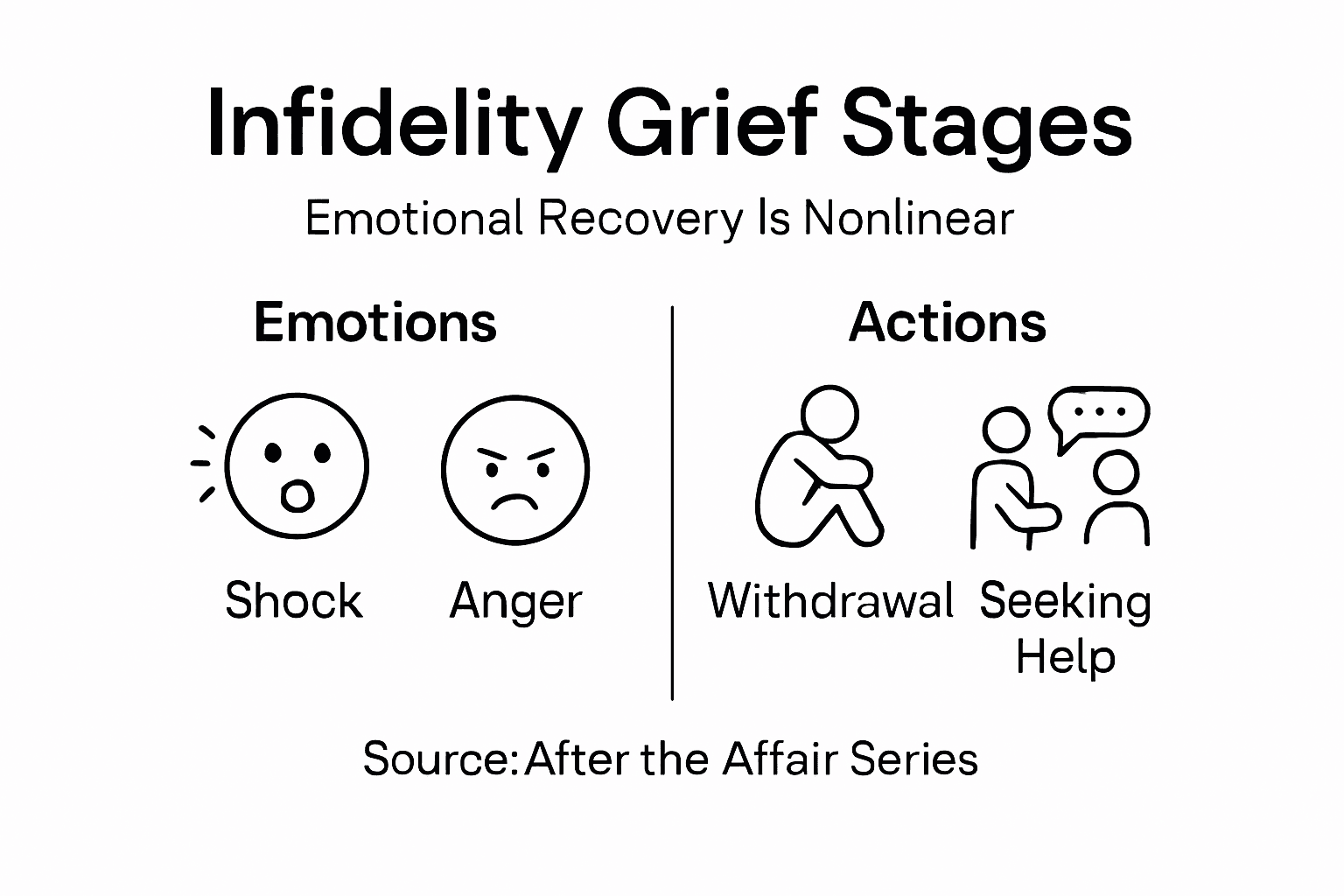
Research indicates that grief in infidelity scenarios isn’t linear but cyclical, with emotional waves that can emerge unexpectedly. Individuals may oscillate between feelings of rage, profound sadness, temporary acceptance, and renewed hurt. This unpredictable emotional terrain underscores the importance of professional support and structured healing approaches.
Pro tip: Acknowledge your grief as valid and allow yourself permission to experience its full emotional spectrum without judgment or self-imposed timelines.
Stages of Grieving After Betrayal
Healing from infidelity is a complex emotional journey marked by distinctive stages of grief that challenge traditional linear recovery models. Emotional processing after betrayal involves navigating intense psychological terrain that requires understanding and compassionate self-reflection. Individuals experiencing betrayal often find themselves exploring unique healing stages that transcend conventional grief expectations.
The stages of grieving after betrayal typically manifest in several profound emotional phases:
- Initial shock and denial where the betrayed partner struggles to comprehend the relationship breach
- Intense anger and rage directed at the unfaithful partner or themselves
- Deep sadness and profound sense of loss encompassing multiple life dimensions
- Gradual acceptance and potential reconstruction of personal identity
- Potential relationship reimagination or separation based on individual healing trajectory
Unlike traditional grief models associated with physical loss, betrayal grief represents a more intricate emotional landscape. The grieving individual must simultaneously process multiple complex emotions: feeling wounded, questioning self-worth, managing potential relationship dynamics, and reconstructing personal narrative. This multifaceted emotional journey demands extraordinary psychological resilience and often requires professional therapeutic support.
Emotional recovery is rarely straightforward. Grief waves can emerge unexpectedly, triggering intense feelings that seem to contradict previous emotional states. Some individuals might experience seemingly random emotional triggers—a song, location, or memory—that can instantaneously transport them back to peak moments of hurt. Understanding these emotional fluctuations as normal helps develop compassionate self-awareness during the healing process.
Pro tip: Create a personal emotional tracking journal to document your grief stages, helping you recognize patterns and progress in your healing journey.
Unique Features of Infidelity Grief
Infidelity grief represents a profoundly distinct emotional experience that transcends traditional understanding of loss and betrayal. Interpersonal trauma fundamentally disrupts relationship assumptions, creating a complex psychological landscape that challenges conventional healing approaches. Betrayal trauma introduces unique emotional dimensions that make recovery distinctly different from other forms of grief.
The distinctive characteristics of infidelity grief include:
- Ongoing relationship proximity where the source of trauma remains present
- Persistent emotional volatility with unpredictable trigger responses
- Fundamental trust erosion affecting multiple life domains
- Complex attachment disruption challenging personal identity
- Disenfranchised grief often minimized by social networks
Trauma response in infidelity grief closely resembles post-traumatic stress patterns. Interpersonal trauma creates PTSD-like symptoms that significantly impact emotional regulation and relational dynamics. Unlike grief from physical loss, infidelity grief involves continuous psychological negotiation with the betraying partner’s presence and the potential for relationship reconstruction.
The multilayered nature of infidelity grief requires nuanced therapeutic approaches. Individuals must simultaneously process intense emotional pain, reconstruct personal narrative, and navigate complex relational dynamics. This multifaceted healing journey demands extraordinary psychological resilience, emotional intelligence, and often professional therapeutic support to effectively integrate the traumatic experience.
Here’s a summary of how infidelity grief differs from traditional grief:
| Aspect | Infidelity Grief | Traditional Grief (Death) |
|---|---|---|
| Relationship to Loss | Ongoing proximity to betrayer | Permanent physical separation |
| Nature of Loss | Trust and future disrupted | Physical presence is gone |
| Emotional Patterns | Cyclical, intense, volatile | Gradually decreasing intensity |
| Social Support | Often minimized or hidden | Generally socially validated |
Pro tip: Develop a personalized emotional safety plan that includes professional support, self-care strategies, and clear boundaries to navigate the complex healing process.
Impact of Grief on Emotional Healing
Emotional healing after infidelity is a profound journey that hinges critically on understanding and processing grief. Grief serves as a foundational mechanism for personal reconstruction, enabling individuals to transform traumatic experiences into pathways of personal growth and resilience. Emotional recovery requires intentionally navigating the complex landscape of loss, pain, and potential renewal.
The critical components of grief’s role in emotional healing include:
- Creating emotional space for authentic healing experiences
- Dismantling previous relationship narratives and expectations
- Rebuilding personal identity independent of betrayal trauma
- Processing unresolved emotional wounds systematically
- Developing psychological resilience through intentional grief work
Posttraumatic growth emerges through confronting painful emotional experiences that challenge existing psychological frameworks. Grief acts as a transformative mechanism, allowing individuals to differentiate their sense of self from the betrayal experience. This process involves reconstructing personal narratives, reestablishing emotional boundaries, and cultivating a renewed sense of psychological integrity.
Successful emotional healing requires acknowledging grief as a dynamic, nonlinear process. Individuals must embrace emotional vulnerability while simultaneously developing psychological strategies that promote self-protection and growth. This delicate balance involves recognizing pain without becoming permanently entrapped by traumatic memories, ultimately transforming grief into a catalyst for personal empowerment and renewed relational potential.
Pro tip: Create a structured grief journal that tracks emotional transitions, helping you transform painful experiences into meaningful personal insights.
Common Obstacles and Actionable Strategies
Infidelity recovery involves navigating complex emotional terrain fraught with significant psychological challenges. Identifying and addressing common recovery obstacles requires a strategic, compassionate approach that acknowledges the profound emotional impact of betrayal. Understanding these barriers is crucial for developing effective healing pathways.
Key obstacles encountered during infidelity recovery include:
- Persistent denial about the relationship’s fundamental changes
- Unresolved anger blocking emotional processing
- Trust reconstruction challenges
- Communication breakdowns between partners
- Shame and social stigma surrounding betrayal experiences
Therapeutic interventions provide structured approaches to systematically address these complex emotional barriers. Professional guidance helps individuals develop targeted strategies for emotional healing, including narrative reconstruction, accountability frameworks, and rebuilding relational communication skills. These interventions focus on creating safe emotional spaces that validate individual experiences while promoting personal growth and potential relationship restoration.
Successful recovery demands a multifaceted approach that balances individual healing with potential relationship reconstruction. This involves developing emotional transparency, practicing radical self-care, establishing clear boundaries, and cultivating resilience. Individuals must simultaneously process personal trauma, manage potential relationship dynamics, and create pathways for potential reconciliation or healthy separation.
The following table outlines actionable strategies for overcoming common obstacles in infidelity recovery:
| Obstacle | Practical Strategy | Expected Benefit |
|---|---|---|
| Persistent denial | Seek reality-testing with counselor | Fosters acceptance and clarity |
| Unresolved anger | Use structured emotional outlets | Reduces emotional overwhelm |
| Trust reconstruction | Set incremental transparency goals | Builds gradual trust and safety |
| Communication breakdown | Schedule guided communication sessions | Improves understanding and empathy |
| Shame and stigma | Join confidential support groups | Promotes validation and acceptance |
Pro tip: Create a personalized healing roadmap with specific emotional milestones and professional support checkpoints to navigate recovery systematically.
Navigate the Complex Grief of Infidelity with Expert Support
Grief in infidelity healing is a uniquely challenging journey filled with intense emotions, trust rebuilding, and personal transformation. If you find yourself overwhelmed by fluctuating feelings like denial, anger, or sadness while trying to make sense of betrayal, you are not alone. Understanding these emotional stages and learning how to manage the cyclical nature of grief is critical to moving forward. At Recovery Strategies – After the Affair Series, you will discover practical, evidence-informed tools designed specifically to help you process these feelings and regain emotional stability.

Take control of your healing today by exploring the Guides & Tools – After the Affair Series for tailored resources that guide you step-by-step through your recovery. Visit https://aftertheaffair.uk now to access compassionate support and expert strategies that validate your grief and empower your journey toward renewed resilience and hope.
Frequently Asked Questions
What is grief in infidelity recovery?
Grief in infidelity recovery refers to the emotional turmoil experienced by the betrayed partner, encompassing multiple layers of loss, such as trust, shared dreams, and social connections.
How do the stages of grief after betrayal differ from traditional grief?
The stages of grief after betrayal often include intense emotions like shock, anger, and sadness, and are characterized by cycles of emotional fluctuation rather than a linear progression seen in traditional grief models.
What are some unique features of infidelity grief?
Infidelity grief includes unique features such as ongoing proximity to the betraying partner, persistent emotional volatility, and complex attachment disruptions that challenge personal identity and emotional healing.
How can individuals support their emotional healing after infidelity?
Individuals can support their emotional healing by acknowledging their grief, creating personal emotional safety plans, establishing clear boundaries, and seeking professional support to navigate the complex healing process.
Recommended
- How to Cope After Infidelity – After the Affair Series
- 7 Key Benefits of Therapy – After the Affair Series
- Why Couples Relapse After Affairs – After the Affair Series
- Healing After Infidelity – After the Affair Series
- How to Recover from Infidelity – Dr. Stephen Oreski & Associates
- 14 Ways to Deal with Anger After a Breakup