
- Defining Therapists’ Role in Infidelity Recovery
- Key Types of Therapy for Affair Recovery
- Core Therapeutic Methods and Interventions
- Navigating Emotional Trauma and Betrayal
- Rebuilding Trust and Improving Communication
- Common Pitfalls and Therapist Challenges
- Discover Expert Guidance to Support Your Infidelity Recovery Journey
- Frequently Asked Questions
- Recommended
Every relationship touched by betrayal faces a unique and deeply challenging road to recovery. Infidelity is not just a crisis of trust but often a profound emotional trauma that affects both partners’ sense of safety and self. For many around the world, finding the right therapist means accessing specialized therapeutic support for complex trauma and trust rebuilding. This guide explores how professional expertise in infidelity recovery can provide structure, compassion, and evidence-based strategies to help individuals and couples navigate the painful aftermath and move toward healing with greater clarity.
Key Takeaways
| Point | Details |
|---|---|
| Therapists are Essential in Infidelity Recovery | They provide specialized guidance in trauma healing, trust rebuilding, and emotional processing for couples. |
| Key Therapeutic Approaches Include EFT and CBT | Emotionally Focused Therapy and Cognitive Behavioral Therapy offer crucial strategies for understanding and healing relationship dynamics. |
| Communication Is Critical for Trust Restoration | Partners must develop honest and vulnerable communication skills to rebuild trust effectively. |
| Therapists Must Navigate Complex Challenges | Professionals face pitfalls like premature forgiveness and bias, requiring them to maintain neutrality and focus on individual healing. |
Defining Therapists’ Role in Infidelity Recovery
Therapists play a critical and nuanced role in guiding couples and individuals through the complex emotional landscape of infidelity recovery. Unlike general relationship counseling, infidelity recovery requires specialized expertise in trauma healing, trust reconstruction, and emotional processing. The therapist serves as a neutral, professional guide who helps both parties navigate the intricate psychological challenges that emerge after betrayal.
In infidelity recovery, therapists typically focus on several key therapeutic objectives:
- Providing a safe, non-judgmental environment for emotional expression
- Helping partners understand the root causes of the betrayal
- Facilitating honest communication between partners
- Supporting individual and collective healing processes
- Developing strategies for rebuilding trust and intimacy
Professional therapists recognize that healing after betrayal is not a linear process. Each partner experiences different emotional stages, from initial shock and anger to potential reconciliation or separation. The therapist’s primary responsibility is to create a structured, compassionate framework that allows both individuals to process their trauma, understand their emotional responses, and make informed decisions about their relationship’s future.
Therapeutic intervention becomes crucial in helping partners move beyond the immediate pain of betrayal. They assist couples in examining underlying relationship dynamics, communication patterns, and individual psychological triggers that might have contributed to the infidelity. By offering objective insights and evidence-based therapeutic techniques, therapists help couples transform their crisis into an opportunity for deeper understanding and potential relationship growth.
Pro tip: Select a therapist specializing in infidelity recovery who demonstrates both empathy and professional expertise in managing complex emotional trauma.
Key Types of Therapy for Affair Recovery
Infidelity recovery involves several specialized therapeutic approaches designed to address the complex emotional and psychological challenges faced by couples experiencing betrayal. Each therapy type offers unique strategies for healing, understanding underlying relationship dynamics, and rebuilding trust. The goal is not just to survive the aftermath of an affair, but to potentially transform the relationship through intentional, professional guidance.
The primary therapeutic approaches for affair recovery include:
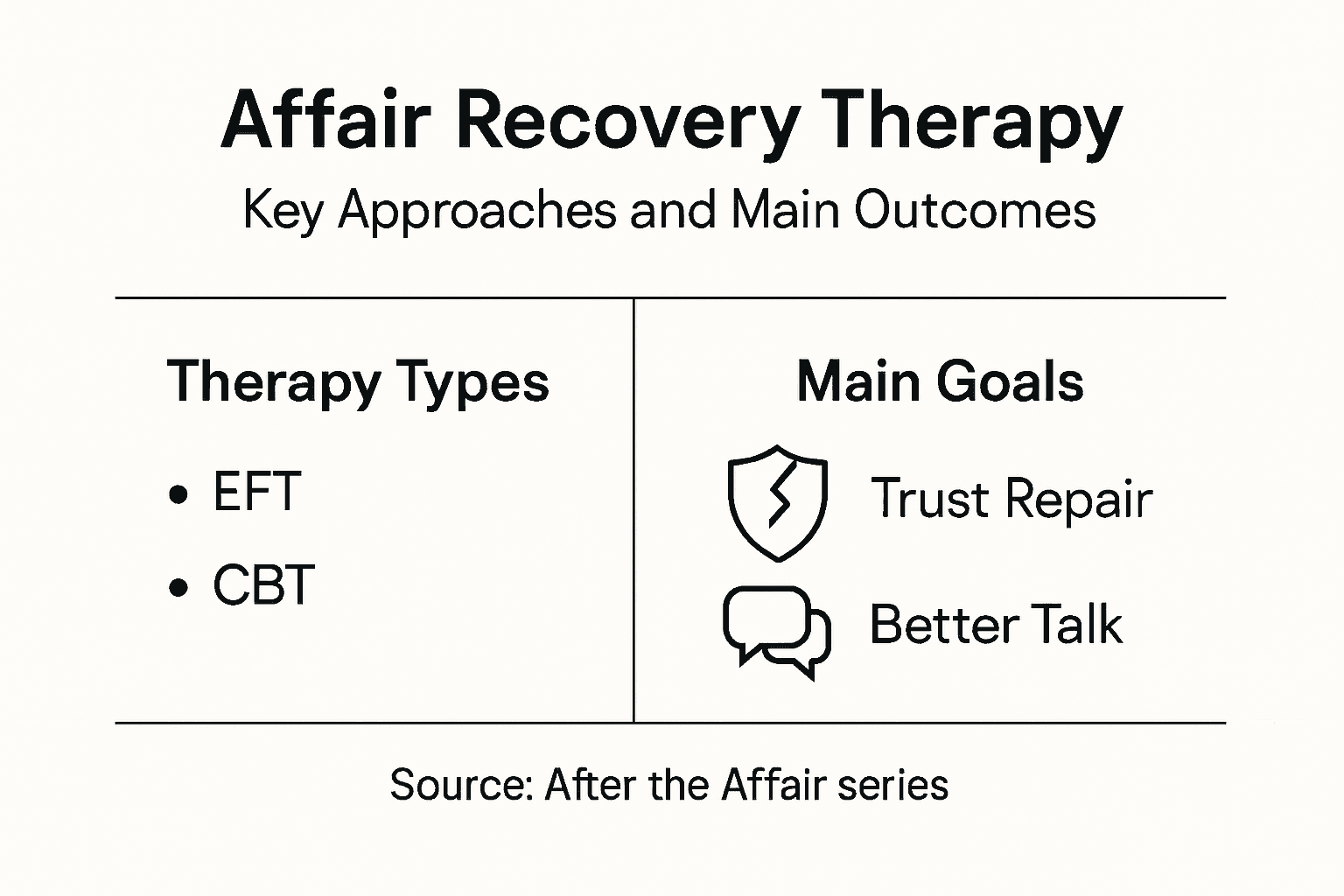
- Emotionally Focused Therapy (EFT): A relationship-centered approach that focuses on emotional bonding and attachment
- Cognitive Behavioral Therapy (CBT): Helps partners identify and modify destructive thought patterns
- Individual Counseling: Addresses personal trauma and individual healing needs
- Group Therapy: Provides support through shared experiences and collective healing
- Integrative Therapy: Combines multiple therapeutic techniques tailored to specific couple dynamics
Emotionally Focused Therapy stands out as particularly effective in affair recovery. Motivational typology of infidelity interventions demonstrates how EFT can be adapted to address specific underlying motivations behind affairs. This approach helps couples rebuild emotional safety, understand the deeper emotional triggers that contributed to the betrayal, and create more secure attachment patterns.
Cognitive Behavioral Therapy offers another critical therapeutic pathway, helping partners deconstruct negative thought patterns and behavioral cycles that may have contributed to the infidelity. By challenging destructive beliefs and developing healthier communication strategies, CBT enables couples to develop more constructive relationship dynamics and individual coping mechanisms.
Pro tip: Consider exploring multiple therapy approaches with a professional who specializes in infidelity recovery to find the most suitable healing strategy for your unique relationship context.
The following table compares popular therapy approaches for affair recovery:
| Therapy Approach | Primary Focus | Typical Outcomes |
|---|---|---|
| Emotionally Focused Therapy | Emotional bonding, attachment | Rebuilt emotional security |
| Cognitive Behavioral Therapy | Thought and behavior patterns | Improved coping strategies |
| Individual Counseling | Personal trauma, self-discovery | Enhanced self-understanding |
| Group Therapy | Peer support, shared healing | Reduced isolation, connection |
| Integrative Therapy | Blended techniques, flexibility | Personalized healing plans |
Core Therapeutic Methods and Interventions
Infidelity recovery demands a sophisticated and multifaceted therapeutic approach that addresses the profound emotional and psychological wounds caused by betrayal. Professional therapists utilize a range of specialized interventions designed to help couples navigate the complex healing journey, understanding that each relationship requires a unique and nuanced treatment strategy.
The core therapeutic methods for infidelity recovery typically include:
- Trauma-Informed Interventions: Addressing psychological shock and emotional wounds
- Cognitive Restructuring: Challenging destructive thought patterns
- Emotional Processing: Facilitating deep emotional exploration and understanding
- Communication Skill Building: Developing healthier interaction patterns
- Trust Restoration Techniques: Systematically rebuilding relationship safety
Integrative treatment approaches combine multiple therapeutic strategies to create comprehensive healing frameworks. These approaches typically blend cognitive-behavioral techniques, insight-oriented methodologies, trauma-focused interventions, and forgiveness strategies to address the multidimensional impacts of infidelity.
Research has identified a structured healing progression that therapists facilitate. This progression involves critical stages such as emotional exploration, empathy development, acceptance of responsibility, and trust restoration. Each stage requires specific therapeutic interventions tailored to the couple’s unique emotional landscape and individual healing needs. Therapists must navigate these stages with exceptional sensitivity, creating a safe environment that supports both individual and collective healing.
Pro tip: Select a therapist experienced in integrative approaches who can flexibly adapt therapeutic methods to your specific relationship dynamics and emotional needs.
Navigating Emotional Trauma and Betrayal
Infidelity represents a profound interpersonal trauma that shatters fundamental emotional safety and trust within a relationship. The psychological impact extends far beyond the immediate discovery of betrayal, creating complex emotional wounds that require specialized, compassionate therapeutic intervention. Survivors often experience a range of intense emotional responses that can significantly disrupt their psychological well-being and relational dynamics.
Typical emotional responses to betrayal trauma include:
- Intense feelings of emotional shock and disbelief
- Overwhelming anxiety and persistent intrusive thoughts
- Deep-seated anger and resentment
- Profound loss of self-esteem and personal identity
- Hypervigilance and trust-related emotional triggers
- Potential symptoms resembling post-traumatic stress disorder (PTSD)
Interpersonal trauma conceptualization demonstrates that infidelity disrupts core psychological safety mechanisms. The betrayed partner experiences a fundamental breach of relational expectations, which can trigger complex emotional and physiological stress responses. Therapeutic interventions must carefully address these multilayered psychological impacts, recognizing the nuanced ways betrayal trauma manifests across different individual experiences.
Attachment theory provides critical insights into healing emotional trauma, emphasizing the importance of rebuilding relational security through consistent, intentional communication. Therapeutic approaches focus on helping partners develop new patterns of emotional connection, process traumatic experiences, and gradually reconstruct a sense of safety and trust. This healing journey requires patience, mutual commitment, and professional guidance to navigate the intricate emotional landscape created by betrayal.
Pro tip: Acknowledge your emotional experience as valid while remaining open to professional support that can help you process and heal from betrayal trauma.
Rebuilding Trust and Improving Communication
Rebuilding trust after infidelity represents one of the most challenging and nuanced processes in relationship recovery. The journey requires deliberate, consistent effort from both partners, characterized by transparency, vulnerability, and a genuine commitment to healing. Trust restoration is not a linear path but a complex, multilayered process that demands patience, emotional intelligence, and professional guidance.
Key strategies for rebuilding trust include:
- Radical Transparency: Complete openness about past and current actions
- Consistent Accountability: Demonstrating reliable, predictable behavior
- Emotional Validation: Acknowledging the betrayed partner’s pain without defensiveness
- Active Listening: Creating safe spaces for genuine emotional expression
- Gradual Trust-Building: Implementing small, verifiable trust-restoration steps
Healing processes following infidelity emphasize the critical importance of building accountability through empathy and open communication. This involves moving beyond blame and shame toward mutual understanding, where both partners actively participate in reconstructing relational safety and emotional connection.
Effective communication becomes the cornerstone of trust restoration. Partners must learn to communicate with unprecedented levels of honesty, vulnerability, and emotional attunement. This requires developing new communication skills that go beyond traditional interaction patterns, including learning to express complex emotions, validate each other’s experiences, and create a shared narrative of healing and growth.
Pro tip: Commit to weekly structured communication sessions with your partner, focusing on honest emotional sharing and mutual understanding rather than accusations or defensiveness.
Common Pitfalls and Therapist Challenges
Navigating infidelity recovery presents complex psychological challenges that require exceptional skill, empathy, and professional expertise from therapists. The therapeutic landscape is fraught with potential missteps that can inadvertently derail the healing process, making it critical for professionals to maintain exceptional awareness and adaptability throughout treatment.
Key challenges and potential pitfalls in infidelity therapy include:
- Premature Forgiveness: Pushing couples to reconcile before emotional processing is complete
- Bias and Neutrality: Unconsciously favoring one partner’s narrative
- Trauma Mismanagement: Inadequately addressing deep emotional wounds
- Communication Skill Gaps: Failing to teach effective communication strategies
- Boundary Confusion: Blurring professional and personal emotional boundaries
Therapists must navigate these challenges with exceptional precision, recognizing that each couple’s healing journey is unique and nonlinear. The most sophisticated therapeutic approaches demand continuous adaptability, deep emotional intelligence, and a nuanced understanding of interpersonal dynamics.
The most significant therapeutic challenge lies in maintaining a delicate balance between supporting individual healing and facilitating collective relationship recovery. Therapists must simultaneously validate the betrayed partner’s emotional experience while preventing destructive blame cycles, create safe spaces for vulnerability, and guide partners toward constructive communication and mutual understanding.
Pro tip: Develop a comprehensive, personalized therapeutic framework that remains flexible and responsive to the unique emotional landscape of each couple’s infidelity recovery journey.
Here’s a summary of common therapist challenges and how skilled professionals respond:
| Common Challenge | Effective Therapist Response |
|---|---|
| Premature Forgiveness | Slow-paced, emotion-first interventions |
| Bias Toward a Partner | Active neutrality, balanced validation |
| Trauma Mismanagement | Use of trauma-informed techniques |
| Skill Gaps in Communication | Frequent role-play and feedback |
| Boundary Issues | Clear session guidelines, self-reflection |
Discover Expert Guidance to Support Your Infidelity Recovery Journey
Rebuilding trust and navigating the emotional trauma caused by infidelity can feel overwhelming. This article highlights the critical role therapists play in providing specialized support focused on trauma-informed interventions, emotional processing, and communication skill building. If you are seeking compassionate, structured strategies to move beyond betrayal and foster healing, you are not alone. The key challenges of restoring trust and managing complex feelings require tailored approaches that go beyond generic advice.
Recovery Strategies – After the Affair Series offers a wealth of carefully developed resources designed to guide you through each stage of recovery with empathy and evidence-based methods.

Take control of your healing process today by exploring practical tools and comprehensive guidance at After the Affair. Access essential help with Essential Crisis Guides – After the Affair Series and empower yourself with actionable insights from Guides & Tools – After the Affair Series. Don’t wait to find the support that can make a difference in rebuilding trust and transforming your relationship after betrayal.
Frequently Asked Questions
What role does a therapist play in infidelity recovery?
Therapists provide a safe, non-judgmental space for partners to process their emotions, understand the root causes of the betrayal, and develop strategies for rebuilding trust and intimacy.
How can therapy help in rebuilding trust after an affair?
Therapy helps by implementing strategies like radical transparency, consistent accountability, and emotional validation, which guide couples through the complex process of restoring trust and improving communication.
What are some common therapeutic approaches used in infidelity recovery?
Common approaches include Emotionally Focused Therapy (EFT) for emotional bonding, Cognitive Behavioral Therapy (CBT) for addressing negative thought patterns, and Integrative Therapy that combines multiple techniques tailored to the couple’s needs.
What challenges do therapists face during infidelity recovery?
Therapists may encounter challenges such as premature forgiveness, maintaining neutrality, trauma mismanagement, skill gaps in communication, and boundary issues, all of which require careful navigation to ensure effective healing.
Recommended
- Rebuilding Trust Timeline – After the Affair Series
- Relationship Healing Process – After the Affair Series
- 7 Key Benefits of Therapy – After the Affair Series
- Rebuilding Trust After Cheating-5 Milestones Reconciliation