Last Updated: October 15, 2026
Table of Contents
What It Means for Trauma to Be Stored in the Body
Signs of stored trauma in the body are the physical ways a past overwhelming event may still show up today, long after the event itself has ended. After the Affair Series provides a structured toolkit designed to help individuals navigate the complexities of betrayal, separation, and high-conflict co-parenting.
The phrase gets thrown around loosely, so let’s be precise. “Stored trauma” is not a substance sitting in your muscles. It’s a shorthand for how the nervous system adapts after a threat it could not escape.
Here’s what most guides get wrong: they promise that releasing “trapped” emotion will cure you. What actually helps is understanding the stress response, spotting your own patterns, and getting the right care.
The Stress Response and the Nervous System
Your nervous system runs two main modes: threat and safety. Trauma can leave the threat switch stuck on.
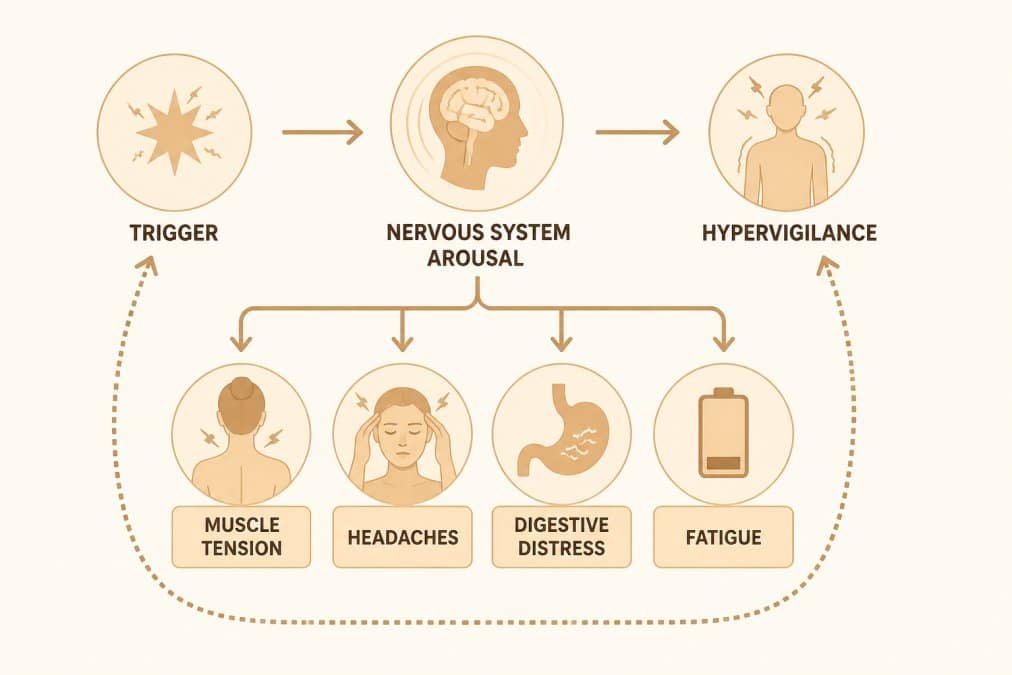
When danger passes, most bodies settle back down. After trauma, the system may stay braced for a threat that never comes. That is the engine behind most physical symptoms of trauma.
Physical Symptoms of Trauma: What Your Body May Be Signaling
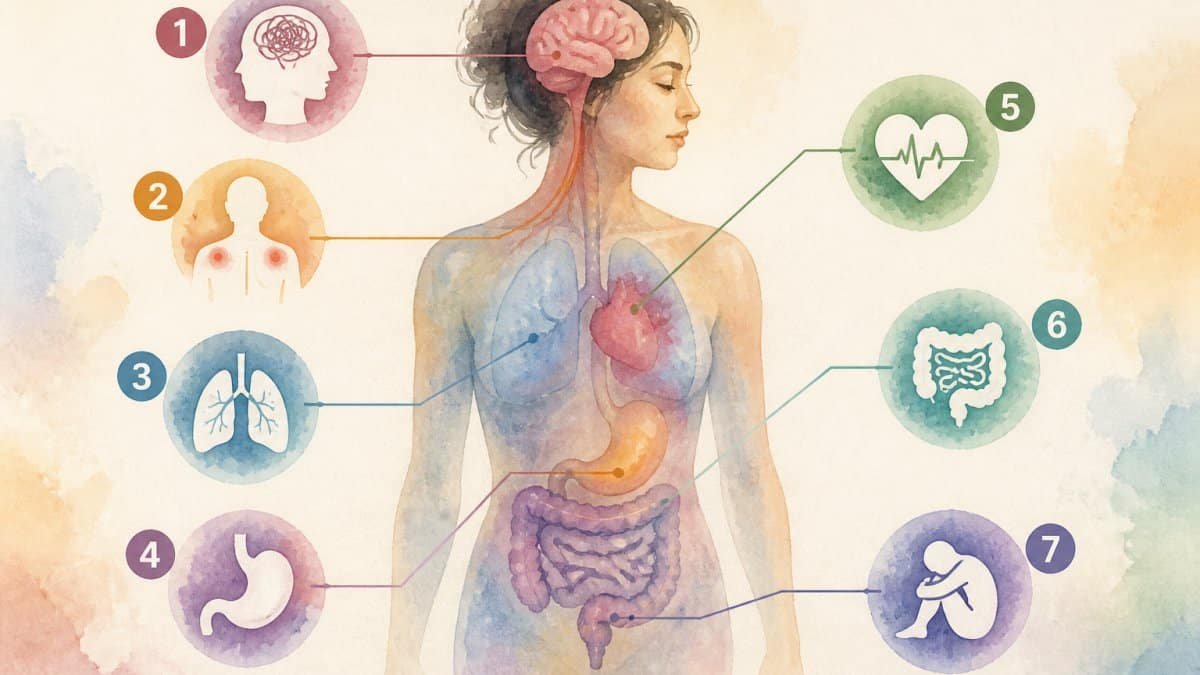
The most common physical symptoms linked to trauma are muscle tension, headaches, fatigue, digestive upset, and a constant sense of being on edge. None of these prove trauma on their own, but the pattern matters.
Muscle Tension, Rigidity, and Chronic Pain
Chronically tight shoulders, a clenched jaw, and lower back pain are common in people carrying unprocessed stress. The body holds a defensive posture long after the threat is gone.
What most guides miss is that this tension is not weakness. It’s your nervous system doing its job too well.
Headaches, Fatigue, and Unexplained Bodily Sensations
Tension headaches, deep fatigue, and odd sensations like numbness or a racing heart often appear together. Many people describe feeling exhausted but unable to rest.
A common mistake is chasing each symptom separately. Treating the headache while ignoring the underlying stress response rarely holds.
Digestive Distress, Nausea, and Shortness of Breath
The gut and the nervous system are wired together through the vagus nerve and the enteric nervous system, a network of roughly 500 million neurons lining the digestive tract. That wiring is why emotional shock so often lands in the stomach first.
Common patterns people describe after a traumatic event include:
- Nausea or a knot in the stomach that appears before or during a trigger, sometimes with dry heaving
- Irritable bowel-type symptoms, alternating constipation and diarrhea, urgency, or cramping without an obvious food cause
- Early fullness or appetite loss, or the opposite: eating as a way to calm the nervous system
- Acid reflux or a burning chest that flares during stress
- Shortness of breath or a tight chest that comes on without exertion, often paired with a racing heart or dizziness
These symptoms are real, not imagined. But they overlap heavily with medical conditions, acid reflux, irritable bowel syndrome, thyroid disorders, anemia, asthma, and cardiac problems all produce similar sensations. That overlap is exactly why a medical workup comes first, not last.
When Digestive or Breathing Symptoms Need Urgent Care
Some symptoms should never wait for a therapy appointment. Seek emergency care for:
- Chest pain or pressure, especially with shortness of breath, sweating, or pain radiating to the arm or jaw
- Fainting, near-fainting, or a heart rate that feels dangerously fast or irregular
- Vomiting blood, black or tarry stools, or severe abdominal pain
- Breathing difficulty that worsens at rest or does not ease with slow breathing
For non-emergency but persistent symptoms, start with a primary care visit. Ask specifically about blood work (thyroid, iron, vitamin B12, celiac screening) and whether a gastroenterology referral makes sense. Ruling out physical causes is not a detour from trauma work, it is the foundation that makes trauma work safe and credible.
Keep a simple two-week log of symptoms, timing, and what was happening emotionally. Patterns, like nausea that spikes before a certain conversation, give both your doctor and your therapist useful data.
Once medical causes are ruled out or managed, the trauma angle becomes worth exploring with a trauma-informed therapist. Grounding skills, paced breathing, and gentle movement can reduce symptom intensity in the moment, but they are not a substitute for assessment.
Body Memories and Trauma: How Past Experiences Show Up Physically
Body memories and trauma refers to physical reactions that get triggered by reminders of a past event, even when you are not consciously thinking about it. A smell, a tone of voice, or a certain date can set off the stress response.
The body reacts before the mind catches up. That gap is why you can feel your heart pound before you know why.
Trauma Triggers and Physical Reactions: Why Your Body Reacts Before You Think
A trigger is any cue, internal or external, that the nervous system reads as a warning sign of the original threat. The reaction is fast because it does not route through the thinking brain. Sensory information reaches the amygdala, which can fire a stress response in roughly 100 milliseconds, well before the prefrontal cortex has finished assessing whether the danger is real. That gap is why your heart can pound, your palms can sweat, or your stomach can drop before you know why.
Triggers fall into a few broad categories:
- Sensory: a smell, a song, a tone of voice, a specific cologne, the sound of a door closing
- Situational: a date on the calendar, a location, a holiday, a courtroom or hospital
- Relational: a certain facial expression, silence, criticism, or a partner’s tone
- Internal: a body sensation (racing heart, tight chest) that itself becomes the trigger, creating a loop
- Anniversary and anticipatory: the body bracing in the days before a known difficult date
This is not overreacting. It is a survival shortcut that once kept you safe, now firing in situations where it is no longer needed.
Hypervigilance, Panic, and Emotional Dysregulation
Hypervigilance means scanning for threat even in safe rooms, sitting with your back to the wall, startling at small noises, tracking other people’s moods for signs of danger. Panic attacks, irritability, sudden crying, and emotional numbness often ride along with it.
Emotional regulation gets harder because the body is stuck in alarm mode. The window between stimulus and reaction narrows, so small stressors can feel enormous. A common pattern is a short fuse followed by shame about the reaction, which then fuels more arousal.
A Practical Response Plan for Triggers
When a trigger hits, the goal is not to analyze it in the moment, it is to bring the nervous system back into a range where thinking is possible. A simple sequence:
- Orient. Slowly look around the room and name five things you can see. This tells the brain the threat is not here now.
- Ground. Press your feet into the floor, feel the chair under you, or hold something cold.
- Breathe. Extend the exhale, in for a count of four, out for a count of six or eight. A longer exhale nudges the parasympathetic system.
- Label. Say silently, “This is a memory reaction, not a current danger.” Naming shifts activity toward the prefrontal cortex.
- Move. A short walk, shaking out your hands, or stretching discharges some of the stress hormones.
- Log. Afterward, write down the trigger, the body sensation, and what helped. Patterns emerge within a week or two.

Do not try to force a panic attack to end by pushing through it or by doing intense “release” exercises alone. Flooding the system can retraumatize. If panic is frequent, work with a trauma-informed therapist who can teach paced, titrated skills.
::: Developing a grounded, somatic framework provides the necessary stability before exploring deeper, ancient modalities of emotional trauma release.
How Triggers Change Over Time
Triggers are not fixed. In the early aftermath of a traumatic event, almost everything can feel like a trigger because the nervous system is broadly sensitized. Over weeks and months, with safety and support, the range usually narrows. Some triggers fade entirely; others may resurface during anniversaries, new stressors, or reminders. This variability is normal and is one reason a single checklist of symptoms cannot capture everyone’s experience.
If triggers are intensifying rather than easing, or if they are driving avoidance that shrinks your life, that is a signal to bring in professional support rather than to push harder on your own.
How to Tell Trauma Symptoms From Other Medical Causes
You cannot tell from symptoms alone, and that is the honest answer. Trauma-related symptoms overlap with thyroid problems, anemia, heart conditions, and more.
See a doctor first. Get the physical causes ruled out. Then, if nothing explains it, explore the trauma angle with a therapist trained in trauma-informed care. This is one of the gaps most articles skip.
Healing From Betrayal Trauma: Practical Steps and When to Seek Help
Healing from betrayal trauma starts with safety, then stabilization, then processing, in that order. Rushing to “release” emotions before you feel safe tends to backfire.
A practical, safe response plan:
- Name what you feel, without judging it
- Use grounding: feet on floor, slow breaths, cold water on wrists
- Move your body gently, like a short walk
- Write down triggers and what helped
- Tell one trusted person
Do not try intense “release” exercises alone or push through a panic attack to “get it out.” That can retraumatize you. Work with a trauma-informed therapist instead.
Seek urgent care for chest pain, fainting, or trouble breathing. For ongoing distress, a trauma-informed therapist is the right next step. After the Affair Series offers structured frameworks and scripts for the betrayal and co-parenting side of this.
Conclusion
Your body’s reactions make sense once you understand the stress response behind them. Rule out medical causes first, then look at the trauma angle with a professional. Small, safe, repeatable steps do more than dramatic breakthroughs.
| Symptom | Possible Trauma Link | First Step |
|---|---|---|
| Muscle tension | Chronic stress response | Gentle movement, therapy |
| Headaches, fatigue | Nervous system overload | Doctor visit, rest |
| Digestive upset | Gut-brain stress link | Medical check, grounding |
| Panic, hypervigilance | Triggered alarm response | Trauma-informed therapist |
Frequently Asked Questions
Can relationship trauma cause physical symptoms?
Yes. Research on trauma and the stress response shows that emotional distress from betrayal or relationship trauma can show up as physical symptoms, including muscle tension, headaches, digestive issues, fatigue, and shortness of breath. These are real bodily reactions driven by a nervous system stuck in a heightened state, not signs that the pain is ‘all in your head.’ If symptoms are persistent or severe, see a doctor to rule out other causes.
How can I tell whether a physical symptom is related to trauma?
There is no single test that confirms a symptom is trauma-related. A useful first step is pattern tracking: note when symptoms appear and whether they cluster around triggers, anniversaries, or emotional distress. Symptoms that flare during stressful moments and ease when you feel safe may point toward a trauma response. Because many conditions share these symptoms, get a medical evaluation first. A doctor or trauma-informed therapist can help you connect the dots safely.
What are common signs of stored trauma in the body?
Common signs include chronic muscle tension, especially clenched shoulders and jaw; headaches; digestive distress and nausea; unexplained pain; fatigue; shortness of breath; and a startle response that feels out of proportion to events. Some people also notice numbness or a sense of being disconnected from their body. These signs overlap with many medical conditions, so they are clues to explore with a professional, not a diagnosis on their own.
When should I seek professional help for physical symptoms or trauma?
Seek urgent care for chest pain, difficulty breathing that does not ease, fainting, or sudden severe symptoms. For ongoing symptoms, see a doctor for a medical workup, then consider a trauma-informed therapist if symptoms track with triggers or past experiences. Healing from betrayal trauma often combines medical care, therapy such as somatic therapy or trauma-informed care, grounding skills, and practical coping strategies. You do not need to wait for a crisis to ask for support.