An affair can trigger immediate trauma-like reactions and significantly raise the risk of depression, anxiety, PTSD-like symptoms, and long-term physical health decline. These are not overreactions. They are documented, measurable consequences that researchers have tracked across large population samples and longitudinal studies.
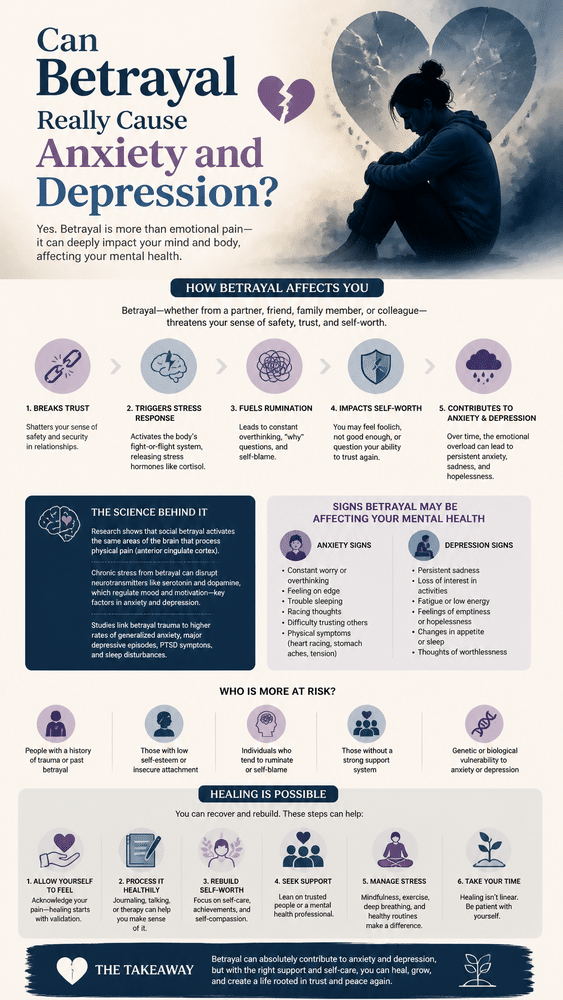
The emotional impact of cheating typically unfolds in waves. First comes the acute phase: shock, numbness, rage, or a strange, dissociated calm that many survivors describe as “going through the motions.” Then the cognitive disruption sets in, with intrusive memories, obsessive questioning, and sleep collapse. Over time, if the acute phase goes unaddressed, clinical conditions can take hold. Clinical summaries and a 2021 review estimate that roughly 30%–60% of betrayed individuals experience clinically meaningful anxiety, depression, or PTSD-like symptoms after discovering infidelity.
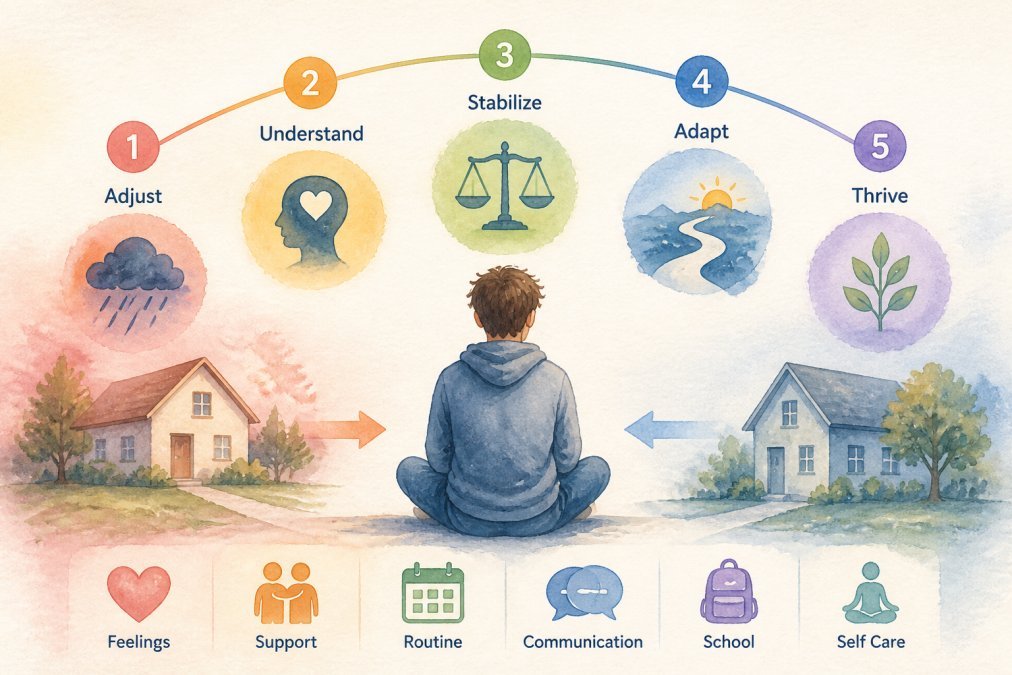
Recovery is possible, but it takes longer than most people expect and usually requires more than willpower alone. Most survivors move through distinct phases over months to years, not weeks.
- Key Takeaways
- How does an affair affect you immediately after discovery?
- What mental health conditions are linked to infidelity?
- What are the long-term psychological and physical effects?
- How does an affair affect your brain and stress systems?
- How does an affair affect children and family dynamics?
- What factors shape mental health outcomes after an affair?
- What are the most effective treatments for infidelity-related trauma?
- What does the research actually show?
- When should you get immediate help?
- An honest note to anyone reading this after discovery
- Aftertheaffair recovery resources for mental health support
- FAQ
Quickest practical next steps after discovery:
- Prioritize physical safety first. If there is any risk of intimate partner violence, contact the National Domestic Violence Hotline at 1-800-799-7233.
- Stabilize basic self-care: sleep, food, and hydration before anything else.
- Limit rumination to a defined window each day rather than letting it run unchecked.
- Contact one trusted person or a clinician within the first 48 hours.
Pro Tip: In the first 24–72 hours, schedule a 20-minute “worry window” at a fixed time each day. Write down every intrusive thought during that window, then close the notebook. Outside that window, redirect your attention to a concrete task. This technique, drawn from cognitive-behavioral practice, interrupts the feedback loop that drives acute symptom escalation.
Key Takeaways
The impact of affairs on mental health is clinically documented, often severe in the acute phase, and treatable with the right evidence-based support.
| Point | Details |
|---|---|
| Trauma-like reactions are normal | Shock, rage, numbness, and intrusive memories are expected responses, not signs of weakness. |
| Clinical conditions are common | Roughly 30%–60% of betrayed individuals develop clinically meaningful depression, anxiety, or PTSD-like symptoms. |
| Long-term health risk is real | Longitudinal research links infidelity to poorer chronic health outcomes, with larger effects for low-income and minority groups. |
| Self-blame worsens outcomes | Negative appraisals, especially self-blame, increase health-compromising behaviors through their effect on depression and anxiety. |
| Aftertheaffair provides structured support | The 7-step recovery checklist and stage-based resources offer a therapist-informed path from acute crisis through long-term growth. |
How does an affair affect you immediately after discovery?
These reactions are expected, often overwhelming, and do not mean you are falling apart. They mean your nervous system is responding to a genuine threat.
The most common immediate responses include:
- Disbelief and confusion: The mind struggles to reconcile what it knows with what it trusted.
- Rage: Sudden, intense anger that can feel frightening in its force.
- Numbness: An emotional shutdown that protects against information overload.
- Grief: A profound sense of loss, not just of the relationship as it was, but of the future that was assumed.
- Obsessive rumination: Replaying conversations, searching for missed signals, constructing timelines.
- Intrusive memories: Unwanted mental images or scenarios that arrive without warning.
- Sleep and appetite disruption: Common within the first days and weeks.
Cognitively, the effects are equally disruptive. Concentration collapses. Short-term memory becomes unreliable. Hypervigilance, the constant scanning for new threats or deception, can make ordinary interactions feel exhausting. Catastrophizing, the mental leap to worst-case conclusions, tends to run on a loop.
Qualitative research on betrayal-related stress found that survivors consistently describe shock, destabilization, and intrusive memories that match the profile of event-related stress responses. Many reported relief when a clinician named their experience as trauma rather than treating it as a relationship problem to be solved.
Warning signs that warrant early professional attention:
- Thoughts of self-harm or suicide
- Severe insomnia lasting more than a few days
- Escalating alcohol or substance use
- Inability to care for yourself or your children
- Complete emotional shutdown or dissociation
If any of these are present, contact a mental health professional or crisis line before working through the rest of this article.
What mental health conditions are linked to infidelity?
Betrayal frequently precedes clinically significant depression, anxiety, and PTSD-like symptoms in a notable subset of betrayed partners. These are not informal labels. They map onto recognized diagnostic criteria and respond to established treatments.
Major Depressive Episode (MDE): Persistent low mood, loss of interest, fatigue, feelings of worthlessness, and in some cases suicidal ideation. A probability-sample study found that discovery of a partner affair was associated with higher odds of past-year MDE, with the association remaining significant even after controlling for demographics and marital adjustment.

Generalized Anxiety and Panic: Chronic worry, physical tension, racing heart, and in acute cases, full panic attacks. The hypervigilance that follows betrayal can evolve into a persistent anxiety state that outlasts the initial crisis.
PTSD-like symptoms (sometimes called Post-Infidelity Stress Disorder): Intrusive memories, avoidance of reminders, emotional numbing, and hyperarousal. These symptoms mirror the diagnostic criteria for PTSD, though the clinical literature typically frames them as trauma-adjacent rather than formally diagnosable PTSD in most cases.
Substance misuse: Research with recently betrayed participants found that negative appraisals, including self-blame and partner-blame, indirectly increase health-compromising behaviors through their effect on depression and anxiety. Alcohol and other substances often become a short-term coping mechanism that compounds the underlying distress.
Prevalence estimates from clinical and qualitative literature:
Across clinical summaries and mixed-methods studies, roughly 30%–60% of betrayed individuals report clinically meaningful anxiety, depression, or PTSD-like symptoms. The wide range reflects differences in study design, sample composition, and how “clinically meaningful” is defined.
Seek professional evaluation if:
- Symptoms persist beyond two to four weeks without improvement
- You are having thoughts of suicide or self-harm
- Substance use is increasing as a coping strategy
- You cannot function at work or maintain basic daily responsibilities
- Panic attacks are occurring regularly
What are the long-term psychological and physical effects?
Infidelity can produce durable effects on psychological well-being and, for some people, measurable long-term physical health risk. This is not speculation. It is documented in longitudinal data.
A two-wave longitudinal analysis found that partner infidelity predicted poorer long-term chronic health across measurement waves, with larger effects among low-income individuals and ethnic minorities. Critically, the same analysis found that supportive family and friend relationships did not fully mitigate these health associations, which challenges the common assumption that a strong social network is sufficient protection on its own.
Psychologically, the long-term picture includes elevated risk of chronic depression, persistent anxiety, damaged self-esteem, and difficulty trusting in future relationships. Some survivors describe a fundamental shift in their worldview, a loss of the assumption that the world is predictable and that people they love will not harm them.
Typical recovery phases:
- Acute phase (weeks 1–8): Intense emotional and physiological reactions, crisis stabilization, basic functioning.
- Processing phase (months 2–12): Grief work, making sense of the betrayal, beginning therapy.
- Integration phase (year 1 onward): Rebuilding identity and trust, deciding about the relationship, longer-term growth.
These phases are not linear. Setbacks are normal, especially around anniversaries, triggers, or new disclosures.
| Outcome | Finding | Source |
|---|---|---|
| Major depressive episode | Higher odds in betrayed partners vs. non-betrayed in probability-sample research | Probability-sample study |
| Long-term chronic health | Infidelity predicted worse chronic health at follow-up, larger effects for low-income and minority groups | Two-wave longitudinal study |
| PTSD-like symptoms | 30%–60% of betrayed individuals report clinically meaningful symptoms | Clinical and qualitative literature |
How does an affair affect your brain and stress systems?
Betrayal can dysregulate attachment-related neurochemistry and the stress-response system, producing withdrawal-like and hyperarousal states that feel physical, not just emotional. Understanding this mechanism helps explain why the distress feels so relentless.

When a close attachment bond is suddenly ruptured, the brain loses its regular supply of dopamine and oxytocin, the neurochemicals associated with bonding, reward, and safety. Clinical summaries describe this as resembling addiction-like withdrawal, with craving-like symptoms, agitation, and somatic complaints that parallel what happens when any powerful reward is abruptly removed.
Simultaneously, the hypothalamic-pituitary-adrenal (HPA) axis, the body’s central stress-response system, activates. Cortisol floods the system. The default mode network, the brain’s internal narrative engine, begins looping through memories and “what if” scenarios. This is why intrusive thoughts feel involuntary. They are, in a neurological sense, exactly that.
Physical symptoms tied to these mechanisms:
- Sleep disruption (difficulty falling or staying asleep, vivid nightmares)
- Appetite changes (loss of hunger or stress eating)
- Heart-rate spikes and chest tightness
- Fatigue despite rest
- Gastrointestinal distress
- Heightened startle response
A useful way to picture the cascade: betrayal triggers neurochemical withdrawal and HPA-axis activation simultaneously, which then produces the cognitive symptoms (rumination, intrusive memories) and somatic symptoms (sleep loss, appetite changes) that survivors describe.
How does an affair affect children and family dynamics?
Affairs commonly ripple outward and can harm children’s emotional security and family routines, especially when parental conflict rises. Children do not need to know the details of what happened to be affected by it.
Likely effects on children and family functioning:
- Emotional withdrawal or increased clinginess, depending on age
- Acting-out behaviors at home or school
- Loyalty conflicts when children sense tension between parents
- Co-parenting disruption and inconsistent routines
- Academic or behavioral changes
- Anxiety or sleep problems in younger children
The research on how families cope after a mental health crisis consistently points to one protective factor above others: maintaining predictable structure. Children regulate their own nervous systems partly through the predictability of their environment. When that predictability collapses, their distress escalates.
Practical steps for parents:
- Keep communication age-appropriate. Young children need reassurance that both parents love them and that the family will be okay. Teenagers may need slightly more honesty, but still do not need adult-level detail.
- Maintain daily routines: mealtimes, bedtimes, school pickup. These are not trivial. They are stabilizing anchors.
- Seek individual therapy for yourself before attempting to co-parent through high conflict.
- Shield children from adult arguments, financial stress conversations, and any discussion of the affair itself.
Pro Tip: In the first weeks after discovery, protect two routines above all others: the family dinner and the bedtime ritual. You do not need to perform happiness. You just need to show up consistently. That consistency is what children’s nervous systems are tracking, not your emotional state.
What factors shape mental health outcomes after an affair?
Outcomes vary widely. Certain factors raise the risk of prolonged distress, and knowing which ones apply to your situation helps you target your resources more precisely.
Key moderating factors:
- Discovery method: Finding out through a third party, a text message, or accidental discovery tends to produce more severe initial reactions than a partner’s voluntary admission. The element of ambush compounds the trauma.
- Attribution style: Research consistently shows that self-blame is a particularly damaging appraisal pattern. Survivors who internalize the affair as evidence of their own inadequacy are more likely to develop chronic depression and anxiety.
- Prior trauma or mental health history: Existing vulnerabilities, including previous trauma, depression, or anxiety disorders, amplify the impact of betrayal.
- Relationship quality before the affair: Paradoxically, survivors in relationships they perceived as strong often experience more acute disorientation, because the betrayal is harder to explain.
- Social support: Having at least one person who can listen without judgment significantly buffers acute distress, though longitudinal data suggests social support alone does not fully protect against long-term health effects.
- Socioeconomic vulnerability: Financial dependence on the partner, limited access to therapy, and housing instability all increase risk for prolonged distress.
Consider two people who discover an affair on the same day. One has a therapist, a supportive friend group, financial independence, and no prior trauma history. The other is financially dependent, socially isolated, and carries unresolved childhood trauma. Same event, profoundly different risk profiles. The goal of understanding these factors is not to assign blame but to identify where to direct support first.
Where to focus initial resources: if self-blame is prominent, prioritize therapy that directly addresses attributional style. If social isolation is the main risk factor, a support group or crisis line contact may be the most urgent first step. If financial vulnerability is present, community mental health centers and sliding-scale therapy options become the practical priority.
What are the most effective treatments for infidelity-related trauma?
Therapy and trauma-informed care are the core evidence-based paths. Self-care and social support are essential adjuncts, not substitutes.
Evidence-based interventions:
- Trauma-focused cognitive behavioral therapy (TF-CBT) and EMDR: Both target the intrusive memories and hyperarousal that characterize PTSD-like symptoms. EMDR, in particular, has a strong evidence base for processing traumatic memories without requiring extensive verbal narrative. Find therapy types matched to infidelity trauma to understand which modality fits your symptom profile.
- Standard CBT for depression and anxiety: Addresses the cognitive distortions, including catastrophizing and self-blame, that drive chronic distress.
- Acceptance-based approaches (ACT): Useful for survivors who are stuck in avoidance or who struggle with the uncertainty of not knowing whether to stay or leave.
- Structured grief work: Betrayal involves multiple losses simultaneously. Grief-focused therapy creates space to mourn the relationship as it was, the future that was assumed, and sometimes the identity built around the partnership.
- Couples therapy: Appropriate when both partners are committed to the process, there is no ongoing deception, and the betrayed partner feels safe enough to engage. Not a first step for most people in the acute phase.
- Medication: Antidepressants or anti-anxiety medications may be indicated when symptoms are severe or when they are blocking engagement with therapy. This is a conversation for a psychiatrist or prescribing clinician, not a self-directed decision.
- Support groups: Peer support from others who have experienced betrayal reduces shame and isolation. Online and in-person options exist through Psychology Today’s group finder and community mental health centers.
How to choose: Match the intervention to your current symptom profile. If intrusive memories and hyperarousal dominate, trauma-focused therapy is the priority. If depression and self-blame are the main features, CBT is a strong starting point. If you cannot yet access a therapist, a structured self-help resource and a support group can provide meaningful stabilization while you wait.
Pro Tip: Ask a prospective therapist directly: “Do you have experience with betrayal trauma specifically?” General trauma training is helpful, but clinicians who work regularly with infidelity survivors understand the specific shame dynamics, the ambivalence about the relationship, and the non-linear nature of recovery in ways that general practitioners may not.
For a structured starting point, the infidelity recovery checklist at Aftertheaffair walks through the first seven steps in a sequenced, therapist-informed format.
What does the research actually show?
Multiple peer-reviewed and longitudinal studies link discovery of infidelity to higher rates of depression, PTSD-like symptoms, and, in large samples, long-term physical health effects. Here is what the strongest evidence says.
Core findings:
A probability-sample study found that discovery of a partner affair was associated with significantly higher odds of past-year major depressive episode, with the association holding after controlling for demographics and marital adjustment. This is not a small clinical sample. It is population-level data.
A two-wave longitudinal analysis found that partner infidelity predicted poorer chronic health outcomes at follow-up, with disproportionate effects among low-income individuals and ethnic minorities. The finding that social support did not fully buffer these effects is particularly important for clinicians and survivors who assume that “having people around” is sufficient.
Qualitative research on betrayal as interpersonal trauma found that survivors consistently describe their experience in trauma language: shock, destabilization, intrusive memories, and hypervigilance. Many reported that having a clinician validate the experience as trauma-like was itself therapeutic.
Research on appraisal styles found that self-blame and partner-blame indirectly increase health-compromising behaviors through their effect on depression and anxiety, with gender moderating some effects. This finding has direct clinical implications: how a survivor interprets the affair matters as much as the affair itself for downstream mental health.
Practical implication: If you have been told that what you are experiencing is “just” a relationship issue, the research disagrees. The effects of infidelity on emotional wellbeing are documented, measurable, and treatable. Seeking clinical support is not an overreaction.
When should you get immediate help?
Get immediate professional help if you have suicidal thoughts, are at risk of harming someone, or if the situation involves ongoing abuse. This is not a threshold to debate.
Crisis indicators that require immediate action:
- Suicidal ideation, even if it feels passive (“I wish I wasn’t here”)
- Thoughts of harming the partner or the affair partner
- Severe panic attacks or dissociative episodes
- Escalating substance use that is impairing daily function
- Intimate partner violence, threats, or coercive control
- Inability to care for yourself or dependent children
U.S. emergency contacts:
- 988 Suicide and Crisis Lifeline: Call or text 988 (24/7, free, confidential)
- Crisis Text Line: Text HOME to 741741
- National Domestic Violence Hotline: 1-800-799-7233
- Emergency services: 911
One important note on confidentiality: therapists are legally required to break confidentiality if they believe a client poses an imminent risk of harm to themselves or others. This is called mandated reporting, and it exists to protect you and others. Knowing this in advance helps you understand the limits of the therapeutic relationship before you begin.
An honest note to anyone reading this after discovery
What you are feeling right now is real, serious, and not a sign that you are weak or broken. The research on the psychological effects of betrayal trauma is unambiguous: these reactions are normal responses to an abnormal violation of trust.
You are allowed to be devastated. You are allowed to not know what you want. You are allowed to need help, and to ask for it without apology.
The path forward is not about “getting over it” quickly. It is about moving through it with the right support. Aftertheaffair exists specifically to provide that support, with resources grounded in clinical evidence and designed for people at exactly this stage.
Aftertheaffair recovery resources for mental health support
Recovering from betrayal is not a single decision. It is a series of steps, and having a structured, evidence-informed guide for each one makes a measurable difference.
Aftertheaffair offers resources built specifically for the mental health consequences of infidelity, not generic relationship advice. The offerings map directly to the recovery stages described in this article:
- The 7-step infidelity recovery checklist: A sequenced, therapist-informed starting point for the acute and early processing phases.
- Stage-based books and digital courses: Covering survival, decision-making, transformation, and growth, so you can start at the stage that matches where you actually are.
- Individual and couples guides: Separate pathways for those navigating recovery alone and those working through it with a partner.
- Therapy-ready scripts and frameworks: Practical tools for high-conflict co-parenting, boundary-setting, and structured conversations that reduce escalation.
- Assessment quizzes and guided protocols: Help you identify your current symptom profile and match it to the right resource.
For readers who want additional mental health and wellness support alongside structured recovery resources, The MentorWell offers complementary guidance.
Start with the recovery checklist if you are in the acute phase and need a clear first step. Move to the stage-based books or digital courses when you are ready for deeper work. Both paths are self-directed, but both are built on the same clinical frameworks a therapist would use.
Sources
- Discovery of partner affair and mental health outcomes (probability-sample study)
- The consequences of spousal infidelity for long-term chronic health: A two-wave longitudinal analysis
- Post Infidelity Stress Disorder: Symptoms, Causes, and Coping
- Infidelity’s aftermath: Appraisals, mental health, and health-compromising behaviors following a partner’s infidelity
This article is general information, not a substitute for advice from a qualified doctor. Consult a qualified healthcare professional about your own circumstances before acting on anything here.
FAQ
What does psychology say about people who cheat?
Psychology research suggests that infidelity is rarely explained by a single cause. Contributing factors typically include attachment insecurity, opportunity, relationship dissatisfaction, and individual personality traits such as low agreeableness or high sensation-seeking, though no single profile reliably predicts who will cheat.
What changes in your brain after getting cheated on?
Betrayal disrupts the brain’s attachment-related neurochemistry, reducing dopamine and oxytocin while activating the HPA-axis stress system. This produces withdrawal-like symptoms, including sleep disruption, appetite changes, and intrusive rumination, that can persist for weeks or months without targeted support.
What do therapists say about affairs?
Therapists increasingly frame betrayal as a form of interpersonal trauma, not simply a relationship problem. Clinical guidance emphasizes validating the betrayed partner’s reactions, addressing self-blame directly, and beginning with stabilization before deeper trauma processing, since attempting to process the full weight of betrayal before the nervous system is regulated tends to increase distress.
How long does it take to recover from the mental health effects of an affair?
Recovery timelines vary widely depending on factors like prior mental health history, social support, and whether therapy is involved. Most survivors move through acute, processing, and integration phases over a period of months to years, with setbacks common around triggers and anniversaries.
Can infidelity cause PTSD?
Infidelity can produce symptoms that closely mirror PTSD, including intrusive memories, avoidance, emotional numbing, and hyperarousal. Clinicians sometimes refer to this as Post-Infidelity Stress Disorder. Whether it meets the formal DSM criteria for PTSD depends on individual assessment, but the symptom overlap is well-documented in the clinical literature.
Recommended
- Online Affair Recovery for Couples – After the Affair Series
- How to Protect Your Mental Health When Triggers Are Constant
- Why Couples Relapse After Affairs – After the Affair Series
- Effects of Infidelity: 65% Face Anxiety, UK Recovery Guide – After the Affair Series