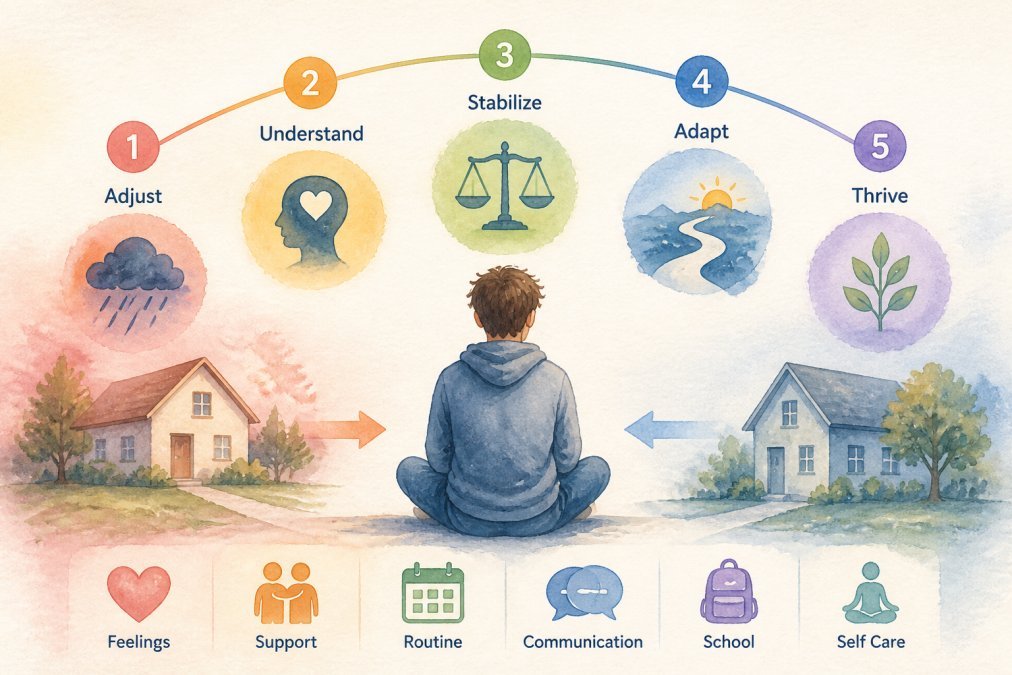
Trauma-informed therapy reduces re-traumatization, increases treatment engagement, and produces measurable symptom relief for PTSD, anxiety, depression, and relational harm. According to StatPearls on NCBI, a large majority of people experience at least one traumatic event in their lifetime, yet standard care often misses the mark by asking “what’s wrong with you?” instead of “what happened to you?” That single reframe changes everything about how healing unfolds.
Here is what the approach delivers in practice:
- Reduced re-traumatization during sessions through pacing, consent, and stabilization
- Higher treatment adherence because the therapeutic environment feels safe enough to stay in
- Symptom reduction across PTSD, anxiety, depression, and sleep disruption
- Improved emotional regulation and capacity to tolerate distressing memories
- Stronger therapeutic alliance, which research consistently links to better outcomes
- Relational recovery, including restored trust and interpersonal functioning after betrayal
Key Takeaways
Trauma-informed therapy works because it makes the therapeutic environment safe enough for the nervous system to engage with healing, which is the prerequisite for every other benefit that follows.
| Point | Details |
|---|---|
| Safety is the mechanism | Without felt safety, the nervous system stays hypervigilant and memory processing cannot hold. |
| Stabilization comes before processing | Grounding and regulation skills must be established before trauma memories are approached. |
| Strongest evidence modalities | EMDR, TF-CBT, and Prolonged Exposure show consistent PTSD symptom reduction in trials. |
| Betrayal trauma needs a trauma-informed frame | Infidelity produces PTSD-like symptoms; individual stabilization before couples work is the recommended sequence. |
| Aftertheaffair resources | The 7-step recovery checklist and relationship growth guide complement clinical therapy at each stage of healing. |
Table of Contents
- What are the benefits of trauma-informed therapy, exactly?
- How do the core principles of trauma-informed care support healing?
- Why does trauma-informed practice actually work? The clinical mechanisms
- What does the research say about trauma-informed treatment outcomes?
- Who is most likely to benefit from trauma-informed approaches?
- What techniques will you encounter in trauma-informed therapy?
- What should you expect in trauma-informed therapy?
- How do you find and evaluate a trauma-informed therapist?
- Applying trauma-informed therapy to betrayal and infidelity trauma
- A perspective on what trauma-informed therapy actually changes
- Structured support for your recovery from Aftertheaffair
- Sources
- FAQ
What are the benefits of trauma-informed therapy, exactly?
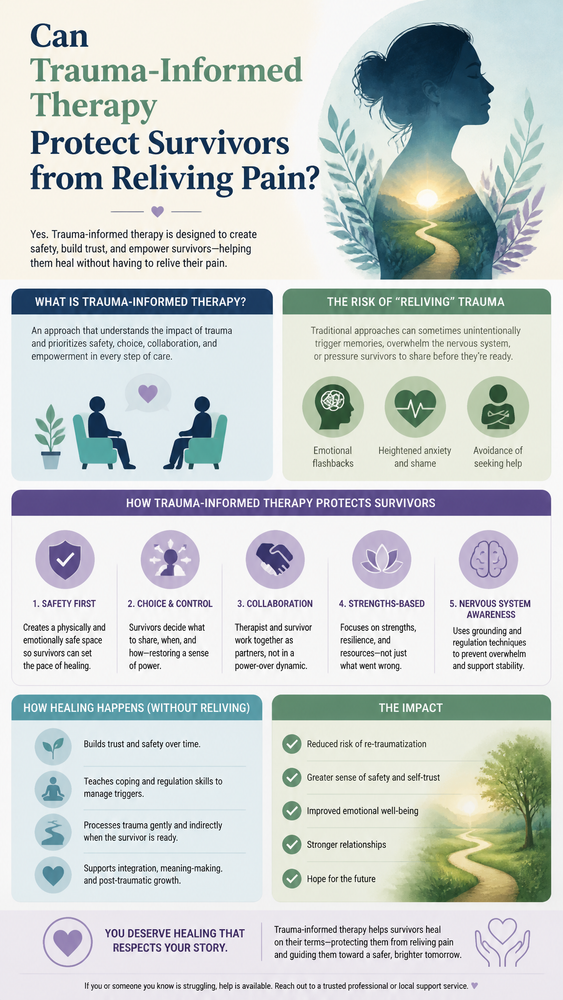
Trauma-informed therapy is not a single treatment technique. It is a framework for how care is delivered, one that shapes every decision a clinician makes, from how they greet you in the waiting room to how quickly they move toward processing difficult memories. The Center for Health Care Strategies defines it as an approach that prioritizes safety, trustworthiness, and client choice, and links those qualities directly to higher treatment adherence and reduced avoidable costs across health systems.
The distinction that trips most people up is the difference between trauma-informed and trauma-focused therapy. Trauma-focused therapies, such as Trauma-Focused Cognitive Behavioral Therapy (TF-CBT), Eye Movement Desensitization and Reprocessing (EMDR), and Prolonged Exposure, are specific treatment protocols that directly process traumatic memories. Trauma-informed therapy is the broader delivery philosophy that makes those protocols tolerable and effective. You can receive EMDR in a way that is not trauma-informed (rushed, directive, ignoring distress signals), or you can receive general counseling in a deeply trauma-informed way. The distinction matters because the container of care, the safety and pacing around any technique, often determines whether a person stays in treatment long enough to benefit.
How do the core principles of trauma-informed care support healing?
The principles below draw from Gov and the SAMHSA consensus framework used across UK and US services.
- Safety. Physical and emotional safety is established before any processing begins. A therapist might spend the first several sessions simply building a predictable, low-threat environment. Without this, the nervous system stays on guard and memory work is less likely to hold.
- Trustworthiness and transparency. Clinicians explain what they are doing and why, including the limits of confidentiality. Predictability reduces the hypervigilance that trauma survivors carry into every new relationship.
- Peer support and choice. Wherever possible, clients choose the pace, the topic, and the technique. This is not permissiveness; it is a clinical strategy. Restoring a sense of choice directly counters the helplessness that trauma instills.
- Collaboration. The therapist works with the client, not on them. Goals are set jointly. This shifts the power dynamic that many survivors experienced as harmful.
- Empowerment. The Psychology Today guidance on trauma-informed therapists frames the ultimate aim as moving people from powerlessness toward agency. Clinicians explicitly invite clients to set boundaries and pace their own recovery.
- Cultural, historical, and gender responsiveness. Trauma does not happen in a vacuum. A clinician who ignores the cultural context of a client’s experience, whether that is racial trauma, gender-based violence, or community-level harm, misses a significant part of what needs healing.
Pro Tip: Ask a prospective therapist how they handle it when a session feels like too much. A trauma-informed answer will describe specific de-escalation options (grounding, pausing, switching topics) rather than pushing through. That answer tells you more about their approach than any credential on the wall.
Reading this won’t change tomorrow’s message
You Know the Tactic Now. Do You Know What You’ll Actually Do When It Lands?
Understanding grey rock is not the same as doing it at 9pm when your phone buzzes. Most parents can explain the theory perfectly and still bite the bait every single time. The gap between the two is exactly what the free self-check measures.
Get Your Ex Out of Your Head ->5 scenarios, scored result, 4 minutes free
Why does trauma-informed practice actually work? The clinical mechanisms
Safety and therapeutic alliance reduce hypervigilance. That is the core mechanism, and everything else follows from it.
When the nervous system perceives threat, the prefrontal cortex, the part of the brain responsible for language, narrative, and meaning-making, goes offline. Trauma survivors often arrive in therapy with a nervous system that is chronically scanning for danger. A therapist who moves too fast, who pushes for disclosure before trust is established, or who ignores visible distress signals, confirms that threat. The result is dropout, dissociation, or re-traumatization.
Stabilization skills, somatic grounding, paced breathing, and body-based regulation exercises, work by giving the client a reliable way to bring their arousal level down before and during sessions. Once the nervous system can tolerate a moderate level of activation without flooding, memory processing becomes possible. The sequence matters: stabilization first, processing second. Skipping stabilization is one of the most common reasons trauma therapy stalls.
Trauma-informed interventions also improve engagement and reduce reliance on crisis services in behavioral health settings, which translates to lower downstream costs and fewer acute episodes. Better engagement is not just a patient-satisfaction metric; it is the mechanism through which symptom change actually accumulates over time.
What does the research say about trauma-informed treatment outcomes?
The evidence base is strongest for specific trauma-focused modalities delivered within a trauma-informed framework. Meta-analyses consistently show meaningful PTSD symptom reduction with EMDR, TF-CBT, and exposure-based therapies. The picture for complex or comorbid presentations is more nuanced.
| Modality | Evidence Strength | Primary Outcome Targets | Notes |
|---|---|---|---|
| EMDR | Strong (multiple RCTs and meta-analyses) | PTSD symptom reduction, intrusive memories | Effective across single-incident and some complex trauma |
| TF-CBT | Strong (especially for children/adolescents) | PTSD, depression, behavioral symptoms | Requires caregiver involvement for best results |
| Prolonged Exposure | Strong | PTSD avoidance and re-experiencing | May have higher dropout in complex cases |
| DBT | Moderate (complex/comorbid cases) | Emotion dysregulation, self-harm, BPD features | Often used as stabilization before trauma processing |
| MBT | Emerging | Interpersonal functioning, BPD features | Useful when attachment disruption is central |
NHS England’s guidance on trauma-informed inpatient care recommends staff training and a range of trauma-specific supports at the system level, reflecting how broadly the evidence has been adopted into clinical policy.
The limits of the evidence deserve an honest mention. Many trials exclude participants with severe comorbidities, meaning the people with the most complex presentations are underrepresented in the data. Long-term follow-up data beyond 12 months remains thin. And heterogeneity across studies, different populations, different trauma types, different outcome measures, makes direct comparisons difficult. What the evidence does support clearly is that trauma-informed delivery improves retention and engagement, and that retained clients show better outcomes than those who drop out early.
Who is most likely to benefit from trauma-informed approaches?
Trauma-informed therapy is relevant across a wide range of presentations, but some groups show particularly strong responses.
- PTSD following a single incident (accident, assault, medical trauma): responds well to structured trauma-focused protocols within a trauma-informed frame.
- Complex or developmental trauma (prolonged childhood abuse, neglect, domestic violence): requires longer stabilization phases and often benefits from DBT or MBT before memory processing. See complex trauma explained for a fuller picture of what this presentation involves.
- Betrayal and infidelity trauma: attachment ruptures, hypervigilance toward a partner, shame spirals, and intrusive memories all respond to trauma-informed approaches. This is discussed in more depth below.
- Substance use comorbidity: trauma-informed care reduces the shame-based barriers that often prevent people with addiction from engaging with treatment.
- Borderline personality features: DBT, delivered within a trauma-informed frame, addresses emotion dysregulation and interpersonal instability that frequently co-occur with trauma histories.
- Interpersonal trauma survivors: anyone whose trauma occurred within a relationship (abuse, coercive control, sexual violence) often needs the relational safety of a trauma-informed approach before any processing is possible.
Two groups need a note of caution. People experiencing severe dissociation may need specialist assessment before standard trauma processing begins, since standard protocols can destabilize rather than help. People still in ongoing threat (an unsafe living situation, active abuse) need safety planning and practical support before therapy can be effective. Trauma-informed clinicians recognize this and do not push processing when the environment remains dangerous.
What techniques will you encounter in trauma-informed therapy?
Stabilization and regulation skills
These come first, always. Grounding techniques, such as the 5-4-3-2-1 sensory exercise or placing feet flat on the floor and noticing physical contact, interrupt the dissociative drift that trauma survivors often experience when distress rises. Paced breathing (typically a longer exhale than inhale) activates the parasympathetic nervous system. Somatic exercises, body scans, progressive muscle relaxation, and movement-based approaches, help clients reconnect with physical sensations in a safe, controlled way. For readers managing constant triggers, the mental health protection guide at Aftertheaffair covers practical coping tools that complement this phase of therapy.
Trauma processing
Once stabilization is solid, processing begins, paced and consent-based. EMDR uses bilateral stimulation (eye movements, tapping, or auditory tones) while the client holds a traumatic memory in mind, gradually reducing its emotional charge. TF-CBT involves structured narrative work and cognitive restructuring of distorted beliefs formed during trauma. Prolonged Exposure asks clients to revisit traumatic memories in a controlled way, reducing avoidance and the power the memory holds. None of these are done to the client; in a trauma-informed frame, the client controls the pace and can pause or stop at any point. For a broader overview of therapy modalities used in trauma recovery, Journey Mental Health’s guide to trauma-informed therapy offers a useful complementary read.
Adjunctive approaches
DBT (Dialectical Behavior Therapy) is often integrated when emotion dysregulation is severe, teaching distress tolerance, mindfulness, and interpersonal effectiveness skills that make trauma processing safer. MBT (Mentalization-Based Therapy) is used when trauma has disrupted the capacity to understand one’s own and others’ mental states, which is common after relational or attachment trauma. Meditation practices also support nervous-system regulation between sessions; the types of meditation for trauma recovery guide at Aftertheaffair covers approaches suited to different stages of healing.
Noticing the pattern is not the same as proving it
You Can Feel the Pattern. Can You Prove It to a Judge?
A diary of what happened reads as emotional venting. A structured, timestamped record reads as evidence. Most parents lose that distinction until it costs them. The free checklist shows you exactly what to document today, before the evidence window closes.
Get the Free Red Flag Checklist ->3 categories, 5 minutes, free
What should you expect in trauma-informed therapy?
Most trauma-informed therapy moves through three broad phases, though these overlap and are not rigidly sequential.
Phase 1: Safety and stabilization (weeks to months, depending on complexity). The therapist focuses on building the relationship, teaching regulation skills, and establishing a shared understanding of the trauma’s impact. Symptom relief often begins here, not because memories are being processed, but because the nervous system is getting consistent practice at coming down from high alert.
Phase 2: Paced processing (variable duration). Traumatic memories are approached gradually, with the client’s explicit consent at each step. Sessions typically open with a brief check-in and grounding, move into processing work only when the client’s window of tolerance is open, and close with a return to regulation before the session ends. A good trauma-informed therapist never ends a session with a client still flooded.
Phase 3: Consolidation and integration (ongoing). Gains are consolidated, meaning is made from the experience, and the client builds a narrative that includes the trauma without being defined by it. Relational repair, whether with a partner, family, or community, often becomes possible here.
A short checklist for evaluating whether your therapist is working in a trauma-informed way:
- Do they explain what they plan to do before doing it?
- Do they check in about your comfort level during sessions?
- Do they offer you choices about pacing and topics?
- Do they teach you regulation skills before moving into difficult material?
- Do they end sessions with grounding, not in the middle of a flood?
If the answer to most of these is no, it is worth raising the question directly or seeking a second opinion.
How do you find and evaluate a trauma-informed therapist?
Credentials and training to look for
In the UK, look for registration with the BACP (British Association for Counselling and Psychotherapy), UKCP (UK Council for Psychotherapy), or HCPC (Health and Care Professions Council). Beyond registration, ask specifically about post-qualification training in EMDR (accredited through EMDR Association UK), TF-CBT, or DBT. General registration does not guarantee trauma-informed practice; the additional training does.
- Ask about their approach to pacing. “How do you decide when a client is ready to start processing traumatic memories?” A strong answer will mention stabilization, window of tolerance, and client readiness, not a fixed number of sessions.
- Ask about consent. “How do you handle it if I want to slow down or stop during a session?” The answer should be immediate and specific.
- Ask about their experience with your specific trauma type. Betrayal trauma, for instance, has distinct features (attachment disruption, hypervigilance toward a specific person, shame) that differ from single-incident trauma.
- Ask about fees and session frequency. Private trauma-informed therapy in the UK generally costs a moderate to high fee per session; NHS waiting lists exist but vary significantly by region. Knowing the cost structure upfront is part of informed consent.
- Check for red flags. Pressuring early disclosure, dismissing your distress, applying a rigid protocol regardless of your state, or claiming a single technique cures all trauma are all warning signs.
Pro Tip: Ask this one question in your first contact: “How do you approach safety and stabilization before trauma processing?” If the therapist cannot answer it clearly, or if they suggest you will start processing memories in session one, keep looking.
Understanding the pattern is not the same as breaking it
You Can Explain Why This Happened. Can You Explain Why You’re Still Stuck In It?
Most people in affair recovery can narrate their entire situation with total clarity, the timeline, the triggers, the whole story, and still find themselves back in the same spiral by evening. Insight was never the missing piece. This free assessment shows you exactly where the gap actually is.
Take the Free Affair Recovery Clarity Check →A few honest questions · a scored result · 4 minutes · free
Applying trauma-informed therapy to betrayal and infidelity trauma
Infidelity is a relational trauma. It ruptures attachment, destroys the assumed safety of the primary relationship, and often produces a symptom profile that closely mirrors PTSD: intrusive memories of discovery, hypervigilance toward a partner’s behavior, avoidance of intimacy, and profound shame. Recognizing betrayal trauma symptoms is often the first step toward understanding why standard couples counseling, without a trauma-informed frame, can feel re-traumatizing rather than helpful.
A trauma-informed approach to infidelity recovery prioritizes individual stabilization before couples work. Attempting to process the relationship while one or both partners are still in acute trauma response tends to produce escalating conflict rather than repair. Individual therapy first, stabilization, safety planning, and regulation skills, creates the foundation that makes couples work possible and productive.
Practical next steps for someone whose trauma stems from infidelity:
- Stabilize first. Grounding, regulation skills, and a predictable daily structure reduce the acute hyperarousal that makes clear thinking impossible.
- Clarify the safety question. Is the relationship safe enough to work on? A trauma-informed therapist will help you assess this without pressure toward any particular outcome.
- Consider the sequence. Individual therapy before couples therapy is usually the more effective order, not the other way around.
- Use structured resources alongside therapy. The step-by-step betrayal recovery guide at Aftertheaffair is designed to complement clinical work, not replace it.
Where trauma is severe, where there are dissociative symptoms, active suicidal ideation, or ongoing coercive dynamics, clinical care must come before self-help. Structured resources work best as a complement to therapy, not a substitute for it.
A perspective on what trauma-informed therapy actually changes
The conventional framing of trauma-informed therapy tends to focus on technique: which modality, how many sessions, what the evidence says. That framing is useful, but it undersells what actually shifts for most people.
The deeper change is relational. Most trauma, including betrayal trauma, is relational in origin. It happened in the context of a relationship, and it disrupted the basic assumption that other people can be trusted. What trauma-informed therapy restores, slowly and imperfectly, is the capacity to be in a relationship with another person without the nervous system treating that person as a threat. That is not a technique. It is a re-education of the body and the relational self.
The evidence on specific modalities matters, and it should inform your choices. But the research also consistently shows that the therapeutic alliance, the quality of the relationship between client and therapist, accounts for a significant portion of outcome variance across all modalities. A technically skilled therapist who makes you feel unsafe will produce worse results than a less credentialed one who genuinely gets the trauma-informed frame right. That is not an argument against credentials. It is an argument for weighting both.
People often ask whether self-help resources can substitute for therapy. For mild to moderate presentations, structured self-help with evidence-based content can produce meaningful symptom relief. For complex trauma, severe PTSD, or active suicidal ideation, clinical care is not optional. The honest answer is that the two work best together: therapy provides the relational container; structured resources extend the work between sessions and after therapy ends.
Structured support for your recovery from Aftertheaffair

Therapy is the clinical foundation. What happens between sessions, and after therapy ends, shapes how durable the recovery becomes. Aftertheaffair offers structured, evidence-informed resources built specifically for people navigating infidelity and betrayal trauma: step-by-step recovery books covering each phase from survival through growth, practical regulation tools, and guided frameworks for the decisions that feel impossible in acute trauma.
The 7-step infidelity recovery checklist is a practical starting point, designed to complement trauma-informed therapy by giving you a clear structure for the work between sessions. For those further along, the relationship growth guide addresses the relational repair phase that trauma-informed therapy makes possible. These resources are not a substitute for clinical care. They are what makes clinical gains stick.
Sources
The following sources informed this article and are worth consulting directly for clinical guidance or further reading:
- Trauma-Informed Therapy – StatPearls – NCBI Bookshelf
- What is trauma-informed care? — Center for Health Care Strategies (CHCS)
- Gov
- Trauma-informed and harm-aware inpatient care — NHS England
- Understanding the Benefits of a Trauma-Informed Therapist — Psychology Today
For personal application, consult a licensed clinician or refer to the clinical guidelines above rather than applying any framework without professional support.
FAQ
What are the 5 principles of trauma-informed practice?
SAMHSA’s framework identifies safety, trustworthiness and transparency, peer support, collaboration and mutuality, and empowerment as the five core principles, with cultural, historical, and gender issues addressed as a sixth dimension. The GOV.UK working definition uses similar language to shape UK services.
What are the 5 R’s of trauma-informed care?
The 5 R’s are a SAMHSA framework: Realize (the widespread impact of trauma), Recognize (signs and symptoms), Respond (by integrating trauma knowledge into practice), Resist re-traumatization, and promote Recovery. They describe an organizational stance rather than individual therapy techniques.
What are some effective trauma processing techniques?
EMDR, TF-CBT, and Prolonged Exposure have the strongest trial evidence for PTSD symptom reduction, as summarized by StatPearls. DBT is commonly integrated when emotion dysregulation is severe, and somatic grounding techniques support stabilization before any processing begins.
What are the four R’s of trauma-informed practice?
The four R’s, Realize, Recognize, Respond, and Resist re-traumatization, represent an earlier iteration of the SAMHSA framework and are still widely cited in UK and US clinical guidance as a shorthand for the organizational shift trauma-informed practice requires.
How long does trauma-informed therapy typically take?
Duration varies by complexity. Single-incident trauma often responds to structured trauma-focused protocols such as EMDR or Prolonged Exposure within a moderate number of sessions. Complex or relational trauma, including betrayal trauma, typically requires a longer stabilization phase and extended therapy before consolidation is reached.
Recommended
- Therapy types that work best for infidelity trauma
- Complex Trauma Explained: What You Need to Know
- Types of Meditation for Trauma Recovery: 2026 Guide
- Guía para apoyar clientes con trauma relacional en 2026 – After the Affair Series
Willpower was never the problem
You’ve Said No Contact Before. What Made It Fail Last Time?
It usually isn’t willpower. It’s a loophole nobody accounted for, a second number, a mutual friend, a platform nobody thought to block. This free audit maps all 47 known workarounds so the boundary holds on its own, without relying on you to be strong enough every single time.
Get the Free Loophole Elimination Matrix ->47-point audit, instant download, free