Last Updated: September 11, 2026
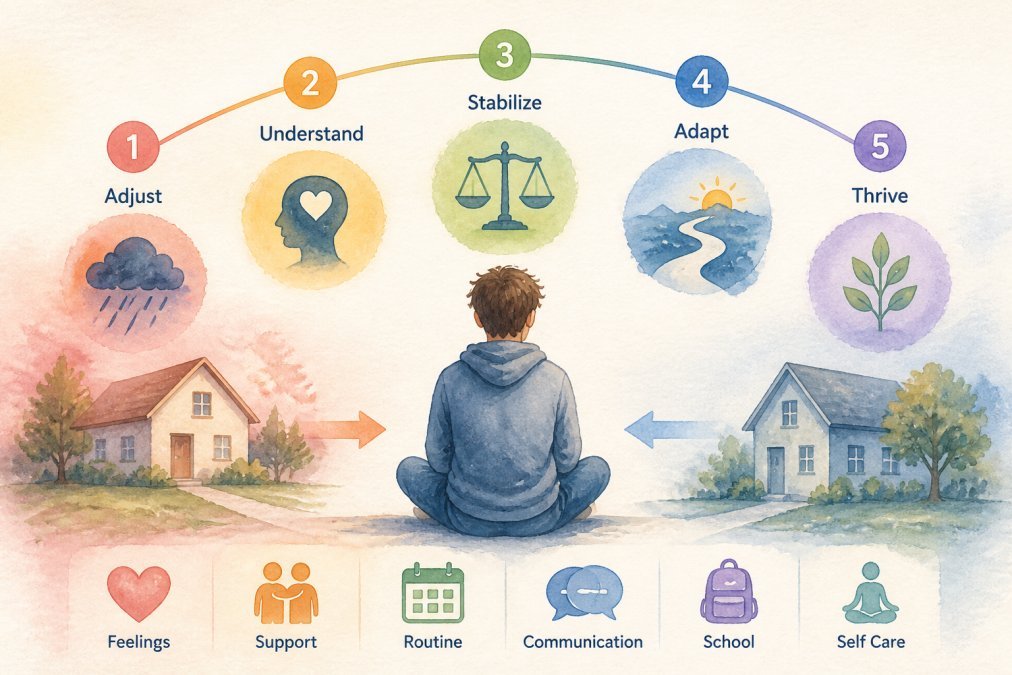
Divorce transitions are the period of adjustment that follows a separation, and for teenagers they land differently than for younger children. Teens understand what divorce means, which means they grieve the loss of the family they thought they had, not just the change in logistics.
Why Adolescence Changes the Equation
Adolescence is already a period of identity formation and emotional volatility. Layer a household transition on top, and you get a teen whose need for stability collides with a family structure that is actively changing. The American Academy of Child and Adolescent Psychiatry’s resources on divorce notes that teens may respond with anger, withdrawal, or a premature push toward independence. That push is often a coping strategy, not maturity.
Common Reactions by Age Group
Younger teens (13-15) tend to act out or regress; older teens (16-18) more often withdraw or take on a caretaking role toward a parent. A common mistake is treating these reactions as personality changes rather than stress responses. In practice, the behavior usually tracks the disruption, not the child.
Scripts for Talking to Teens About Divorce
The goal of any conversation about separation is to deliver clear information without asking your teen to process your emotions alongside their own. Keep it short, direct, and repeatable.
Opening the Conversation Without Triggering Defensiveness
Try a script like: “We have something important to tell you. This is about us, not about you. You did nothing to cause this, and nothing you do can fix it. We’ll answer any question you have, and we’ll keep telling you what’s happening as we know it.” Then stop talking. Let them respond on their own timeline.
What to Say When Your Teen Blames You
Blame is common and rarely accurate. A useful response: “You’re allowed to be angry with me. I can take it. What I won’t do is make you choose sides or carry messages between us.” This keeps the door open without endorsing the accusation.
Co-Parenting Strategies for Teenagers Across Two Households
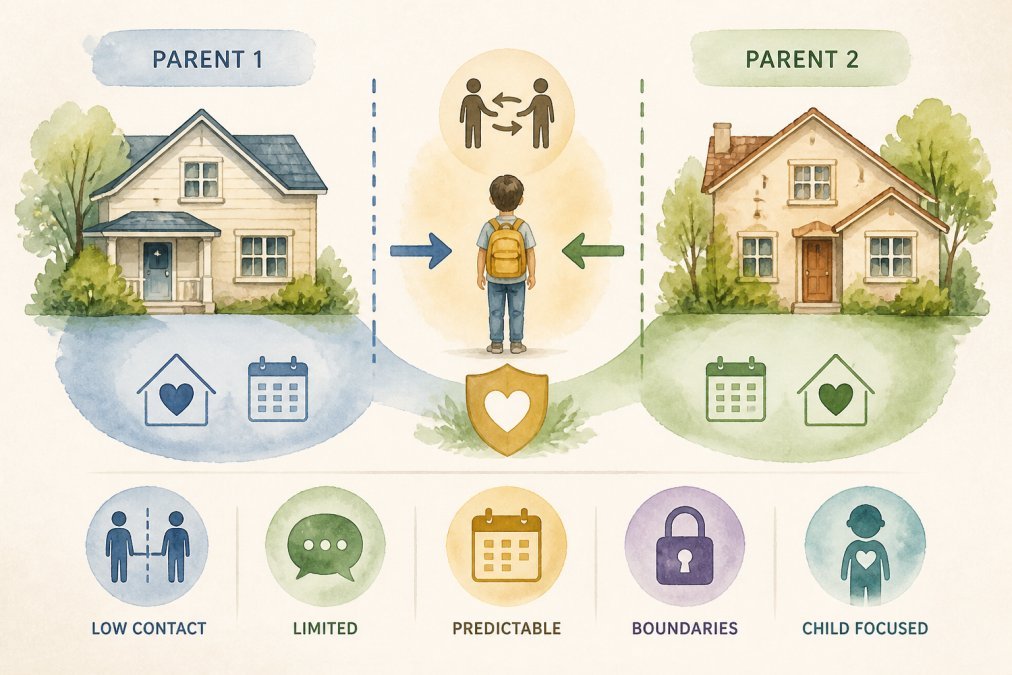
Consistency matters more than identical rules. Teens need to know what to expect in each home, even if the two homes differ.
Building Consistent Rules Without Power Struggles
Agree on a small set of non-negotiables: curfew, school attendance, substance rules, phone access at night. Everything else can vary. Write the list down and share it with your teen so they see it as a household standard, not a weapon either parent wields against the other.
| Area | Non-Negotiable | Can Vary by Household |
|---|---|---|
| Curfew | Yes | Weekend vs. weeknight times |
| School attendance | Yes | Homework location and timing |
| Substance rules | Yes | Consequences for violations |
| Phone at night | Yes | Charging location |
When your ex refuses to agree on anything, document your own household rules and share them with your teen in writing. Predictability in one home still provides stability.
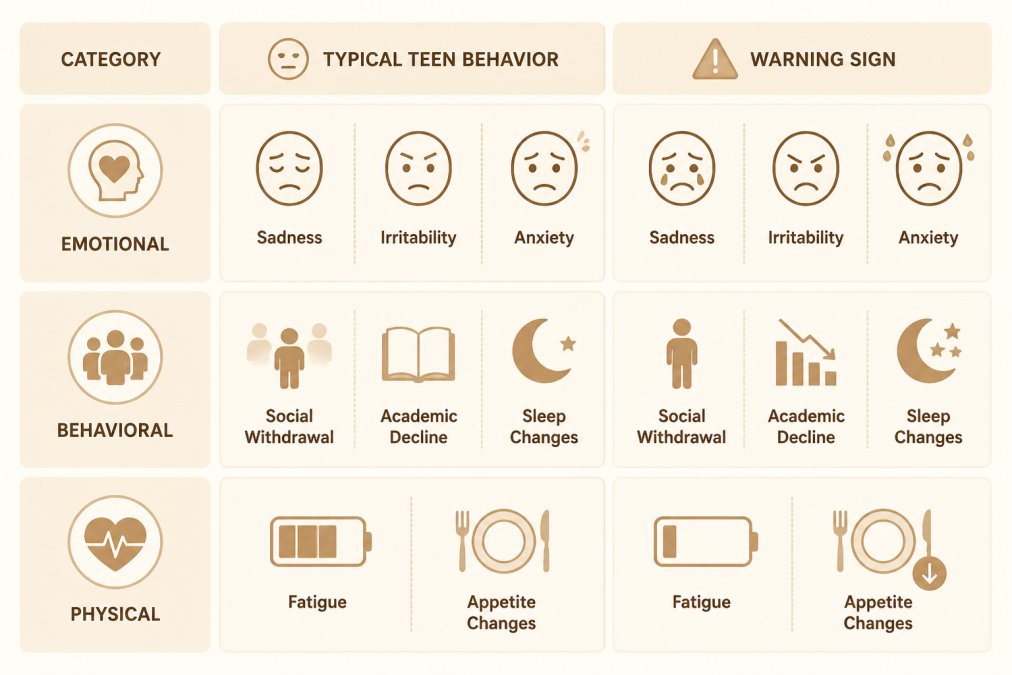
Signs of Teen Depression After Divorce
Distinguishing typical teen behavior from a warning sign is the hardest part of this work. Sadness, irritability, and fatigue are normal during a family transition. What matters is duration, intensity, and whether the teen is still functioning at school and with friends.
A Teen-Facing Self-Advocacy Script (The Gap Most Guides Miss)
Most articles on this topic are written to the parent. Very few give the teenager language to use when the adults around them are in conflict. That is the single biggest gap on this SERP, and it matters because a teen who can name what they need is far less likely to internalize the conflict as their fault.
Teach your teen a three-part script they can deploy with either parent:
- Name the feeling without assigning blame. “I’m feeling stretched thin right now.”
- Name the specific ask. “I need you to text Dad directly about Saturday instead of asking me to pass it along.”
- Name the boundary. “If you two need to argue about it, please do that when I’m not on the call.”
A common pattern is that teens in high-conflict divorces become unpaid couriers, carrying messages, softening bad news, and monitoring each parent’s mood. That role is a documented driver of anxiety and depressive symptoms in adolescents, and it is one of the few stressors a teen can actually push back on themselves.
When to Seek Professional Help
Reach out to a school counselor or therapist if withdrawal, academic decline, or sleep changes last more than a few weeks, or if your teen mentions self-harm. The Substance Abuse and Mental Health Services Administration’s national helpline offers free, confidential support and referrals. Asking for help early is not overreacting.
What a Teen Can Do While Waiting for the Appointment
A therapist waitlist can run weeks. In the meantime, three concrete self-care moves that teens can run without a parent’s help:
- Name one adult outside the divorce. A coach, aunt, teacher, or friend’s parent. One trusted adult who is not in the middle of the conflict is one of the strongest protective factors for adolescent adjustment.
- Protect one non-negotiable routine. A sport, a job, a weekly hangout. Consistency in one area buffers the inconsistency in the rest.
- Write it down before sending it. Drafting a text to a parent and waiting an hour before hitting send prevents the kind of message that escalates conflict and then gets blamed on the teen.
Noticing the pattern is not the same as proving it
You Can Feel the Pattern. Can You Prove It to a Judge?
A diary of what happened reads as emotional venting. A structured, timestamped record reads as evidence. Most parents lose that distinction until it costs them. The free checklist shows you exactly what to document today, before the evidence window closes.
Get the Free Red Flag Checklist ->3 categories, 5 minutes, free
Do not wait for a crisis to involve a professional. Teens often hide distress until it becomes unmanageable, and early intervention is far easier than crisis response.
Digital Boundaries and Online Behavior During Divorce Transitions
Teens process divorce online, often in ways parents never see. Group chats, social media, and even shared gaming spaces become outlets for venting, and sometimes for one parent to communicate through the child. Set clear rules: your teen is not a messenger between households, and they should not be asked to relay information about either parent. help teens with anxiety.
One practical step: agree with your co-parent that all logistics go directly between adults. If that’s not possible, use a written log or shared calendar and keep your teen out of the loop entirely.
Supporting Your Teen’s Long-Term Development and Self-Care
The long-term outcome of a divorce depends less on the divorce itself than on the level of conflict your teen is exposed to. Research consistently points to parental conflict, not family structure, as the primary driver of poor adolescent adjustment, a finding echoed in Pew Research Center’s analysis of family change.
But “low conflict” is not a single strategy, it is a different strategy at 13 than it is at 17. Most guides collapse adolescence into one block. The developmental reality is that early and late adolescence need opposite things from a divorcing parent.

A Stage-by-Stage Roadmap (The Gap Competitors Skip)
Early adolescence (roughly 13-15). The dominant need is predictability. Teens at this stage are still concrete thinkers and tend to act out or regress when the ground shifts. What helps: fixed schedules, visible calendars, and a parent who absorbs the anger without retaliating. What backfires: asking a 13-year-old to weigh in on custody preferences or to “understand” why the divorce is happening.
Middle adolescence (roughly 15-17). The dominant need is autonomy with a safety net. Teens at this stage often pull away from both parents, and a divorce can accelerate that pull into something permanent if it is read as rejection. What helps: letting the teen choose which house they sleep at on a given weekend, within limits, and keeping the door open without demanding check-ins. What backfires: treating normal withdrawal as a symptom and forcing family therapy the teen did not ask for.
Late adolescence (roughly 17-19). The dominant need is a clean launch. Teens at this stage are applying to college, working, or both, and the divorce can either fund that launch or drain it. What helps: keeping financial commitments to the teen stable and separate from any spousal dispute, and not making the teen the emotional confidant of either parent as they prepare to leave. What backfires: using tuition, a car, or a place to live as leverage in the adult conflict.
Digital Boundaries and Online Behavior During Divorce Transitions
Teens process divorce online, often in ways parents never see. Group chats, social media, and even shared gaming spaces become outlets for venting, and sometimes for one parent to communicate through the child. Set clear rules: your teen is not a messenger between households, and they should not be asked to relay information about either parent.
Three concrete digital rules that hold up in practice:
- No parent uses the teen’s phone as a channel. Logistics go adult-to-adult, full stop. If a parent texts the teen “tell your mother,” the teen is allowed to reply “please text her directly.”
- Shared calendars replace group texts. A shared calendar app keeps both households on the same page without making the teen the switchboard.
- The teen’s accounts stay private from both parents’ disputes. Neither parent should be reading the teen’s messages to the other parent, or screenshotting them into a co-parenting argument.
One practical step: agree with your co-parent that all logistics go directly between adults. If that’s not possible, use a written log or shared calendar and keep your teen out of the loop entirely.
Willpower was never the problem
You’ve Said No Contact Before. What Made It Fail Last Time?
It usually isn’t willpower. It’s a loophole nobody accounted for, a second number, a mutual friend, a platform nobody thought to block. This free audit maps all 47 known workarounds so the boundary holds on its own, without relying on you to be strong enough every single time.
Get the Free Loophole Elimination Matrix ->47-point audit, instant download, free
Self-Care for the Teen, Not Just the Parent
Self-care for your teen means protecting their time for friends, activities, and rest, not just managing their emotions. It also means protecting your own capacity. A parent running on empty cannot provide the stable environment a teen needs.
A short list a teen can actually use:
- Keep one friend who is not connected to either parent.
- Keep one activity that existed before the divorce.
- Sleep is the first thing to go and the first thing to protect.
- It is allowed to say “I don’t want to talk about it right now”, to either parent.
Your teen’s resilience is built through consistency, low conflict, and the presence of at least one trusted adult who is not in the middle of the divorce.
Frequently Asked Questions
What age is divorce most damaging to a child?
Research does not identify a single worst age. Adolescents often struggle because they understand the conflict but lack full emotional regulation skills. Teenagers may act out, withdraw, or take sides. Younger children may regress. The key factor is not age but the level of parental conflict and the stability of routines after separation. A calm, predictable environment helps at any age.
How can I tell if my teenager is struggling with the divorce?
Watch for changes in sleep, appetite, grades, or friendships. Signs of teen depression after divorce include persistent sadness, irritability, social withdrawal, loss of interest in activities, and frequent headaches or stomachaches. Some teens express anger instead of sadness. If these last more than two weeks or interfere with daily life, talk to a school counselor or therapist.
How do I maintain boundaries during divorce transitions?
Set clear rules about communication with your ex: use written messages, avoid discussing conflict in front of your teen, and keep conversations focused on logistics. With your teenager, be honest but age-appropriate. Do not share legal details or vent about your ex. A structured toolkit with scripts can help you respond consistently when your teen pushes back or tries to mediate.
What are the three C’s of divorce?
The three C’s often refer to communication, consistency, and conflict resolution. For teenagers, these mean: communicate calmly and honestly, keep routines consistent across both homes, and resolve disagreements without putting your teen in the middle. When parents model these behaviors, teens learn that conflict can be managed without hostility.
Understanding the pattern is not the same as breaking it
You Can Explain Why This Happened. Can You Explain Why You’re Still Stuck In It?
Most people in affair recovery can narrate their entire situation with total clarity, the timeline, the triggers, the whole story, and still find themselves back in the same spiral by evening. Insight was never the missing piece. This free assessment shows you exactly where the gap actually is.
Take the Free Affair Recovery Clarity Check ->A few honest questions, a scored result, 4 minutes free