Last Updated: July 20, 2026
- Best Tools for Surviving High-Conflict Divorce: Quick Comparison
- How We Evaluated These Tools
- 1. Divorce Communication Apps: Structured Messaging in Crisis
- 2. Documentation in High-Conflict Divorce: Building Your Evidence Trail
- 3. Managing Emotions During Divorce: Mental Health and Support
- 4. Parallel Parenting Strategies: Communication Without Conflict
- 5. Specialized Tools for High-Conflict Situations: Handling False Allegations and Legal Abuse Tactics
- 6. Setting Boundaries and Protecting Your Peace: Tools Beyond Apps
- 7. Long-Term Recovery After High-Conflict Divorce: Healing and Moving Forward
- Frequently Asked Questions
Many individuals navigating relationship breakdown face high-conflict co-parenting dynamics that drain resources and harm children caught in the crossfire. According to research on high-conflict divorce outcomes, families in high-conflict separations report significantly higher stress levels and delayed emotional recovery. This guide explores practical tools, communication platforms, documentation systems, emotional support resources, and structured frameworks, that help you protect your peace while prioritizing your children’s wellbeing.
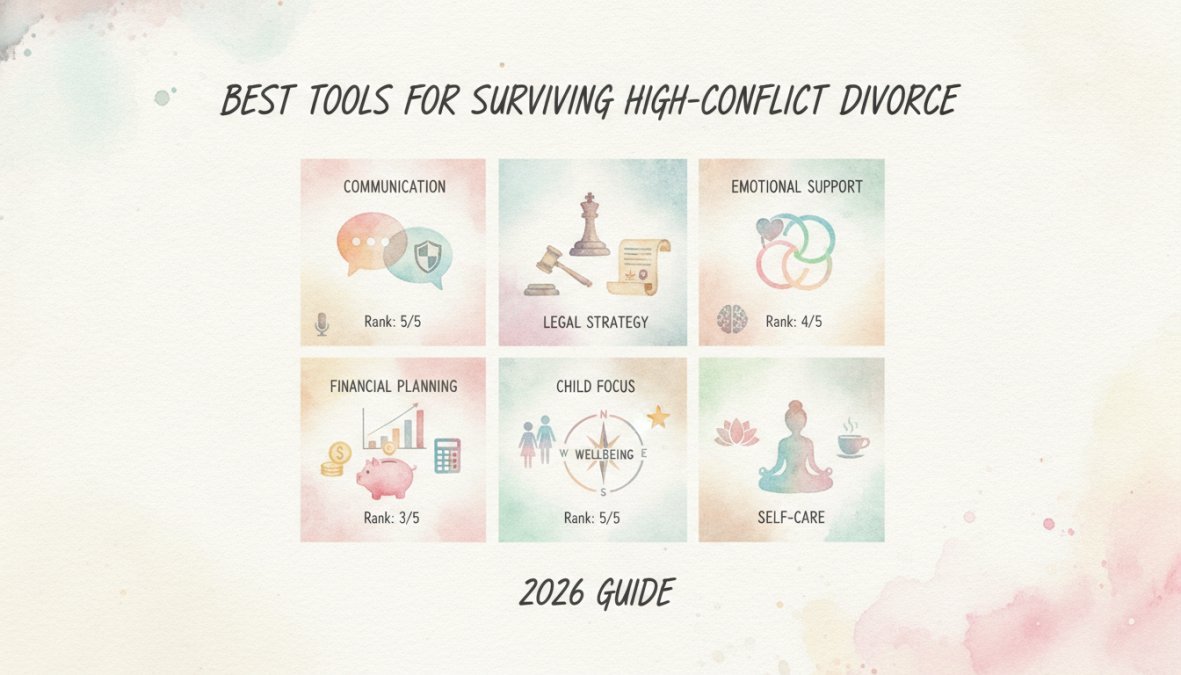
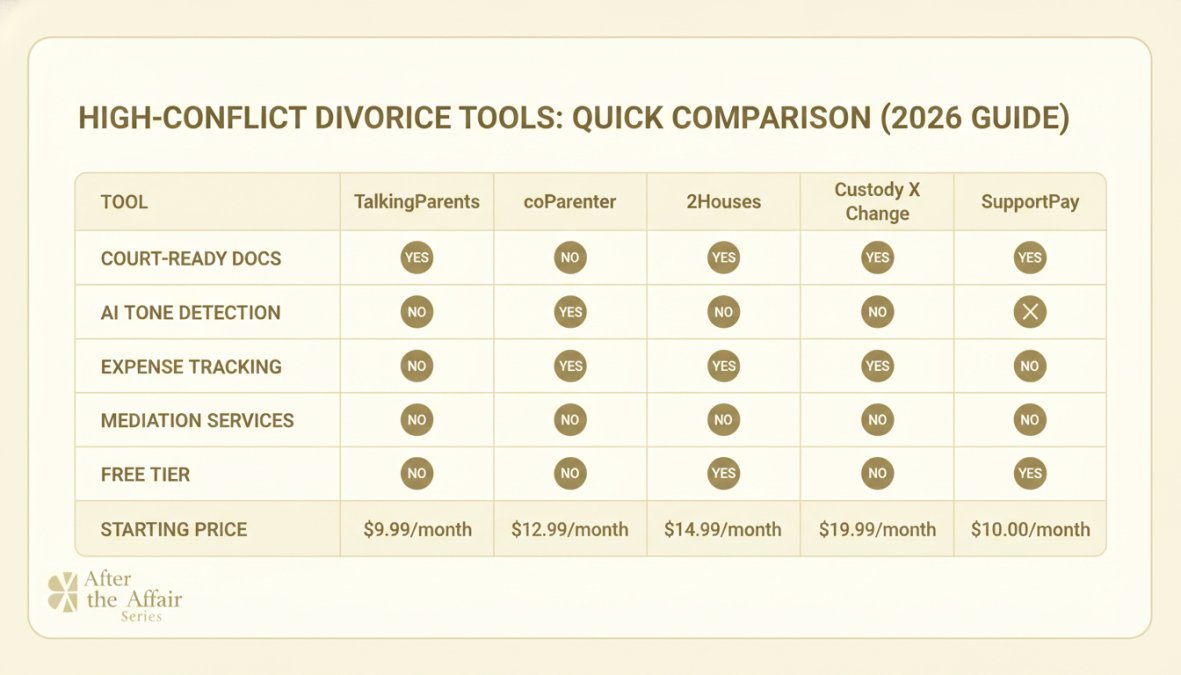
Best Tools for Surviving High-Conflict Divorce: Quick Comparison
You now have dedicated co-parenting apps with court-ready documentation, therapy platforms specializing in divorce recovery, and structured communication frameworks that replace reactive exchanges with calm, strategic responses.
When choosing tools, ask: Does it create unalterable records for legal proceedings? Does it reduce emotional triggers? Does it help document hostile patterns? Does it support your mental health?
| Tool Category | Best Option | Starting Price | Key Differentiator |
|---|---|---|---|
| Court-Ready Documentation | TalkingParents | $7/month | Unalterable, timestamped records + sentiment scanner |
| Integrated Mediation & AI | coParenter | $12.99/month per parent | On-demand mediation + conflict detection |
| Simplified Organization | 2Houses | $14.17/month (annual) | One family subscription covers all members |
| Parenting Plan Creation | Custody X Change | $6/month (annual) | State-specific court-ready documents |
| Financial Tracking | SupportPay | Variable | Legally admissible expense records |
| Mental Health Support | Grouport | $25/session | Licensed therapists specializing in divorce |
| Personalized Strategy | Divorce Coaching | Varies | Tailored frameworks for hostile dynamics |
How We Evaluated These Tools
We assessed each platform on five dimensions: documentation strength (court admissibility), ease of use under stress, cost-effectiveness, whether both parents must participate, and whether the tool reduces conflict or manages it. We weighted practical implementation heavily, a tool you’ll actually use consistently matters more than a theoretically perfect one.
1. Divorce Communication Apps: Structured Messaging in Crisis
When your ex uses communication as a weapon, you need a platform that neutralizes emotional charge while creating unalterable records.
TalkingParents: Court-Ready Documentation
TalkingParents transforms every message into legal evidence. Every text, call, and payment is timestamped, unalterable, and admissible in court. The Sentiment Scanner flags aggressive language before you send it, preventing emotional responses in moments of anger. The Writing Assist feature helps you maintain a child-focused, factual tone.
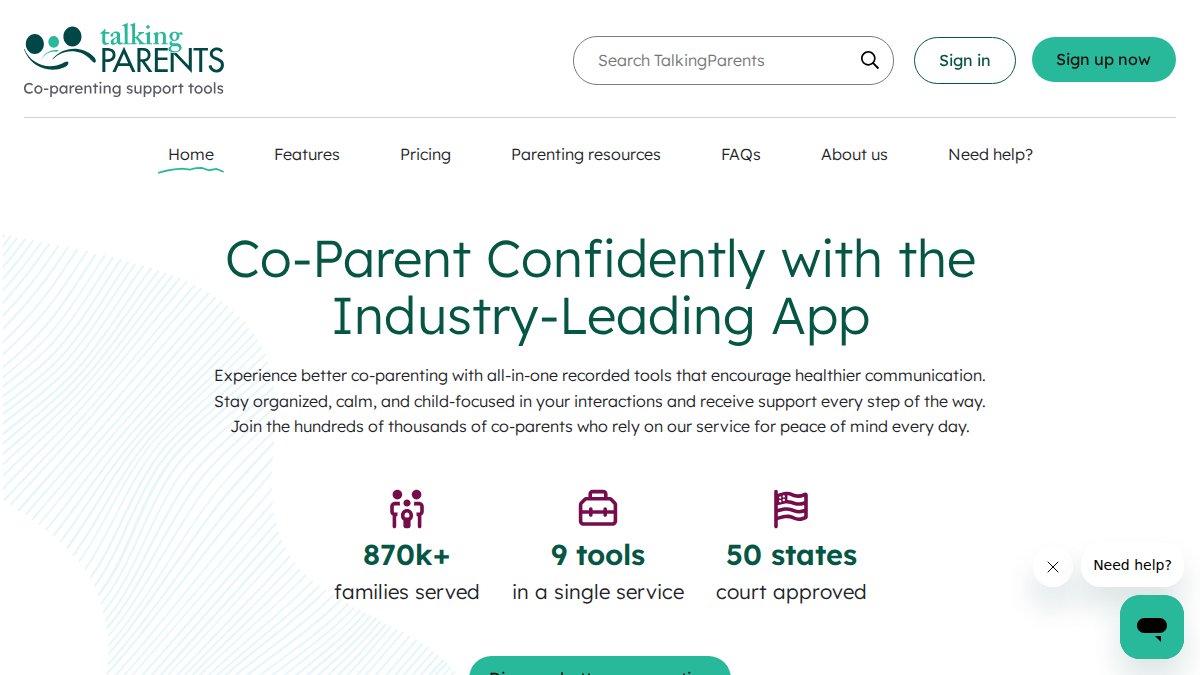
Accountable Calling records and transcribes phone conversations, eliminating “he said, she said” disputes. The unalterable record is powerful in court.
What works: Sentiment analysis helps you pause and rewrite angry drafts. The unalterable record is legally powerful.
What doesn’t: No free tier (fee waivers available for low-income individuals). Interface can feel clunky. Advanced features are locked behind higher tiers.
coParenter: Built-In Mediation and AI Conflict Detection
coParenter flags inflammatory language and suggests reframes. More importantly, if you hit an impasse over medical decisions or schedule changes, you can request mediation within the app. A qualified mediator helps you reach consensus, eliminating the need to hire a lawyer for every disagreement.
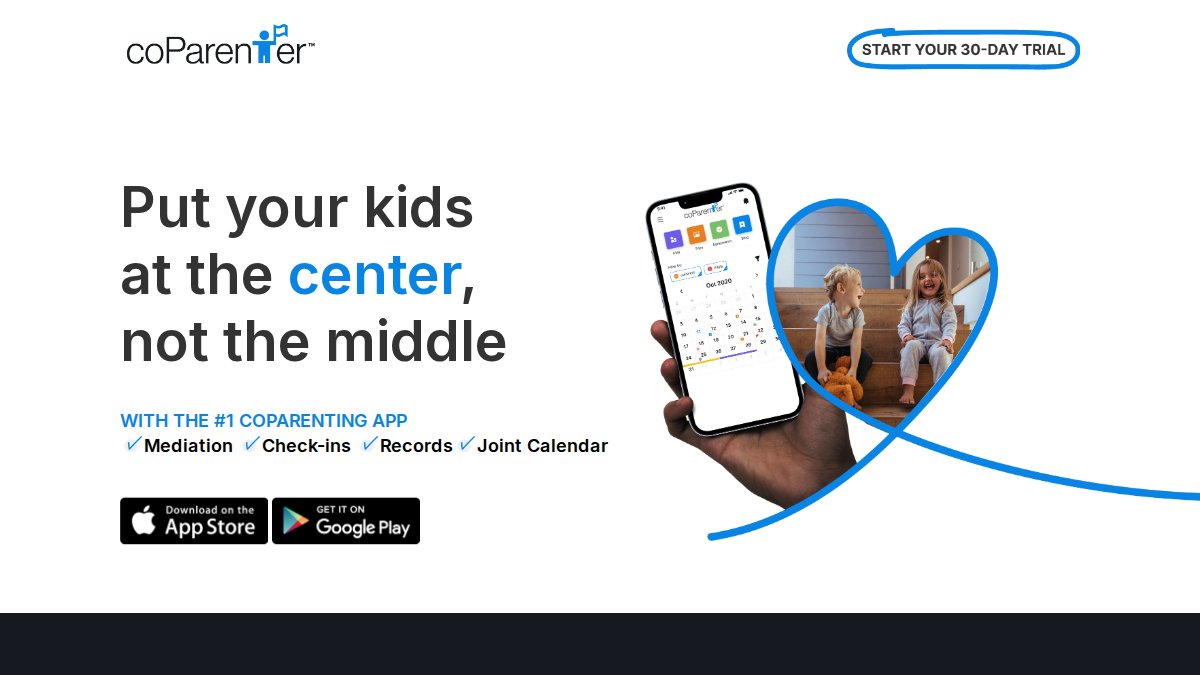
What works: The mediation feature is unique and reduces conflict escalation. AI tone detection is sophisticated. Designed by a former judge.
What doesn’t: Requires both parents to participate for full functionality. Can be expensive when both parents pay separate subscriptions.
2Houses: Simplified Organization for Cooperative Co-Parenting
2Houses prioritizes organization over legal documentation. One subscription covers the entire family. The shared calendar syncs with Google Calendar and Outlook. Expenses are tracked with running balances.
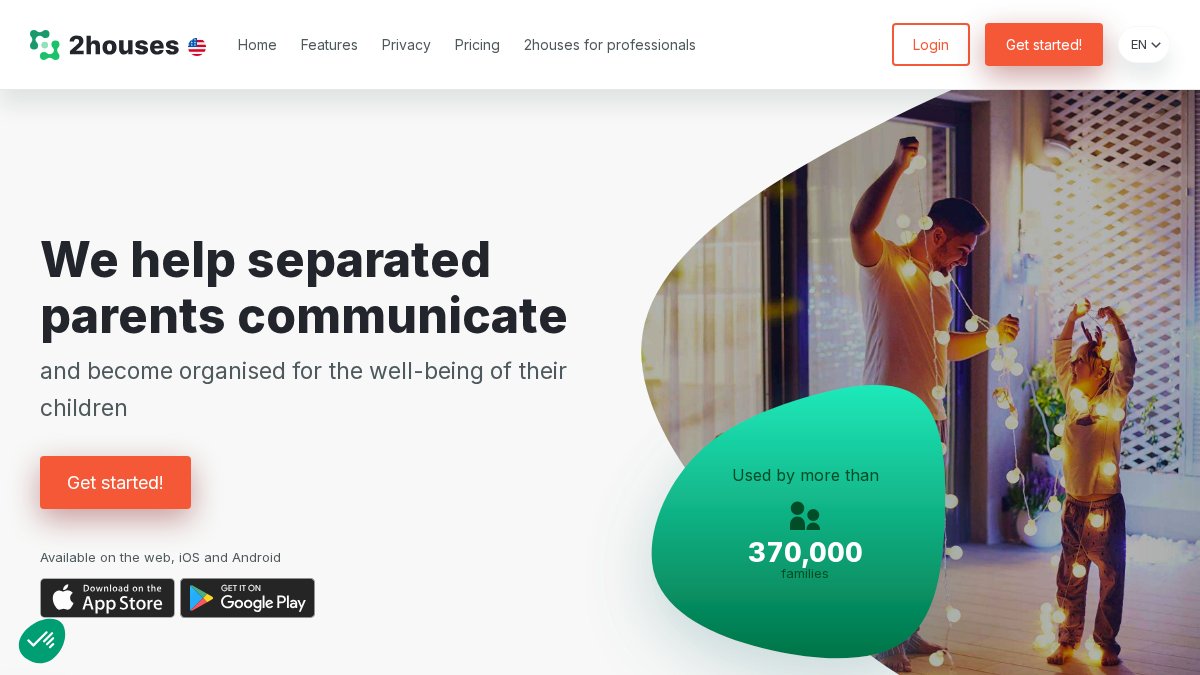
What works: Cost-effective for families moving toward cooperation. Multilingual support. Clean, easy interface.
What doesn’t: Records aren’t court-admissible. No AI features. Better suited to lower-conflict situations.
2. Documentation in High-Conflict Divorce: Building Your Evidence Trail
Documentation protects you from false accusations, provides evidence of behavioral patterns, and creates the record courts rely on for custody decisions.
Custody X Change: Court-Ready Parenting Plans
Custody X Change generates detailed, state-specific parenting plans that courts accept. Vague language like “reasonable visitation” creates disputes. Specific schedules like “every other weekend Friday 6 PM to Sunday 6 PM” leave no room for interpretation.

The parenting-time calculator tracks actual time splits, providing data if you need to modify custody later. One parent can build the plan independently.
What works: Designed specifically for legal documentation. Free trial without credit card. Can be used by one parent alone.
What doesn’t: Minimal messaging features. Primarily a planning tool. You still need a separate app for ongoing co-parenting messaging.
SupportPay: Financial Records and Legal Proof
High-conflict divorces often involve financial disputes. SupportPay creates certified legal records for every transaction, including expense tracking with receipt scanning, payment processing, and a conflict resolution module.

This is particularly valuable if your ex uses financial control as a weapon, refusing reimbursement or claiming you never paid for shared expenses.
What works: Specializes in financial documentation. Provides certified records for tax and legal use. Simplifies reimbursement so money isn’t weaponized.
What doesn’t: Primarily expense-focused, not a full co-parenting system. Pricing varies and isn’t always transparent upfront.
Combine Custody X Change with SupportPay if financial disputes are a major source of conflict. The parenting plan defines who pays for what; SupportPay documents that every payment was made as agreed.
3. Managing Emotions During Divorce: Mental Health and Support
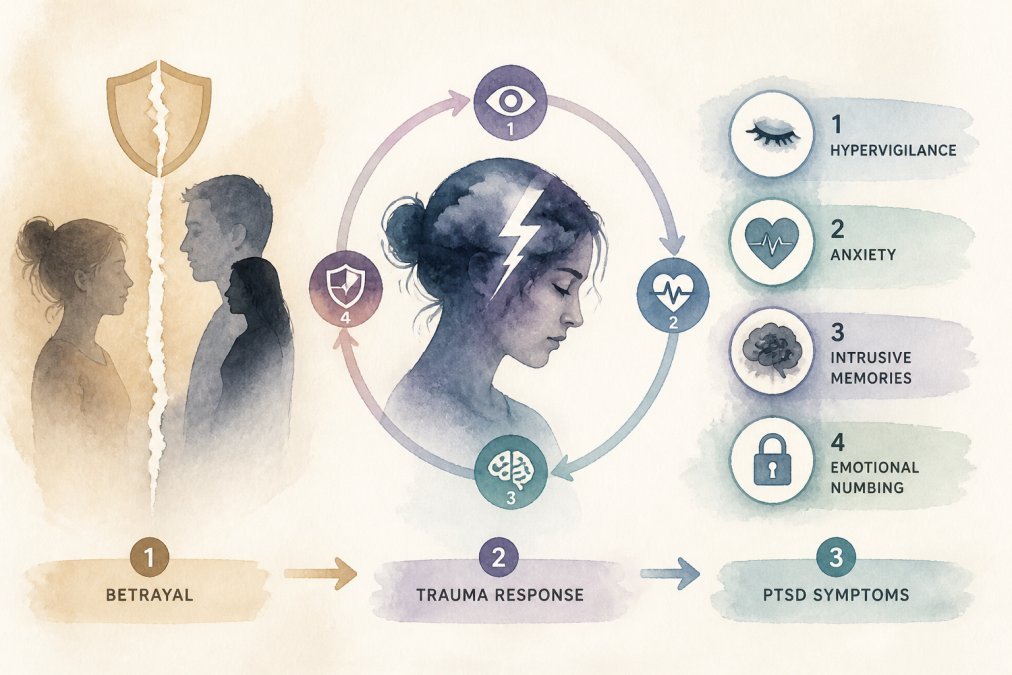
High-conflict divorce is a trauma. You’re grieving your relationship, managing co-parenting with someone potentially hostile, protecting your children, and often defending yourself against false accusations. Without mental health support, you will burn out.
Grouport: Affordable Online Therapy and Support Groups
Grouport offers licensed therapists specializing in divorce trauma and co-parenting stress. Individual therapy allows private processing. Group therapy connects you with others in similar situations. Sessions start at $25, making it accessible despite legal fees.
What works: Affordable compared to traditional therapy. Group sessions provide community. Therapists specialize in divorce recovery.
What doesn’t: Requires active participation. May not be covered by all insurance. Focuses on emotional support rather than legal strategy.
Divorce Coaching: Personalized Strategy and Emotional Guidance
A divorce coach helps you develop strategic responses to high-conflict dynamics, set boundaries, and make decisions aligned with your values. Coaches teach frameworks like BIFF (Brief, Informative, Friendly, Firm) for responding to hostile communication.
Coaches trained in high-conflict personalities help you respond strategically rather than emotionally.
What works: Personalized to your situation. Teaches tactical frameworks you can deploy immediately. Helps you maintain focus on your children’s wellbeing.
What doesn’t: Cost varies significantly. Not a substitute for legal advice. Effectiveness depends on coach expertise and fit.
4. Parallel Parenting Strategies: Communication Without Conflict
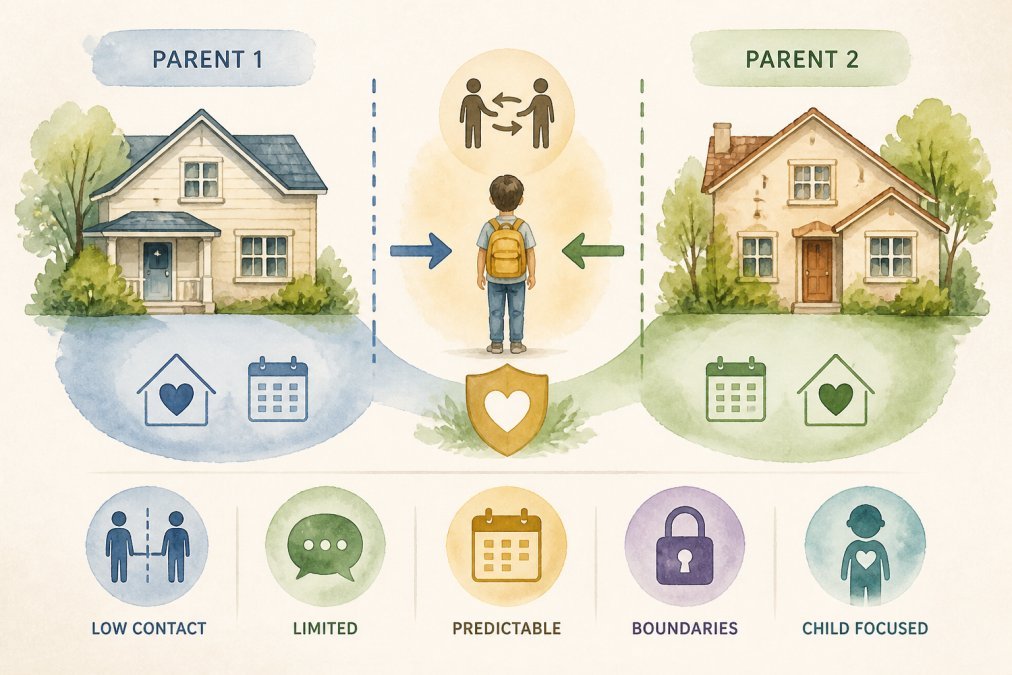
When you can’t co-parent cooperatively, parallel parenting reduces contact and eliminates opportunities for conflict.
The BIFF Method and Gray Rock Technique
The BIFF method structures every response: Brief (don’t give ammunition), Informative (only facts relevant to children), Friendly (maintain civility), Firm (set clear boundaries).
Example: “The soccer schedule for fall is on the league website. Games are Saturdays 10 AM. I’ll handle registration and you can arrange transportation for your weekends.”
The Gray Rock technique takes this further. You become as uninteresting as a gray rock. Hostile communication gets no emotional response. This removes the reward your ex gets from conflict.
Gray Rock can feel cold and unnatural. The discomfort is the point. Your ex is looking for emotional engagement. Denying it removes their motivation to escalate.

Structured Frameworks for Hostile Communication
High-conflict communication follows predictable patterns: provocation, defense, escalation. Breaking this cycle requires structured responses that don’t feed conflict.
Document everything. Keep records of hostile messages, false accusations, and boundary violations. This provides evidence if needed in court and prevents gaslighting.
Set communication boundaries. Establish that non-emergency communication happens via the co-parenting app only. Respond in writing whenever possible to prevent emotional escalation.
5. Specialized Tools for High-Conflict Situations: Handling False Allegations and Legal Abuse Tactics
False accusations require meticulous documentation. Keep detailed incident logs with dates, times, witnesses, and context. Photograph evidence of your parenting: clean home, organized children’s spaces, involvement in their activities.
Preserve all communication. If your ex sends hostile messages or makes accusations via text, you have the record. Record interactions when legal in your state. Recorded conversations where your ex contradicts their accusations are powerful evidence.
False accusations often trigger child protective services investigation. Cooperate fully with investigators, document everything, and have your attorney present.
Contact your state bar association for legal aid referrals. The Legal Services Corporation provides a directory by state. Many attorneys offer payment plans or reduced fees for high-conflict cases.
6. Setting Boundaries and Protecting Your Peace: Tools Beyond Apps
Limit contact. Reduce communication to what’s legally required: children’s schedule, health, and education.
Establish communication protocols. Email for non-urgent matters. Co-parenting app for scheduling. Phone calls only for emergencies.
Don’t engage with provocations. Recognize hostile patterns. Apply BIFF. Move on.
Protect your children from conflict. Never criticize their other parent to them. Don’t use them as messengers. Shield them from adult disputes.
Maintain your support system. Friends, family, therapists, coaches, let people help you.
Prioritize self-care. Exercise, sleep, nutrition, time with loved ones. A burned-out parent cannot protect their children.
7. Long-Term Recovery After High-Conflict Divorce: Healing and Moving Forward
High-conflict divorce doesn’t end when papers are signed. Co-parenting continues for years. Recovery requires recognizing you cannot control your ex’s behavior, only your responses.
The first 1-2 years post-separation are typically most acute. As time passes, children grow older, routines solidify, and conflict intensity often decreases. You develop resilience.
Therapy or coaching during this period helps you process trauma, rebuild identity, and develop meaning beyond the divorce. Document your healing journey. Notice when you stop reacting emotionally to provocations. Celebrate when you can communicate about the children without defensiveness.
Children’s recovery matters profoundly. Research shows children in high-conflict families experience better outcomes when one parent models emotional regulation, maintains boundaries, and refuses to pull them into adult conflict. By protecting your peace, you’re protecting theirs.
High-conflict divorce is one of the most challenging experiences you’ll face. The tools outlined above, communication apps, documentation systems, mental health support, and structured frameworks, exist to make it manageable. The most important tool is your commitment to protecting your peace and your children’s wellbeing, even when your ex refuses to cooperate.
After the Affair Series provides a free 23-point assessment identifying which high-conflict dynamics you’re facing and which frameworks work best for your situation. The platform offers 50+ age-appropriate scripts for conversations with your children, structured communication templates for hostile exchanges, and the Gray Rock Method and BIFF frameworks with specific examples. Get started with the free assessment and take the first step toward protecting your peace.
Frequently Asked Questions
What are the best tools for surviving high-conflict divorce when my ex refuses to communicate?
Communication apps like TalkingParents create documented, unalterable records that protect you legally while minimizing direct confrontation. Parallel parenting strategies, including the Gray Rock Method and BIFF technique, help you respond to hostile communication without escalating conflict. Divorce coaching provides personalized strategies for managing unpredictable ex partners. These tools work best together: structured apps keep records neutral, while coaching teaches you how to stay calm and strategic when your ex becomes hostile.
How does documentation in high-conflict divorce protect me legally?
Court-ready documentation creates an unalterable evidence trail that judges rely on. Apps like TalkingParents, Custody X Change, and SupportPay generate timestamped, certified records of communication, parenting time, and expenses. This protects you against false allegations because courts can verify what was actually said and when. Keep detailed incident logs, save screenshots, and use apps with legal certification features. This documentation becomes critical if custody evaluations or litigation occurs.
Can structured communication scripts and apps like After the Affair Series actually work with a genuinely hostile ex?
Yes, but differently than with cooperative co-parents. Scripts and structured frameworks like the Gray Rock Method reduce emotional triggers and prevent you from being manipulated into reactive responses. Apps with tone-detection features (like coParenter’s AI filters) help you avoid language that hostile exes can weaponize. The goal isn’t to change your ex’s behavior, it’s to protect your peace, document interactions, and keep your children’s wellbeing central. Divorce coaches help you apply these tools realistically in high-conflict situations.
What should I prioritize first: a co-parenting app, therapy, or a divorce coach?
Start with managing emotions (therapy or coaching) so you can make clear decisions. Simultaneously, set up a documented communication app to create a legal safety net. Then layer in specialized tools: custody planning software, financial tracking, and parallel parenting strategies. If you’re in crisis or facing false allegations, legal aid resources and specialized documentation become urgent. Most people benefit from combining therapy (emotional regulation), apps (documentation), and coaching (strategic communication) rather than choosing one.
Are there affordable legal aid resources specifically for low-income individuals in high-conflict divorce?
Yes. DivorceNet offers free legal information and affordable document preparation starting at $159. Many state bar associations provide free or sliding-scale legal consultations. Some co-parenting apps like TalkingParents offer fee waivers for qualifying individuals. Non-profit organizations often provide free mediation and legal guidance. Divorce coaches and online therapy platforms (like Grouport at $25/session) are more affordable than traditional lawyers. Combine free resources (legal information) with low-cost tools (apps with fee waivers, affordable therapy) to build comprehensive support without breaking your budget.