Table of Contents
- Understanding Narcissistic Parenting and Its Impact on Children
- Recognizing Signs of Emotional Manipulation and Parental Alienation
- Establishing Healthy Boundaries: Co-Parenting With a Narcissist Scripts
- Documenting Narcissistic Abuse for Court and Legal Protection
- Parallel Parenting Strategies for High-Conflict Situations
- Building Your Child’s Emotional Resilience and Sense of Self
- Managing Your Own Emotional Regulation and Self-Care
- Conclusion
- Frequently Asked Questions
Last Updated: September 21, 2026
Understanding Narcissistic Parenting and Its Impact on Children
Protecting children from narcissistic parent manipulation means recognizing harmful patterns and taking deliberate action to shield your child’s emotional wellbeing. Narcissistic parenting involves using a child as an extension of the parent’s ego, where the child’s needs come secondary to the parent’s need for control, admiration, or validation.
The damage runs deep. Children of narcissistic parents often develop anxiety, depression, and difficulty trusting their own judgment. They may struggle with self-worth because they’ve learned that their value depends on pleasing the narcissistic parent. Over time, this erodes their sense of self.
A common mistake is thinking this is just “difficult parenting.” It’s not. Narcissistic abuse is deliberate manipulation designed to maintain control. The narcissist uses guilt, shame, and conditional love as weapons. Your child learns early that their emotions don’t matter, only the parent’s do.
At After the Affair Series, we work with parents navigating exactly this situation. The toolkit provides scripts and frameworks specifically designed for high-conflict co-parenting where one parent exhibits narcissistic traits. Understanding the pattern is your first line of defense.
Recognizing Signs of Emotional Manipulation and Parental Alienation
Emotional manipulation happens in predictable ways. Watch for these specific patterns that signal your child is being manipulated:
- The narcissistic parent tells your child that you don’t love them or that you abandoned the family
- Your child reports feeling responsible for the parent’s emotions (“Mom cried when I said I wanted to visit you”)
- The parent uses gifts or special privileges to win loyalty, then withdraws them as punishment
- Your child repeats phrases that sound coached: “Dad says you’re trying to turn me against him”
- The parent dismisses your child’s feelings (“You’re being too sensitive”) or contradicts their reality (“That never happened”)
Parental alienation is the systematic effort to damage your relationship with your child.
Signs of parental alienation include:
- Your child suddenly refuses contact with you without explanation
- They become hostile during visits or phone calls
- They parrot the other parent’s criticisms word-for-word
- They claim you did things you didn’t do
- They express fear of you that wasn’t present before
Parental alienation is recognized in family courts as harmful to children. If you see these patterns intensifying, this is the time to involve your attorney and potentially request a custody evaluation. Waiting makes the alienation harder to reverse.
Establishing Healthy Boundaries: Co-Parenting With a Narcissist Scripts
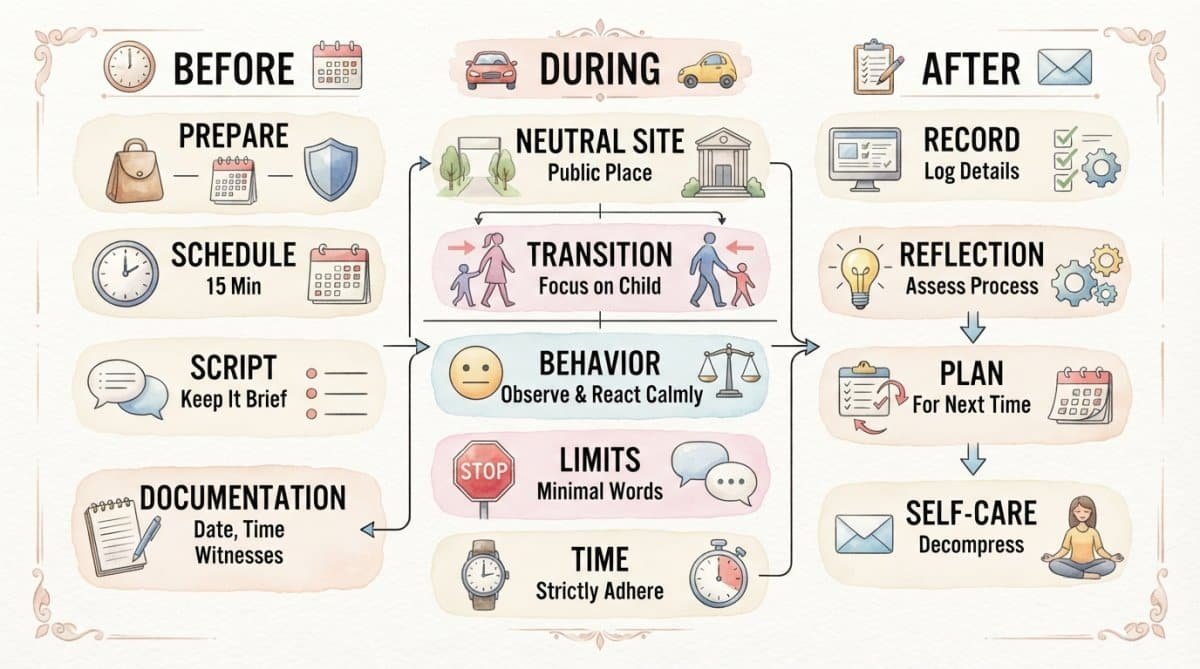
Here’s a practical script for a boundary-setting conversation:
“I’m writing this to confirm our plan for pickup on Saturday at 3 PM. I’ll pick up at your place. If you have questions about the schedule, please email me. I won’t be discussing personal matters during transitions.”
Notice what this does:
- States facts only (time, place, method)
- Sets the communication boundary (email only for logistics)
- Removes emotional language
- Gives no opening for argument
“I’m not going to discuss this right now. [Child’s name], let’s go get your bag ready.”
Write your scripts down before you need them. When you’re triggered, your brain doesn’t access creative language, it goes into survival mode. Having a script memorized means you can deliver it calmly even when your emotions are running high.
Co-parenting with a narcissist requires accepting that traditional co-parenting won’t work. You can’t have reasonable conversations. You can’t problem-solve together. So stop trying.
Instead, use these boundaries:
- All non-emergency communication goes through email or a co-parenting app
- You respond to logistics only; you ignore personal attacks
- Pickup and dropoff happen at neutral locations or with a third party present
- You never discuss the other parent with your child
- You keep visits short and predictable
Documenting Narcissistic Abuse for Court and Legal Protection
Here’s what to document:
Incidents of emotional abuse:
- Date and time
- What happened (be specific, not “was mean” but “told child they were a burden”)
- Who witnessed it
- What your child said or did in response
- How it affected your child
Communications from the narcissist:
- Save all texts, emails, and voicemails
- Screenshot everything (narcissists delete messages to hide evidence)
- Note the date and time of each message
- Don’t edit or alter, courts want originals
Your child’s statements:
- Write down exact quotes when your child reports alienation or manipulation
- Include the date and context
- Don’t lead your child or ask suggestive questions
- Let them tell the story in their own words
Behavioral changes in your child:
- Anxiety or depression that emerges after visits
- School performance changes
- Sleep disturbances
- Regression in behavior
Never use documentation as a threat. Don’t tell your ex “I’m documenting everything you do.” That signals you’re building a case and gives them time to change their behavior or discredit you. Document quietly. Let your attorney present it.
Courts also care about court-ordered therapy. If the judge orders the narcissistic parent into therapy or your child into therapy, keep records of attendance and progress notes. A therapist’s report that your child shows signs of parental alienation or trauma carries significant weight.
Parallel Parenting Strategies for High-Conflict Situations
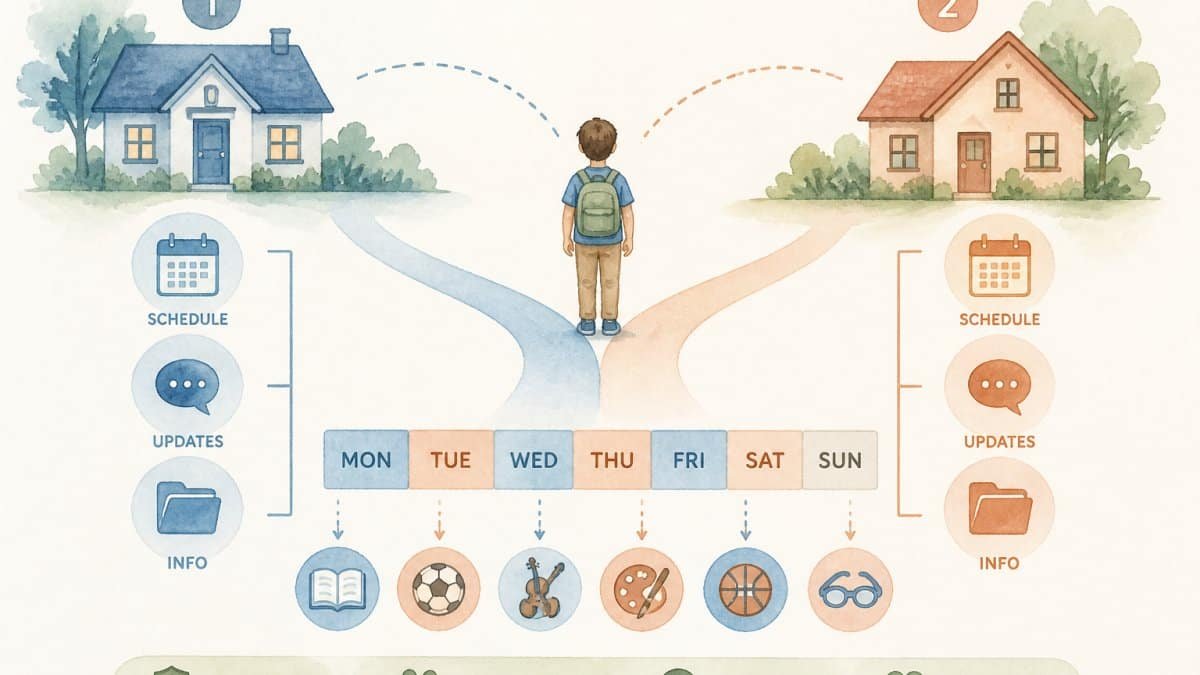
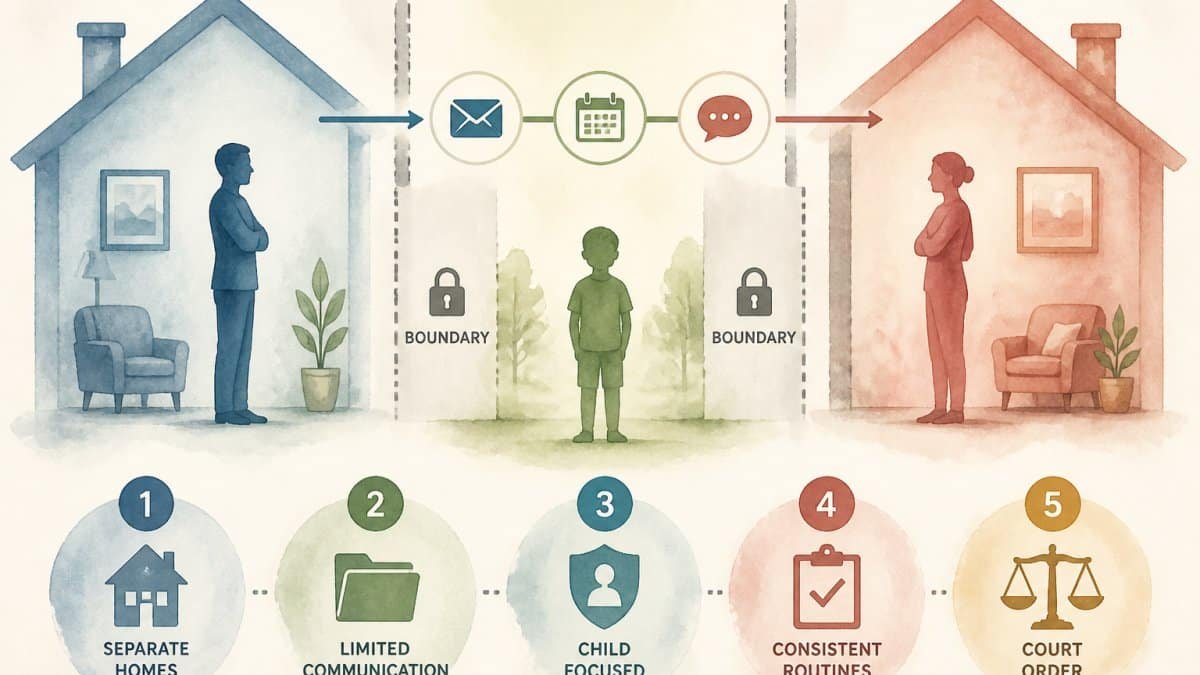
When co-parenting fails, parallel parenting becomes your strategy. This means you and the other parent operate almost independently. You’re not partners, you’re two separate households with minimal contact.
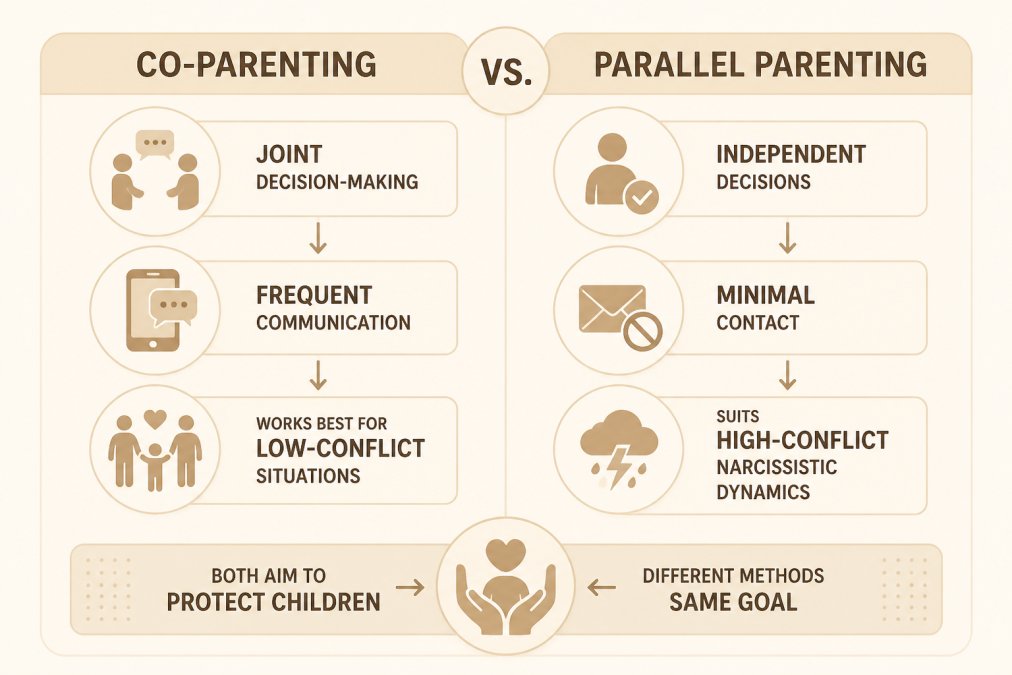
Here’s how parallel parenting works in practice:
At your house:
- You set the rules, routines, and expectations
- You make parenting decisions without consulting the other parent
- You don’t enforce the other parent’s rules
- You create a safe, predictable environment
Transitions:
- Keep them brief and businesslike
- Use a neutral location (parking lot, school) when possible
- Minimize conversation
- Don’t discuss the other parent or upcoming events at their house
Communication:
- Limit it to logistics: schedule changes, medical appointments, school events
- Use email or a co-parenting app (not phone calls or texts)
- Keep messages short and factual
- Don’t respond to provocations
Decision-making:
- Each parent decides what happens in their home
- School and medical decisions require communication only if they’re major (surgery, school change)
- Routine decisions stay with the parent who has custody that day
- Don’t try to enforce consistency across households

Building Your Child’s Emotional Resilience and Sense of Self
“It’s okay to feel upset when someone treats you poorly. You don’t have to accept unkind behavior to keep the peace. Your feelings tell you important information about how you’re being treated.”
With young children (5-8):
- Keep explanations simple: “Sometimes grown-ups have trouble managing their feelings. That’s not your job to fix.”
- Reassure them constantly: “You are loved. This is not your fault.”
- Create predictable routines so they feel safe
With older children (9-12):
- Be more direct: “Your parent has traits that make relationships difficult. That’s about them, not about you.”
- Teach them to recognize manipulation: “When someone says ‘If you loved me, you’d…’ that’s not okay.”
- Help them set boundaries: “You can say no to things that don’t feel right.”
With teens (13+):
- Name what’s happening: “This is emotional manipulation. Here’s why it’s harmful.”
- Validate their anger: “It makes sense that you’re angry. You have every right to be.”
- Teach them to protect themselves: “You don’t owe anyone access to your feelings or your time.”
The most important thing you can do is be consistent, predictable, and emotionally available. Your child needs to know that you are safe, that your love doesn’t depend on their behavior or their loyalty to the other parent.
Managing Your Own Emotional Regulation and Self-Care
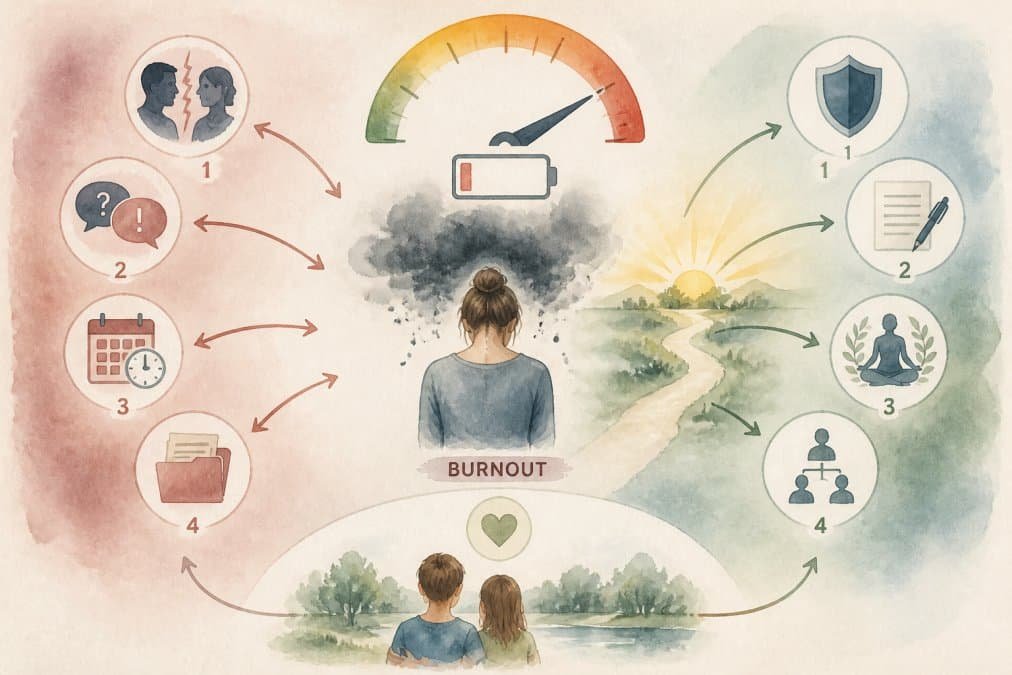
You cannot pour from an empty cup. If you’re dysregulated, your child feels it. They internalize your stress as evidence that the situation is dangerous.
Common triggers:
- Lies they tell about you
- Seeing your child hurt by their behavior
- Being excluded from decisions
- Feeling powerless in the situation
What actually helps:
- Therapy (find a trauma-informed therapist who understands high-conflict situations)
- Exercise (it regulates your nervous system)
- Sleep (protect it fiercely)
- Connection (spend time with people who believe you and support you)
- Boundaries (say no to things that drain you)
Conclusion
Protecting children from narcissistic parent manipulation requires three things: recognizing the patterns, setting firm boundaries, and building your child’s resilience. None of this is easy. The narcissist will resist. Your child may struggle. You will have moments of doubt.
Frequently Asked Questions
How do I protect my child from a narcissistic parent?
Protecting children from narcissistic parent manipulation involves multiple layers: establish clear, documented boundaries; use structured communication scripts that don’t invite manipulation; maintain consistent routines and validation of your child’s feelings; limit the narcissistic parent’s access to sensitive information; document interactions for legal purposes; and help your child develop a strong sense of self separate from the narcissistic parent’s narratives. The key is consistency across all these areas while managing your own emotional responses so you don’t inadvertently model reactive behavior.
What are the signs of parental alienation I should watch for?
Parental alienation signs include your child suddenly rejecting the other parent without legitimate reason, repeating the narcissistic parent’s negative language about you, showing anxiety or fear around the other parent that seems exaggerated, losing interest in activities they previously enjoyed with you, or expressing feelings that seem scripted or coached. Your child may also show conflicting emotions: they claim to hate you but then slip into normal behavior when with you, or they refuse contact but later ask why you didn’t call. Document these patterns with dates and specific examples for custody evaluations.
Can these communication scripts actually work with someone who refuses to communicate reasonably?
Structured scripts work differently in high-conflict situations than in typical co-parenting. Their purpose isn’t to change the narcissistic parent’s behavior but to protect you legally, reduce your emotional reactivity, and remove hooks for manipulation. Scripts keep communication factual and unemotional, which denies the narcissistic parent the emotional fuel they seek. Even if they escalate initially, consistent use of boundary-focused scripts eventually reduces engagement. In truly hostile situations, parallel parenting (minimal direct communication) may be more effective than scripts designed for cooperative exchange.
How should I document narcissistic abuse for court proceedings?
Documenting narcissistic abuse for court requires specific, dated records: keep a log of incidents with dates, times, what happened, witnesses if any, and your child’s observable reaction; save all emails, texts, and messages (screenshot with metadata); record patterns, not isolated events; document impact on your child’s behavior, school performance, or mental health; maintain records of therapy or medical visits related to the abuse; and use a neutral tone focused on facts rather than interpretations. Courts prioritize documented patterns and concrete impact over emotional narratives. Avoid editorializing; let the facts speak for themselves.