Table of Contents
- Parallel Parenting vs Co-Parenting: Core Definitions
- Key Differences in Communication and Decision-Making
- Parallel Parenting Communication Scripts for High-Conflict Situations
- High-Conflict Co-Parenting Strategies and Boundary Setting
- Co-Parenting Apps for High-Conflict Situations
- When to Choose Parallel Parenting vs Co-Parenting
- Implementation: Making the Transition
- Frequently Asked Questions
Last Updated: September 1, 2026
Parallel Parenting vs Co-Parenting: Core Definitions
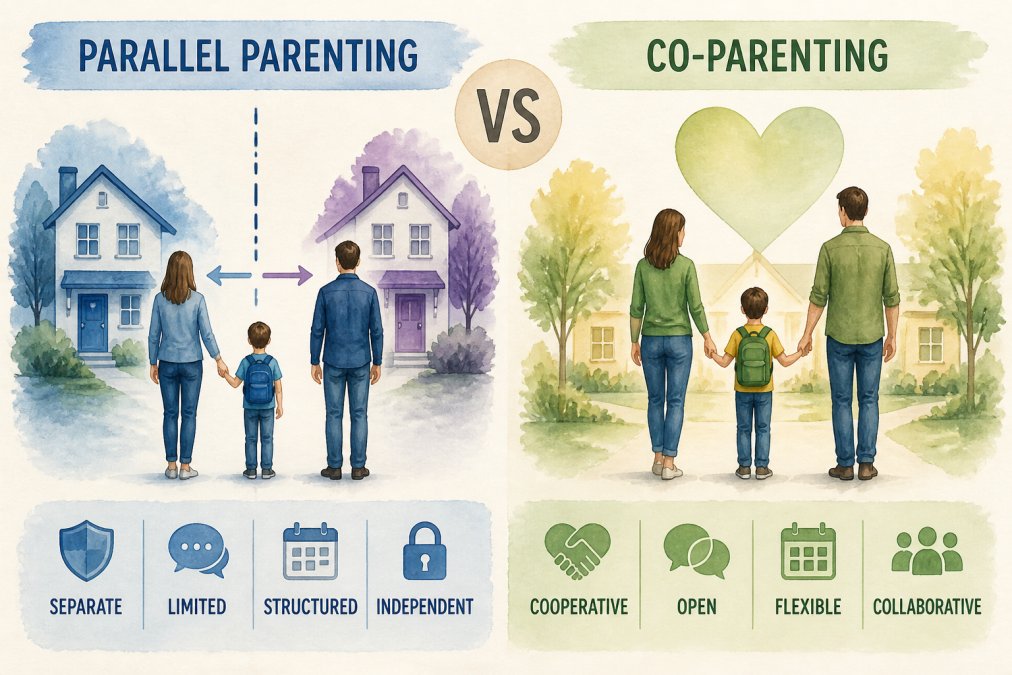
Parallel parenting is a structured approach where separated or divorced parents maintain minimal contact and make independent decisions about their children’s upbringing within their own households. Each parent operates autonomously, reducing the need for ongoing communication or agreement on parenting methods.
Co-parenting is a collaborative model where both parents actively communicate, coordinate decisions, and present a unified approach to parenting despite living separately. This requires regular interaction and mutual agreement on major decisions affecting the children.
The distinction matters because one approach works when parents can cooperate; the other works when they cannot. After the Affair Series helps parents navigate this choice when high-conflict situations make traditional co-parenting impossible. Understanding which model fits your situation can mean the difference between stability and chaos.
Key Differences in Communication and Decision-Making
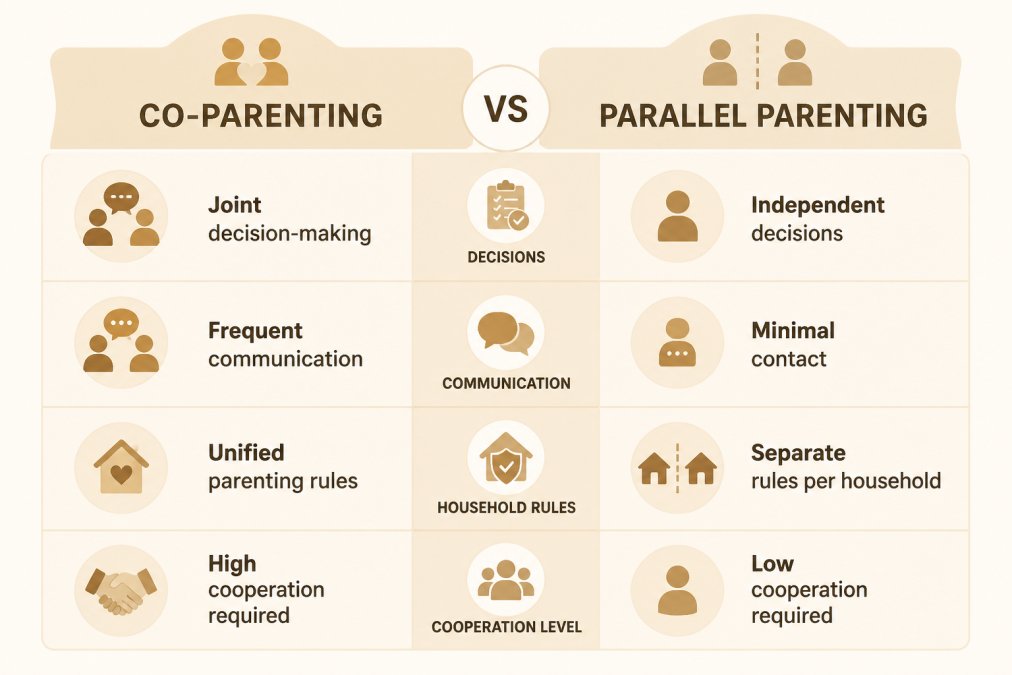
Co-parenting requires regular, substantive communication about school choices, medical decisions, discipline approaches, and major life events. Success depends on both parties’ willingness to compromise and present a consistent front.
Parallel parenting minimizes communication to logistics only: pickup times, basic health information, school schedules. Each parent makes autonomous decisions within their household. A child might follow one set of rules at mom’s house and different rules at dad’s house, and that’s intentional, not a failure.
Research on family dynamics shows that the communication structure you choose directly impacts how much conflict children witness (peer-reviewed research). When parents cannot communicate respectfully, parallel parenting reduces the child’s exposure to hostile exchanges (apa.org). When parents can communicate respectfully, co-parenting allows them to present unified expectations that children find reassuring.
Decision-making authority differs sharply. Co-parenting parents jointly decide major issues; parallel parenting gives each parent full autonomy over decisions made during their parenting time. This autonomy is the core feature that makes parallel parenting viable for high-conflict situations, removing the need to reach agreement when reaching agreement has repeatedly failed.
Parallel Parenting Communication Scripts for High-Conflict Situations
When parallel parenting is the chosen model, the minimal communication that does occur must be structured to prevent escalation.
For scheduling conflicts:
“I have [child] from [date/time] to [date/time] as scheduled. If you need to adjust, please let me know by [specific date] via [communication method].”
For health or school information:
“[Child] has an appointment on [date] at [time] for [reason]. I will handle this during my parenting time. I’ll provide documentation if needed for your records.”
For emergency situations:
“There is a medical/safety emergency. I am taking [child] to [location] for [reason]. I will update you once the situation is addressed.”
The Gray Rock Method, responding with minimal emotional content like a gray rock, works well in parallel parenting communication (peer-reviewed research). Responses are brief, factual, and emotionally neutral, removing the reward for hostile communication. If anger or manipulation produces no reaction, the motivation to escalate decreases.
After the Affair Series provides 50+ age-appropriate scripts for different scenarios, including how to tell children about the separation and how to respond when a child returns upset from the other household. The key insight: in parallel parenting, you are not trying to convince the other parent. You are simply stating what will happen.
High-Conflict Co-Parenting Strategies and Boundary Setting
For parents who choose co-parenting despite high conflict, often because the legal custody agreement requires it, boundary setting becomes the survival mechanism.
Boundaries in co-parenting are explicit agreements about what topics are open for discussion and what decisions each parent makes alone. A boundary might be: “Discipline decisions during my parenting time are mine. You can tell me what happened, but I decide the consequence.” Another: “We discuss school and medical decisions together. Personal grooming, clothing, and entertainment choices are each parent’s call during their time.”
Boundaries work because they reduce the surface area for conflict. Specific boundaries succeed where vague ones fail: “Parent A handles discipline during their time; Parent B handles discipline during theirs, but we both use time-out for dangerous behavior” is clear and enforceable.
Many parents benefit from using documented communication platforms, which create a record of what was agreed and who violated boundaries. This protects both parents and prevents disputes.
The emotional boundary is equally critical. You cannot control the other parent’s behavior, only your response to it. Setting an emotional boundary means deciding in advance: “If they yell, I will end the conversation.” This requires practice and often therapy to maintain when someone is deliberately trying to provoke you.
Co-Parenting Apps for High-Conflict Situations
When parents choose co-parenting but struggle with communication, apps designed for documented, neutral exchange can help.
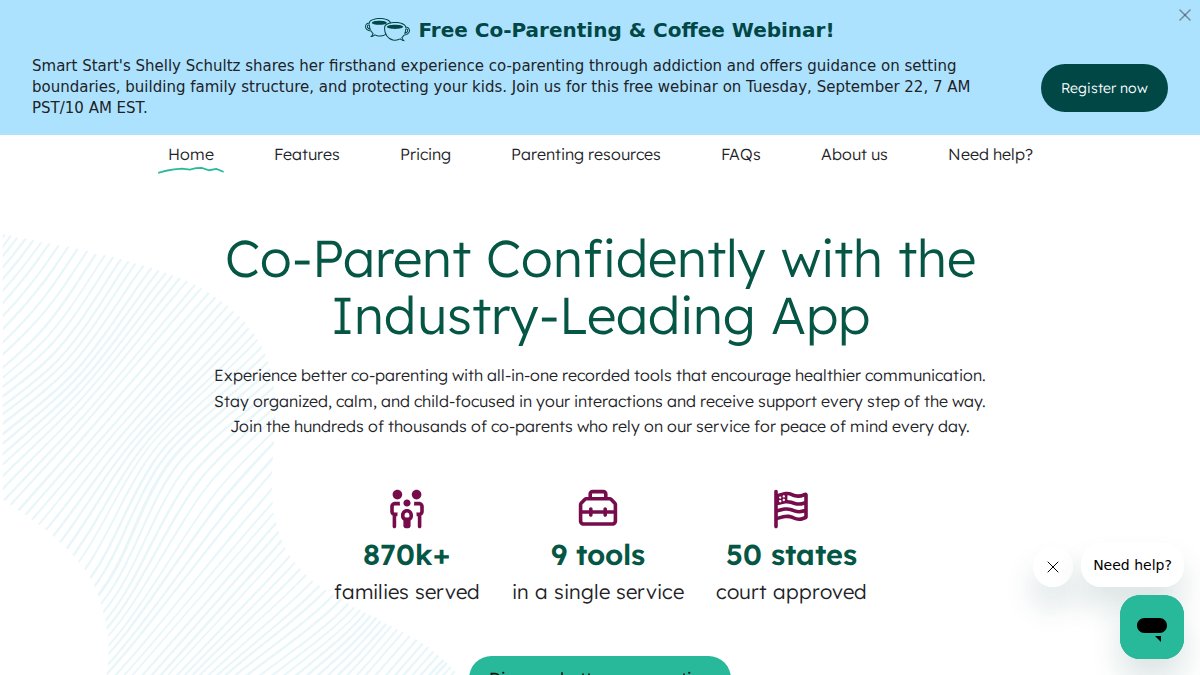
TalkingParents specializes in high-conflict situations. All messages are time-stamped, unalterable, and admissible in court. The platform offers recorded and transcribed calls, creating an objective record. It begins at $7 per month for the Essentials plan, with higher tiers offering advanced features like tone analysis.
AppClose offers unlimited secure messaging and call recording at $7.99 per month per parent, with fee waivers for financial hardship or domestic violence. Every message is documented and court-admissible. Its strength is comprehensive expense tracking for shared childcare and medical costs. investigating child support matters.
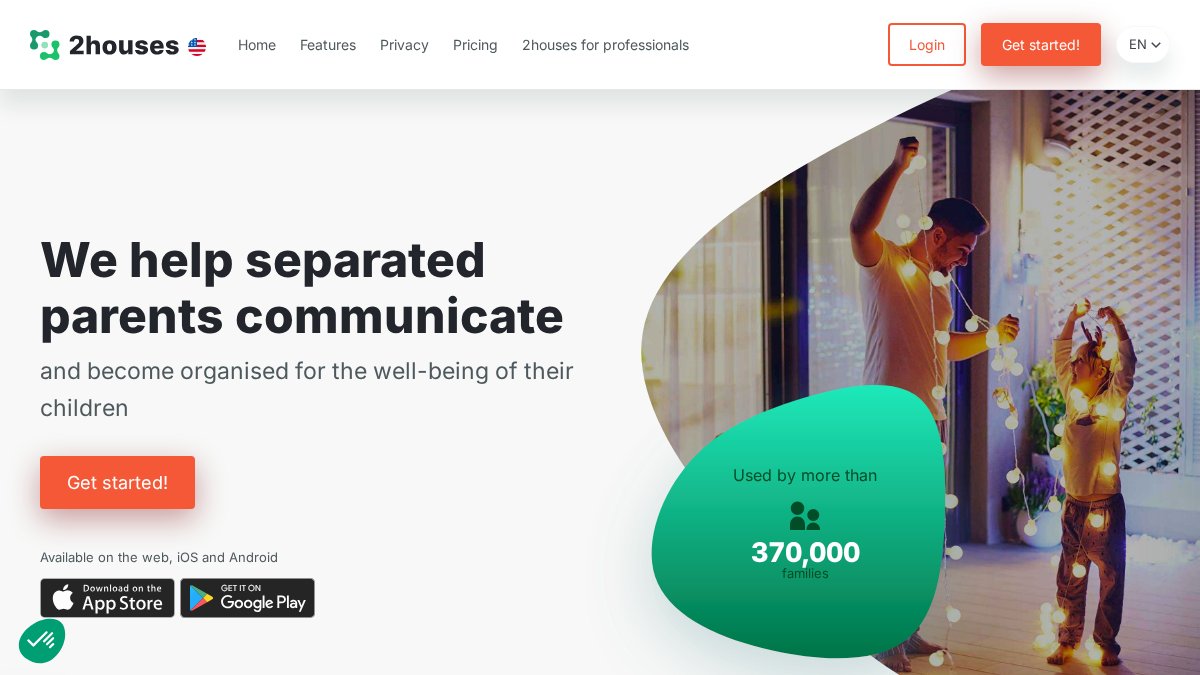
2Houses operates as a family organizer rather than a conflict management tool, costing $169.99 per year per family. It excels at shared calendars, expense tracking, and storing information about children. It works best for lower-conflict situations where parents can collaborate on logistics.
The choice depends on your conflict level and documentation needs. For hostile communication requiring court-ready records, TalkingParents or AppClose are necessary. For civil communication needing organized logistics, 2Houses handles that efficiently.
After the Affair Series recommends these tools as supplements to structured communication scripts.
When to Choose Parallel Parenting vs Co-Parenting
The choice depends on specific factors about your situation, your ex-partner, and your children.
Choose parallel parenting if:
Communication with your ex-partner is consistently hostile, manipulative, or abusive. If conversations regularly escalate into arguments or you feel unsafe discussing anything beyond logistics, parallel parenting removes the need for that communication.
Take the free 23-point assessment →
Your ex-partner engages in parental alienation, actively working to damage your relationship with your children. Parallel parenting limits their opportunity to poison conversations.
You have a court order mandating parallel parenting, or your custody agreement gives each parent significant autonomous time.
Your ex-partner is unwilling or unable to compromise. If every decision becomes a battle, the energy required for co-parenting becomes unsustainable.
Your children show signs of distress when exposed to parental conflict. If they’re anxious, withdrawn, or acting out after time with both parents, reducing their exposure to hostile exchanges matters more than presenting a unified front.
Choose co-parenting if:
You and your ex-partner can communicate respectfully, even if you don’t like each other. Respect and civility are the foundation co-parenting requires.
You share similar values about parenting, education, and discipline. Unified expectations are easier to maintain when you’re already on the same page philosophically.
Your children benefit from consistency and clear, unified rules.
You have the emotional capacity to negotiate, compromise, and sometimes let the other parent’s approach stand even when you disagree.
Your ex-partner is willing to put the children’s needs ahead of personal conflict.
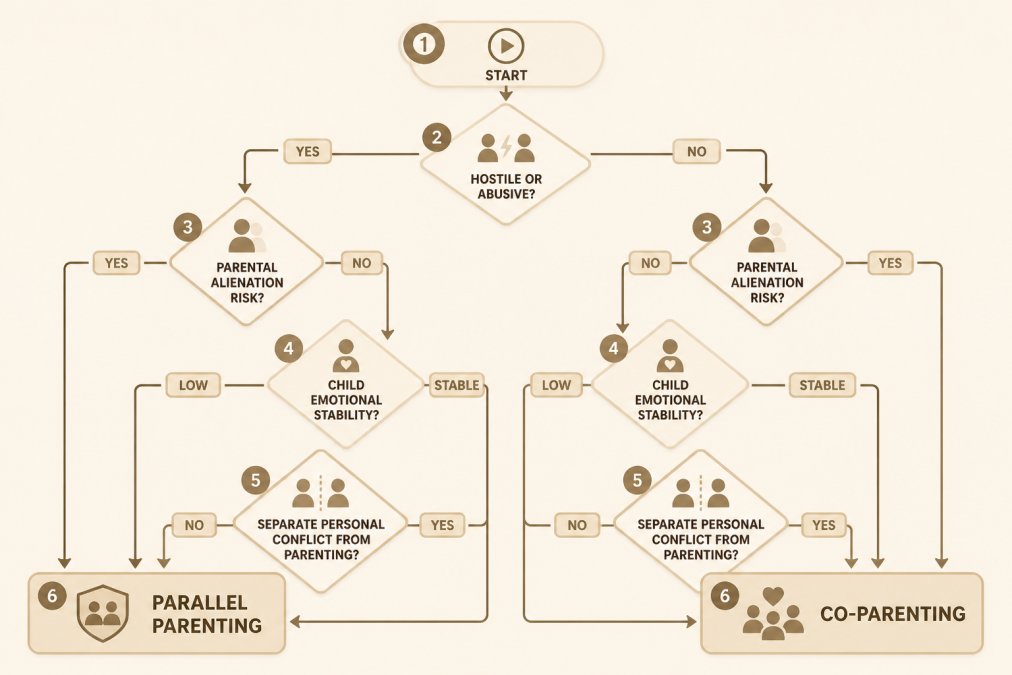
If you’re unsure which model fits, you probably need parallel parenting. Parents in genuinely functional co-parenting situations rarely question whether co-parenting is right for them.
Implementation: Making the Transition
Transitioning to either model requires deliberate steps.
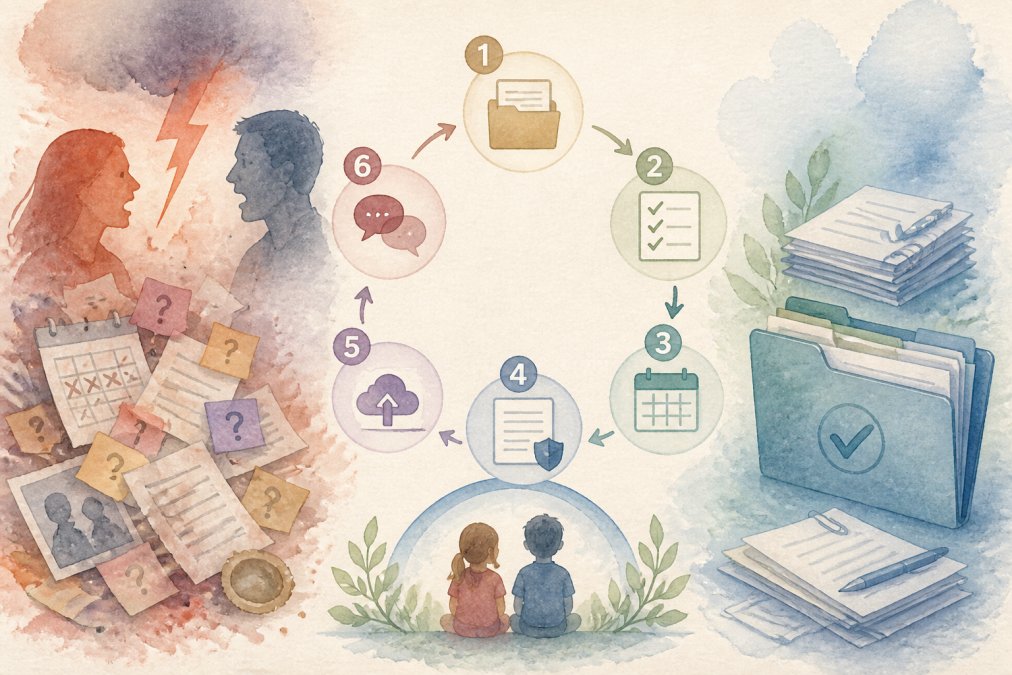
Step 1: Get clarity on your legal custody arrangement. Review your custody order to determine whether you’re legally required to co-parent on major decisions or have autonomy. Consult a family law attorney if you’re unsure.
Step 2: Document your chosen model in writing. Put it in writing as an amendment to your custody agreement, a written agreement both parents sign, or a memo to your attorney. Specificity matters: “Parent A and Parent B will discuss school changes via email by [date] and decide by [method]” is clear.
Step 3: Establish communication protocols. Decide how you’ll communicate (email only, a co-parenting app, text with specific topics only), when you’ll communicate (within 24 or 48 hours), and what you won’t discuss. Put these rules in writing and share them.
Step 4: Create a transition plan for the children. Children need to understand the new structure. In parallel parenting: “Mom’s house has these rules. Dad’s house has these rules. Both are okay.” In co-parenting: “Your parents talk about big decisions together.” Age-appropriate explanations matter.
After the Affair Series provides templates for these conversations, including specific language for different ages.
Step 5: Prepare for resistance. Your ex-partner may resist the model you’ve chosen. Prepare by having your reasons clear and documented. If you’re requesting parallel parenting due to communication breakdown or safety concerns, document those concerns. You may need to involve a mediator or court.
Step 6: Build in review points. Plan to reassess after 3-6 months. Is it working? Are the children adjusting? Is conflict decreasing? Be willing to adjust if the model isn’t serving your family.
The transition is hardest in the first month. Expect awkwardness, boundary testing, and occasional slips into old patterns. Having structured scripts makes the transition easier by removing the need to improvise under stress.
The choice between parallel parenting and co-parenting isn’t about which is objectively better. It’s about which works for your specific situation, your ex-partner’s capacity for cooperation, and your children’s needs. High-conflict situations demand parallel parenting’s clear boundaries and minimal contact. Functional relationships allow co-parenting’s collaborative approach.
After the Affair Series provides the structured frameworks, communication scripts, and assessment tools to help you navigate this decision and implement it effectively. The free 23-point assessment helps clarify whether your situation calls for parallel parenting or co-parenting, and provides a personalized roadmap for moving forward with the model that fits your reality.
Frequently Asked Questions
Is parallel parenting better than co-parenting for high-conflict situations?
Neither approach is universally better, the right choice depends on your situation. Parallel parenting works best when communication is hostile, abusive, or impossible. It reduces conflict exposure for children by minimizing parental interaction and allowing each parent autonomy. Co-parenting requires trust and cooperation but benefits children through consistent rules and unified messaging. If your ex refuses reasonable communication or uses it as a weapon, parallel parenting protects your child’s emotional stability. If you can maintain boundaries while cooperating, co-parenting may provide better continuity.
What are examples of parallel parenting communication scripts?
Parallel parenting communication uses the Gray Rock Method: short, boring, unemotional responses that discourage further engagement. Example: Instead of ‘You’re being irresponsible about homework,’ write ‘Homework schedule for this week: Monday-Wednesday at your house, Thursday-Friday at mine.’ Keep messages focused on logistics only (schedules, expenses, health issues). Avoid explanations, justifications, or emotional language. Use a co-parenting app to document all messages. These scripts protect you legally while preventing escalation. After the Affair Series provides 50+ age-appropriate scripts tailored to different conflict levels and child ages.
When should I transition from co-parenting to parallel parenting?
Transition to parallel parenting when communication becomes hostile, when your ex uses information against you, when discussions escalate into arguments, or when your child shows anxiety around parental interactions. Signs include repeated boundary violations, refusal to respect agreements, or patterns of parental alienation. If the situation is safety-related or involves abuse, consult a family law attorney about formalizing the arrangement.
How do co-parenting apps help in high-conflict situations?
Co-parenting apps create documented, time-stamped records of all communication, making them court-admissible evidence if disputes arise. They enforce neutral communication by limiting message length and tone, preventing escalation. Features like shared calendars, expense tracking, and call recording reduce direct contact while keeping both parents informed. Apps like TalkingParents and AppClose are specifically designed for high-conflict situations. They remove emotion from logistics by providing templates and preventing message deletion. This structure protects both parents legally while keeping children out of communication conflicts.
This article was written using GrandRanker