Table of Contents
- Understanding Narcissistic Co-Parenting and Its Impact
- Signs of Narcissistic Co-Parenting Burnout
- The Grey Rock Method for Co-Parenting
- Using Co-Parenting Communication Scripts Effectively
- Nervous System Regulation and Physiological Recovery
- Protecting Your Children While Managing Your Own Burnout
- Documentation, Boundaries, and Legal Protection
- Frequently Asked Questions
Last Updated: September 22, 2026
Understanding Narcissistic Co-Parenting and Its Impact
Recovering from narcissistic co-parenting burnout means learning to protect your peace while raising children with someone who uses manipulation, control, or emotional tactics. This isn’t ordinary conflict. Narcissistic co-parenting involves a pattern of behavior designed to dominate, belittle, or exhaust you, and it takes a real toll.
Signs of Narcissistic Co-Parenting Burnout
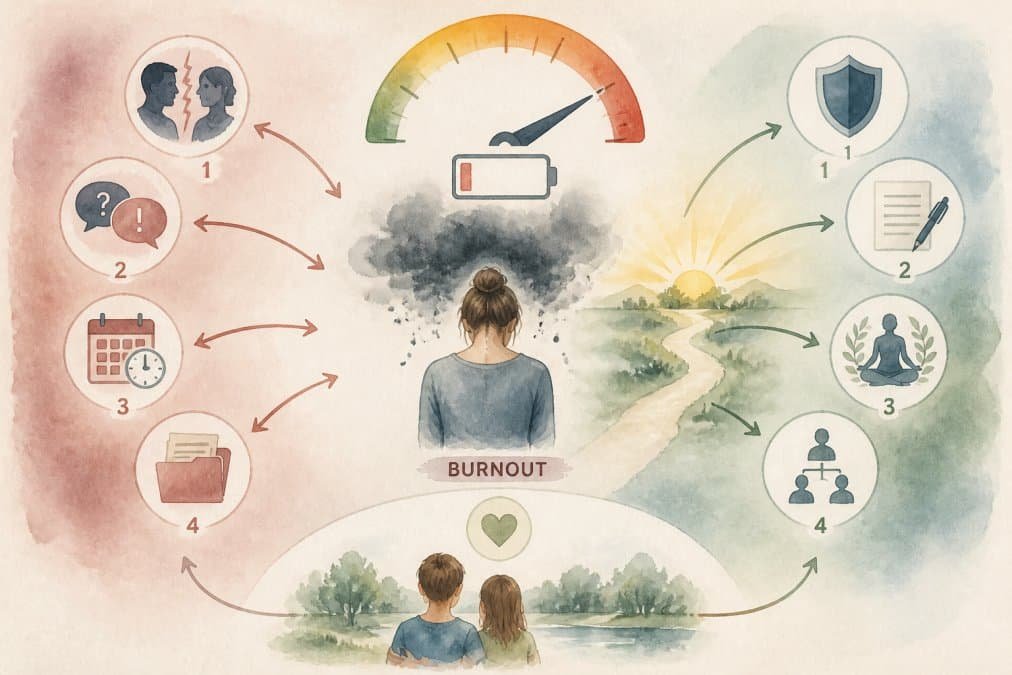
Burnout from narcissistic co-parenting looks different than regular parenting stress. Watch for these patterns:
Emotional and mental signs:
- Constant anxiety before or after interactions with your ex
- Feeling like you can never do anything right as a parent
- Second-guessing every decision you make
- Emotional exhaustion that doesn’t improve with rest
Physical symptoms:
- Tension headaches or jaw clenching
- Sleep disruption or insomnia
- Stomach issues or digestive problems
- Chronic fatigue that doesn’t match your activity level
Behavioral changes:
- Withdrawing from friends or activities you once enjoyed
- Difficulty concentrating at work
- Snapping at your children over small things
- Obsessing over what your ex said or did
Parenting impact:
- Feeling disconnected from your children
- Struggling to set consistent boundaries
- Using parenting as a way to compete with your ex
- Feeling guilty no matter what you do
The Grey Rock Method for Co-Parenting
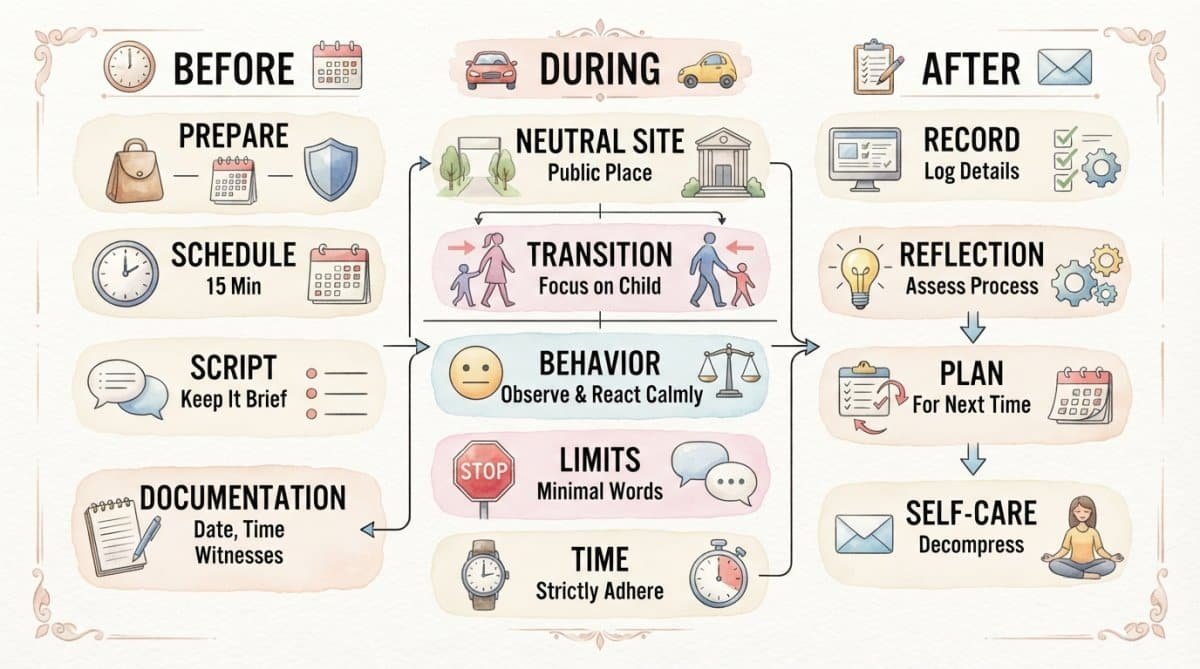
The Grey Rock method is one of the most effective tools for managing narcissistic co-parenting dynamics. It works because it removes the emotional fuel that narcissistic behavior feeds on.
How to use it:
- Keep responses short and factual
- Use neutral tone and body language
- Don’t explain, defend, or justify your parenting decisions
- Stick to logistics: schedules, school information, medical updates
- Never share personal information or feelings
- If your ex provokes, stay calm and repeat the same response
Example Grey Rock responses:
- “Okay” (instead of explaining why you made a parenting decision)
- “I’ll look into that” (instead of debating whether it’s necessary)
- “That works for this week” (instead of defending your schedule)
- “I’ll handle it” (instead of justifying your approach)
Using Co-Parenting Communication Scripts Effectively
Scripts protect you by removing the emotional improvisation that narcissistic partners exploit.
Why scripts work:
- They prevent you from over-explaining or defending yourself
- They keep conversations focused on logistics, not personality
- They reduce the likelihood of escalation
- They give you something to rely on when you’re triggered
How to use them:
- Choose a script that matches the situation
- Adapt it slightly so it sounds natural to you
- Use it consistently, word for word, when that issue comes up again
- Don’t deviate when your ex pushes back
Common scenarios where scripts help:
- Refusing an unreasonable request
- Responding to criticism about your parenting
- Setting a boundary about communication timing
- Addressing a scheduling conflict
- Declining to engage in drama
Nervous System Regulation and Physiological Recovery
Chronic stress from narcissistic co-parenting keeps your body in a state of activation. Unlike acute stress, the unpredictability creates prolonged hypervigilance, your body stays alert because the next triggering interaction could come at any time.
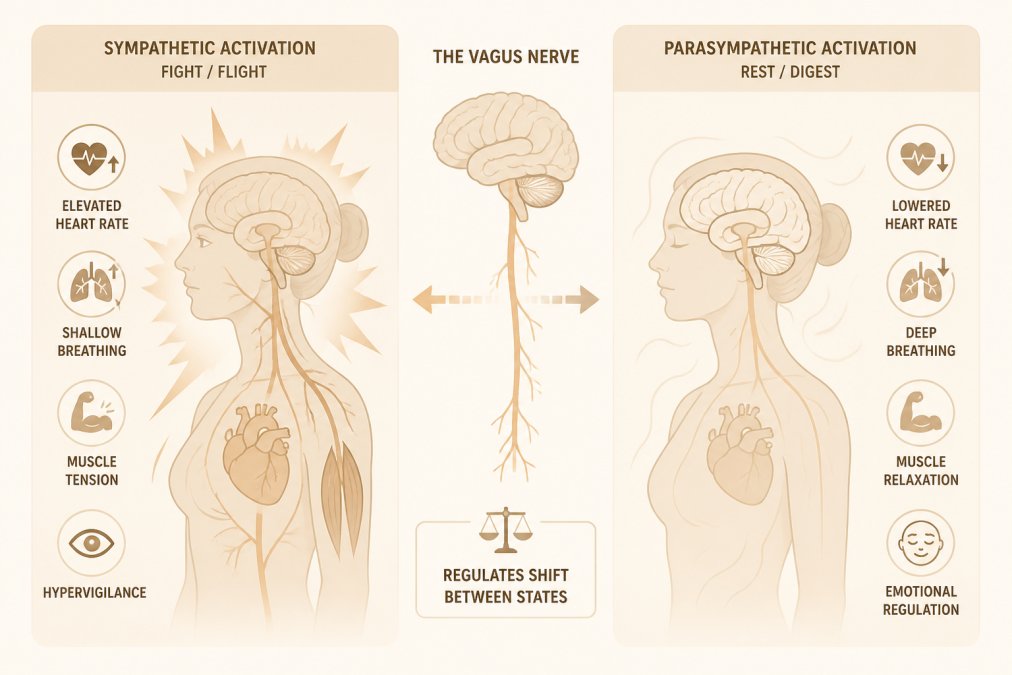
Somatic practices for nervous system reset:
Humming or singing: Humming for 30 seconds, several times daily, stimulates the vagus nerve and signals safety to your nervous system.
Cold water immersion: Splash cold water on your face or hold ice against your cheeks for 20-30 seconds to activate the mammalian dive reflex, which immediately lowers heart rate and blood pressure.
Gargling: Gargling vigorously for 30 seconds stimulates the vagus nerve through the throat muscles. It’s simple, discreet, and can be done anywhere.
Slow exhale breathing: Breathe in for a count of 4, exhale for a count of 6-8. The longer exhale activates your parasympathetic nervous system. Do this for 5 minutes daily, not just during crises.
Body scan meditation: Lie down and notice sensations in each part of your body without trying to change anything. Do this for 10 minutes, 3-4 times weekly to reconnect with physical sensations and signal safety.
Progressive muscle relaxation: Tense each muscle group for 5 seconds, then release, to teach your body the difference between tension and relaxation.
Pendulation: Shift attention between tension and calm in your body (e.g., chest tightness to feet on ground). This teaches your nervous system it can move between activated and calm states.
Lifestyle practices that support nervous system recovery:
- Sleep is non-negotiable: Prioritize 7-8 hours nightly so your brain can process emotional memories and your nervous system can recover. Consult a healthcare provider if insomnia is severe.
- Movement within 30 minutes of stress: After a triggering interaction, move your body to metabolize stress hormones. Without movement, these hormones linger, keeping you activated.
- Limit caffeine and alcohol: Both interfere with nervous system regulation and sleep quality.
- Spend time in nature: Even 15 minutes in a natural setting reduces cortisol and activates your parasympathetic nervous system.
- Consistent meal timing: Skipping meals or eating irregularly keeps your nervous system in a mild stress state. Eating regular, balanced meals signals safety and stability to your body.
Protecting Your Children While Managing Your Own Burnout
Your children are watching. Not to judge you, but to learn how to handle stress and conflict. Protecting them means two things: shielding them from adult conflict and modeling healthy boundaries.
What children don’t need to know:
- Details about your ex’s behavior or mistakes
- Your feelings about the custody situation
- Financial or legal conflicts
- Anything that positions them as a messenger or ally
What children do need:
- Reassurance that both parents love them
- Consistency and predictability in your parenting
- Permission to have a relationship with the other parent
- A parent who is emotionally present, not drained
Practical protection strategies:
- Keep exchanges brief and child-focused
- Use a co-parenting app for non-urgent communication
- Never ask children to relay messages
- Avoid discussing your ex negatively, even when provoked
- Maintain your own friendships and support system so you’re not emotionally dependent on your children

Documentation, Boundaries, and Legal Protection
Documentation protects you in legal disputes and creates a clear record of patterns. It also shifts you from emotional reactivity to objective observation, helping you regain control.
What to document:
- Dates and times of concerning behaviors
- Specific quotes or messages (screenshot them with timestamps visible)
- Impact on your children or parenting (“Child came home upset after mentioning parent’s comment about my parenting”)
- Missed exchanges, late pickups, or financial obligations
- Any communication that feels threatening, harassing, or designed to provoke
- Patterns over time (e.g., “Third missed exchange this month”)
How to document:
- Use a co-parenting app (OurFamilyWizard or Talking Parents) that creates automatic, timestamped records courts recognize.
- Keep emails and texts; don’t delete them.
- Write brief, factual notes after significant interactions (“He was 20 minutes late to pickup”).
- Screenshot concerning messages with full headers visible.
- Store copies in a secure location separate from your phone.
Boundary-setting essentials:
- Communicate only about children and logistics. No personal topics, no venting, no debate.
- Set specific times for communication (e.g., “I respond to messages between 5-6 PM on weekdays”). This prevents constant activation.
- Use written communication when possible. It creates a record and gives you time to respond thoughtfully instead of reactively.
- Don’t engage with provocations or personal attacks. Respond to urgent issues; ignore non-urgent drama.
- Use scripts (as covered earlier) to stay consistent and neutral.
The financial and legal burnout cycle:
Strategies to reduce legal and financial drain:
- Prioritize documentation over litigation: Clear records reduce the need for expensive legal battles and enable negotiated resolution.
- Use mediation for modifications: Mediation can be a cost-effective alternative to litigation for routine modifications (schedule changes, support adjustments).
- Establish a legal retainer: Maintain a small retainer with a trusted attorney for quick access to legal advice and reduced decision-making paralysis during crises.
- Know when to fight and when to let go: Your attorney can help distinguish between issues that threaten custody/finances (worth fighting) and annoying but legally insignificant issues (not worth the cost). This discernment saves thousands and reduces burnout.
- Track all financial obligations: Document missed child support payments, unreimbursed medical expenses, or other financial obligations. This creates a record for future modifications and prevents the slow financial bleed that compounds burnout.
- Explore fee-shifting: If your ex engages in frivolous legal actions, discuss with your attorney whether the court can order them to pay your fees.
When to involve legal counsel:
Consult an attorney if:
- Your ex is threatening custody changes
- Support payments are missed or inconsistent
- Your ex is violating the custody order
- You’re considering a custody modification
- You’re being sued or threatened with legal action
- You need guidance on documentation strategy
Frequently Asked Questions
What are the physical and emotional signs of co-parenting burnout with a narcissistic ex?
Burnout from narcissistic co-parenting shows up as persistent exhaustion, hypervigilance, difficulty concentrating, and emotional numbness. Physically, you may experience tension headaches, sleep disruption, or digestive issues from chronic stress. Emotionally, you might feel trapped between protecting your children and avoiding conflict escalation. These symptoms reflect your nervous system staying in a state of threat detection. Recognizing these signs is the first step toward recovery, they’re not weakness, but evidence that your mind and body need structured support and boundary-setting.
How does the Grey Rock method reduce stress in high-conflict co-parenting situations?
The Grey Rock method works by removing the emotional reward your ex seeks from conflict. When you respond to provocations with neutral, factual, unemotional replies, you stop feeding the dynamic that narcissistic individuals rely on. Instead of detailed explanations or emotional reactions, you provide boring, brief responses focused only on logistics (pickup times, school information). This removes the ‘supply’ that drives escalation. Over time, your ex typically loses interest in provoking you because the interaction no longer generates the emotional response they’re seeking. The result is fewer conflicts and less activation of your stress response.
Can I recover from narcissistic abuse while still co-parenting with my ex?
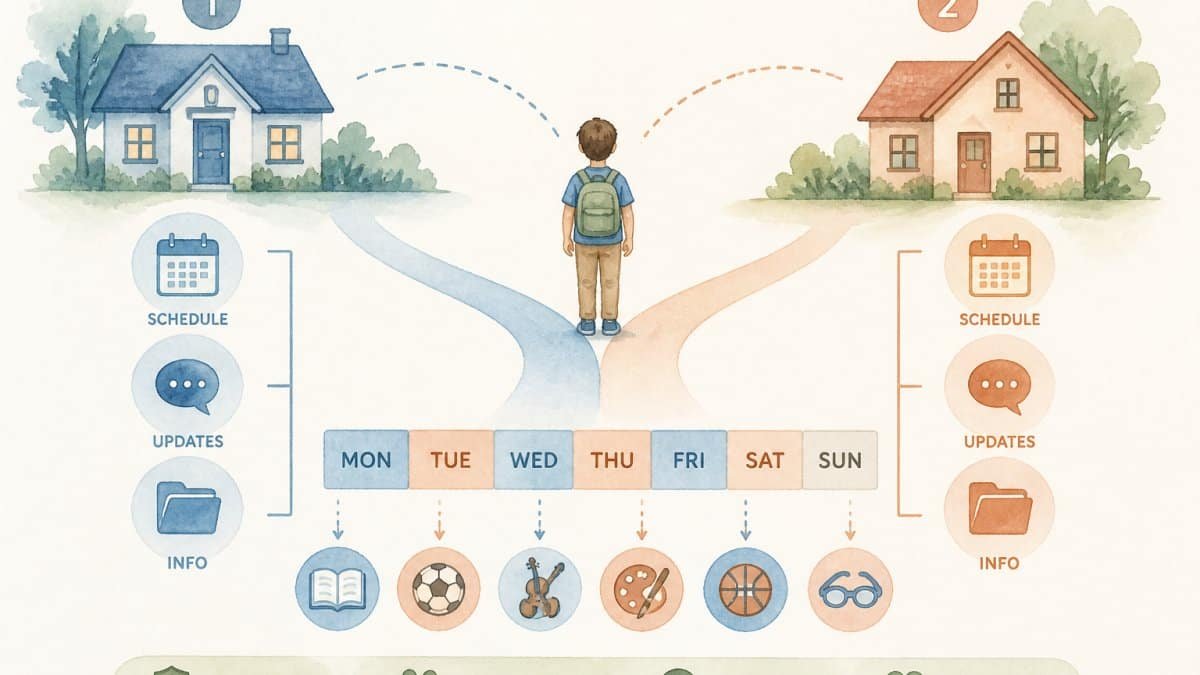
Yes, recovery is possible while maintaining necessary co-parenting contact. The key is shifting from co-parenting (which assumes cooperation) to parallel parenting, where each parent manages their own household and decisions independently. This reduces the need for ongoing negotiation and communication. Combined with structured tools like communication scripts and the Grey Rock method, you can minimize triggering interactions. Recovery also depends on addressing your own trauma symptoms through nervous system regulation practices, documentation that reduces uncertainty, and firm boundaries around what topics require discussion. Many parents find that protecting their peace actually improves their children’s outcomes because they’re calmer and more present.
What’s the difference between this approach and just using a co-parenting app or getting therapy?
Co-parenting apps document communication but don’t teach you how to respond to manipulation or manage the emotional toll. Therapy addresses your trauma recovery but may not provide the specific scripts and frameworks you need for real-time high-conflict interactions. After the Affair Series combines both: structured communication scripts designed specifically for narcissistic dynamics, frameworks like the Grey Rock method that work immediately, and recovery protocols that address both the practical and physiological impacts of chronic conflict. It’s not a replacement for therapy, but a complementary toolkit for the moments when you’re facing your ex directly and need to protect both your children and your nervous system.