- Co-parenting After Infidelity Explained
- Damaging Behaviors That Hurt Children
- Common Co-Parenting Mistakes To Avoid
- Emotional Traps And How To Prevent Them
- Safer Alternatives For Difficult Co-Parenting
- Take Control of Co-Parenting After Infidelity with Trusted Support
- Frequently Asked Questions
- Recommended
Every conversation with your co-parent can feel like walking through an emotional minefield after infidelity has shattered your trust. Broken trust turns simple parenting decisions into daily tests of vulnerability and control. For parents recovering from betrayal, the challenge is more than managing logistics—it is about protecting your children’s sense of security while coping with raw wounds of the past. Here, you will find validation for your struggles and practical tools to shield your children from conflict as you rebuild your family’s foundations.
Key Takeaways
| Point | Details |
|---|---|
| Impact of Infidelity on Co-Parenting | Infidelity complicates co-parenting by creating broken trust and unresolved emotional pain that affects decision-making for children. |
| Harmful Behaviors to Avoid | Engaging in ongoing conflict, badmouthing, and using children as messengers can lead to anxiety and behavioral issues in children. |
| Emotional Traps | Unresolved grief, shame, and hypervigilance hinder effective co-parenting decisions, prioritizing personal pain over children’s needs. |
| Alternative Co-Parenting Structures | When conflict is too intense, consider parallel parenting or third-party mediation to maintain safety and reduce emotional escalation for children. |
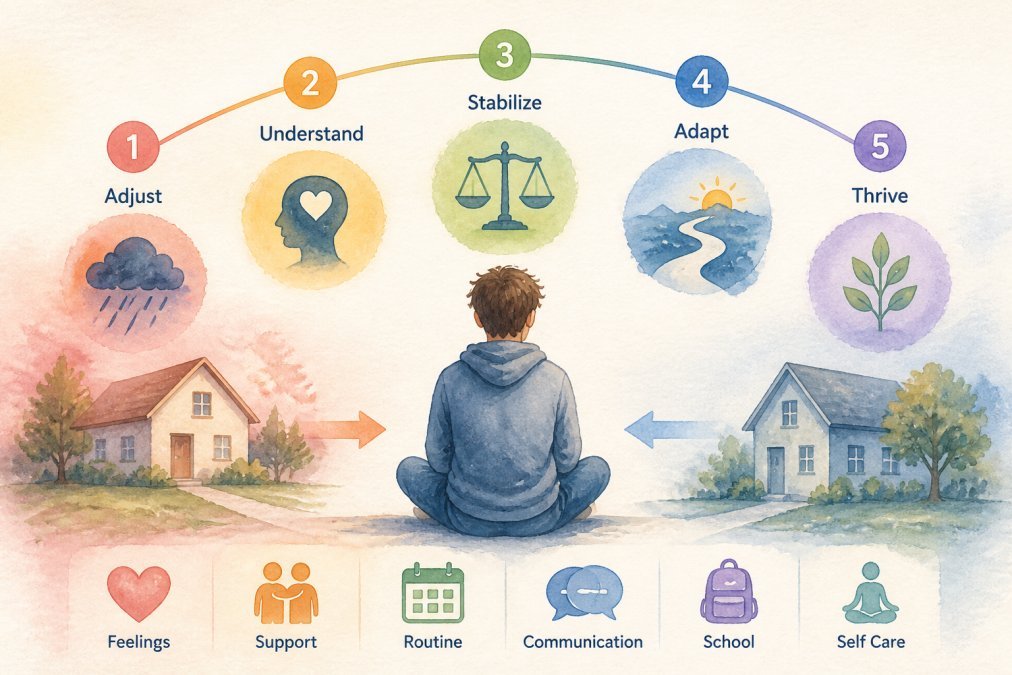
Co-parenting After Infidelity Explained
Co-parenting after infidelity is fundamentally different from typical post-divorce parenting. The betrayal creates an added layer of complexity that goes far beyond the standard challenges of separated parents.
When infidelity fractures a relationship, the family structure doesn’t just reorganize—it often breaks down entirely. The betrayed partner may struggle to trust the other parent’s judgment, decisions, or even their presence around the children. This emotional turbulence directly impacts how effectively you can work together.
Research shows that post-divorce parenting arrangements significantly affect how children develop their sense of autonomy and belonging. After infidelity forces a separation, parents must completely rebuild their cooperation framework, which requires intentional effort.
Unlike couples who separated due to incompatibility, co-parents navigating infidelity recovery carry active trauma. You may find yourself questioning every interaction the other parent has with your children. That hypervigilance is natural—but it can sabotage effective co-parenting if left unchecked.
What Makes This Different
Several factors distinguish co-parenting after infidelity from other post-separation situations:
- Broken trust: Your foundational belief in the other parent’s honesty is shattered, making cooperation feel dangerous.
- Unprocessed pain: While managing custody schedules, you’re simultaneously healing from deep betrayal.
- Fear-based decision making: You may restrict access or information-sharing out of protective instinct rather than logic.
- Children sensing tension: Kids pick up on unresolved anger and become anxious during transitions between homes.
- Lingering resentment: Small parenting disagreements trigger larger relationship wounds.
Why Co-Parenting After Infidelity Matters
Your children didn’t cause the affair, but they live with its consequences daily. They need both parents, even when one of those parents broke your trust completely.
Pro tip: Separate the co-parenting relationship from the romantic relationship that failed. You’re not trying to salvage anything except functional partnership around your children’s needs—that’s it.
Damaging Behaviors That Hurt Children
Your children notice everything. They see the tension between you and your co-parent, hear the bitter comments, and feel the emotional charge in every transition.
The behaviors you display during co-parenting after infidelity either help your children heal or deepen their wounds. There’s rarely a middle ground.
High interparental conflict and poor cooperation directly cause emotional and behavioral problems in children. When you engage in damaging co-parenting patterns, you’re not just hurting your ex—you’re actively harming the kids you’re trying to protect.
Understanding which behaviors damage children allows you to stop before they become patterns. This awareness is your most powerful parenting tool right now.
Common Damaging Behaviors
These patterns show up repeatedly in households navigating infidelity recovery:
- Ongoing parental conflict: Arguing in front of children or discussing adult problems with them
- Parental alienation: Deliberately turning children against the other parent or blocking contact
- Emotional disengagement: Withdrawing affection because you’re angry at the other parent
- Using children as messengers: Forcing kids to relay information, money, or schedules between homes
- Badmouthing the other parent: Making negative comments about the infidelity or character in front of children
- Keeping score: Retaliating with custody restrictions when you feel wronged
Why Children Suffer
Negatively engaged co-parenting behaviors correlate with higher rates of anxiety, depression, and behavioral problems in children. Kids caught in this environment often blame themselves for the conflict or feel responsible for healing the family.
Your children lose the security they need most during this unstable time. Instead of two stable bases, they live in two conflicted environments.
Children don’t recover from infidelity through perfect custody arrangements. They recover when both parents stop using them as weapons in the betrayal.
Pro tip: Before responding to your co-parent about anything, ask yourself: “Will my child be safer and happier if I say this?” If the answer is no, wait until you’ve cooled down.
Common Co-Parenting Mistakes To Avoid
Most co-parenting mistakes after infidelity stem from the same root: unresolved emotional pain driving parenting decisions. You think you’re protecting your children, but you’re actually repeating destructive patterns.
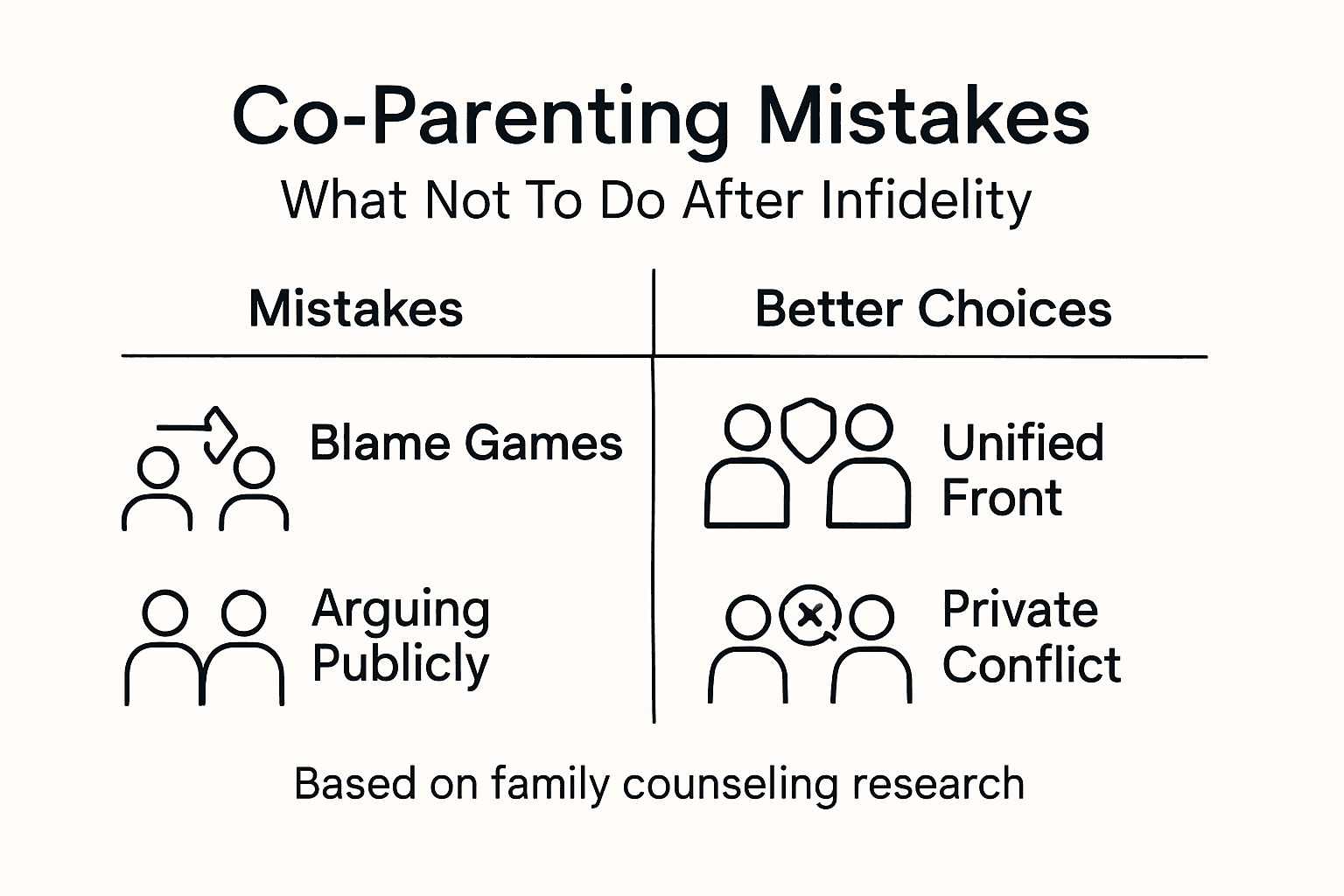
The good news is that recognizing these mistakes before they take hold gives you the power to change course. Awareness is your first defense against damaging your children further.
Mistakes That Sabotage Co-Parenting
These errors show up constantly in post-infidelity families:
- Prioritizing punishment over the child’s needs: Restricting access or creating obstacles because you’re angry
- Poor conflict management: Allowing disagreements to escalate in front of your children
- Failing to separate parenting from romance: Treating the co-parenting relationship as an extension of the failed marriage
- Emotional unavailability: Withdrawing from parenting duties because you’re processing betrayal
- Using children to gather information: Asking kids about the other parent’s personal life or new relationships
- Refusing cooperation on major decisions: Blocking the other parent’s input on school, health, or activities
Why These Mistakes Happen
Managing disagreements poorly and failing to prioritize the child’s best interests prevents effective co-parenting and delays healing. Your pain is real and valid, but it cannot become your child’s burden.
Unresolved emotional feelings and maladaptive coping strategies after infidelity make these mistakes more likely. You’re operating from a trauma response, not logic.
The betrayal created a void you’re trying to fill. Often, controlling the co-parenting situation feels like regaining control over your life. It doesn’t work that way.
The mistake isn’t trying to co-parent after infidelity. The mistake is allowing your healing journey to become your child’s responsibility.
What Happens When You Repeat These Mistakes
Your children develop anxiety around transitions, fear confrontation, or internalize blame for the family breakdown. They may struggle in school, withdraw from friends, or act out behaviorally.
The cycle perpetuates because reactive parenting triggers more reactive responses from your co-parent. Before long, you’re locked in patterns that seem impossible to break.
Pro tip: Write down the three biggest mistakes you’ve already made, acknowledge why you made them (pain, fear, anger), and commit to one specific change this week instead of overhauling everything at once.
Emotional Traps And How To Prevent Them
Emotional traps are the invisible quicksand of co-parenting after infidelity. You sink deeper into them without realizing it’s happening.
These traps feel justified in the moment. Your anger seems reasonable. Your fear feels protective. Your need for control appears logical. But they’re pulling you—and your children—under.
The Most Common Emotional Traps
These patterns emerge repeatedly after betrayal:
- Unresolved grief: Mourning the relationship you thought you had while trying to parent effectively
- Rage that masquerades as protection: Anger at your co-parent bleeding into parenting decisions about your children
- Fear of abandonment: Overcompensating by controlling access or creating dependency with your kids
- Shame and guilt: Blaming yourself for the family breakdown or punishing yourself through poor boundaries
- Loss of identity: Defining yourself solely through the betrayal rather than your role as parent
- Hypervigilance: Constantly monitoring the other parent for signs of further betrayal
These emotions feel real because they are real. The trap isn’t the emotion itself—it’s mistaking emotion for truth.
How Emotional Traps Damage Co-Parenting
Unresolved grief, anger, shame, and guilt adversely impact co-parenting quality. When you’re stuck in these emotions, you cannot make decisions in your child’s best interest because you’re too focused on your own pain.
Awareness, intellectualization, openness, and therapeutic processing are essential for prevention and healing. You must process your emotional wounds separately from your parenting role.
Prevention Strategies
These approaches actually work:
The following table summarizes effective prevention strategies for avoiding emotional traps in co-parenting:
| Strategy | Core Benefit | How to Apply |
|---|---|---|
| Naming Emotions | Reduces reactive decisions | Pause and identify feelings |
| Setting Boundaries | Separates roles and wounds | Keep healing talk out of coparenting |
| Seeking Support | Enhances coping skills | Use therapy or support groups |
| Practice Acceptance | Stops blame cycle | Accept reality, focus forward |
| Parent-First Filter | Prioritizes child well-being | Test every response by impact |
- Name the emotion before responding: Pause and identify what you’re really feeling instead of reacting
- Establish firm boundaries: Separate your healing journey from co-parenting conversations
- Seek emotional support: Therapy, support groups, or trusted friends—not your children
- Practice acceptance: Acknowledge what happened without letting it control your decisions
- Create a “parent first” filter: Ask if your proposed action serves your child’s welfare
The trap closes when you believe your emotional pain justifies harming your co-parenting. Prevention starts when you refuse that permission.
Pro tip: When you feel anger, fear, or shame rising during co-parenting interactions, write down what you want to say, wait 24 hours, then reread it as if a friend wrote it—you’ll see the trap immediately.
Safer Alternatives For Difficult Co-Parenting
When traditional co-parenting feels impossible, you have options. The goal isn’t to force a relationship that’s broken—it’s to create a functional structure that protects your children.
Sometimes the healthiest choice isn’t trying harder at co-parenting. It’s choosing a different framework entirely.
When Standard Co-Parenting Doesn’t Work
You may need an alternative if:
- The conflict between you and your co-parent is too intense to manage
- Every conversation triggers trauma responses or emotional escalation
- Your co-parent refuses to cooperate or act in the child’s best interest
- You cannot separate parenting from the betrayal emotionally
- Your children are showing increased anxiety during transitions or communication
- Direct communication consistently devolves into arguments or manipulation
Recognizing these signs early allows you to pivot before more damage occurs. Stubbornness about “making co-parenting work” can actually harm your children more than shifting to a safer approach.
Safer Alternative Structures
These frameworks reduce conflict while maintaining your children’s relationships:
Parallel parenting: You and your co-parent operate independently, with minimal communication or overlap. Each parent makes decisions within their own household without requiring agreement. This works when direct cooperation isn’t possible but both parents are still capable and safe.
Third-party mediation: A neutral professional handles communication, scheduling, and decision-making. Communication happens through the mediator, not directly between you and your co-parent. This removes emotional triggers from interactions.
Structured communication tools: Apps and platforms designed for co-parenting eliminate the need for direct contact while creating a documented record of all exchanges.
Court-enforced agreements: When voluntary cooperation fails, specific court orders remove discretion and leave no room for conflict or manipulation.
Here’s a summary of how different co-parenting structures address ongoing conflict after infidelity:
| Structure Type | Level of Communication | Conflict Management Approach | Impact on Children |
|---|---|---|---|
| Standard Co-Parenting | Frequent/Direct | Relies on personal cooperation | Can increase tension |
| Parallel Parenting | Minimal/Essential | Limits direct interaction | Reduces conflict exposure |
| Third-Party Mediation | Indirect via Mediator | Uses neutral professional | Supports healthy boundaries |
| Structured Tools | Written/Tracked | Uses digital record | Lowers emotional escalation |
| Court-Enforced Agreements | Legal/Strict | Enforced by legal system | Provides clear expectations |
Making the Transition
Evidence-based approaches emphasizing communication skills, conflict management, and child-centered decision-making create safer co-parenting environments. Choose the structure that allows both parents to remain engaged with your children while minimizing conflict exposure.
The “best” alternative is the one your specific situation requires, not the one that sounds ideal in theory.
You don’t need to co-parent perfectly. You need a structure that keeps your children safe from adult conflict while maintaining both parent-child relationships.
Pro tip: Before choosing an alternative, consult with your family law attorney to understand which options your jurisdiction supports and what documentation you’ll need to implement them effectively.

Take Control of Co-Parenting After Infidelity with Trusted Support
Co-parenting after infidelity comes with unique challenges like broken trust, emotional traps, and fear-based decisions that can deeply affect your children. If you are struggling with recognizing damaging behaviors or avoiding common mistakes in this difficult journey, reliable guidance can make all the difference. Explore compassionate strategies tailored for parents who need to separate their healing from their parenting role while protecting their children’s wellbeing.
Discover practical help through our Co-Parenting Support – After the Affair Series where you can learn how to navigate complex feelings and rebuild a functional partnership focused on your children. For insights on protecting your kids from the fallout of betrayal, our Helping Your Children – After the Affair Series offers essential resources designed around their emotional needs. Start transforming your post-infidelity co-parenting experience today by visiting our full collection at After the Affair Resource Library. Your children deserve the safest and most supportive environment you can provide now.
Frequently Asked Questions
What are common mistakes to avoid while co-parenting after infidelity?
Some common mistakes include prioritizing punishment over your child’s needs, allowing conflicts to escalate in front of children, failing to separate parenting from the romantic relationship, and using children to gather information about the other parent.
How can unresolved emotional pain affect co-parenting?
Unresolved emotional pain can lead to reactive behaviors that impair decision-making and conflict management, making it harder to focus on your child’s well-being and leading to destructive patterns.
What are the signs that co-parenting is not working after infidelity?
Signs include intense conflict, emotional escalation during discussions, inability to separate parenting roles from the betrayal, and noticeable anxiety in your children during transitions between homes.
How can I prevent emotional traps while co-parenting?
To prevent emotional traps, you can name your emotions before responding, set clear boundaries between your healing and co-parenting, seek support from therapists or groups, practice acceptance of the situation, and use a “parent-first” filter to assess your responses.
Recommended
- Co-Parenting After Betrayal: What Healthy Looks Like (And What It Doesn’t)
- How to Co-Parent Effectively After Infidelity (Without Losing Your Sanity)
- Post-Infidelity Co-Parenting – After the Affair Series
- Common Co-Parenting Transition Pitfalls (And How to Avoid Them)