
Every co-parent recovering from broken trust faces the stress of miscommunication and emotional triggers that can turn simple conversations into fresh wounds. When starting to rebuild after infidelity, picking the right tool is more than keeping a digital record—it is about finding a way to reduce conflict and regain peace for your family. By focusing on communication tools that create accountability with timestamped, uneditable messages, you set a foundation for calmer, more thoughtful interactions while protecting everyone’s needs.
Quick Summary
| Key Point | Explanation |
|---|---|
| 1. Identify Communication Needs First | Understand specific friction points to choose the most effective communication tool. Tailor your selection to your unique co-parenting challenges. |
| 2. Test Free Versions Before Committing | Always experiment with free trials to ensure the tool meets your needs for accountability and ease of use. Look for features that genuinely reduce conflict. |
| 3. Evaluate Security and Compatibility | Check the app’s security measures and compatibility with different devices to safeguard your family’s information while ensuring usability for both parents. |
| 4. Focus on Essential Features | Create a comparison checklist of features that matter to your situation, prioritizing messaging, scheduling, and documentation capabilities. |
| 5. Real-World Testing is Crucial | Use the tool in actual parenting scenarios to assess its effectiveness under real emotional conditions and to ensure both parents can actively use it. |
Step 1: Assess Your Communication Needs
Before choosing a co-parenting communication tool, you need to understand what you’re actually trying to accomplish. This isn’t about picking the fanciest app; it’s about identifying the real friction points in your relationship and what a tool can realistically address.
Start by thinking honestly about your current communication patterns. Are messages becoming heated? Do conversations spin into old arguments? Are you struggling to document agreements about custody or finances? Different tools solve different problems.
Consider these key areas:
- Emotional triggers: How often do conversations escalate into conflict?
- Documentation needs: Do you need records for legal purposes?
- Scheduling coordination: How complex is your custody arrangement?
- Message clarity: Are there frequent misunderstandings about logistics or child-related decisions?
- Accountability: Do you need timestamped records of who said what and when?
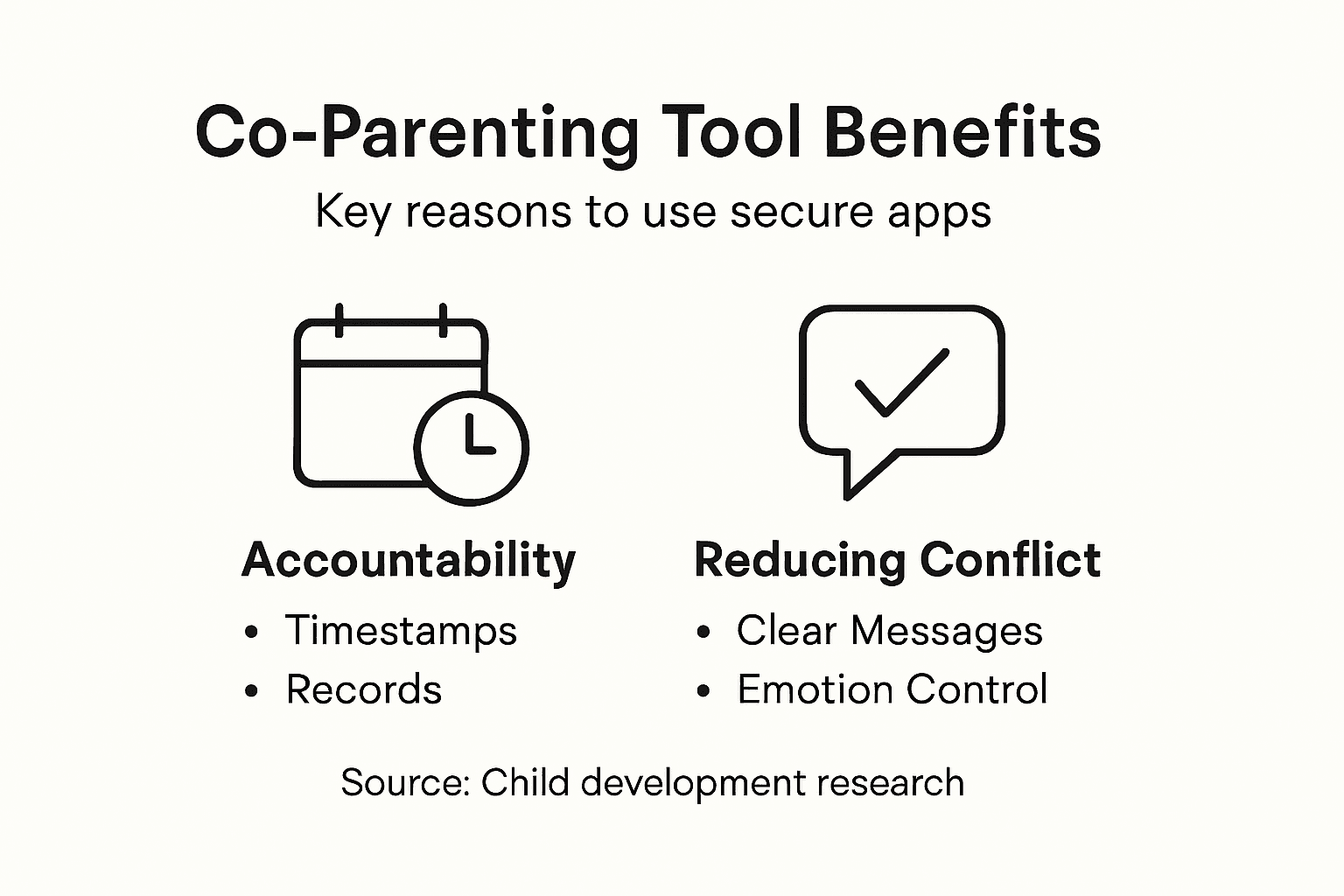
Research shows that co-parenting apps create accountability through timestamped, uneditable messages, which reduces emotional escalation by providing a digital barrier that lets both parents respond thoughtfully instead of reactively. This matters when trust is fractured—a tool that slows things down can prevent damage.
You might also want to assess whether you need help with specific topics like questions to ask your partner that build understanding during co-parenting discussions.
Think about your communication style too. Some people prefer structured platforms with separate channels for schedules versus important discussions. Others want everything in one place. Some need reminders to stay civil. Others just need a neutral space.
The right tool matches your actual needs, not someone else’s needs or the app’s marketing promises.
Test free versions before committing. Most platforms offer trials so you can see if the structure genuinely reduces conflict or just feels like another chore. Pay attention to whether the interface encourages calm communication or enables venting.
Here’s a summary of common communication challenges and potential tool solutions:
| Communication Challenge | Typical Tool Solution | Business Impact |
|---|---|---|
| Emotional escalation | Digital barrier, tone checks | Reduces conflict, builds trust |
| Poor documentation | Uneditable records, timestamped | Supports legal clarity |
| Scheduling confusion | Shared calendar, reminders | Improves reliability |
| Misunderstood logistics | Structured discussion channels | Increases message clarity |
| Accountability concerns | Permanent message history | Prevents disputes |
Pro tip: Write down your top 3 communication problems before evaluating tools—this keeps you focused on solutions that matter instead of getting distracted by features you’ll never use.
Step 2: Compare Co-parenting Tool Features
Now that you’ve identified your communication needs, it’s time to see what different tools actually offer. Not every platform includes the same features, and some might have capabilities you don’t need while missing ones that matter to you.
Start by creating a simple comparison checklist. Look at the core features most co-parenting tools provide, then rank them by importance for your situation.
Common features to evaluate include:
- Messaging: Does it support timestamped, uneditable messages that create accountability?
- Scheduling: Can you coordinate custody exchanges and appointments?
- Expense tracking: Do you need to split costs for childcare, medical visits, or activities?
- Medical records: Can you share health information and medication details?
- Documentation: Are messages stored in a format that supports security and privacy in case you need legal records?
- Notifications: Do both parents get reminders about important dates or pending messages?
Pay attention to how each tool handles conflict. Does the interface encourage calm communication, or does it let heated exchanges pile up? Some platforms have built-in cooling-off features or tone-checking suggestions.
Also consider whether you’re working within a co-parenting or parallel parenting arrangement. Parallel parenting requires less direct communication and more independent decision-making, so a tool designed for active co-parenting might include features you won’t use.
Test the actual user experience. Free trials let you see if the app feels intuitive or clunky. Some tools have steep learning curves. Others are instantly obvious.
Compare co-parenting vs. parallel parenting app needs:
| Parenting Style | Preferred App Features | Example Benefit |
|---|---|---|
| Co-parenting | Shared schedules, direct chat | Real-time updates and collaboration |
| Parallel parenting | Limited messaging, solo tools | Flexibility without constant contact |
| Complex custody | Expense/medical tracking | Smooth coordination for busy plans |
The best feature list means nothing if the tool is frustrating to actually use every day.
Check pricing carefully too. Some apps offer sliding-scale fees or waivers for families with financial hardship. Others have per-message costs that add up quickly if you communicate frequently.
Read reviews from other parents in similar situations. Look for comments about whether the tool actually reduced conflict or just created another obligation.
Pro tip: Compare no more than three tools side by side—otherwise you’ll get overwhelmed and end up choosing based on which website looked nicest instead of which features actually match your needs.
Step 3: Test Communication Tools in Real Scenarios
Reading about features isn’t the same as actually using a tool when emotions are high. This step is about taking a tool for a real test drive before committing to it as your primary co-parenting communication platform.
Most co-parenting apps offer free trials or limited free versions. Use this time intentionally. Don’t just poke around; actually use the tool the way you would in real life.
Here’s how to test effectively:
- Schedule a real exchange: Use the app to plan an actual custody handoff or appointment. See how intuitive the scheduling feature is and whether notifications reach both parents.
- Practice messaging: Send a few messages about logistics or decisions. Notice if the interface encourages thoughtful communication or if you feel rushed.
- Document something important: If the tool has expense tracking or medical record sharing, enter real information and see how easily you can retrieve it later.
- Share with your co-parent: Invite them to test it too. Their experience matters as much as yours. If they find it confusing, it won’t work regardless of how good it is.
Pay attention to how the tool handles conflict. When disagreements come up, does the structure help you stay calm or does it amplify frustration? Real-world testing reveals whether a tool genuinely reduces conflict or just creates another source of tension.
Notice what’s missing too. A tool might have messaging but no way to share school forms. It might track expenses but not medical appointments. These gaps matter when you’re managing custody full-time.
Check whether both of you can actually use it. Does it work on both smartphones and computers? Is the learning curve steep, or can your co-parent figure it out without hours of tutorials?
A tool is only useful if both parents will actually use it consistently.
After testing, wait a few days. Let the experience settle. Would you genuinely want to use this app every time you need to communicate about parenting?
Pro tip: Test for at least one full week before deciding—that’s enough time to hit real scheduling conflicts and messaging scenarios without overthinking the decision.
Step 4: Review Compatibility and Security
Before you commit to a co-parenting tool, you need to know whether it actually protects your information and works reliably across devices. Security matters, especially when co-parenting after infidelity where trust is fragile and emotions run high.
Start by checking basic compatibility. Does the app work on both iOS and Android? Can you access it from your computer as well as your phone? If your co-parent uses a different device than you do, the tool needs to work for both.
Now dig into security and privacy. Look for these critical elements:
- Privacy notice: Does the company explain how they collect, store, and use your data?
- Data encryption: Are your messages encrypted in transit and at rest?
- Account security: Can you set a strong password and enable two-factor authentication?
- Data retention: How long does the company keep your information after you delete messages?
- Third-party access: Does the company share data with advertisers or other companies?
- Legal compliance: Can the platform generate court-admissible records if you need them?
This is especially important if your situation involves any safety concerns. Evaluate app privacy practices carefully, particularly around data handling and your ability to protect your information in sensitive circumstances.
Check whether the platform’s design supports accountability. Timestamped, uneditable messages create a permanent record that protects both parents by preventing later disputes about what was actually said. This matters when rebuilding trust after betrayal.
Look at the company’s track record too. How long have they been in business? Do they have good reviews about security? Have they experienced data breaches? A quick online search reveals a lot.
Security features aren’t glamorous, but they’re non-negotiable when choosing where your family’s information lives.
Contact customer support with a question before fully committing. Their response speed and helpfulness tell you how they’ll treat you if something goes wrong.
Pro tip: Check the app’s privacy policy and terms of service before signing up—if they’re vague about data handling or mention selling information to third parties, keep looking.

Strengthen Trust with the Right Support for Co-Parenting Communication
Choosing an effective co-parenting communication tool is a crucial step toward rebuilding trust and reducing conflict after infidelity. The article highlights key challenges like emotional escalation, accountability needs, and clear documentation. These issues often reflect deeper wounds from betrayal that can make even simple conversations feel overwhelming. If you are navigating these complexities, understanding your communication style and emotional triggers is essential to choosing tools that will truly support healing and cooperation.
At After The Affair, we offer comprehensive resources crafted specifically for individuals and couples recovering from infidelity-related trauma. Our carefully designed guides address not only personal emotional recovery but also practical strategies for managing co-parenting relationships with compassion and clarity. Discover structured approaches to communication, accountability, and conflict reduction through our collection of books, case studies, and therapeutic insights. Take control now by exploring our resource library to find tools that help you navigate co-parenting with confidence and care.
Frequently Asked Questions
How can I identify my co-parenting communication needs?
Before selecting a co-parenting communication tool, take some time to assess your specific needs. Reflect on your current communication challenges, such as emotional triggers or documentation needs, and list your top three issues to focus on when evaluating options.
What features should I look for in a co-parenting communication tool?
Key features to consider include timestamped messaging, scheduling abilities, expense tracking, and document sharing for medical records. Create a checklist to rank these features by importance based on your unique situation.
How can I effectively test co-parenting communication tools?
To test a co-parenting tool effectively, schedule real exchanges and practice messaging using the app. Use the trial period to send messages and coordinate logistics, ensuring that both you and your co-parent find it intuitive and effective.
What security measures should I check before choosing a communication tool?
Review the tool’s privacy policy and look for features such as data encryption, account security options, and third-party data access. Verify that the tool complies with legal standards to ensure your family’s information is secure and protected.
How can I assess whether a co-parenting tool will work for both parents?
Engage your co-parent in the testing process by inviting them to explore the tool as well. Their feedback on usability is crucial; if they find it challenging or unhelpful, it won’t serve its purpose effectively.
What should I do if the first co-parenting tool I try doesn’t meet my needs?
If the initial tool you choose doesn’t address your communication challenges, take note of which specific features were lacking. Continue exploring alternative options that align more closely with your needs, and test a maximum of three tools to avoid feeling overwhelmed.
Recommended
- Communication Transition Mistakes – After the Affair Series
- Parallel Parenting Plan – After the Affair Series
- Parallel to Co-parenting Transition – After the Affair Series
- Healthy Co-Parenting – After the Affair Series