Table of Contents
- Why Timing Matters in Introducing New Partners to Children
- How Long to Wait Before Introducing a New Partner to Children
- How to Tell Your Co-Parent About a New Partner
- Planning the First Meeting Between Children and a New Partner
- Setting New Partner Boundaries in Co-Parenting Arrangements
- Managing Age-Specific Reactions and Concerns
- What to Do When a Child Reacts Badly to a New Partner
- Frequently Asked Questions
Last Updated: October 6, 2026
Why Timing Matters in Introducing New Partners to Children
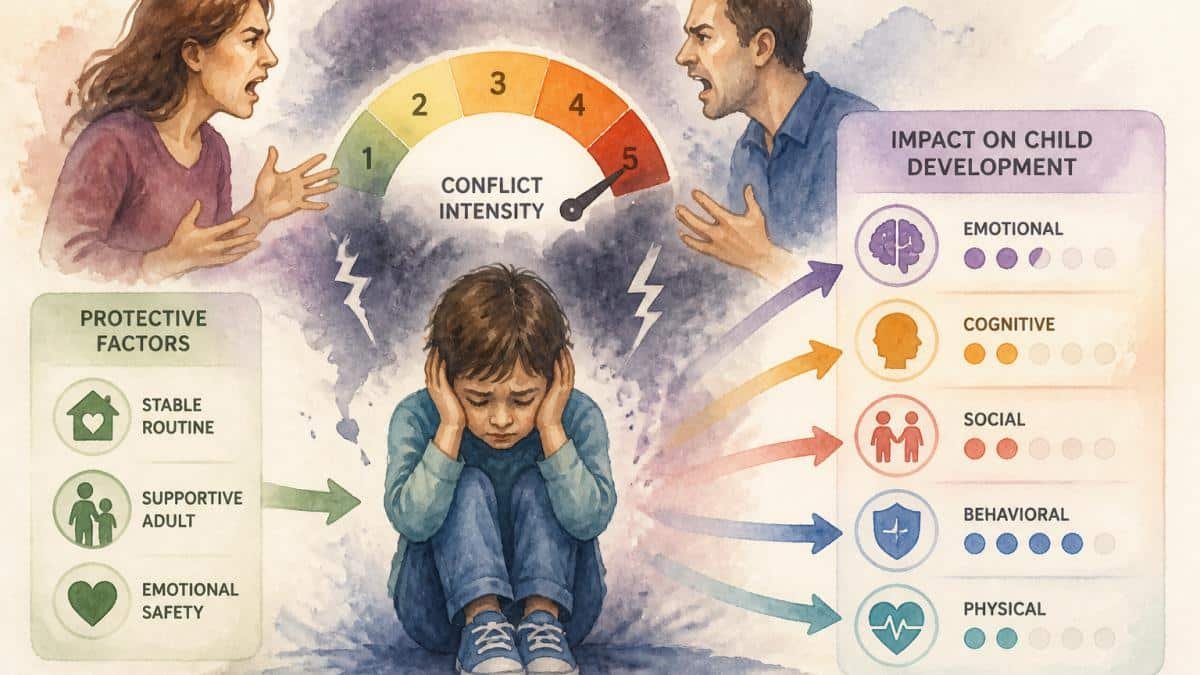
The decision about when and how to introduce new partners in co-parenting situations carries enormous weight. Your children’s emotional stability depends on getting this right. A rushed introduction can trigger confusion, loyalty conflicts, and deeper trust issues with both parents. Waiting too long, conversely, can create unnecessary secrecy and make the eventual meeting feel like a shock.
The core insight is simple: timing isn’t about arbitrary rules. It’s about your child’s readiness, your relationship’s stability, and your co-parent’s right to know what’s happening in their child’s life.
The stakes are real. Children need predictability. They need to understand that adults in their world communicate openly, even when relationships are strained. When you introduce a new partner without warning or without giving your co-parent notice, you signal that surprises and secrets are acceptable. That message travels deeper than you intend.
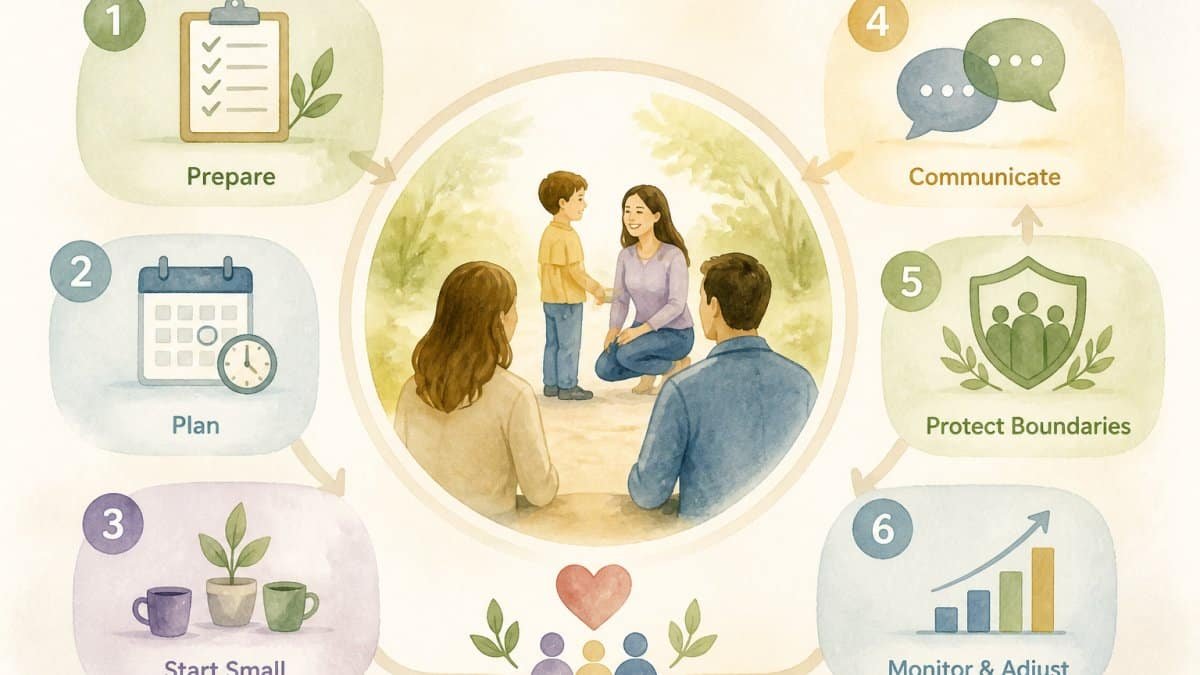
This guide walks you through the framework for introducing new partners in co-parenting arrangements, from deciding when you’re ready, to telling your ex-partner, to planning the actual meeting, to handling the reactions that follow.
How Long to Wait Before Introducing a New Partner to Children
The standard recommendation is to wait 6 to 12 months before introducing a new romantic partner to your children. This timeframe allows your relationship to prove it’s stable and worth disrupting your child’s world for.
But timing depends on several factors:
Relationship stability matters most. Your new partner should be someone you see consistently and with genuine commitment. If you’re dating casually, your child doesn’t need to meet them. If you’ve been together for three months and you’re already thinking about introductions, pause. Three months is when new relationships often feel perfect but haven’t weathered real conflict yet.
Your child’s age changes the timeline. Younger children (ages 3-7) need more time to adjust to the idea. They process change slowly. Teenagers (ages 13+) may actually want to meet your new partner sooner, especially if they’re old enough to understand you’re a person with a life outside parenting.
How long you’ve been separated matters. If the separation happened six months ago, your child is still processing loss. Adding a new adult into that space too quickly can feel like a replacement.
Your co-parent’s stability affects readiness too. If your ex-partner is still in crisis mode, introducing a new partner will escalate conflict. If they’ve moved forward with their own life, they’re more likely to accept yours.
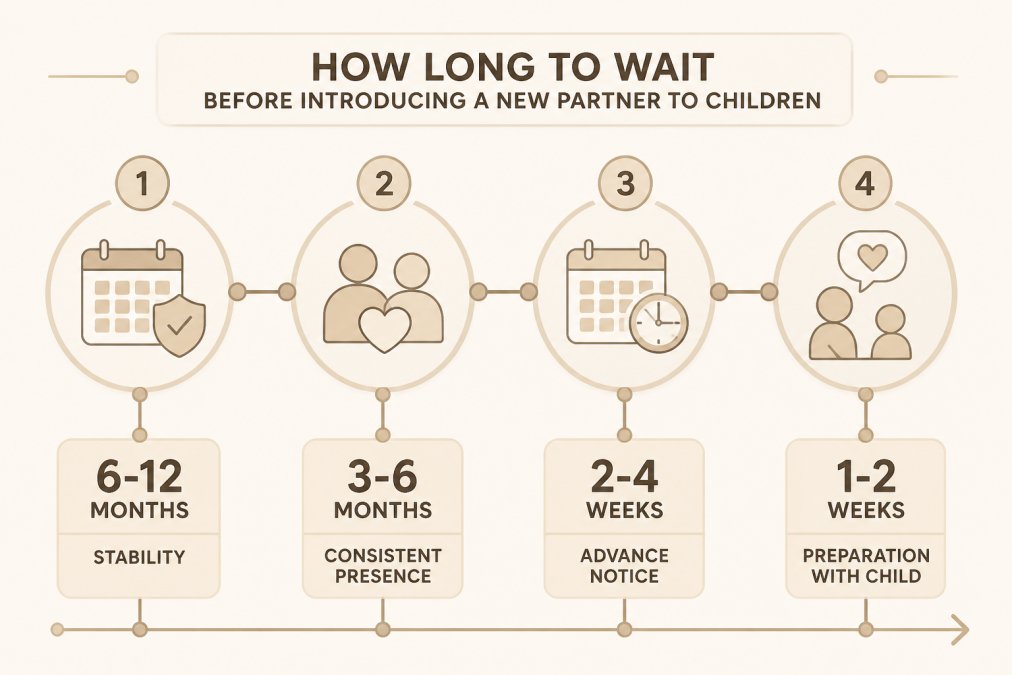
A practical approach: track consistency, not just calendar time. Has your new partner been present at regular intervals for at least 6 months? Have you weathered at least one conflict together? Do you see a future with them, or are you testing the waters?
How to Tell Your Co-Parent About a New Partner
This conversation is non-negotiable. Your co-parent deserves advance notice, not as a courtesy, but as a co-parent who shares responsibility for your child’s emotional wellbeing.
Frame it as information, not permission. You’re not asking for approval. You’re informing them of a development in your life that affects your shared child. The tone matters enormously here. This isn’t confrontational. It’s straightforward and respectful.
Give them time to process. Two to four weeks of advance notice is standard. This window lets them ask questions, adjust their mindset, and prepare your child without feeling ambushed. It also signals that you’re confident in your decision and not hiding anything.
Use a neutral communication channel. If you have a documented co-parenting app, use it. If not, email works. Text is too casual for something this important.
What to include in your message:
- Your new partner’s name
- How long you’ve been together
- When you plan to introduce them to your child
- Where the introduction will happen
- How long the first meeting will last
Keep it factual. Don’t over-explain or defend your choices. Don’t ask for feedback on your relationship. The message is: “I wanted to let you know that I’ve been in a relationship for [timeframe].
Expect pushback. Your ex-partner might express concern, anger, or disapproval. That’s normal. Stay calm. Acknowledge their concern without agreeing to their demands. “I understand this is an adjustment. I’m confident this is the right timing for our child.”
If your co-parent refuses to accept the introduction or threatens consequences, that’s a sign you’re dealing with high-conflict co-parenting. After the Affair Series provides structured communication frameworks designed for exactly this scenario.
Planning the First Meeting Between Children and a New Partner
The first meeting should feel low-pressure and brief. Thirty to sixty minutes is ideal. Your child shouldn’t feel like they’re being auditioned or evaluated. The new partner shouldn’t feel like they’re on trial.
Location matters. Choose somewhere neutral and activity-based. A park, a casual lunch, a trip to get ice cream. Avoid your home if possible, that feels too intimate for a first meeting. Avoid your new partner’s home for the same reason.
Manage your child’s expectations beforehand. Tell them: “I want you to meet someone who’s important to me. Their name is [name]. We’re going to [activity] together. You can ask them questions, or you can just listen. Either way is fine.” Don’t oversell it.
Brief your new partner. They need to understand that this is about your child feeling comfortable, not about impressing anyone. They should be warm but not overly enthusiastic. They should ask questions and listen more than they talk.
Keep the first meeting short. Thirty minutes is perfect. An hour is acceptable. Anything longer and children get tired and cranky. Shorter is better than longer. You can always have a second meeting. You can’t undo a long, awkward first meeting.
Don’t force connection. If your child is quiet or withdrawn, that’s okay. If they’re chatty and warm, that’s also okay. Connection takes time. One meeting doesn’t determine whether a relationship will work.
Setting New Partner Boundaries in Co-Parenting Arrangements
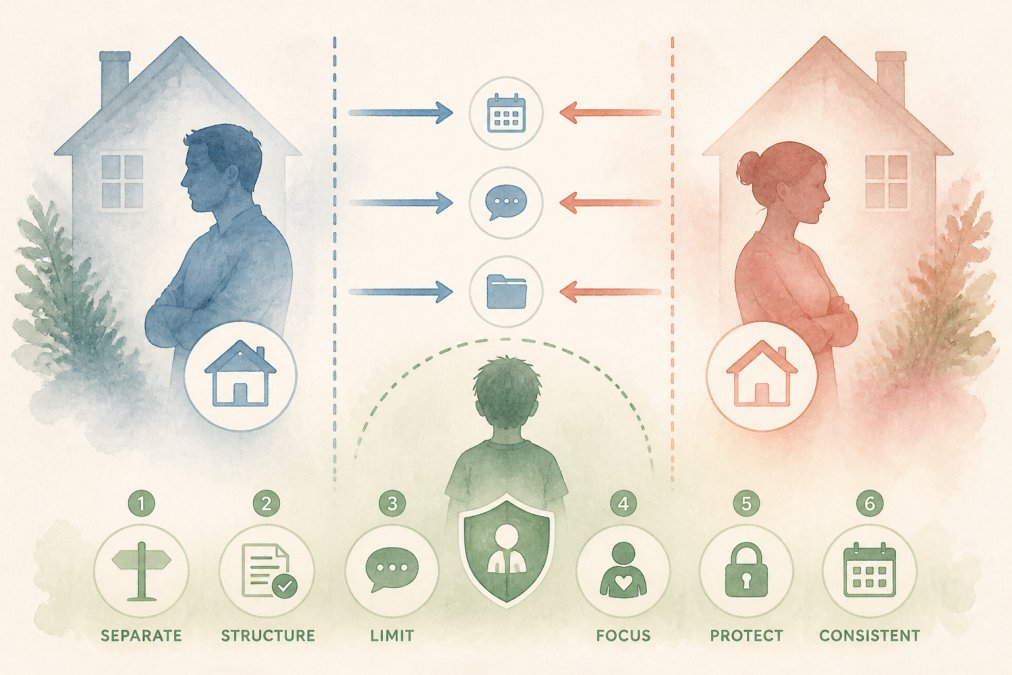
Once introductions happen, boundaries become critical. Your new partner is not a co-parent. They’re not a disciplinarian. They’re not responsible for your child’s emotional wellbeing. That’s still your job and your co-parent’s job.
Define roles clearly. Your new partner can be friendly, supportive, and present. They should not make parenting decisions, enforce rules, or have one-on-one time with your child unsupervised until a significant amount of time has passed, typically 12 to 18 months of consistent relationship. Even then, that decision should be made thoughtfully with your co-parent’s awareness.
Protect your child’s relationship with their other parent. Your new partner should never speak negatively about your ex-partner. They should never position themselves as a replacement. They should actively support your child’s relationship with their other parent. “Your mom/dad is a good parent. I’m glad you get to spend time with them.”
Communicate with your co-parent about boundaries. Tell them what role your new partner will and won’t play. This reduces anxiety and prevents your co-parent from imagining worst-case scenarios. “My new partner will be present when you drop off and pick up, but they won’t be involved in parenting decisions. That’s still between us.”
Watch for loyalty conflicts. Children often feel they have to choose sides or hide their feelings about a new partner from their other parent. Actively work against this. “You can like [new partner] and also love your mom/dad. Those feelings don’t compete with each other.”

Managing Age-Specific Reactions and Concerns
Children respond differently to new partners depending on their age and developmental stage. Understanding what’s normal for your child’s age helps you respond with empathy instead of frustration.
Young children (ages 3-7) often struggle with the concept of a new partner. They may regress, having accidents, acting clingy, or becoming more defiant. They may ask repeatedly when you’re getting back together with their other parent. They need reassurance that the separation isn’t their fault and that your new partner doesn’t replace their other parent.
School-age children (ages 8-12) may feel embarrassed or worried about what their friends will think. They might be protective of their other parent’s feelings. They may test boundaries with your new partner to see if this person is trustworthy. This is normal. Give them space to process without pressure. “It’s okay if you have mixed feelings about this.”
Teenagers (ages 13+) often have strong opinions and may feel their autonomy is being ignored. They might resent the introduction or feel protective of their other parent. Some teens actually want to meet your new partner sooner because they understand you’re an adult with a separate life. Others push back hard.
Cultural and religious factors matter too. Some families have specific traditions or beliefs about remarriage or new partners. Acknowledge these without using them as an excuse to hide your relationship or delay introductions indefinitely.
What to Do When a Child Reacts Badly to a New Partner
Not every introduction goes smoothly. Your child might cry, refuse to participate, act out, or tell you they hate your new partner. This doesn’t mean you made a mistake.
Stay calm and don’t take it personally. Your child’s reaction is about their feelings and their adjustment, not about you or your new partner. Respond with empathy: “I see this is hard for you. That makes sense.”
Don’t force connection. Pushing your child to like your new partner creates resentment. Instead, give them space and time. “You don’t have to like them right now. But I need you to be respectful.”
Validate their feelings without agreeing with their conclusions. “I understand you’re upset. It’s okay to have mixed feelings. That doesn’t mean this is wrong.”
Check in with your co-parent. If your child is really struggling, talk to your ex-partner. They may have insights into what’s driving the reaction.
Give it time. One bad meeting doesn’t predict the future. Some children warm up after a few interactions. Others take months. Some never fully accept a new partner, and that’s their right.
Watch for signs of real distress. If your child is having nightmares, refusing to eat, showing signs of anxiety, or expressing suicidal thoughts, that’s a signal to slow down and consider professional support.
Introducing new partners in co-parenting situations requires patience, clear communication, and a genuine commitment to your child’s emotional wellbeing.
Frequently Asked Questions
How long should I wait before introducing a new partner to my children?
Most child-centered approaches recommend waiting 6-12 months into a serious relationship where your new partner has shown consistent presence and stability. This allows you to assess relationship sustainability before involving your children. However, timing depends on your child’s age, temperament, and your co-parenting dynamics. After establishing this foundation, give your co-parent 2-4 weeks advance notice and prepare your child 1-2 weeks beforehand. Rushing introductions can create confusion and loyalty conflicts for children.
What should I say when telling my co-parent about a new partner?
Use direct, respectful communication focused on your child’s wellbeing. Example: ‘I wanted to let you know I’m in a relationship with [name]. This person has been part of my life for [timeframe], and I’m planning to introduce them to the children in [timeframe]. I’m committed to keeping this child-centered and want to discuss any concerns you have.’ Provide advance notice, acknowledge their parenting role, and invite dialogue about boundaries. Avoid defensiveness or over-explaining. Document the conversation in writing if your co-parenting relationship is high-conflict.
What boundaries should my new partner respect in a co-parenting situation?
New partners should understand they are not parental figures initially and should not discipline, make decisions about the child, or interfere with your co-parenting agreement. They should not speak negatively about the other parent, participate in custody exchanges, or be present during parenting plan transitions. Your new partner should respect your child’s need for loyalty to both biological parents and avoid creating pressure to choose sides. Clear boundaries protect your child emotionally and legally, and prevent your new partner from becoming a point of conflict with your co-parent.
How do I prepare my child for meeting a new partner?
Use age-appropriate language to explain that you have a friend who is important to you, and you’d like them to meet. Keep initial conversations brief and factual: ‘This is someone I care about. We’ll spend some time together, and you can ask me questions.’ For younger children (under 8), keep the meeting short (30-60 minutes) and in a neutral setting like a park. For older children, be honest about the relationship’s seriousness. Address potential concerns directly: ‘This doesn’t change your time with me or your other parent.’ Reassure them that their feelings are valid, whatever they may be.