Last Updated: October 8, 2026
Table of Contents
How High-Conflict Exchanges Affect Child Development
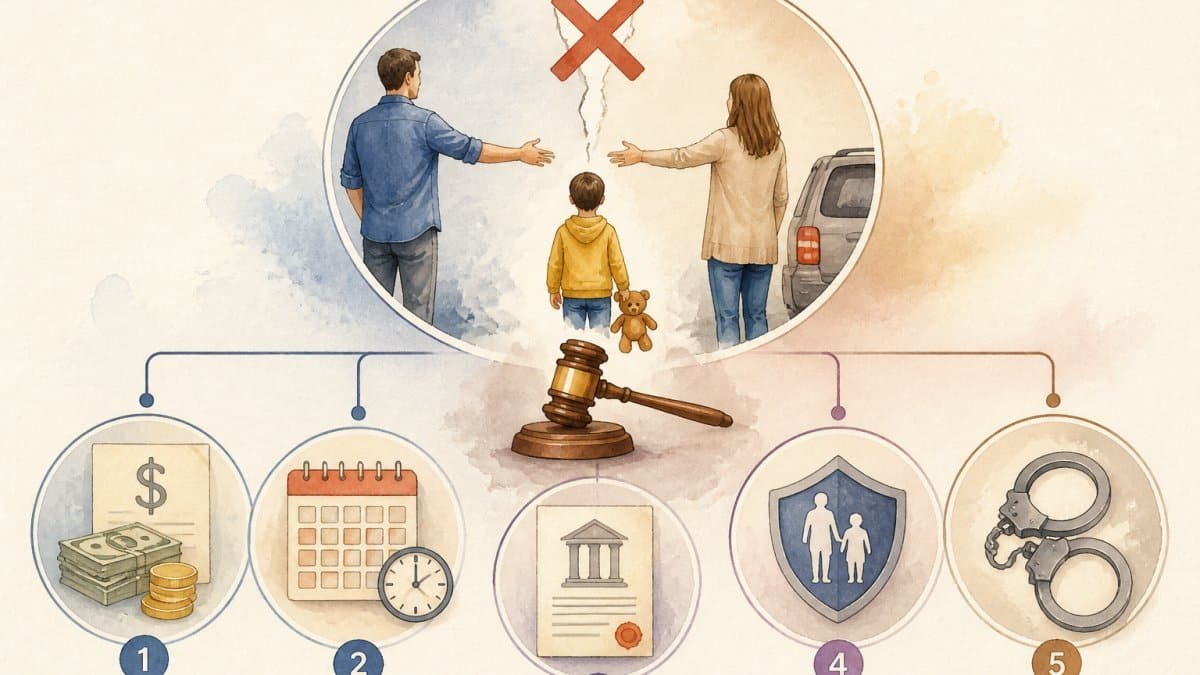
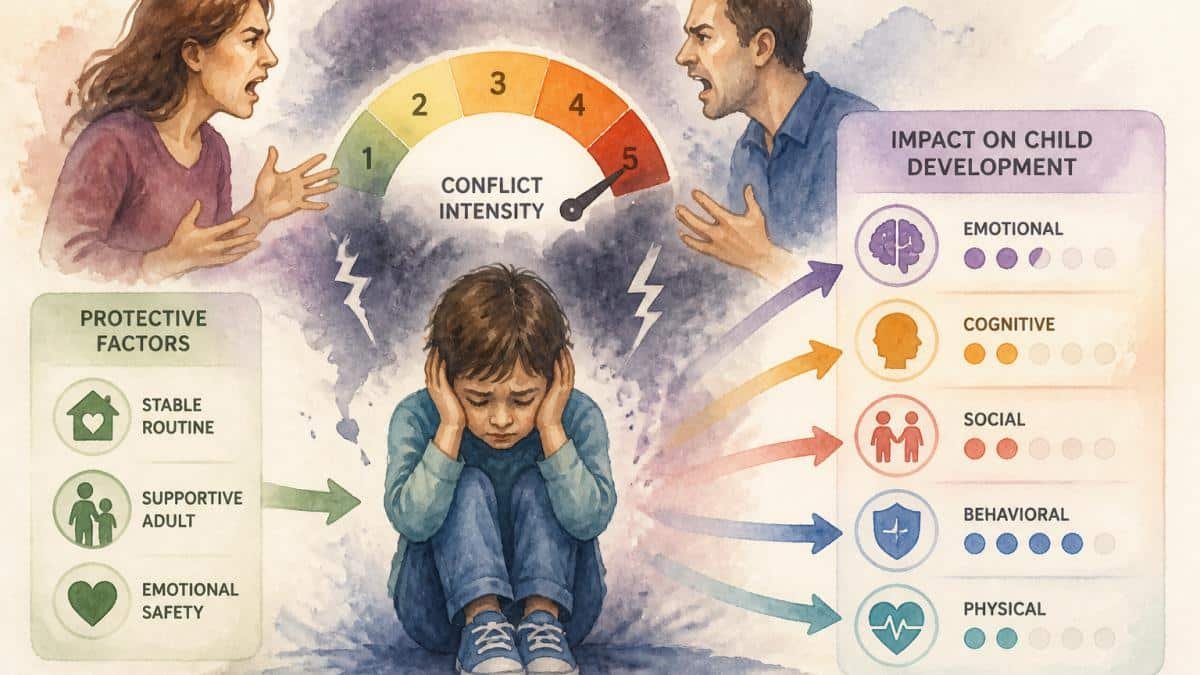
When parents hand off their child in a tense, hostile environment, that moment shapes how your child processes safety, trust, and emotional stability, research on high-conflict exchanges child development shows the impact is measurable and lasting. High-conflict exchanges create a cascade of stress responses in children that affect their development in measurable ways.
Our toolkit focuses on one insight: how you manage exchanges influences whether your child emerges feeling secure or anxious.
The cascade of stress during transitions
Your child’s nervous system is tuned to detect threat. During a high-conflict exchange, they pick up on tone, body language, and unspoken tension. Even without words, cortisol and adrenaline tell them something is wrong.
This is biology, not blame. Repeated stress during exchanges teaches a child’s body to stay on high alert, rewiring how they regulate emotion and respond to conflict (pubmed.ncbi.nlm.nih.gov).
A child who dreads exchanges may develop stomach problems, sleep disruption, or trouble concentrating at school. These are stress responses, not character flaws.
Why exchanges matter more than you think
Many parents assume the damage comes from the conflict itself. But research on parental conflict and child outcomes shows the moments of transition carry outsized weight.
Exchanges are unpredictable: your child doesn’t know if a handoff will be calm or chaotic, and that uncertainty is itself a stressor. A child who knows what to expect handles transitions better than one caught off guard.
Structure is protective. Clear boundaries, predictable routines, and calm communication reduce uncertainty so your child’s nervous system can relax.
Signs of Stress in Children After Parental Conflict
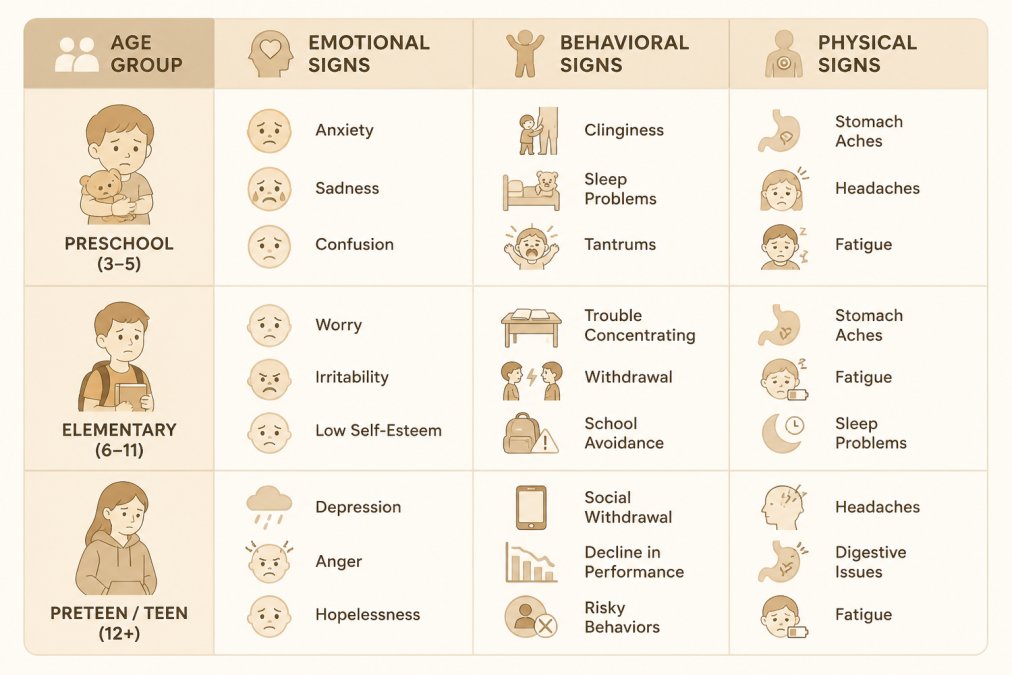
Children show stress in unexpected ways: some withdraw, some act out, and many show physical symptoms that seem unrelated to emotion.
Emotional and behavioral red flags
Watch for these signs that your child is struggling with the stress of high-conflict exchanges:
- Increased anxiety before or after exchanges. Your child may cling to you, ask repeated questions about the schedule, or express fear about seeing the other parent.
- Emotional withdrawal. Some children go quiet, lose interest in activities they enjoyed, or seem “checked out.”
- Irritability and anger outbursts. Stress often shows up as anger that seems disproportionate to the trigger.
- Sleep disruption. Nightmares, difficulty falling asleep, or waking early are common stress responses.
- Regression. A child may revert to behaviors they’ve outgrown, thumb-sucking, bed-wetting, baby talk.
- Physical complaints. Stomachaches, headaches, or general “not feeling well” often accompany emotional stress.
Watch for patterns. One bad day isn’t a problem, but consistent changes around exchange times are.
Age-specific responses to conflict exposure
Children process conflict differently by developmental stage. Knowing what’s typical for your child’s age helps you respond appropriately.
Preschoolers (ages 3-5): Young children lack the language to express complex emotions. They show stress through behavior, clinginess, aggression, or regression.
Elementary-age children (ages 6-11): This group often tries to manage conflict by being “perfect.” They may suppress their own needs to avoid upsetting either parent.
Preteens and teens (ages 12+): Older children understand the conflict more clearly, which can increase anxiety.
Anxiety, Depression, and Stress Responses in Children
Repeated exposure to parental conflict during exchanges doesn’t just cause temporary stress. Over time, it can contribute to clinical anxiety and depression.
When a child’s nervous system stays on high alert, their threshold for perceiving threat drops. A neutral comment reads as hostile; a normal transition feels dangerous. This hypervigilance is a survival mechanism, but it’s exhausting.
Children in high-conflict situations show higher rates of anxiety disorders, depression, and posttraumatic stress responses (pubmed.ncbi.nlm.nih.gov). Parental conflict during transitions matters.
But intervention works. When parents reduce conflict during exchanges and create predictable, calm transitions, children’s stress drops, sleep improves, school performance stabilizes, and emotional regulation gets better.
Low-Conflict Custody Exchange Tips
The goal isn’t to eliminate all tension, which is unrealistic after betrayal and separation. It’s to create a buffer zone where your child doesn’t absorb the stress.
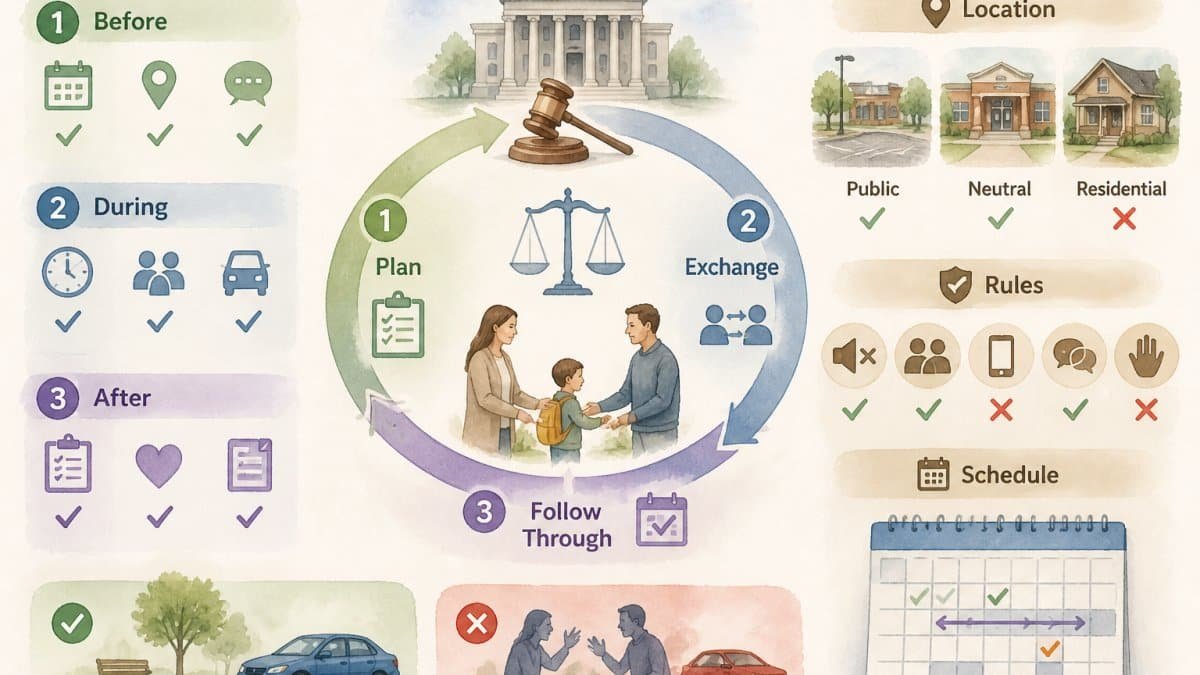
Before the exchange: preparation and boundaries
Preparation before you see your ex sets the tone.
Set your emotional baseline. Take five minutes to breathe and remind yourself of your boundaries. If you arrive dysregulated, your child will feel it.
Brief your child appropriately. Skip conflict details; give clear, calm information: “You’re going to Dad’s house today. He’ll pick you up at 3 p.m.
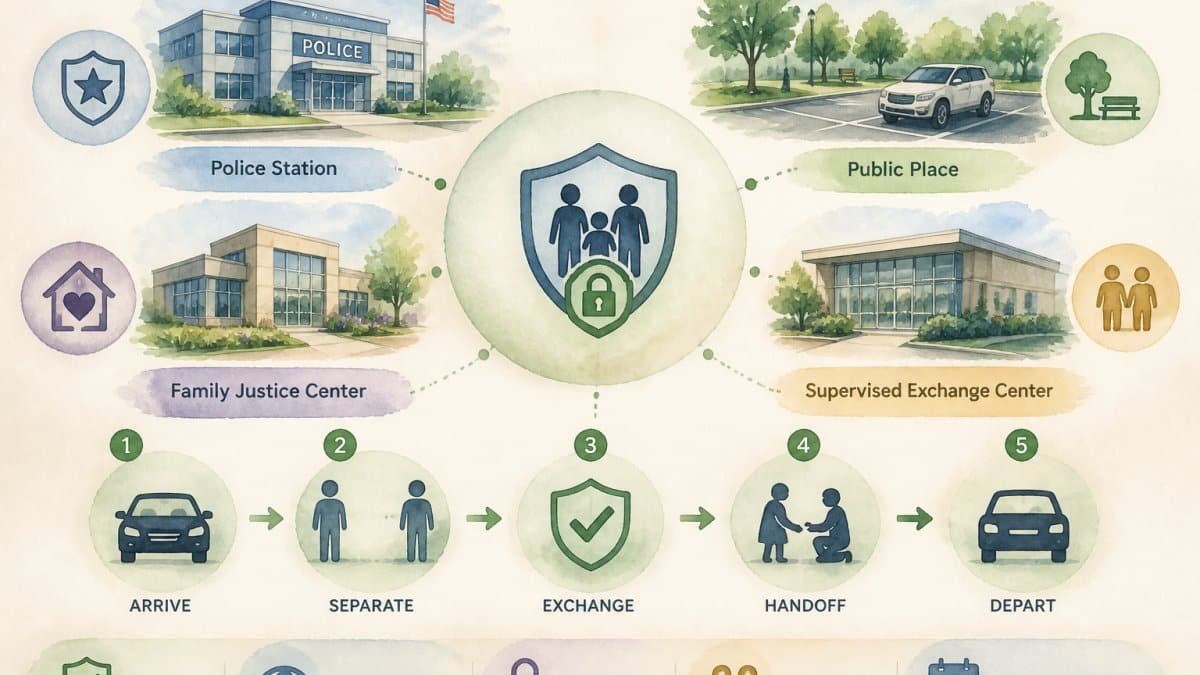
Choose a neutral location. Use a public space, parking lot, community center, or school pickup area. Public settings lower conflict intensity.
Plan the handoff logistics. Agree on exact times, location, and what your child should bring. Written agreements (text, email, or a co-parenting app) eliminate ambiguity.
Manage your triggers. Decide in advance how you’ll respond to topics that set you off. Anticipate, don’t react.
During the handoff: what to do and avoid
Your child is watching, listening, and absorbing cues about safety.
Keep it brief. Long exchanges invite conflict. Hand off your child, exchange necessary information, and leave. Aim for under five minutes.
Use neutral language. No criticism, no updates about the other parent, no emotional loading.
Avoid discussing the child in front of them. Never negotiate parenting decisions or concerns while your child is present.
Stay calm and pleasant. Your tone teaches your child how to handle difficult people.
Don’t ask your child to relay messages. This puts them in the middle and creates loyalty conflicts.
Never address conflict at the exchange. Save serious conversations for when your child isn’t present.
Co-Parenting Communication Scripts That Work
When you can’t communicate naturally with your ex, scripts provide structure, removing emotion and keeping focus on logistics and boundaries.
Scripts for logistics and scheduling
Use these neutral, clear templates for routine exchanges and scheduling questions.
Confirming an exchange time:
“I want to confirm the pickup on Saturday at 2 p.m. at the school parking lot.
Requesting a schedule change:
“I need to adjust the schedule for next weekend.
Sharing necessary information:
“Emma has a soccer game Saturday at 10 a.m. The location is [address]. She needs to be there by 9:30 a.m.
Confirming receipt of information:
“Got your message about the dentist appointment. I’ll make sure he’s ready. Thanks for the heads up.”
These scripts work because they’re transactional. They focus on the child’s needs, not the relationship conflict.
Scripts for boundary-setting with a hostile ex
With a hostile or dismissive ex, boundaries must be firmer and more direct.
Refusing to engage in conflict:
“I understand you’re frustrated. I’m not going to discuss this right now.
Redirecting personal attacks:
“I’m not going to respond to that comment.
Ending a conversation that’s escalating:
“This conversation isn’t productive. I’m going to end it here.
Responding to accusations:
“I disagree with that. I’m making decisions based on what’s best for the kids.
Setting a communication boundary:
“I prefer to handle scheduling through text or email so we have a record.
The key to all these scripts: stay calm, don’t defend yourself, and redirect to the child’s needs.
Parallel Parenting Strategies to Reduce Conflict
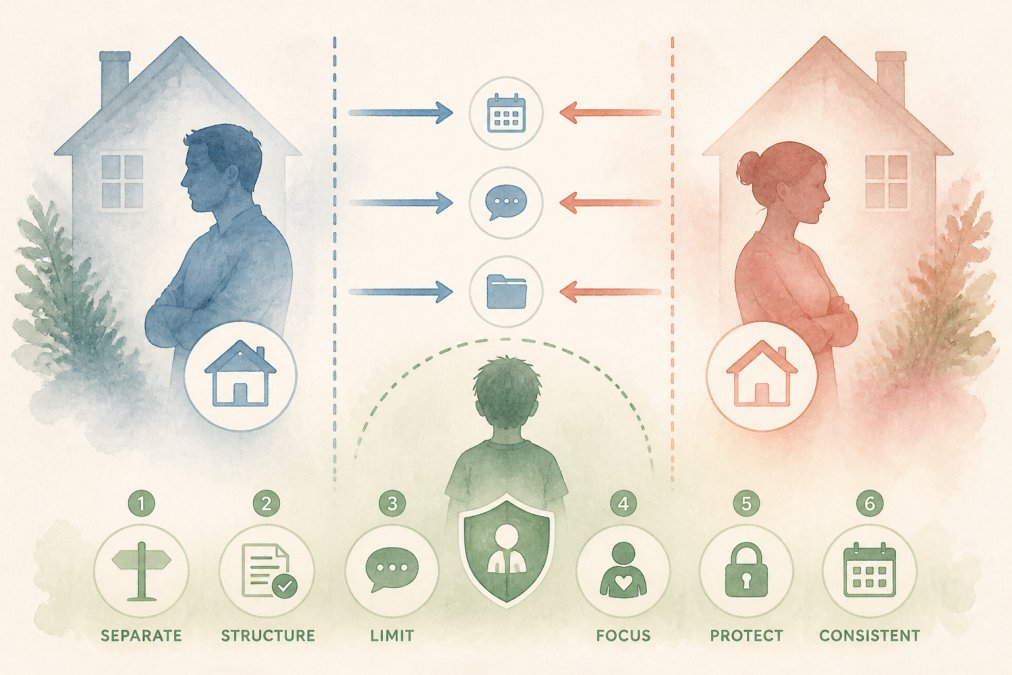
When co-parenting communication breaks down, parallel parenting is the realistic alternative: you operate independently while both staying involved in your child’s life.
Operating independently while protecting the child
Parallel parenting means each parent makes decisions in their own home without the other’s approval.
This removes the need for constant negotiation.
Set clear boundaries about each parent’s domain. Your home, your rules; their home, their rules.
Communicate only about essentials. Medical emergencies, school information, schedule changes. Everything else stays separate.
Don’t criticize the other parent’s choices in your home. If your ex allows screen time you wouldn’t, that’s their call.
Focus on consistency within your own home. You control your environment, tone, and boundaries. Make that space calm and predictable.
When and how to implement parallel parenting
Parallel parenting isn’t ideal; co-parenting coordination is better when possible. But it beats ongoing conflict.
Consider parallel parenting if:
- Your ex is unwilling or unable to communicate respectfully
- Attempts at co-parenting have repeatedly failed
- Conflict during communication is affecting your child
- You need to protect yourself from manipulation or hostility
Make the shift explicit. You might say: “Trying to coordinate closely isn’t working for either of us. I’m going to focus on making our home as stable as possible for the kids, and I’ll respect that you’re doing the same in your space. We’ll communicate about essentials only.”
This removes the expectation of partnership while keeping both parents active. Your child still has both parents. The conflict just stops happening in front of them.

Recognizing When Your Child Needs Professional Support
Not every child affected by high-conflict exchanges needs therapy, but some do. Knowing the difference matters.
A child with temporary stress around exchanges, anxiety before handoffs, or irritability afterward often responds well to the strategies covered here: structure, calm exchanges, and reassurance.
But if your child shows persistent symptoms, you should seek professional support:
- Sleep problems lasting more than a few weeks
- Significant changes in school performance
- Withdrawal from friends or activities
- Frequent physical complaints without medical cause
- Behavioral changes that don’t improve with routine adjustments
- Expressions of hopelessness or self-harm thoughts
A child psychologist or therapist trained in family dynamics can help your child process stress and build coping skills. Seeking help isn’t failure; professional support can be beneficial.
Choose a therapist experienced with children of separation and divorce who works with high-conflict situations. Make sure they understand your goal is to support your child, not weaponize therapy against your ex.
Building Resilience and Protective Factors
Resilience isn’t innate. It’s built through repeated experiences of managing stress and recovering.
The most powerful protective factor is a calm, consistent relationship with at least one parent. Create an environment where your child feels safe, exchanges are predictable, and you model emotional regulation, and you build resilience.
Other protective factors include:
- Predictable routines. Your child knows what to expect and when. This reduces anxiety.
- Clear communication about the schedule. No surprises. No uncertainty about when exchanges happen.
- Your own emotional stability. When you manage your stress and don’t dump it on your child, they learn that adults can handle difficulty.
- Validation of their feelings. “I know this is hard. It’s okay to feel sad about the schedule. I’m here for you.”
- Involvement in activities they enjoy. School, sports, hobbies, friendships, these are anchors that keep life stable.
- Honest age-appropriate information. Your child isn’t responsible for the conflict, and they need to know that.
Research on children of high-conflict separation suggests that outcomes depend less on whether parents stay together and more on whether they manage conflict respectfully.
By implementing these strategies, structured exchanges, clear scripts, parallel parenting when necessary, and professional support when needed, you can positively influence your child’s long-term emotional health. The work you do now matters profoundly.
Frequently Asked Questions
How does parental conflict affect a child’s development?
High-conflict exchanges expose children to stress that disrupts emotional regulation, academic focus, and social relationships. Repeated exposure to parental conflict increases risk for anxiety, depression, and behavioral difficulties. Children may also develop loyalty conflicts, feeling caught between parents, which undermines their sense of security and self-worth. The impact varies by age, but even young children register tension during custody handoffs.
What are the signs of stress in children after parental conflict?
Common indicators include sleep disruption, withdrawn behavior, increased aggression, regression to earlier behaviors (thumb-sucking, bed-wetting), stomach complaints without medical cause, and difficulty concentrating at school. Older children may express sadness, anxiety about transitions, reluctance to attend exchanges, or sudden changes in school performance. Some children become overly compliant or parentified, taking on adult emotional labor to manage a parent’s mood.
Can low-conflict custody exchange tips actually reduce my child’s stress?
Yes. Structured, predictable exchanges with minimal parental interaction significantly reduce children’s anxiety about transitions. Using neutral meeting locations, keeping handoffs brief, avoiding discussion of the other parent, and maintaining calm body language all signal safety to your child. Children benefit most when exchanges are consistent, on-time, and free from conflict or tension, these practical adjustments directly lower stress responses.
When should a child see a therapist after witnessing parental conflict?
Consider therapy if your child shows persistent anxiety, depression, behavioral aggression, academic decline, or physical symptoms lasting more than a few weeks. Children who express feeling caught between parents, refuse to attend exchanges, or display trauma symptoms warrant professional evaluation. A therapist specializing in childhood trauma and family conflict can help children process exposure and develop coping skills. Early intervention can help mitigate long-term adjustment problems.