Table of Contents
Last Updated: October 20, 2026
Understanding Parental Betrayal and Its Impact on Children
Parental betrayal, through infidelity, abandonment, manipulation, or broken promises, ruptures a child’s sense of safety and trust, leaving them confused, in pain, and asking one question: Can I trust the people who are supposed to protect me?
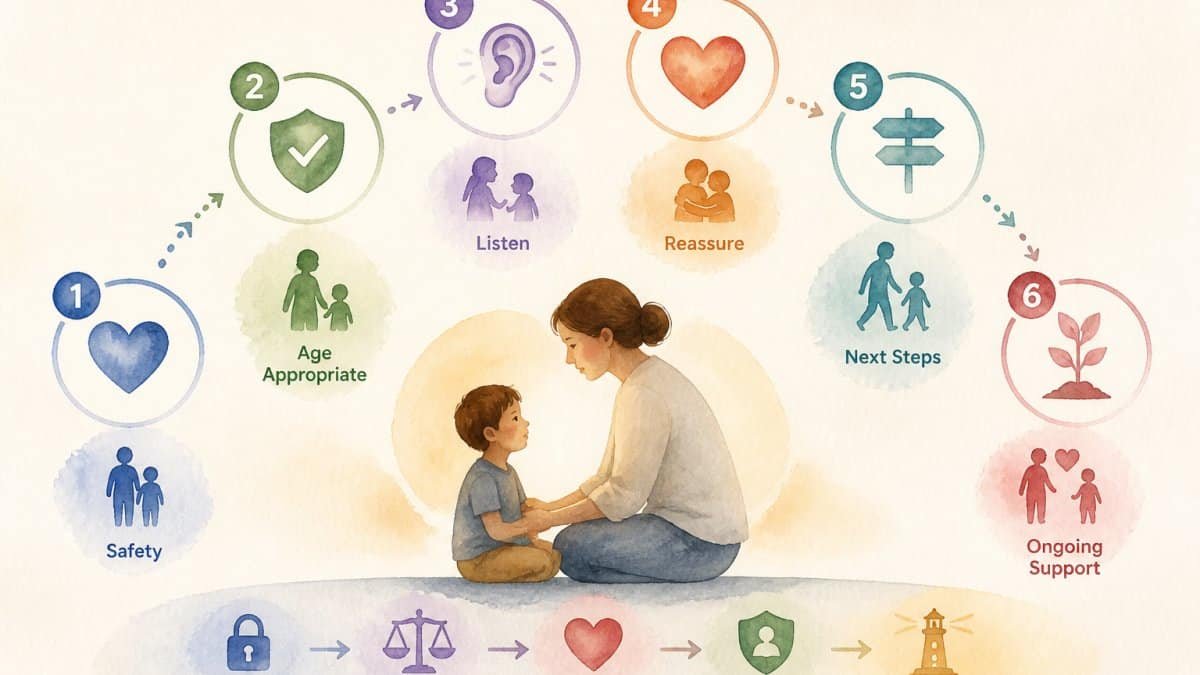
Learning how to explain parental betrayal to children shapes how your child processes what happened and rebuilds trust.
Children don’t need adult relationship dynamics explained. They need clarity, honesty, and reassurance.
How betrayal affects children emotionally
Children who discover parental betrayal feel a cascade of overwhelming, contradictory emotions, angry at one parent, protective of another, confused about their own role. Common reactions include:
- Shock and denial: “This can’t be real. My parent wouldn’t do this.”
- Confusion: “What does this mean for our family? Are we still a family?”
- Hurt and rejection: “If my parent could betray someone they loved, could they betray me?”
What makes parental betrayal especially damaging is that it disrupts the child’s foundational sense of emotional safety. Children rely on parents to model trustworthiness; when that model breaks, they struggle to understand what trust means.
Children often internalize betrayal as their own failure. A child might think, “If I had been better, this wouldn’t have happened” or “Maybe I caused this.” This is a critical moment to intervene with clear reassurance.
Why children need honest, age-appropriate explanations
Silence about parental betrayal doesn’t protect children, it confuses them. When adults avoid the topic, children fill the gaps with their own stories, often worse than the truth.
Children need honest explanations because:
- They sense something is wrong. Kids pick up on tension and emotional distance. Without explanation, they create their own narratives, often blaming themselves.
- Honesty builds trust. Telling the truth in age-appropriate language models integrity and shows your child you can be relied on even in difficult moments.
- Clarity reduces anxiety. Uncertainty is more frightening than difficult truth. A child who understands what happened can begin to process it; a child left guessing stays stuck in fear.
The key is matching your explanation to your child’s developmental stage. A five-year-old needs a very different explanation than a teenager.
What to Tell Children About Infidelity
Keeping explanations simple and truthful
When explaining infidelity to a child, simplicity is your greatest tool. Your job isn’t to justify the betrayal or explain adult complexity, it’s to tell the truth in words your child can understand.
Start with the core fact: “Your mom/dad made a choice that hurt our family. They were dishonest, and that broke the trust between us.” You might add: “Sometimes people make mistakes.
Keep these principles in mind:
- Use simple language. Avoid clinical terms like “infidelity” or “affair” with young children. Say “dishonest” or “broke our trust” instead.
- Stick to facts. Don’t embellish or minimize, and don’t add details your child didn’t ask for.
- Separate the behavior from the person. “Your dad made a bad choice” is different from “Your dad is a bad person.”
Many parents worry about “the right words.” There aren’t magic words. What matters is that you stay calm, tell the truth, and make clear that your child is safe and loved. Your tone communicates more than your exact phrasing.
What not to say: avoiding blame and adult details
In moments of pain, it’s tempting to vent anger toward the betraying parent or share cathartic details. Resist this completely.
Never say:
- Blame statements: “Your mom/dad ruined our family” or “Your parent is a liar/cheater.” Your child shares DNA with both parents. Attacking one parent feels like attacking half of your child.
- Adult relationship details: “Your dad was with someone else” or naming the other person involved. Your child doesn’t need the specifics of adult betrayal.
- Comparisons or judgments: “Your mom always does this” or “Your dad never thinks about anyone but himself.” Don’t use the betrayal to reinforce negative character judgments.
What you avoid saying matters as much as what you say. Your restraint teaches your child that even in betrayal, there are boundaries and dignity.
Age-Appropriate Explanation of Infidelity
Talking to young children (ages 5-8)
Young children have limited capacity to understand adult relationships. They think concretely: someone did something wrong, and now there are consequences. Keep your explanation extremely simple:

What to say:
“Mommy and Daddy are not going to live together anymore. One of us made a choice that broke the trust between us. This is not your fault. We both love you very much, and that will never change.”
If your child asks why, you might say: “Mommy/Daddy was not honest with us. They did something that hurt our family. Sometimes grown-ups make big mistakes.”
What young children need to hear:
- The separation is not their fault.
- Both parents still love them.
- The family structure is changing, but the love is not.
What to avoid:
- Don’t use the word “affair” or describe sexual betrayal.
- Don’t name the other person involved.
- Don’t explain the emotional complexity of adult relationships.
For young children, the core message is simple: something went wrong, it’s not your fault, and you’re still loved. Everything else is unnecessary noise.
Communicating with school-age children (ages 9-12)
School-age children understand cause and effect better and grasp that people make choices and face consequences.
What to say:
“Your mom/dad made a choice to be dishonest.
If your child asks for specifics, you might say: “Your parent was not faithful to our marriage.
What school-age children need:
- An honest explanation they can understand.
- Permission to feel angry, sad, or confused.
- Clear reassurance that they’re not responsible for the betrayal or the separation.
What to avoid:
- Don’t ask your child to spy on or report on the other parent.
- Don’t use your child as a messenger between parents.
- Don’t make your child the confidant for your adult pain.
At this age, children often internalize shame. A school-age child might think, “Everyone’s parents are together.
Speaking with teenagers (ages 13+)
Teenagers can understand complex emotional and relational dynamics, and may already suspect or know about the betrayal.
With teenagers, honesty is non-negotiable. They will sense if you’re lying or protecting them, and that erodes trust further.
What to say:
“Your mom/dad had an affair, which means they were unfaithful to our marriage.
What teenagers need:
- Honest information delivered calmly.
- Acknowledgment that this is difficult and their feelings are valid.
- Clear boundaries: you’re the parent, they’re not your therapist.
What to avoid:
- Don’t vent your adult pain to your teenager.
- Don’t ask your teenager to keep secrets from the other parent.
- Don’t expect your teenager to defend you or validate your feelings.
Teenagers often feel a mix of anger, embarrassment, and protectiveness, and some distance themselves emotionally as a defense.
Teenagers may act out, withdraw, or express anger toward you even though you’re not the betraying parent. This is not rejection, it’s processing. Stay calm and available. Professional support can help.
What to Say When a Child Asks Why Parents Separated
Answering questions honestly without oversharing
If your child asks if it’s their fault:
“No. This is between your parents.
If your child asks if you still love the other parent:
“I love you.
If your child asks if you’ll get back together:
“No, we won’t be getting back together.
The principle is: answer honestly, keep it simple, and redirect focus to your child’s safety and your continued love for them.
Handling follow-up questions and confusion
Children rarely ask one question and move on. They process in layers, circling back to the same themes with new questions.
This is normal. It means your child is trying to make sense of what happened. Stay patient.
Common follow-up questions:
- “Will you get back together?” (Asked multiple times, often months apart)
- “Is it my fault?”
- “Do I have to choose which parent to live with?”
For each question, return to the core messages:
- It’s not your child’s fault.
- Both parents love them.
- The family structure is changing, but the love is not.
If your child asks the same question repeatedly, that’s a sign they didn’t fully absorb the answer or they need reassurance. Answer again, calmly, without frustration.
If your child’s questions become overwhelming or you notice signs of significant distress, changes in sleep, appetite, school performance, or withdrawal, this is a signal to seek professional support. A therapist can help your child process in a safe space.
Validating Feelings and Processing Grief
Listening without immediately trying to fix the problem
When your child says, “I’m so angry at Dad,” you don’t need to say, “But he still loves you.” Your child already knows that. What they need is acknowledgment: “You’re really angry. That makes sense.”
This feels counterintuitive because we’re taught good parenting means solving problems. But sometimes the problem is the feeling itself, and the solution is permission to feel it.
Reflecting back what you hear to show understanding
Reflection is a simple technique that communicates: I hear you. Your feelings matter.
When your child expresses emotion, reflect it back:
Child: “I hate that Mom did this. Everything is ruined.”
Parent (reflecting): “You’re really upset. You feel like everything has changed and you hate that Mom made this choice.”
Child: “I don’t want to go to Dad’s house. I’m mad at him.”
Parent (reflecting): “You’re angry at your dad right now, and you don’t feel like seeing him.

Reassuring Children During Divorce
Making clear they are loved and not responsible
Children need to hear this repeatedly, in different ways, because betrayal and separation plant seeds of doubt.
Core reassurances to give:
- “This is not your fault. Nothing you did or didn’t do caused this.”
- “I love you. That hasn’t changed and won’t change.”
- “Your other parent loves you too. This is between your parents.”
Say these things regularly, not just once, children need repetition to internalize reassurance. Also show them through action: maintain consistent routines and time with both parents, follow through on promises, keep your child out of adult conflicts, and show up for school events, activities, and moments that matter.
Words matter, but consistency matters more. Your child learns they’re loved and safe through your steady presence, not through perfect words.
Maintaining emotional safety and predictability
In the chaos of separation and betrayal, children crave predictability. Knowing what comes next, who they’ll see, where they’ll sleep, and the routine creates control and safety.
Protect this by:
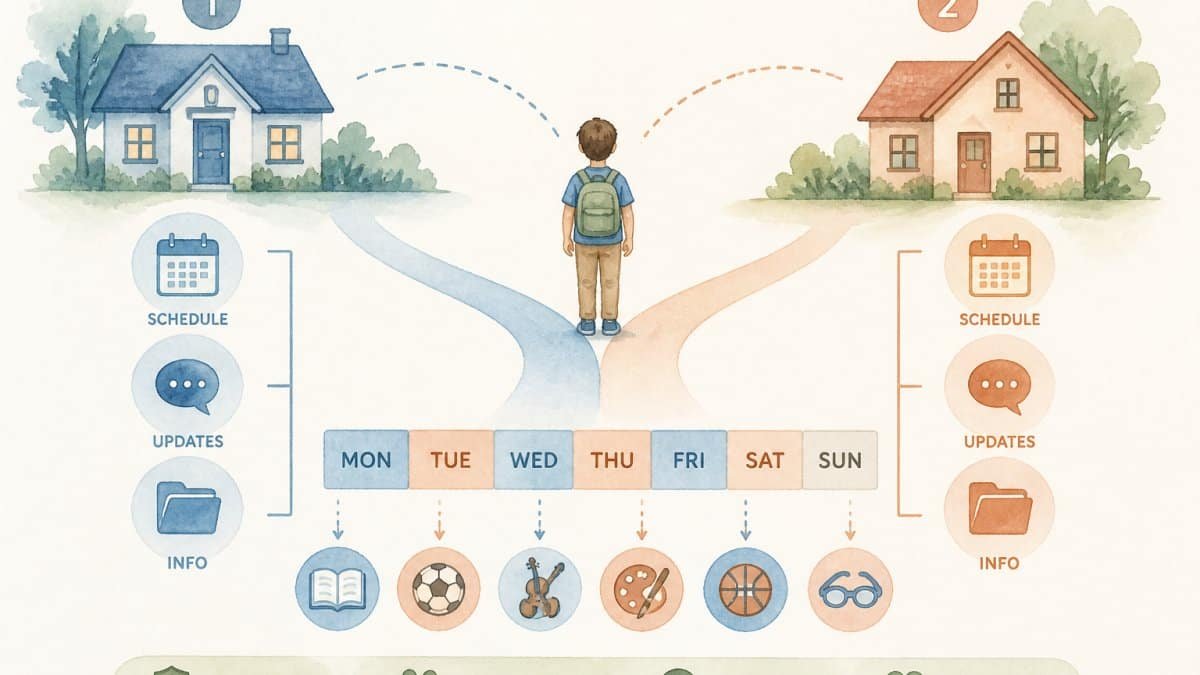
- Keeping schedules consistent. If your child sees the other parent on Wednesday and Saturday, keep that the same week after week.
- Communicating changes in advance. If the schedule needs to shift, tell your child ahead of time, not at the last minute.
- Maintaining routines. Bedtime routines, family meals, weekend activities, these anchor your child’s sense of normalcy.
Emotional safety doesn’t mean pretending everything is fine. It means being honest about what’s happening while reassuring your child that you’re the adult and you’re handling it.
Managing Co-Parenting Conversations and Safety Planning
Coordinating messages when accounts conflict
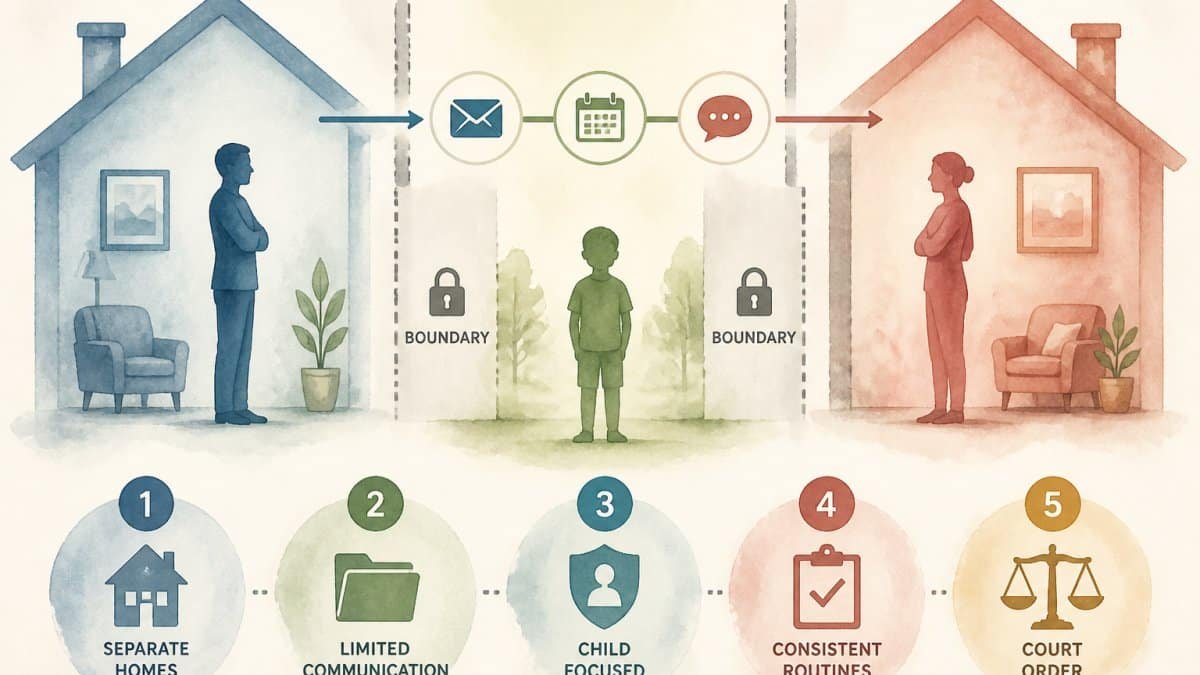
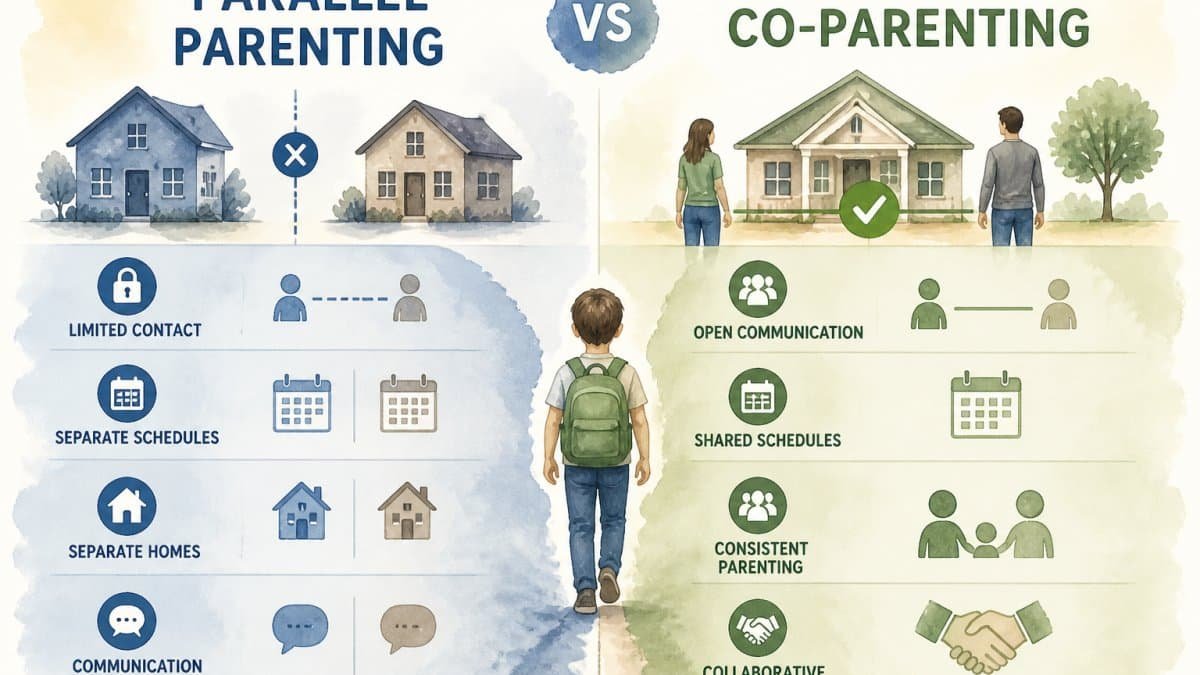
When parents have different stories, children feel torn and confused. Coordinate with the other parent so your child hears consistent messages, even if you disagree about details.
Before talking to your child, try to align with the other parent:
- Agree on the basic facts your child will hear.
- Agree on what you will and won’t say.
- Agree that you won’t criticize each other in front of your child.
If the other parent won’t cooperate or refuses to align messages, you can only control your own communication. Stick to your values: be honest, don’t blame, don’t overshare, and protect your child’s relationship with both parents.
Safety planning and disclosures of abuse
If the betrayal involved abuse, emotional, physical, or sexual, your approach changes. Your child’s safety comes first, and you may need to involve professionals.
Signs your child may have experienced abuse:
- Sudden behavioral changes or regression.
- Fear of a specific parent or situation.
- Inappropriate sexual knowledge or behavior.
If you suspect abuse:
- Believe your child.
- Don’t interrogate them for details.
- Contact a professional: a therapist, social worker, or child protective services.
Do not use allegations of abuse as a tactic in custody disputes. Credible disclosures of abuse require professional investigation, not parental judgment.
If your child discloses abuse to you, your response matters:
- Stay calm. Don’t show shock or anger (even if you feel it).
- Believe them. Say, “I believe you. Thank you for telling me.”
- Don’t ask leading questions.
Abuse disclosures require professional response. Do not try to handle this alone or use it as use in custody negotiations. Your child’s safety depends on proper investigation and intervention.
Signs of distress and when to seek professional support
Some distress is normal after parental betrayal and separation, but persistent signs of struggle mean professional support can help.
Signs your child may benefit from therapy:
- Changes in sleep, appetite, or energy that last more than a few weeks.
- Decline in school performance or attendance.
- Withdrawal from friends or activities they used to enjoy.
How to find professional support:
- Ask your pediatrician for referrals to child therapists.
- Contact your insurance provider for in-network therapists.
- Look for therapists who specialize in family trauma, divorce, or betrayal.
Professional support doesn’t mean something is wrong with your child.
Explaining parental betrayal to children is one of the hardest conversations a parent can have.
The After the Affair Series toolkit provides structured frameworks and age-specific scripts to help you navigate these conversations with clarity and confidence.
Your child’s ability to heal depends largely on how you handle this transition.
Frequently Asked Questions
How do you explain a parent’s betrayal to a child without damaging the parent-child relationship?
Focus on facts rather than judgment. Use simple, age-appropriate language that acknowledges what happened without assigning blame or asking the child to take sides. For example, say ‘Mom and Dad are not going to be together anymore because of choices Mom made’ rather than ‘Mom ruined our family.’ Reassure the child that the betrayal was between the parents and has nothing to do with the child’s worth or lovability. Keep the explanation brief and let the child ask questions at their own pace.
What should you avoid saying when a child asks why parents separated?
Avoid detailed explanations of the infidelity, blaming language, or asking the child to keep secrets. Do not say things like ‘Your parent cheated on me’ or ‘Your parent doesn’t care about our family.’ Do not share adult relationship details, vent your pain to the child, or expect them to comfort you. Also avoid saying ‘You’ll understand when you’re older’, this dismisses their current need for clarity. Instead, give an honest but simple answer that respects the child’s age and emotional capacity.
How can you reassure a child that the betrayal was not their fault?
State it directly and repeat it as needed: ‘This is not your fault. Nothing you did caused this. Mom and Dad’s relationship is between us, and it has nothing to do with you.’ Children often internalize betrayal as personal rejection, so reassurance must be clear and frequent. Maintain consistent routines, follow through on promises, and show up reliably for the child. Actions reinforce words, predictability and presence are powerful reassurances that they are safe and valued.
When should a child see a therapist after learning about parental betrayal?
Consider professional support if the child shows persistent signs of distress: changes in sleep or appetite, withdrawal from friends, declining school performance, anger outbursts, or expressions of self-blame lasting more than a few weeks. A therapist can help the child process grief and confusion in a safe space separate from both parents. Early intervention often prevents long-term trauma symptoms and gives the child tools to express feelings they may not share with you. Even if the child seems to cope well, a few sessions can be preventive.