Last Updated: October 8, 2026
Table of Contents
Understanding Different Parenting Styles and Their Impact on Co-Parenting
Co-parenting strategies for different parenting styles begin with recognizing that no two parents approach child-rearing the same way.
The real challenge isn’t eliminating differences, it’s deciding which ones matter enough to address. Separated parents’ biggest arguments aren’t about parenting philosophy but about feeling unheard and disrespected.
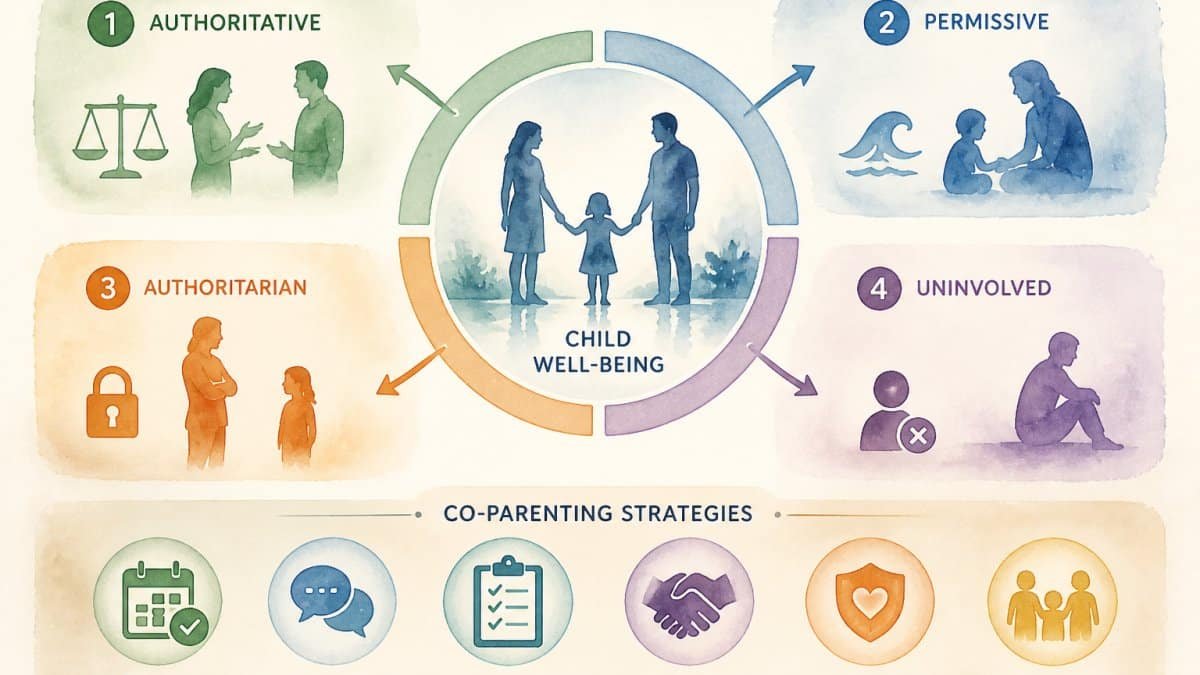
Parenting styles typically fall into recognizable categories: authoritative (structured but warm), permissive (flexible, child-led), authoritarian (rule-based, strict), and uninvolved (detached).
Before any conversation with your co-parent about parenting differences, write down your three non-negotiable values (safety, respect, education, whatever matters most to you). This clarity prevents you from arguing about minor preferences when you should be protecting what truly matters.
Finding Shared Values and Common Ground Between Co-Parents
Finding shared values between co-parents is where co-parenting strategies for different parenting styles take real shape.
Start by identifying what you both want for your child’s future.
The mistake most co-parents make is leading with rules. “You let them stay up too late” becomes an argument about control rather than shared goals.
This works because it separates the goal from the method.
The fastest way to find common ground is to ask your co-parent directly: “What matters most to you as a parent?” Listen without interrupting or defending your own approach. You’ll often find overlap you didn’t expect.
Co-Parenting Communication Scripts for Difficult Conversations
Co-parenting communication scripts are essential when emotions run high or past conflict makes conversation difficult.
The Gray Rock Method is one structured approach: respond with short, unemotional, fact-based statements.
For conversations about rule differences, use this framework:
Step 1: Name the specific behavior. Not “You’re too permissive” but “I’ve noticed they’re not doing chores at your house.”
Step 2: State the impact on your child. “When expectations differ, they get confused about what’s required.”
Step 4: Listen to their perspective. “What’s your take on this?”
For written communication, use email or a co-parenting app when conversations feel too charged.
Setting Co-Parenting Rules for Two Households Without Conflict
Setting co-parenting rules for two households requires deciding which rules genuinely need consistency and which can safely differ. Treating them all as equally important is one of the fastest ways to create unnecessary conflict.
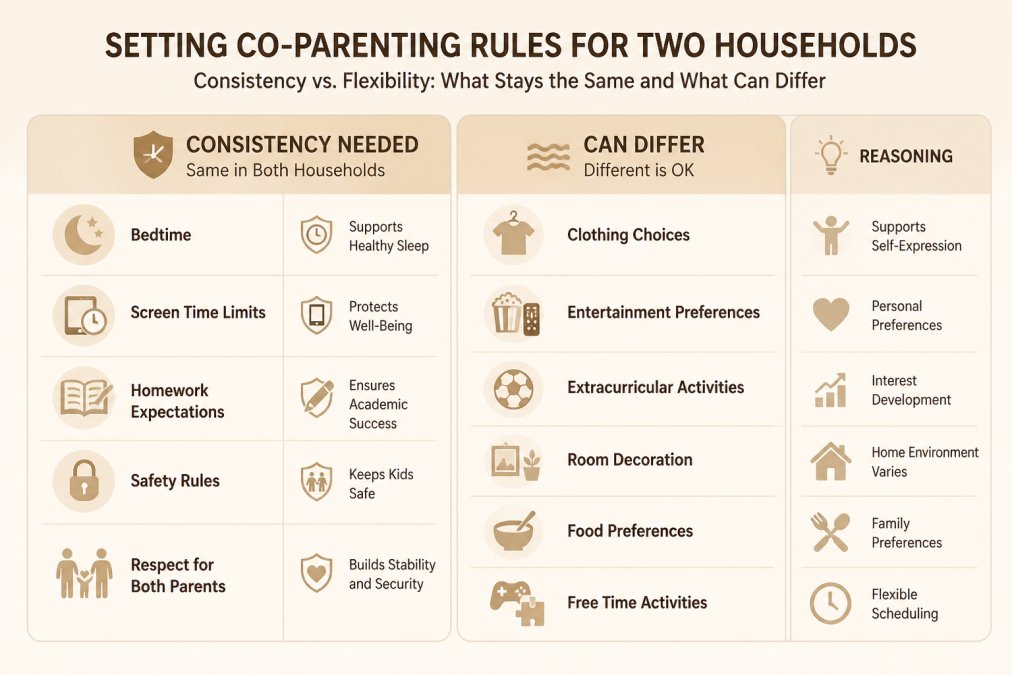
A Three-Question Framework for Sorting Rules
A simple sorting process removes the emotion from these decisions. For any rule you disagree about, run it through three questions:
- Does it involve safety or health? Car seats, helmet use, supervision around water, medication schedules, and who watches the child belong here. These need alignment, full stop.
- Does it affect the child’s ability to function in the other home or at school? Homework completion, school-night sleep totals, and shared chores fall here. They need not be identical, but close enough that the child isn’t set up to fail on Monday morning.
- Is it about preference, comfort, or household culture? Food choices, room decor, screen entertainment, and weekend wake-up times are usually safe to differ. Insisting on sameness here tends to be about control rather than the child.
If a rule lands in the first two buckets, it is worth a conversation. If it lands in the third, it is usually worth letting go.
What Consistency Actually Requires
When you do align on rules, be specific. “No screens after 8 PM” is clearer than “reasonable screen time.” Vague rules create arguments about interpretation, and those never resolve.
Parents often agree on the headline rule but not the enforcement. Decide in advance what happens when the rule is broken. If one home takes the phone for an evening and the other for a week, the child learns consequences are unpredictable, its own kind of instability.
Handling Rules That Differ
For rules that differ, help your child understand the transition rather than hiding the difference. “At Dad’s house, you have more flexibility with bedtime. At Mom’s house, it’s 9 PM. Both are okay, they’re just different.” This normalizes difference instead of creating anxiety.
Watch for a child comparing households to negotiate: “Dad lets me stay up, why can’t you?” A neutral response beats a defensive one: “Different houses have different rules.
Document What You Agree On
Write your agreements down, share them, and refer to them when questions arise. This prevents “I thought we agreed” arguments. Keep the document short, focused on rules that matter, and dated so you know which version is current.
When you and your co-parent disagree about a rule, ask which of the three buckets it falls into before you argue about the rule itself. Naming the category often ends the disagreement faster than debating the specifics.
When to Stop Negotiating
Some rules will never align, and that’s acceptable as long as the child is safe and functioning. If a rule keeps landing in the preference bucket, accept the difference and stop relitigating it. Repeatedly reopening settled differences harms your child more than the difference itself.
Creating Effective Co-Parenting Schedule Examples and Transitions
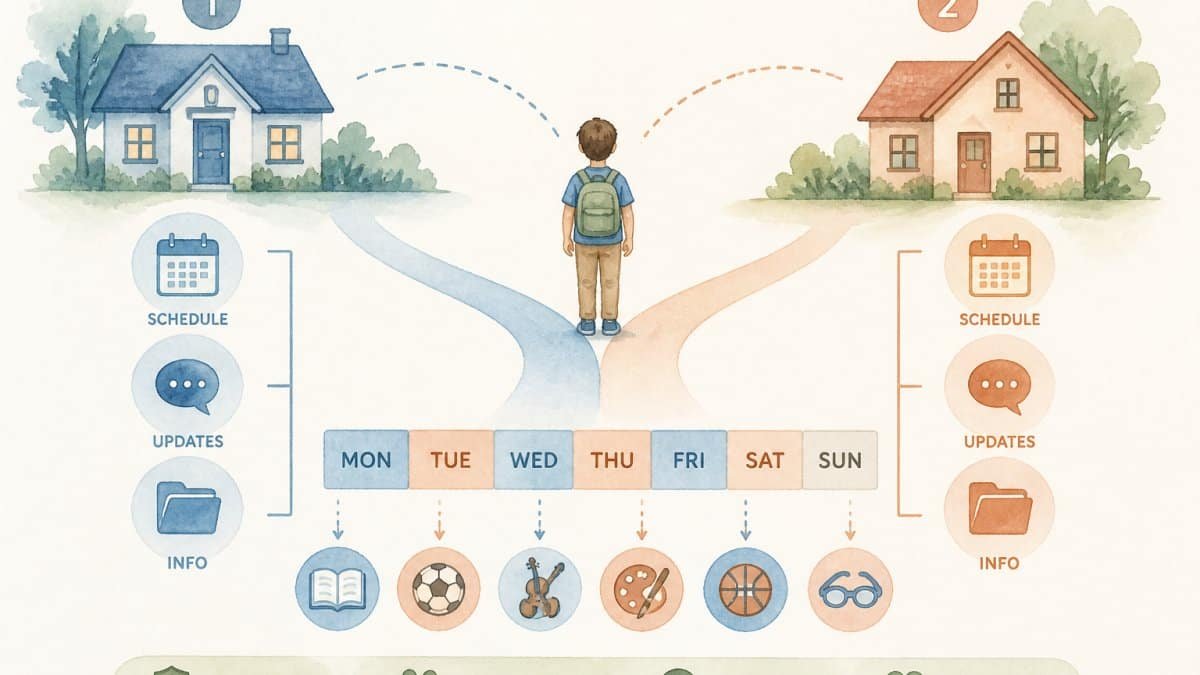
A basic schedule might be weekdays with one parent, alternating weekends, and one weeknight dinner with the other.
Transitions between households are where co-parenting strategies for different parenting styles either succeed or fall apart.
Before a transition, remind your child what to expect: “You’re going to Dad’s after school.
Create consistent transition rituals, packing their own backpack, a special goodbye routine.
Avoid using transitions as an opportunity to gather information about your co-parent’s household or to extend conversations. This turns pickup into a conflict zone. Keep it brief, friendly, and focused on your child’s immediate needs.
Parallel Parenting Strategies for High-Conflict Situations
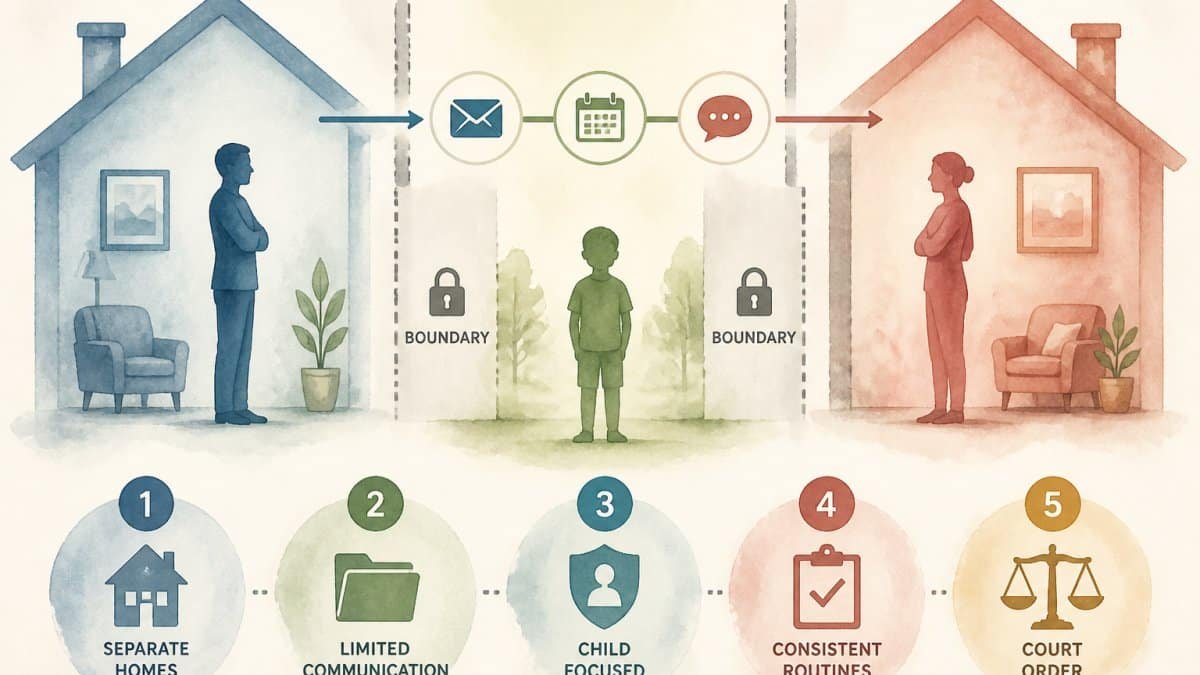
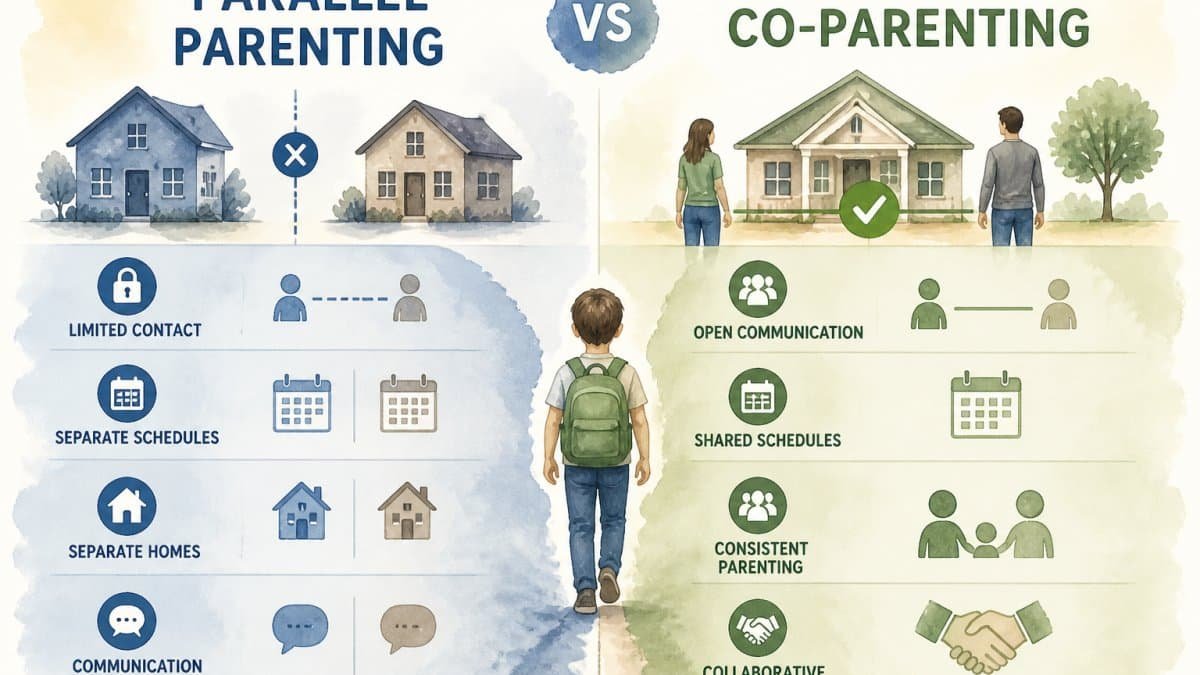
In parallel parenting, each parent makes independent decisions in their own household without requiring agreement.
This works when direct communication has failed, your co-parent is dismissive or hostile, or there’s a history of manipulation.
Parallel parenting requires a specific mindset: your co-parent’s choices in their home are not your problem to solve.
Communication in parallel parenting is minimal and strictly business.

Keeping Your Child’s Wellbeing Central Through Consistency and Stability
Keeping your child’s wellbeing central means recognizing that consistency and stability matter more than perfect alignment on rules. Your child needs to know both parents love them, their basic needs will be met, and they are not responsible for managing the conflict between their parents.
Consistency does not mean identical rules. It means predictable routines, reliable communication about major decisions, and both parents prioritizing the child over their own conflict.
What Stability Looks Like at Each Age
A common mistake is applying the same co-parenting playbook to a toddler and a teenager.
Infants and toddlers (0-3). Predictability is the whole game.
School-age children (roughly 5-11). Kids start comparing households, testing whether rules are negotiable, and carrying information between homes.
Teenagers (12+). Teens need to be consulted, not managed. They’ll notice inconsistency and use it to negotiate, which is developmentally normal.
Signs the Plan Is Working, and Signs It Is Not
Review the arrangement on a regular schedule, such as every few months, rather than only when something goes wrong. Track a few observable signals:
- Transitions. Does your child settle into the new household within a reasonable time, or are there days of dysregulation after every switch?
- Routines. Are sleep, meals, and homework holding steady across both homes, or is one household undoing the other?
- Communication. Are messages staying focused on logistics and the child, or drifting back into old arguments?
- The child’s behavior. Withdrawal, a drop in school performance, new physical complaints with no medical cause, or anxiety before visits are all worth noting.
No single signal means the arrangement is failing. A pattern persisting across several weeks is what to act on.
The Non-Negotiables
The most stable arrangement, regardless of parenting style differences, is one where both parents:
- Speak respectfully about each other to the child
- Make decisions based on what the child needs, not what punishes the ex
- Show up consistently and follow through on commitments
- Acknowledge the other parent loves the child, even if they parent differently
- Keep the child out of adult conflicts
Your child’s wellbeing depends less on identical rules and more on whether both parents are emotionally available, predictable, and united in their commitment to them.
When to Bring In Outside Help
Ordinary disagreements about rules and schedules are normal and usually resolvable. The picture changes when conflict is persistent, a child shows sustained distress, or there are safety concerns.
Reassurance is key. Children of separated parents often worry they caused the separation or must choose sides. Regularly tell your child: “Both your parents love you. This is not your fault. You do not have to choose between us.
Review your arrangement on a set schedule, not just when something breaks. Track transitions, routines, communication, and your child’s behavior, and treat a persistent pattern, not a single bad week, as your signal to adjust the plan or bring in outside help.
Frequently Asked Questions
How do you co-parent when you have different parenting styles?
Start by identifying your core values, safety, respect, education, health, and align on those first. Then separate non-negotiable rules (bedtime, screen limits) from flexible areas (clothing, hobbies). Use structured communication scripts to discuss differences without blame. If direct conversation escalates, use written communication or parallel parenting, where each parent manages their household independently while respecting the child’s need for stability during transitions. Focus on the child’s wellbeing, not winning disagreements.
Should co-parents have the same rules in both homes?
Not all rules need to be identical. Safety, health, and academic expectations should stay consistent across households. Flexibility in areas like bedtime by 30 minutes, screen time limits, or chore systems reduces conflict and helps children adapt. The key is explaining transitions clearly to your child, ‘At Mom’s house, bedtime is 8:30; at Dad’s house, it’s 9’, rather than pretending both homes are identical. Children adjust well when expectations are clear and predictable within each household.
What are some tips for co-parenting successfully with opposing parenting styles?
First, acknowledge that different styles can both be valid. A permissive parent and an authoritative parent can co-parent effectively by defining non-negotiables (safety, respect, honesty) and allowing flexibility elsewhere. Use written co-parenting communication scripts to stay factual and emotion-free. Schedule regular check-ins about what’s working for your child. Avoid criticizing the other parent in front of your child. If conflict is high, consider parallel parenting to reduce direct interaction while maintaining consistency on the child’s core needs.
How do you handle a difficult co-parent without involving the children?
Keep all disagreements away from your child, never ask them to relay messages or take sides. Use structured communication methods: email for complex topics, a co-parenting app for scheduling, or the Gray Rock Method during conversations. If your ex becomes hostile, end the conversation respectfully: ‘I want to focus on what’s best for our child. Let’s revisit this when we’re both calm.’ Document all interactions. If safety is at risk or conflict is unmanageable, seek mediation or legal guidance to establish clear boundaries.
What is the best schedule for co-parenting?
The best schedule depends on your child’s age and both parents’ work situations. Common examples include 50/50 alternating weeks, 2-2-3 rotation (two days with each parent, then three with one), or flexible weekday/weekend splits. Younger children often do better with shorter, more frequent transitions; teenagers may prefer longer blocks. Whatever schedule you choose, keep it consistent and predictable. Include clear pickup/drop-off times, holiday rotation, and transition plans. Write it down and share it with your child so they know what to expect.
Does co-parenting get easier over time?
Yes, co-parenting typically becomes easier as you establish routines, set clear boundaries, and reduce direct conflict. Children adjust when rules are predictable and transitions are calm. However, ease depends on your willingness to separate personal hurt from parenting decisions and to prioritize your child’s wellbeing over winning disputes. Using structured communication scripts, parallel parenting when needed, and seeking mediation for major disagreements all accelerate the process.
When should co-parents seek mediation or counseling?
Seek mediation if you and your co-parent cannot agree on major decisions (schooling, medical care, discipline), if conversations consistently escalate to conflict, or if you’re unable to keep disagreements away from your child. Family counseling helps when your child shows anxiety, behavioral changes, or emotional distress during transitions. Individual therapy supports you in processing anger or grief so it doesn’t affect your co-parenting. Legal support is necessary if safety is at risk, if one parent violates the custody agreement, or if you need to formalize a parenting plan. Early intervention prevents escalation.