- Understanding the Psychological Impact of Betrayal
- The Role of Self-Worth Restoration in Recovery
- Common Misconceptions About Healing and Personal Growth
- Conceptual Framework for Post-Betrayal Growth
- Practical Personal Growth Strategies After Betrayal
- Impact of Betrayal Type on Recovery Trajectory
- Case Studies of Personal Growth After Betrayal
- Bridging Understanding to Application: Growth as a Lifelong Journey
- Explore Our Expert Resources for Recovery
- FAQ: What is the role of personal growth after betrayal?
- Recommended
Betrayal shatters trust and leaves deep emotional wounds that can make healing feel impossible. Yet personal growth after betrayal offers a powerful pathway to restore self-worth, rebuild trust, and reclaim emotional wellbeing. This guide explores evidence-based Personal Growth Strategies, psychological insights, and practical techniques to help you transform pain into purposeful growth and create a stronger foundation for your future.
Key Takeaways
| Point | Details |
|---|---|
| Self-worth restoration is essential | Over 70% of individuals regain self-worth as a pivotal milestone in recovery. |
| Healing requires active engagement | Passive approaches prolong distress while structured strategies accelerate growth. |
| Recovery timelines vary | Most healing journeys span 12 to 18 months with natural emotional fluctuations. |
| Betrayal type influences recovery | Tailored strategies based on emotional or physical infidelity improve outcomes by 20%. |
| Growth is an ongoing process | Personal development extends beyond initial healing into lifelong resilience. |
Understanding the Psychological Impact of Betrayal
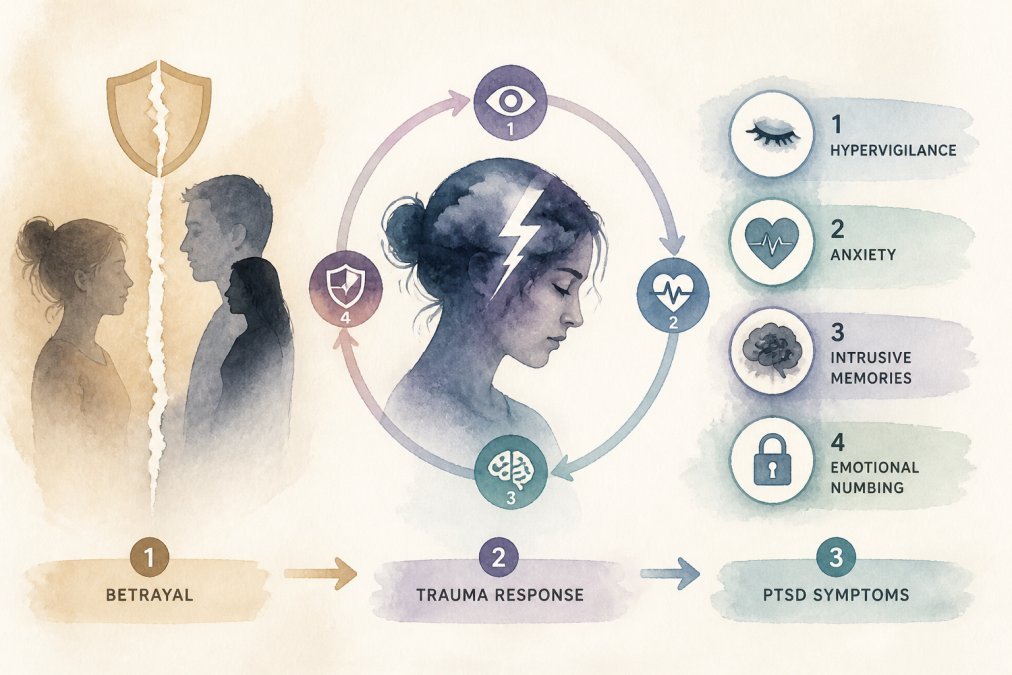
Betrayal creates profound psychological disruptions that extend far beyond emotional pain. When trust shatters, your brain undergoes significant changes that affect how you process emotions and relationships.
Betrayal trauma triggers neurological disruptions that impair trust and emotional regulation, particularly in areas like the amygdala and prefrontal cortex. The amygdala, responsible for threat detection, becomes hyperactive and perceives danger in previously safe situations. Meanwhile, your prefrontal cortex, which manages rational thinking and emotional control, struggles to function effectively under stress.
These neural changes explain why you might feel emotionally reactive, struggle with decision making, or find it difficult to trust again. Your brain essentially rewires itself for protection, creating barriers that once kept you safe but now hinder connection. Understanding this neurological foundation helps you recognize that your reactions are normal responses to trauma, not personal failures.
The good news is that neural pathways are adaptable. Through targeted personal growth efforts, you can rebuild the relationship healing process after betrayal by creating new, healthier patterns. This neuroplasticity means your brain can heal, but it requires intentional work and patience.
“The brain’s capacity to reorganize itself through growth and experience offers hope that healing from betrayal trauma is not only possible but achievable through structured personal development strategies.”
The Role of Self-Worth Restoration in Recovery
Restoring self-worth stands as one of the most critical milestones in healing after betrayal. When someone you trusted breaks that bond, it often triggers deep questions about your value, judgment, and worthiness of love.
Research reveals that over 70% of individuals regain self-worth as a pivotal milestone in their recovery journey. This statistic highlights that while betrayal damages self-esteem, rebuilding it is both common and achievable. Improved self-worth directly correlates with better emotional wellbeing, stronger boundaries, and increased resilience in future relationships.
Practical steps to restore self-worth include:
- Practice positive self-talk by challenging negative thoughts and replacing self-blame with compassion
- Set clear boundaries that protect your emotional space and communicate your needs
- Engage in reflective journaling to track growth, identify patterns, and celebrate progress
- Reconnect with activities and relationships that affirm your value independent of the betrayal
- Seek professional support when self-worth feels too damaged to rebuild alone
These strategies work because they shift focus from what was done to you toward what you can create for yourself. Understanding typical healing timelines after infidelity helps set realistic expectations for this gradual but powerful transformation.
Pro Tip: Create a daily self-worth journal where you list three things you appreciate about yourself each morning. This simple practice rewires your brain to notice strengths rather than fixate on perceived flaws or failures.
Common Misconceptions About Healing and Personal Growth
Several myths about recovery after betrayal can actually delay healing and create unrealistic expectations. Recognizing these misconceptions empowers you to pursue authentic growth rather than false shortcuts.
Understanding these realities prepares you for a more authentic recovery journey. When you know that healing takes time and effort, you can cope naturally after infidelity without feeling pressured to rush or perform recovery for others.
Pro Tip: When someone suggests you should be “over it by now,” remember that healing operates on your timeline, not external expectations. Progress happens in stages, not on schedule.
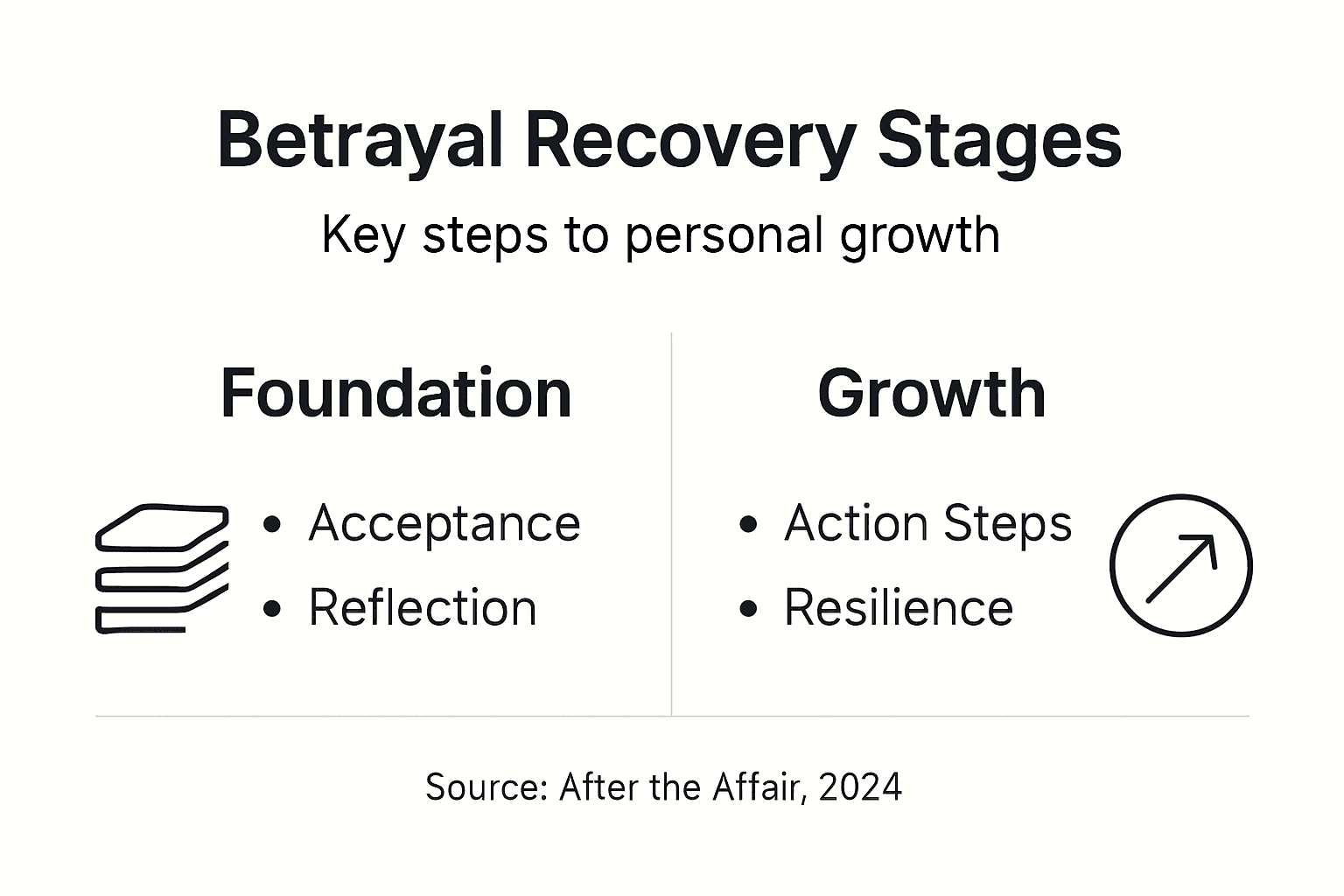
Conceptual Framework for Post-Betrayal Growth
The Trauma Recovery Growth Model provides a structured framework for understanding and navigating your healing journey. This model organizes growth into three distinct yet interconnected stages that build upon each other.
| Stage | Focus | Key Activities |
|---|---|---|
| Acceptance | Acknowledging reality | Processing emotions, reducing denial, validating pain |
| Self-Reflection | Understanding impact | Identifying patterns, exploring beliefs, redefining identity |
| Purposeful Change | Building forward | Setting boundaries, rebuilding trust, creating new goals |
Acceptance forms the foundation by helping you acknowledge what happened without minimizing or catastrophizing. This stage reduces denial and opens pathways for genuine healing. You move from “this shouldn’t have happened” to “this did happen, and I can choose how to respond.”
Self-reflection deepens your understanding of how betrayal affected your beliefs about trust, relationships, and yourself. This stage fosters emotional clarity and allows you to separate your identity from what was done to you. You explore questions like “What patterns led here?” and “Who am I beyond this experience?”
Purposeful change translates insights into action. Here you rebuild trust in yourself and potentially others, restore self-worth through boundary setting, and establish new life goals aligned with your authentic values. This stage transforms understanding into tangible growth.
Key benefits of this framework:
- Provides clear milestones to track progress
- Reduces feeling overwhelmed by breaking healing into manageable stages
- Helps identify which stage you are in and what work comes next
- Validates that growth is an active process requiring your participation
The stages of healing after betrayal naturally align with this model, offering additional guidance for navigating each phase.
Practical Personal Growth Strategies After Betrayal
Transforming knowledge into action requires specific, evidence-based strategies you can implement immediately. These practical approaches support healing and accelerate personal growth.
Mindfulness practice increases your capacity for emotional regulation by 25 to 30%. Simple techniques like focused breathing, body scans, or mindful walking help you stay present rather than ruminating on past betrayal or fearing future pain. Start with five minutes daily and gradually increase as the practice becomes comfortable.
Journaling supports both self-reflection and decision making. Writing about your emotions, thoughts, and experiences creates distance that allows clearer perspective. Research shows that mindfulness and journaling improve emotional clarity significantly, helping you process complex feelings more effectively.
Peer support groups boost recovery outcomes by 60% compared to isolated healing. Connecting with others who understand betrayal reduces shame, normalizes your experience, and provides practical insights from those further along the journey. Look for support groups through therapists, community centers, or online platforms.
| Approach | Benefits | Considerations |
|---|---|---|
| Therapeutic Support | Professional guidance, trauma expertise | Higher cost, scheduling constraints |
| Self-Guided Growth | Flexible timing, personal pace, lower cost | Requires self-discipline, may miss blind spots |
| Hybrid Model | Combines professional insight with personal work | Balanced investment, comprehensive support |
To maintain consistency:
- Schedule growth activities like appointments rather than fitting them in when convenient
- Start small with achievable goals to build momentum and confidence
- Track progress in a journal or app to visualize growth over time
- Adjust strategies when something stops working rather than abandoning all efforts
Pro Tip: Pair new habits with existing routines. Journal while drinking morning coffee or practice mindfulness during your commute to make growth strategies stick.

Impact of Betrayal Type on Recovery Trajectory
The nature of betrayal significantly influences healing approaches and timelines. Emotional and physical infidelity create different wounds that benefit from tailored recovery strategies
- Myth: Moving on quickly equals healing. Reality: Avoidance and rushing recovery often prolong emotional pain in 65% of cases. True healing requires processing emotions fully, not bypassing them.
- Myth: Personal growth happens automatically with time. Reality: Time alone does not heal wounds. Active engagement in reflection, boundary setting, and purposeful change creates growth.
- Myth: Only professional therapy aids recovery. Reality: While therapy offers valuable support, self-help strategies, peer groups, and personal development work also contribute significantly to healing.
- Myth: You must forgive to heal. Reality: Healing can occur without forgiveness. Your emotional wellbeing does not depend on absolving the person who hurt you.
- Myth: Healing is linear with steady progress. Reality: Recovery involves ups and downs, breakthroughs and setbacks. Fluctuations are normal, not failures.
Emotional infidelity often involves deeper questions about intimacy, emotional connection, and what the affair partner provided that the primary relationship lacked. Healing requires processing feelings of inadequacy, examining emotional needs, and rebuilding emotional trust. This type of betrayal can feel more threatening because it suggests intellectual and emotional compatibility with someone else.
Physical infidelity triggers different concerns centered on sexual boundaries, body image, and physical safety. Recovery often involves addressing fears about disease, comparing yourself physically to the affair partner, and rebuilding sexual trust. The tangible nature of physical betrayal can make it feel more concrete and, for some, easier to address.
Tailored personal growth interventions based on betrayal type improve emotional outcomes by 20% compared to generic support. This improvement occurs because customized strategies address the specific wounds each type creates.
Considerations for emotional infidelity recovery:
- Focus on rebuilding emotional intimacy through vulnerable conversations
- Explore what emotional needs went unmet and how to address them
- Process fears about being truly known and still chosen
Considerations for physical infidelity recovery:
- Address health concerns and get tested for sexually transmitted infections
- Work through body image issues and comparisons
- Rebuild physical and sexual trust at a comfortable pace
Understanding differences in healing emotional versus physical infidelity helps you pursue strategies aligned with your specific experience rather than following a one-size-fits-all approach.
Case Studies of Personal Growth After Betrayal
Real stories illustrate how personal growth transforms pain into purpose and validates that healing is possible.
Sarah discovered her partner’s affair after 12 years of marriage. Initially consumed by rage and self-blame, she eventually shifted to a growth-oriented mindset. Through therapy and journaling, she identified patterns where she had ignored her own needs to maintain peace. Sarah used this insight to establish boundaries, pursue delayed career goals, and redefine her identity beyond the relationship. Two years later, she describes the affair as devastating yet ultimately catalyzing positive changes she might never have made otherwise.
Michael experienced emotional betrayal when his partner developed a deep connection with a coworker. The discovery shattered his confidence in his ability to meet emotional needs. Rather than staying stuck in regret, Michael engaged in mindfulness practices and joined a support group. He learned to separate his worth from his partner’s choices and developed stronger communication skills. While the relationship ended, Michael reports greater self-awareness and healthier boundaries in his current partnership.
These cases highlight several key patterns:
- Transforming pain into growth requires intentional effort and support
- Shifting from regret-focused to growth-oriented thinking improves wellbeing
- Redefining self-identity separate from betrayal creates freedom
- Outcomes vary but consistently show positive results from growth efforts
- Many individuals eventually view their recovery journey as valuable despite its painful origins
These stories do not romanticize betrayal or suggest it was necessary for growth. Rather, they demonstrate that when betrayal occurs, you can choose to use the experience as a catalyst for becoming stronger, clearer, and more aligned with your authentic self.
Bridging Understanding to Application: Growth as a Lifelong Journey
Personal growth does not end when acute pain subsides. True healing evolves into an ongoing commitment to self-awareness, purposeful living, and continuous development.
Healing and personal growth after betrayal typically span 12 to 18 months with natural fluctuations. Understanding this timeline helps set realistic expectations and prevents frustration when progress feels slow. Some days you will feel strong and clear. Other days old pain resurfaces unexpectedly. Both experiences are normal parts of recovery.
Realistic expectations that support sustained growth:
- Healing is not linear, and setbacks do not erase progress
- Some questions about the betrayal may never have satisfying answers
- You can heal whether the relationship continues or ends
- Growth requires consistent effort but should not consume your entire life
- Your recovery timeline may differ from others, and that is perfectly acceptable
Personal growth extends beyond recovering from betrayal into becoming the person you want to be. The skills you develop during healing, such as boundary setting, emotional regulation, and self-reflection, serve you in all life areas. Many people discover that their post-betrayal self is more authentic, confident, and purposeful than before.
Continuous self-reflection through journaling, therapy, or meaningful conversations helps you stay connected to your values and notice when you drift from them. Purpose-driven change, guided by what truly matters to you, sustains wellbeing far beyond initial recovery.
The stages of healing after infidelity provide ongoing guidance as you navigate different phases and deepen your growth over time.
Explore Our Expert Resources for Recovery
Your healing journey deserves structured support and proven strategies. After the Affair offers specialized resources designed specifically for individuals recovering from betrayal.
Our infidelity recovery checklist provides seven practical steps to guide your healing process with clear, actionable milestones. This resource helps you track progress and ensures you address essential recovery elements without feeling overwhelmed.
Explore our comprehensive guide on relationship growth after infidelity to learn evidence-based strategies for rebuilding trust and creating stronger connections, whether you stay in your current relationship or prepare for future partnerships.
For immediate support, navigating infidelity in the first months offers crucial guidance during the most challenging early stages when emotions run highest and clarity feels impossible.
FAQ: What is the role of personal growth after betrayal?
How does personal growth support healing after betrayal?
Personal growth restores self-worth, rebuilds trust in yourself and potentially others, and fosters resilience that extends beyond the betrayal. It transforms the experience from purely traumatic into an opportunity for deep self-discovery and positive change.
Is personal growth automatic after experiencing betrayal?
No, growth requires active engagement through structured strategies like therapy, journaling, mindfulness, and boundary setting. Simply waiting for time to pass often prolongs distress rather than facilitating genuine healing.
How long does personal growth take after betrayal?
Most recovery journeys span 12 to 18 months, though timelines vary based on betrayal type, support systems, and personal circumstances. Growth continues beyond initial healing as an ongoing process of self-development.
Can I experience personal growth if my relationship ends?
Absolutely. Personal growth focuses on your individual healing, self-worth, and future wellbeing regardless of relationship status. Many individuals experience profound growth whether they reconcile or move forward separately.
What are the first steps toward personal growth after betrayal?
Begin with acceptance of what happened, seek support through therapy or peer groups, and engage in self-reflection through journaling or mindfulness. These foundational steps create the groundwork for deeper growth and lasting healing.
Recommended
- Relationship Healing Process – After the Affair Series
- How to Cope After Infidelity – After the Affair Series
- 7 Key Benefits of Therapy – After the Affair Series
- Relationship Growth After Infidelity – After the Affair Series