TL;DR:
- Discovering betrayal shifts your worldview and triggers complex emotional responses that require structured healing.
- Following a step-by-step recovery process, like acknowledging the betrayal and rebuilding trust, facilitates genuine emotional growth.
- Avoiding common pitfalls such as suppression or isolation enhances progress, ultimately leading to increased self-worth and clarity.
- Key Takeaways
- Understanding the impact of infidelity
- Preparation: What you need before starting recovery
- Step-by-step infidelity recovery process
- Common mistakes and how to avoid them
- Measuring progress and verifying healing
- Our perspective: Why recovery is more than just healing
- Frequently asked questions
The moment you discover a partner’s betrayal, the world you knew shifts completely. Infidelity leaves wounds that go far beyond heartbreak — shaking your sense of self, your ability to trust, and your vision of the future. Many people find themselves cycling through shock, rage, grief, and confusion with no clear sense of how to move forward. The good news is that structured, step-by-step recovery strategies can make this painful journey far more manageable, giving you a framework when everything else feels chaotic.
Key Takeaways
| Point | Details |
|---|---|
| Structured recovery is crucial | A step-by-step approach simplifies healing and prevents overwhelm after infidelity. |
| Preparation improves results | Mindset, support, and clear goals boost your chances of successful emotional recovery. |
| Avoid common mistakes | Ignoring emotions and isolating yourself can delay healing—seek support instead. |
| Track your progress | Regularly reviewing growth benchmarks helps verify real healing and builds self-confidence. |
| Personal growth is possible | Even if your relationship changes, infidelity recovery can spark self-worth and transformation. |
Understanding the impact of infidelity
Understanding how infidelity affects you lays the groundwork for starting structured recovery. Before you can heal, you need an honest picture of what you’re actually dealing with emotionally and psychologically. Betrayal trauma, the specific distress caused by infidelity, can produce symptoms that mirror post-traumatic stress disorder. Intrusive thoughts, hyper-vigilance, sleep disruption, and emotional numbness are all common responses that many people don’t expect.
Stages of healing after an affair commonly include shock, grief, and rebuilding trust — and knowing which stage you’re in helps you respond to your own needs more accurately. Most people move through these stages non-linearly, which means you might feel like you’ve “gone backward” after a period of progress. That’s entirely normal.
Here’s a quick look at how the emotional landscape typically shifts across the early recovery phases:
| Phase | Core emotions | Common behaviors |
|---|---|---|
| Shock | Disbelief, numbness | Withdrawal, inability to eat or sleep |
| Acute grief | Rage, despair, shame | Crying, obsessive questioning |
| Stabilization | Sadness, confusion | Beginning to function, seeking answers |
| Rebuilding | Hope, cautious trust | Active healing, boundary-setting |
Common experiences during early recovery include:
- Flashbacks or intrusive images related to the affair
- Constant questioning of past memories and events
- Loss of self-confidence and identity
- Physical symptoms such as nausea, fatigue, or appetite changes
- Difficulty concentrating at work or managing daily responsibilities
“Healing is not a straight line. Some days you will feel like you have lost all the ground you gained. That is not failure. That is grief doing its work.”
Recognizing the emotional healing signs early on matters because it helps you separate normal grief responses from signs that you might need additional support. Reading tips for emotional healing tailored specifically to infidelity can also help you identify where you currently are and what tools might be most useful at each stage.
Preparation: What you need before starting recovery
Once you’ve acknowledged the impact, it’s vital to prepare thoroughly for the recovery journey. Jumping straight into “fixing things” without laying the right groundwork is one of the most common reasons people stall or relapse emotionally. Think of this phase like preparing soil before planting — the work you do now directly affects how well everything grows later.
Mindset matters more than motivation. Motivation is fleeting; a recovery-oriented mindset is sustainable. This means accepting that healing will take time, that setbacks are not failures, and that your worth is not defined by what happened to you.
Here’s a comparison of two common approaches to starting recovery:
| Reactive approach | Prepared approach |
|---|---|
| Jumping to decisions immediately | Taking time to stabilize emotionally first |
| Isolating from all support | Building a small, trusted support network |
| Expecting quick resolution | Setting realistic, phased expectations |
| Avoiding professional help | Actively exploring therapy or guided resources |
| No self-care structure | Establishing daily routines and boundaries |
Access to the right trauma healing resources can significantly promote emotional recovery. This includes professional therapy, peer support groups, and structured self-help guides. You don’t have to access all of these at once. Start small.
Your essential preparation checklist:
- Identify one trusted person you can speak to honestly
- Schedule a first appointment with a counselor or therapist
- Write down three personal boundaries you need honored during recovery
- Clear your schedule of unnecessary stressors for the first weeks
- Commit to one daily self-care practice, even something as small as a 10-minute walk
The actionable healing steps available through structured guides can help you put this preparation into a practical sequence. Understanding the therapy benefits specifically during infidelity recovery is also worth exploring early. For those supporting others, there’s also excellent material on how to guide clients after infidelity for a professional perspective.
Pro Tip: Don’t wait until you feel “ready” to begin recovery. Readiness is built through action, not the other way around. Set one small, manageable goal for each day rather than trying to overhaul your emotional state overnight.
Step-by-step infidelity recovery process
With your preparation complete, you can follow proven steps for infidelity recovery. A structured framework removes the paralysis of not knowing what to do next. It gives your healing a direction and a sequence, which is especially important during the early weeks when emotions are most overwhelming.
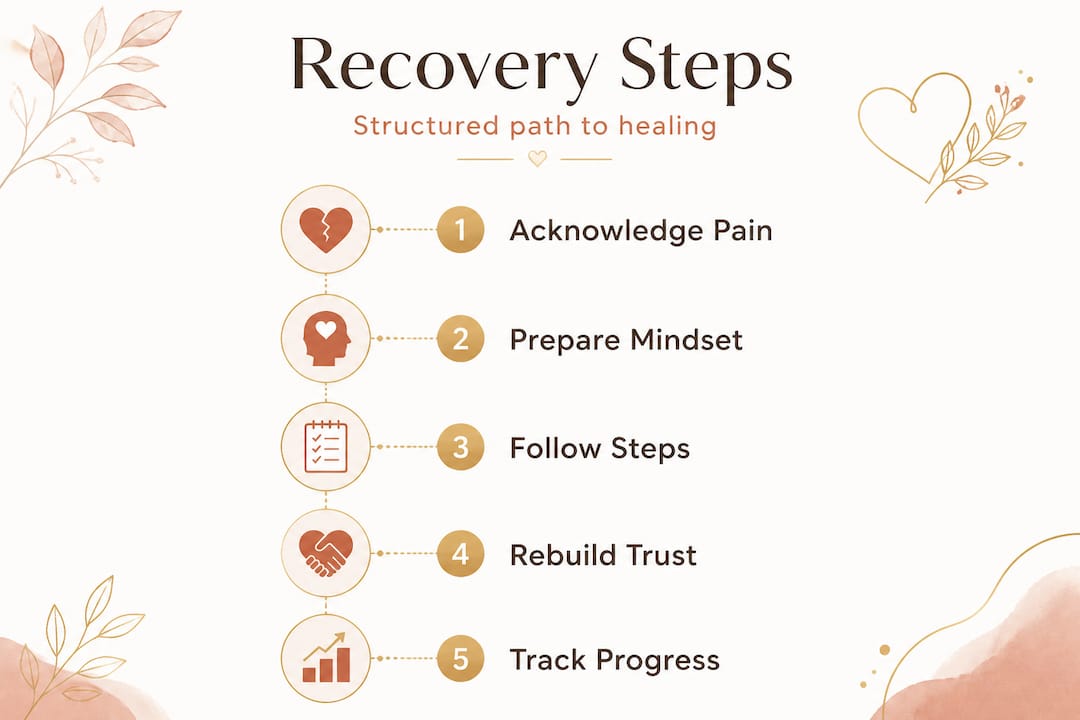
The 7 Steps-Infidelity Recovery Checklist is a proven, practical guide to effective healing that many people have used to navigate the journey from shock to renewed selfhood. Here are those steps, explained in practical terms:
- Acknowledge the betrayal. Name what happened without minimizing it. Say it clearly to yourself: “I was betrayed, and that has caused me real harm.” This is not about blame — it’s about honesty with yourself.
- Accept your emotional reality. You will feel things that surprise you, including grief for the relationship you thought you had, anger at yourself, or even sadness for the person who hurt you. All of it is valid. Suppressing any of it slows recovery.
- Seek support actively. This means reaching out, not waiting for others to notice you’re struggling. Whether that’s a therapist, a support group, or a close friend, connection accelerates healing more than almost anything else.
- Rebuild internal trust. Before you can consider trusting another person, you need to rebuild trust in your own perceptions. Many betrayed partners struggle with self-doubt — questioning whether they “missed signs.” Reconnecting with your own judgment is essential here.
- Set new relational boundaries. Whether you’re staying in the relationship or leaving, you need to define what is acceptable and what is not. Boundaries are not punishments — they are the architecture of your emotional safety going forward.
- Pursue personal growth intentionally. This is where recovery becomes transformational. Explore who you are outside of this relationship and this crisis. New skills, new interests, and revisiting neglected parts of yourself all contribute to a stronger sense of identity.
- Practice forgiveness on your own terms. Forgiveness in this context does not mean condoning what happened. It means releasing the corrosive grip that anger and resentment have on your daily life. This step comes when you’re ready — not on anyone else’s schedule.
“You don’t have to forgive to heal. But you do have to let go of carrying the other person’s actions as your own burden.”
Statistic callout: 70% of individuals report regaining self-worth after following a structured infidelity recovery process — a powerful reminder that healing is genuinely possible.
Understanding the trust rebuilding timeline is particularly useful in Step 4 and Step 5. For those committed to repairing the relationship, reviewing relationship growth steps provides additional structure for working through things as a couple. A dedicated trust rebuilding guide can also offer day-by-day support during this phase.
Common mistakes and how to avoid them
Knowing what to avoid helps you maximize your recovery efforts and sidestep preventable setbacks. Even people who are genuinely committed to healing often fall into patterns that slow their progress. Recognizing these mistakes early allows you to course-correct before they take hold.
- Ignoring or suppressing feelings. Many people push through daily life as though nothing happened, only to find their emotions erupt later in unexpected, destructive ways. Feelings that aren’t processed don’t disappear — they relocate.
- Isolating completely. Shame is a powerful force in infidelity recovery. Many people withdraw from friends and family because they feel embarrassed or don’t want to “burden” others. This isolation deepens the pain rather than easing it.
- Relying on unhealthy coping mechanisms. Alcohol, overworking, compulsive behaviors, or starting a rebound relationship are all ways people try to numb the pain. They work temporarily and cost significantly in the long run.
- Rushing reconciliation before healing occurs. Deciding to stay in the relationship is a valid choice, but doing so before emotional stability is reestablished often leads to deeper resentment. Rushing emotional healing frequently leads to setbacks that set the entire recovery back by months.
- Comparing your progress to others. Someone else may seem to “move on” faster than you. That comparison is not useful. Recovery is not a competition, and visible calmness is not always genuine healing.
The most common recovery pitfalls:
Remedies for each pitfall:
Allow yourself scheduled time to feel. Set aside 20 minutes each day to sit with your emotions deliberately, then return to your normal tasks. This prevents suppression while also preventing total overwhelm.
If isolation is your pattern, start small. Commit to one honest conversation per week with someone you trust. Explore how to cope after infidelity using strategies that keep you connected to others while honoring your need for space.
Understanding whether individual or couples therapy is the right fit for your specific situation is also a valuable step. Both options have distinct benefits depending on where you are in the process and what your relational goals look like.
Pro Tip: If you feel completely stuck — unable to move through your daily life or unable to stop obsessive thoughts — please reach out to a professional. Getting support is a sign of strength, not weakness. The sooner you get help, the shorter the stall.
Measuring progress and verifying healing
After avoiding mistakes, learning how to measure progress validates your healing journey and builds confidence. Without clear markers, it’s easy to feel like you’re standing still even when significant growth is actually happening. Progress in emotional recovery is often subtle before it becomes obvious.
Clear signs of emotional healing include restored trust, improved communication, and greater self-worth — three benchmarks that give you concrete, meaningful ways to measure how far you’ve come.
Signs you are genuinely progressing:
- You can go longer periods without intrusive thoughts about the affair
- Your sleep and appetite are returning to normal patterns
- You are making decisions based on your own values rather than out of fear or reactivity
- You feel curiosity about your future rather than only dread
- Your physical health is stabilizing
Signs to watch carefully:
- Prolonged inability to function in daily responsibilities
- Increasing reliance on substances or avoidant behaviors
- Persistent thoughts of self-harm (seek immediate professional help if this applies)
- Complete emotional numbness that doesn’t lift over time
Here’s a practical benchmark table to help you assess where you are:
| Recovery benchmark | Early stage | Mid stage | Advanced stage |
|---|---|---|---|
| Emotional regulation | Overwhelmed daily | Managing most days | Stable with occasional setbacks |
| Communication ability | Avoidant or explosive | Expressing needs clearly | Productive dialogue possible |
| Self-worth | Severely diminished | Slowly rebuilding | Largely restored |
| Future orientation | Cannot envision future | Beginning to plan | Actively building new goals |
| Trust in self | Severely doubting | Questioning less often | Trusting own perceptions |
Tracking your signs of emotional healing over time using a simple journal is one of the most effective and underused recovery tools. Writing just three sentences each morning about how you feel and one thing you’re grateful for can reveal patterns of progress that you would otherwise miss entirely.
Our perspective: Why recovery is more than just healing
Most people come to infidelity recovery wanting one thing — for the pain to stop. That’s completely understandable. But in our work, we’ve seen a consistent pattern: the people who experience the deepest, most lasting transformation are those who eventually stopped asking “how do I get back to normal?” and started asking “what kind of person do I want to become?”
Recovery is not about restoring the exact life you had before. That life included the conditions that led to the betrayal, and simply returning to it — whether you reconcile or not — leaves the most important questions unanswered. The deeper work involves examining what you need from relationships, what values you want at the core of your life, and how your sense of self got tied to another person’s choices.
Structured steps work. They genuinely do. But they are most powerful when paired with a willingness to confront root causes — the patterns in how you relate, the stories you tell yourself about your worth, and the boundaries you allowed to erode before the crisis arrived. None of this is your fault, but all of it is your opportunity.
We believe that vulnerability — the real kind, not the performative kind — is where transformation lives. The growth strategies that produce lasting change require you to look honestly at your own inner landscape, not just the other person’s behavior. Accessing quality trauma healing resources is part of that process, giving you external scaffolding while you do internal work.
Personal transformation is possible even if the relationship doesn’t survive. Many of the people we’ve supported have emerged from infidelity into lives that are richer, more authentic, and more intentional than what they had before. The pain was real. So is the growth.
Take the next step: Infidelity recovery resources
Healing from infidelity is one of the hardest things a person can go through, and you don’t have to navigate it alone or figure it out as you go. Structured, evidence-informed resources make the journey clearer, faster, and far less isolating.
At After the Affair, we’ve built a series of practical guides, checklists, and real-life recovery resources specifically designed to meet you wherever you are in your healing journey — whether you’re in the earliest days of shock or actively rebuilding a new chapter. From the 7 steps recovery checklist to in-depth guidance on personal growth after betrayal, each resource is grounded in clinical understanding and compassionate, direct guidance. Explore the full library and find the structured support that matches your current stage of recovery.
Frequently asked questions
How long does infidelity recovery usually take?
Recovery timelines vary greatly, but many report noticeable healing within several months using structured steps and consistent support systems.
What is the most important first step after discovering infidelity?
Acknowledge your emotional response honestly and seek support as soon as you’re able — early healing stages like shock and grief need acknowledgment before deeper recovery work can begin.
How can I measure progress in my recovery?
Progress shows up in specific, concrete ways — restored trust and improved communication alongside a growing sense of self-worth are the most reliable indicators that healing is genuinely occurring.
Should I consider therapy during infidelity recovery?
Yes, strongly. Therapy after infidelity provides expert guidance, helps prevent common recovery mistakes, and creates a safe space to process trauma without judgment.
Is it possible to grow personally even if the relationship ends?
Absolutely. 70% of individuals report regaining self-worth and many describe profound personal development after betrayal, regardless of whether the relationship continued.
Recommended
- Relationship Growth After Infidelity – After the Affair Series
- How to Guide Clients After Infidelity for Healing – After the Affair Series
- Trust Rebuilding Guide: Steps to Heal After Infidelity
- 7 Steps-Infidelity Recovery Checklist – After the Affair Series