- Step 1: Assess emotional readiness for recovery
- Step 2: Establish a structured healing plan
- Step 3: Facilitate open and honest communication
- Step 4: Support rebuilding trust and accountability
- Step 5: Monitor progress and adjust strategies
- Empower Your Healing Journey After Infidelity
- Frequently Asked Questions
- Recommended
The shock of discovering infidelity leaves many people feeling lost and unsure of where to begin the healing process. Facing trust issues and emotional pain can seem overwhelming, especially when the urge to recover quickly competes with the need for real progress. Research shows that genuine emotional readiness involves understanding your relationship’s deeper dynamics, not just reacting to one painful event. This how to guide Individuals after infidelity brings together proven therapeutic steps that help you assess readiness, create structure, rebuild trust, and move forward with clarity and support.
Quick Summary
| Major Insight | Explanation |
|---|---|
| 1. Assess Emotional Readiness | Evaluate your psychological state to determine if you’re ready for recovery efforts after infidelity. |
| 2. Create a Structured Healing Plan | Develop a clear plan with actionable steps for both personal and relational healing during recovery. |
| 3. Promote Open Communication | Engage in honest dialogue to express feelings and rebuild trust while ensuring emotional safety. |
| 4. Rebuild Trust and Accountability | Actively demonstrate reliability and transparency to restore trust after infidelity. |
| 5. Monitor Progress Regularly | Continuously track your emotional and relational growth, adjusting strategies as necessary to facilitate healing. |
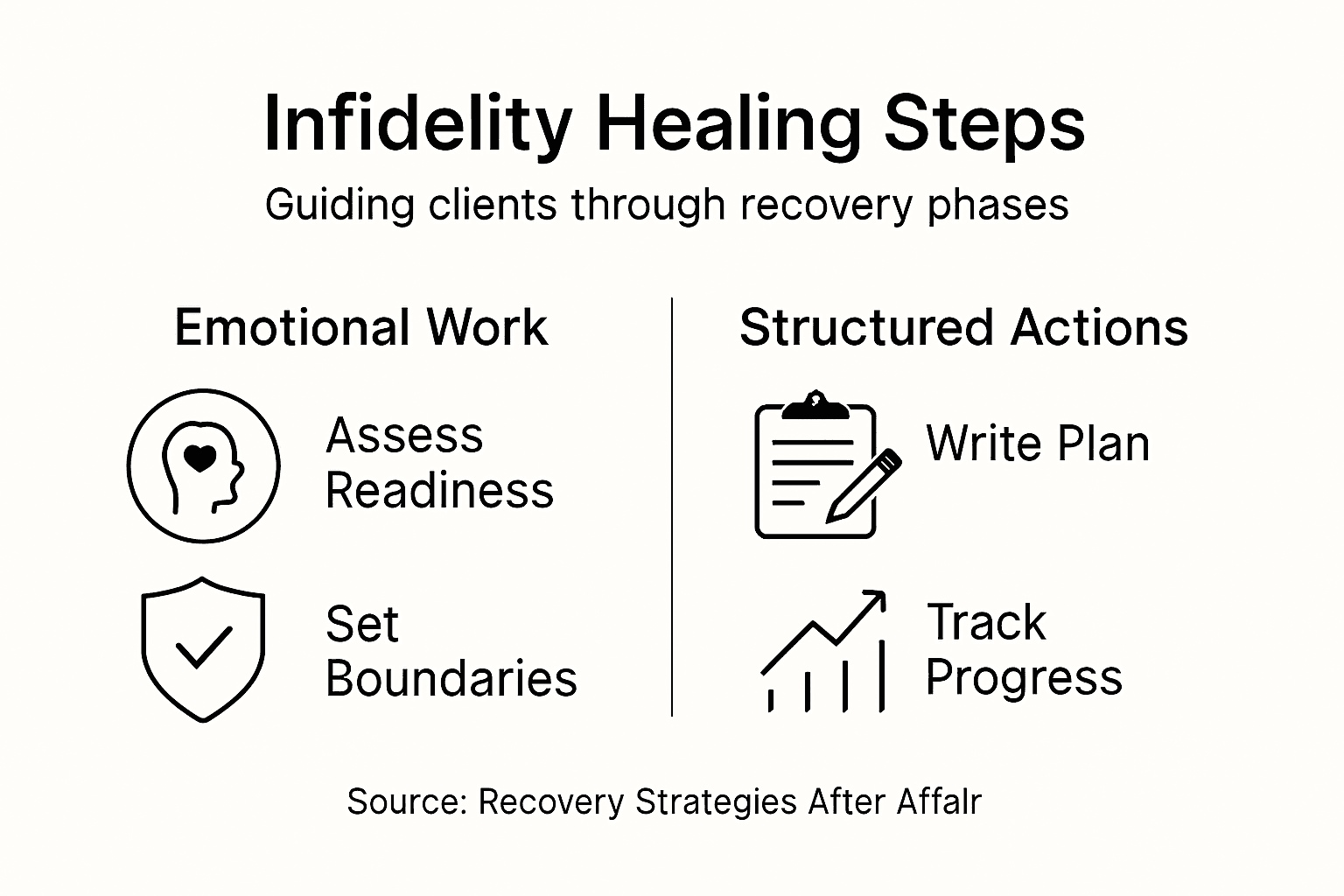
Step 1: Assess emotional readiness for recovery
Assessing emotional readiness is a critical first step in healing after infidelity. This process involves understanding your psychological state and determining whether you are prepared to engage in genuine recovery work.
Emotional readiness requires a nuanced approach that goes beyond simple willingness. Relationship functioning research indicates that recovery is complex, involving deep examination of relationship dynamics preceding the infidelity. To evaluate your readiness, consider these key indicators:
- Emotional stability: Can you discuss the affair without experiencing overwhelming anger or shutting down completely?
- Curiosity over vengeance: Are you more interested in understanding what happened than punishing your partner?
- Self-reflection capacity: Can you examine your own role in relationship dynamics?
- Willingness to heal: Do you genuinely want to move forward, whether together or separately?
Some individuals might feel pressured to start recovery immediately, but healing requires genuine emotional capacity. Professional counseling can help assess your readiness objectively.
Emotional readiness is not about perfection, but about genuine openness to growth and understanding.
Pro tip: Consider working with a therapist who specializes in infidelity recovery to get a professional assessment of your emotional readiness.
Step 2: Establish a structured healing plan
Creating a structured healing plan transforms recovery from an overwhelming emotional journey into a manageable process. Your plan serves as a roadmap, providing direction and hope during challenging times.
Integrative treatment models suggest a comprehensive approach to healing that addresses multiple dimensions of relationship recovery. Developing your plan should include these critical components:
- Immediate crisis management: Address urgent emotional and psychological needs
- Individual healing strategies: Focus on personal emotional restoration
- Relationship assessment: Evaluate the relationship’s current state and potential
- Communication protocols: Establish healthy dialogue frameworks
- Boundaries and expectations: Define clear relationship guidelines
Your healing plan requires flexibility and commitment. Consider breaking down your journey into distinct stages:
- Initial trauma processing
- Individual emotional work
- Mutual understanding and reflection
- Potential relationship reconstruction or healthy separation
Recovery is not a linear path, but a dynamic journey of personal growth and understanding.
Professional guidance can significantly enhance your healing process by providing objective insights and structured support.
Pro tip: Document your healing plan in writing, creating a tangible reference that allows you to track progress and remain accountable to your emotional recovery goals.
Step 3: Facilitate open and honest communication
Effective communication is the cornerstone of healing after infidelity, transforming potential relationship destruction into an opportunity for profound reconnection. This step requires courage, vulnerability, and a commitment to radical honesty.
Therapeutic communication strategies emphasize creating a safe environment where both partners can express their deepest emotions without fear of judgment. Successful communication involves several critical elements:
- Emotional safety: Create a non-threatening dialogue space
- Active listening: Hear your partner’s perspective without interrupting
- Transparency: Share feelings and experiences candidly
- Empathy: Acknowledge each other’s emotional experiences
- Accountability: Take responsibility for personal actions
Communication techniques to implement:
- Use “I” statements to express feelings
- Practice reflective listening
- Allow uninterrupted speaking turns
- Validate each other’s emotional experiences
- Avoid defensive or accusatory language
Honest communication is not about being right, but about understanding each other’s emotional landscape.
Professional guidance can provide structured communication frameworks that help navigate complex emotional terrain.
Pro tip: Consider scheduling regular, structured communication sessions where both partners commit to honest, uninterrupted dialogue without distractions.

Step 4: Support rebuilding trust and accountability
Rebuilding trust after infidelity is a delicate, intentional process that demands genuine commitment from both partners. This step involves transforming past betrayal into an opportunity for deeper relational understanding and personal growth.
Post-infidelity recovery research reveals that trust restoration hinges on consistent, transparent behaviors that demonstrate genuine accountability. The unfaithful partner must actively engage in rebuilding trust through specific, measurable actions:
- Complete transparency: Share communication records and personal activities
- Consistent reliability: Follow through on promised behaviors
- Emotional availability: Demonstrate genuine remorse and empathy
- Proactive communication: Volunteer information without being prompted
- Sustained commitment: Show long-term dedication to relationship healing
Key accountability strategies include:
- Develop a detailed transparency agreement
- Create measurable behavioral benchmarks
- Engage in regular check-in conversations
- Accept full responsibility without defensiveness
- Demonstrate patience with your partner’s healing process
Accountability is not about perfection, but about consistent, honest effort toward rebuilding trust.
Professional counseling can provide structured guidance in navigating this complex emotional terrain.
Pro tip: Document your accountability commitments in writing, creating a tangible roadmap that allows both partners to track progress and maintain mutual understanding.
Step 5: Monitor progress and adjust strategies
Tracking your healing journey requires consistent self-awareness and a willingness to adapt as your relationship evolves. This step transforms recovery from a rigid process into a dynamic, responsive pathway toward reconnection.
Integrative therapeutic approaches emphasize the importance of continuous monitoring and flexible strategy adjustment. Your progress tracking should encompass multiple dimensions of healing:
- Emotional indicators: Assess changes in emotional intensity and reactivity
- Communication quality: Evaluate openness and depth of interactions
- Trust restoration: Measure incremental improvements in mutual trust
- Conflict resolution: Observe how effectively you navigate disagreements
- Individual growth: Track personal development and self-understanding
Key monitoring strategies include:
- Schedule monthly relationship check-ins
- Maintain individual and joint recovery journals
- Be honest about setbacks and challenges
- Celebrate small victories and milestones
- Remain open to professional guidance
Progress is not linear; it’s a series of interconnected moments of growth and understanding.
Professional therapeutic support can provide objective insights and structured evaluation methods.
Pro tip: Create a shared digital document or spreadsheet where both partners can transparently log progress, insights, and emerging relationship needs.
Below is a quick reference for professional therapy benefits during recovery:
| Therapy Benefit | How It Helps | When Most Valuable |
|---|---|---|
| Objective Assessment | Honest evaluation of progress | Early and ongoing recovery |
| Communication Skills | Teach conflict resolution | During trust rebuilding |
| Emotional Support | Address hurt and anxiety | During crisis and setbacks |
| Accountability | Monitor commitments made | Throughout the process |
Here’s how different phases of post-infidelity recovery compare:
| Recovery Phase | Main Focus | Typical Duration | Professional Support Role |
|---|---|---|---|
| Emotional Readiness | Assess personal capacity | Days to weeks | Evaluate and build readiness |
| Structured Healing Plan | Organize healing actions | Weeks to months | Guide goal setting and strategies |
| Open Communication | Rebuild honest dialogue | Ongoing | Teach effective communication tools |
| Trust & Accountability | Restore reliability | Months to years | Track trust milestones |
| Progress Monitoring | Adjust plans as needed | Long-term, ongoing | Provide feedback and adjustments |
Empower Your Healing Journey After Infidelity
Navigating the complex emotional landscape after betrayal requires more than just courage. This article highlights key challenges such as assessing emotional readiness, rebuilding trust, and fostering honest communication. If you are seeking structured guidance to move beyond pain and work toward genuine recovery, understanding these crucial steps is essential.
Discover how to transform your experience with expert strategies tailored to every phase of healing. From managing emotional turmoil to creating actionable plans that promote accountability and growth, our resources provide compassionate support grounded in professional insight. Explore practical approaches to rebuild your relationship or find peace within yourself.
Take control of your healing now by accessing comprehensive tools and guidance at our Recovery Strategies – After the Affair Series. Explore the depth of understanding needed with insights on Affair Types & Signs – After the Affair Series, and access all support in one place at our resource library. Begin your journey toward healing with confidence and clarity today.
Frequently Asked Questions
How can I assess my emotional readiness for recovery after infidelity?
To assess your emotional readiness, reflect on key indicators such as your emotional stability and willingness to heal. Consider journaling your feelings and discussing them with a therapist to evaluate your capacity for genuine recovery within the next few weeks.
What should be included in a structured healing plan after infidelity?
A structured healing plan should encompass immediate crisis management, individual healing strategies, and clear communication protocols. Create this plan with specific stages outlined, such as emotional processing and relationship assessment, to guide your recovery over the next few months.
How can we facilitate open and honest communication during the healing process?
Begin by establishing a safe environment for discussions, where both partners feel emotionally secure. Use
Recommended
- How to Cope After Infidelity – After the Affair Series
- Role of Grief in Infidelity Healing – After the Affair Series
- 7 Key Benefits of Therapy – After the Affair Series
- Relationship Healing Process – After the Affair Series