
TL;DR:
- Rebuilding trust after infidelity is challenging, with only 15-31% achieving long-term satisfaction. Addressing root causes, full disclosure, and structured therapy improve outcomes but cannot eliminate the risk of recurrence. Genuine prevention involves ongoing effort, honest communication, and establishing firm boundaries to sustain relationship health.
Rebuilding trust after an affair feels like the most logical path forward. If you can just repair what was broken, the thinking goes, you’ll be protected from going through this again. But only 15-31% of marriages achieve lasting satisfaction after infidelity, which means the odds are harder than most couples expect. Trust is necessary, but it is not a shield. Understanding why requires looking honestly at the data, the patterns, and the work that genuinely changes outcomes.
Table of Contents
- The reality: Can rebuilt trust truly prevent future affairs?
- Why affairs repeat: Root causes and unaddressed patterns
- Evidence-based methods for real trust rebuilding
- What prevention looks like: Boundaries, vigilance, and growth
- Our perspective: Why genuine change is rare—And what you can actually do
- Take the next step: Practical guides for healing and prevention
- Frequently asked questions
Key Takeaways
| Point | Details |
|---|---|
| Trust doesn’t guarantee prevention | Even with trust rebuilt, the risk of future affairs remains unless core issues are addressed. |
| Evidence shows high recidivism | Cheaters are statistically more likely to cheat again, and most couples struggle with long-term satisfaction. |
| Therapy boosts your odds | Structured therapy with accountability and new boundaries improves relationship recovery chances. |
| Prevention requires new patterns | Ongoing actions, healthy boundaries, and emotional connection are necessary to break affair cycles. |
The reality: Can rebuilt trust truly prevent future affairs?
Most people assume that if a couple works hard enough to rebuild trust, the risk of another affair drops to nearly zero. The data tells a more complicated story. Knowing these numbers is not meant to discourage you. It is meant to give you an honest foundation so you can make informed choices.
What the research shows:
| Outcome | Statistic |
|---|---|
| Couples who stay together initially | 45-75% |
| Couples who divorce within 5 years | 43-80% |
| Couples achieving high satisfaction | 15-20% |
| Risk of cheating again | 3x higher than non-cheaters |
Those figures come from a sobering body of evidence. According to tracked outcomes, only 15-31% of couples sustain real relationship satisfaction five years after infidelity. The person who cheated is statistically three times more likely to cheat again than someone who never has. That pattern holds even when couples genuinely try to repair things.
So what shifts the odds? Several variables make a measurable difference:
- Full disclosure rather than partial or hidden truth
- Structured therapy using recognized frameworks
- Serial vs. isolated behavior (one incident carries different risk than a repeated pattern)
- The cheating partner’s willingness to accept full accountability
- Whether root causes are identified and actively addressed
“The question is not just whether trust can be rebuilt, but whether both partners are willing to do the specific, sustained work that changes the underlying dynamic entirely.”
Exploring relationship growth after infidelity often reveals that the couples who succeed treat recovery as a restructuring of the relationship itself, not a patch job. Understanding your personal trust rebuilding timeline also matters because rushing this process is one of the most common ways people undermine genuine progress.
The honest takeaway: rebuilding trust can lower risk, but it does not eliminate it. The difference between couples who thrive and those who cycle back into betrayal often comes down to whether they fix the surface or the structure.
Why affairs repeat: Root causes and unaddressed patterns
With the data showing such high recidivism risk, the next logical question is: why do affairs keep happening even after couples try to rebuild? The answer almost always points to patterns that were never properly examined.
Here are the most common reasons infidelity repeats:
- Emotional needs go unnamed. One or both partners never clearly articulate what they were missing, so the same void remains.
- Boundaries are assumed, not created. Couples expect the affair to have “taught the lesson” without setting concrete new expectations.
- The unfaithful partner avoids deep accountability. Apologies happen, but genuine self-examination does not.
- Trauma responses are mistaken for healing. The betrayed partner’s ability to function day-to-day gets confused with actual recovery.
- Outside relationships go unexamined. Friendships or work dynamics that enabled the affair are left unchanged.
“Trust rebuilding that focuses only on transparency without addressing the root emotional and behavioral patterns is like treating a wound without removing the splinter.”
The Gottman Institute’s research confirms this: addressing root causes beyond transparency is essential to reducing repeat patterns. You cannot shame or monitor someone into lasting fidelity. Change requires understanding why the affair happened at a deep level, including what the cheating partner was avoiding in themselves.
This is why transparency after betrayal matters so much more than surveillance. Real transparency means the unfaithful partner voluntarily shares their internal world, not just their location. It signals a shift in attitude, not just behavior.
Setting boundaries after betrayal is equally critical. Boundaries are not punishments. They are agreements that both partners build together to reduce risk and create safety. Without them, old patterns find their way back in.
Pro Tip: Ask your partner to describe, in their own words, what emotional need the affair was filling. If they cannot answer this question clearly and honestly, that is a significant warning sign that root causes remain unaddressed.
Evidence-based methods for real trust rebuilding
So what actually works? There is meaningful research on this, and the couples who beat the odds tend to follow structured, evidence-based approaches rather than relying on willpower and good intentions alone.
The Gottman Institute’s Trust Revival Method organizes recovery into three phases: Atonement, where the unfaithful partner takes full responsibility; Attunement, where both partners develop deeper emotional awareness; and Attachment, where the couple rebuilds security and connection. This is not a quick process, but it is one of the most researched frameworks available.
Emotionally Focused Therapy (EFT) is another well-supported approach. EFT targets the attachment injuries underneath the affair, helping both partners understand why safety broke down and how to restore it. Research supports its effectiveness for couples dealing with betrayal trauma.
How key methods compare:
| Method | Core focus | Estimated effectiveness |
|---|---|---|
| Gottman Trust Revival | Atonement, attunement, attachment | Higher with full disclosure |
| Emotionally Focused Therapy | Attachment repair | Strong for trauma-based betrayal |
| Individual therapy only | Personal accountability | Limited for relationship repair |
| No structured support | Willpower and time | Lowest success outcomes |
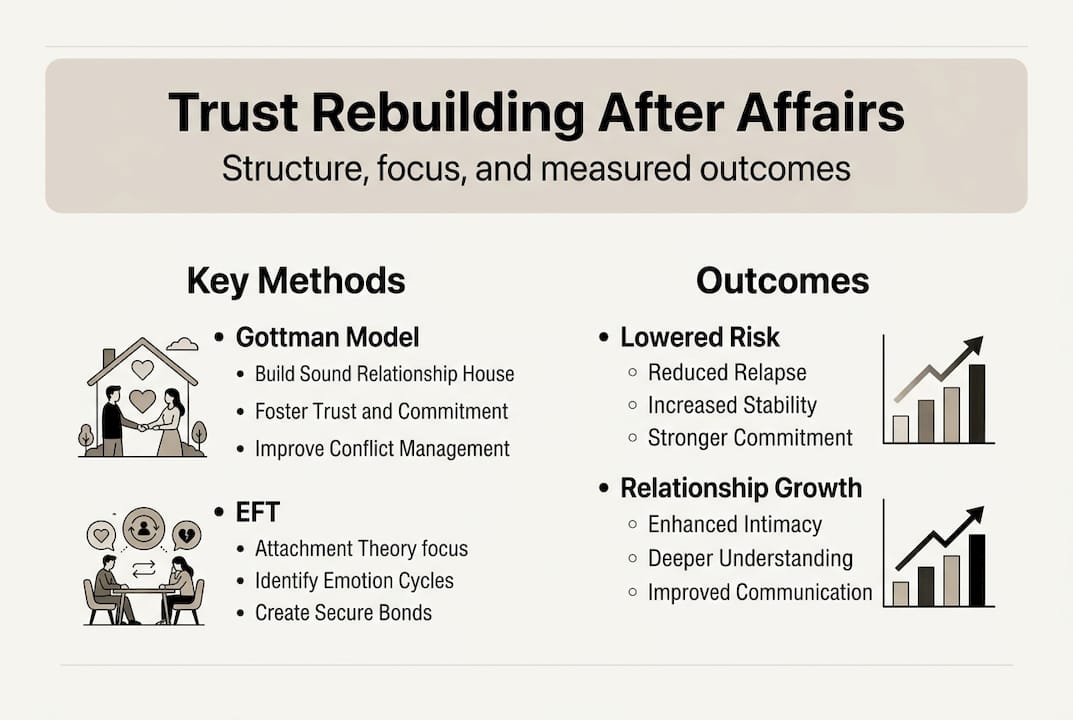
One striking figure: 57% of couples survive long-term when infidelity is fully disclosed, compared to just 20% when the affair is kept secret and discovered later. That single variable, honesty at the outset, nearly triples survival odds.
What makes prevention plans effective versus hollow:
- Both partners commit to ongoing couples therapy, not just crisis sessions
- The cheating partner takes ownership in the format the betrayed partner needs
- New relationship rituals (daily check-ins, weekly connection time) replace old patterns
- Individual therapy supports personal accountability alongside couples work
Practical trust-building exercises give couples structured ways to practice safety together. Combining those with marriage healing strategies and improving communication after betrayal creates a layered foundation rather than a single point of reliance.
Pro Tip: Treat your first six months of recovery like physical rehabilitation after an injury. Consistency and structure matter more than intensity. Small, repeated actions rebuild trust faster than dramatic gestures.
What prevention looks like: Boundaries, vigilance, and growth
Understanding methods is one thing. Sustaining the change long enough for it to become the new normal is where most couples struggle. Prevention is not a destination. It is an ongoing practice.
Genuine prevention requires new boundaries, ongoing rituals, and actively addressing vulnerabilities rather than assuming goodwill will hold things together. The two biggest pitfalls are pseudo-forgiveness and optimism bias. Pseudo-forgiveness means the betrayed partner says they have forgiven when they have actually just suppressed the pain. Optimism bias means both partners assume they are past the risk without doing the work to verify that.
Signs prevention is working:
- Both partners feel emotionally safe raising concerns without fear of shutdown
- The unfaithful partner proactively maintains accountability, without being asked
- Agreed boundaries are consistently respected, not tested
- Both partners continue investing in the relationship, not just monitoring it
- Individual therapy or self-reflection continues alongside couples work
Warning signs that patterns may be returning:
- Emotional distance increases without either partner naming it
- Conversations about the affair or boundaries get avoided
- One partner feels they are carrying all the recovery work
- Old habits around secrecy, like phone privacy or unexplained time away, reappear
Understanding the stages of healing after an affair helps you recognize where you are in the process and what comes next. Many couples mistake the initial relief of surviving the crisis for full healing, which leaves them vulnerable later. A step-by-step betrayal recovery framework can help you track real progress rather than relying on feelings alone.
Pro Tip: Every three months, schedule a relationship check-in where both partners honestly rate their safety, connection, and any lingering concerns. This builds a habit of vigilance that prevents slow drift back into old patterns.

Our perspective: Why genuine change is rare—And what you can actually do
After reviewing the research and working alongside people navigating recovery, one thing becomes clear: the couples who genuinely beat the odds do not just rebuild trust. They rebuild the relationship’s entire foundation. That distinction matters enormously.
Conventional wisdom says that if both partners try hard enough and love each other enough, recovery is possible. What the evidence actually shows is more demanding. Sustained change requires the unfaithful partner to do deep personal work, not just demonstrate remorse. It requires the betrayed partner to distinguish between real healing and performed forgiveness. And it requires both people to maintain effort long after the crisis fades.
The uncomfortable truth is that preventing a future affair is not about watching your partner more carefully. It is about both of you building self-awareness, honest communication, and accountability into the daily fabric of your relationship. That is rare because it is genuinely hard. But it is possible.
For those committed to this path, understanding restoring trust after betrayal at a structural level is the most important starting point. Focus less on guarantees and more on the quality of the daily work.
Take the next step: Practical guides for healing and prevention
Knowing the evidence is a strong start, but turning that knowledge into daily action is where real change happens.
At After the Affair, we have built structured resources specifically for people at this stage of recovery. If you want a clear starting point, the infidelity recovery checklist gives you seven concrete steps grounded in real recovery research. For couples focused on the longer journey, the relationship growth guide walks you through rebuilding safely and sustainably. And if boundary-setting feels uncertain, the setting healthy boundaries resource offers practical guidance on creating agreements that actually hold.
Frequently asked questions
Can therapy guarantee the prevention of future affairs?
No, therapy improves odds significantly but cannot guarantee prevention. Success still depends on full disclosure, genuine empathy, and the absence of pseudo-forgiveness patterns.
How likely is it for a partner to cheat again after rebuilding trust?
Statistically, people who have cheated are three times more likely to cheat again than those who have not, even after attempting recovery.
Is full disclosure necessary to prevent affairs from happening again?
Full disclosure is strongly linked to better outcomes: 57% of couples survive long-term when infidelity is admitted, compared to just 20% when it remains hidden. No method eliminates all risk, but honesty significantly shifts the odds.
What are warning signs that a pattern of infidelity could return?
Key warning signs include growing emotional distance, avoided conversations about boundaries, and the reappearance of secrecy-related habits. Genuine prevention requires ongoing vigilance, not just an initial recovery period.
Recommended
- Rebuilding Trust Timeline – After the Affair Series
- Relationship Growth After Infidelity – After the Affair Series
- Restoring Trust After Betrayal – After the Affair Series
- How to communicate after affair: rebuild trust in 2026 – After the Affair Series