- Prerequisites: setting communication boundaries and mutual commitment
- Step 1: crisis control and emotional stabilization
- Step 2: truth-telling and facilitated disclosure
- Step 3: professional therapy integration for communication skills
- Step 4: structured communication and emotional safety practices
- Common mistakes and how to avoid them
- Expected results and realistic timelines
- Discover expert support to rebuild and grow your relationship
- Frequently asked questions
- Recommended
After an affair, every conversation feels like walking on broken glass. One misplaced word can trigger pain, defensiveness, or withdrawal. Without a structured approach, well-meaning attempts to talk can reopen wounds instead of healing them. This guide offers practical communication strategies used by therapists to help couples restore emotional safety, rebuild trust, and create a foundation for genuine healing through effective Communication After an Affair.
Key takeaways
| Point | Details |
|---|---|
| Establish safety first | Both partners must be willing and committed to communication before meaningful dialogue succeeds. |
| Stabilize before disclosing | Crisis control and emotional regulation come before detailed truth-telling to prevent retraumatization. |
| Use professional support | Therapy provides structured exercises and conflict de-escalation techniques critical for rebuilding communication skills. |
| Schedule regular check-ins | Weekly structured conversations reduce emotional triggers and maintain consistent progress. |
| Expect realistic timelines | Trust restoration typically requires 6 to 12 months of sustained, honest communication effort. |
Prerequisites: setting communication boundaries and mutual commitment
Before diving into difficult conversations, you need solid ground to stand on. Emotional readiness and clear agreements create the safety net that keeps conversations from spiraling into destructive patterns.
Both partners must be willing and committed to the communication process for successful rebuilding after an affair. Without mutual investment, even the best strategies fall flat. One partner pushing while the other resists creates frustration and deeper disconnection.
Establish these foundational boundaries before beginning recovery conversations:
- Agree on when and where to have sensitive discussions, avoiding rushed or public settings
- Determine which topics are ready for discussion and which need more time
- Set limits on conversation length to prevent emotional overwhelm
- Identify physical and emotional signals that mean someone needs a break
- Commit to pausing rather than escalating when emotions run too high
Emotional safety acts as the foundation. Without it, honesty feels dangerous and vulnerability becomes impossible. Consider whether both of you can manage intense feelings without shutting down or lashing out. If either partner struggles with emotional regulation, professional support becomes essential before attempting deeper dialogue.
Access to a qualified therapist or counselor strengthens your ability to navigate tough conversations. Professional guidance provides structure, teaches skills, and offers intervention when communication breaks down. Explore boundaries after infidelity examples to understand what healthy limits look like in practice.
Step 1: crisis control and emotional stabilization
The immediate aftermath of discovery brings chaos. Your first priority is stopping further damage and creating enough stability to think clearly about next steps.
Implement these crisis control measures immediately:
- End all contact with the affair partner completely and transparently
- Avoid demanding detailed play-by-play accounts of intimate encounters
- Allow space for shock, anger, and grief without forcing premature forgiveness
- Offer presence and emotional support without defensiveness or minimizing
- Establish temporary routines that provide predictability during turmoil
Asking for excessive detail about the affair too soon often retraumatizes the betrayed partner. Questions about sexual specifics or romantic moments rarely provide the closure people hope for. Instead, they create vivid mental images that intensify pain and obsessive thinking.
Focus on containing the emotional flood rather than processing everything at once. This phase is about survival, not resolution. Give yourself permission to feel overwhelmed while taking small steps toward stability.
Pro tip: Use calming routines or brief breaks during discussions to reduce tension. Step outside for five minutes, practice deep breathing, or agree to revisit the conversation after a short walk. These pauses prevent escalation and preserve emotional safety.
Learn more about professional approaches in how to guide clients after infidelity for structured crisis management techniques.
Step 2: truth-telling and facilitated disclosure
Once initial emotions stabilize, the betrayed partner needs answers. Controlled, honest disclosure helps restore clarity and begins rebuilding the foundation of trust.
Full, honest disclosure during facilitated sessions improves clarity and emotional stability for the betrayed partner. Hiding details or trickling out information over time creates repeated betrayals and prevents healing from starting.
Conduct disclosure sessions with these guidelines:
- Use a therapist or neutral third party to facilitate the conversation
- Answer key questions about timeline, frequency, and emotional involvement honestly
- Avoid graphic sexual details unless specifically requested and necessary for closure
- Stay accountable without defensive language or blame shifting
- Recognize that full disclosure may require multiple sessions as trust builds
Facilitated environments reduce anxiety and improve emotional clarity. A skilled therapist keeps conversations productive, intervenes when emotions escalate, and ensures both partners feel heard. Without this structure, disclosure sessions often devolve into arguments or shutdowns.
Guided truth disclosure reduces anxious rumination by 40%.
Defensive or evasive responses destroy the fragile trust you’re trying to rebuild. Own your actions fully. Acknowledge the pain caused without making excuses or comparing your suffering to your partner’s. Accountability demonstrates genuine commitment to change.
Explore guided disclosure strategies for therapist-led approaches that balance honesty with emotional safety.
Step 3: professional therapy integration for communication skills
Even couples with strong pre-affair communication struggle after betrayal. Professional support teaches specialized skills necessary for navigating this unique crisis.
Engage in couples therapy to develop trust-building communication techniques specifically designed for affair recovery. Standard relationship advice often falls short because infidelity creates trauma responses that require specialized approaches.
Therapy provides these essential benefits:
- Structured exercises that improve active listening and empathetic responding
- Emotional regulation techniques to prevent conflict escalation
- Safe space for expressing difficult feelings without judgment
- Expert intervention when conversations reach impasses
- Homework assignments that build skills between sessions
Therapists teach you to recognize and interrupt destructive patterns before they derail progress. You learn to identify emotional triggers, communicate needs clearly, and respond to your partner’s pain without becoming defensive. These skills feel awkward at first but become natural with practice.
Conflict de-escalation techniques prevent conversations from spiraling. When you notice tension rising, trained responses help you pause, breathe, and reset before saying something harmful. This conscious interruption of old patterns creates space for new, healthier interactions.
Pro tip: Consider periodic check-in therapy sessions for ongoing skill reinforcement. Even after initial recovery, quarterly sessions help maintain healthy communication and address new challenges before they become crises.
Discover more about professional support in therapists in infidelity recovery to understand how expert guidance accelerates healing.
Step 4: structured communication and emotional safety practices
Ongoing recovery requires consistent, predictable communication routines. Structure replaces chaos and builds the repetitive positive experiences that restore trust over time.
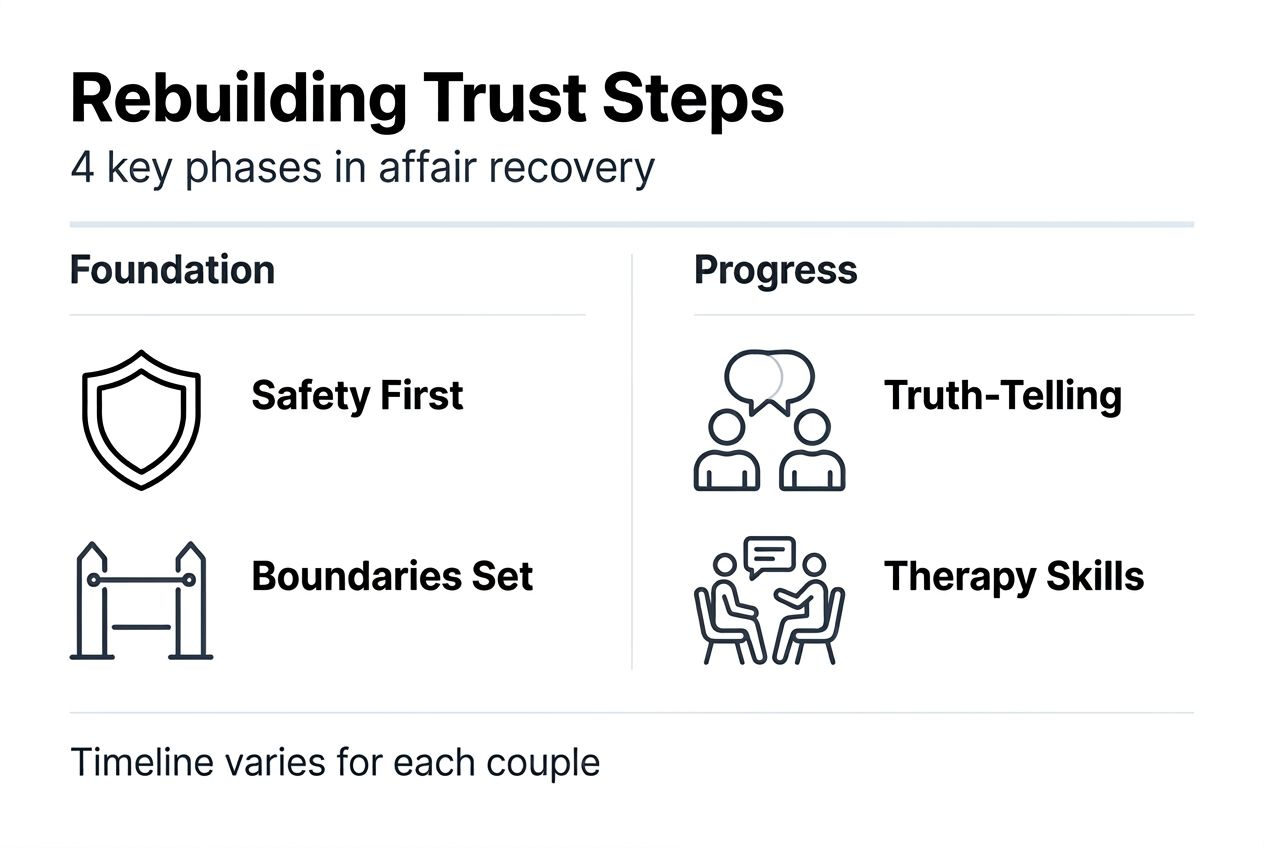
Regular structured check-in conversations promote consistent communication and reduce emotional triggers during recovery. These aren’t casual chats but intentional conversations with clear purposes and boundaries.
Implement these ongoing communication practices:
- Schedule weekly 30-minute check-ins at consistent times to discuss feelings and progress
- Practice active listening where each partner speaks uninterrupted for equal time
- Use “I feel” statements instead of “You always” accusations
- End each check-in by acknowledging one positive change or effort
- Revisit boundaries and adjust as healing progresses
Some couples find writing letters effective when verbal conversations provoke too much pain. Written communication allows you to organize thoughts, choose words carefully, and process information at your own pace without immediate reaction.
| Communication method | Advantages | Disadvantages |
|---|---|---|
| Weekly verbal check-ins | Immediate feedback, reads body language, builds connection | Can escalate quickly, hard to regulate emotions in real time |
| Letter writing | Time to process, thoughtful responses, less reactive | Lacks immediate clarification, misses nonverbal cues, feels distant |
Alternate between methods based on topic difficulty and current emotional capacity. Use letters for particularly triggering subjects, then discuss your written exchange during a scheduled check-in with your therapist present.
Pro tip: Use a shared journal or notes app to track emotions between check-ins. Quick entries about feelings, triggers, or positive moments give you concrete material to discuss and show patterns over time.
Learn more about sustaining progress through relationship growth after infidelity with evidence-based approaches.
Common mistakes and how to avoid them
Even well-intentioned couples make predictable errors that stall or reverse recovery progress. Recognizing these pitfalls helps you navigate around them.
- Rushing full disclosure without emotional safety. Wait until both partners demonstrate basic emotional regulation before attempting complete truth-telling. Premature disclosure retraumatizes and damages fragile trust.
- Demanding excessive play-by-play details early. Limit initial questions to timeline, frequency, and emotional involvement. Graphic specifics rarely provide closure and often intensify intrusive thoughts and pain.
- Using defensive or accusatory language. Replace “You’re overreacting” with “I hear how much pain this causes.” Swap “You drove me to this” for “I made a choice I deeply regret.”
- Assuming one partner’s readiness means both are ready. Check in explicitly about emotional capacity before difficult conversations. One person’s urgency shouldn’t override the other’s genuine need for more time.
- Neglecting professional support. DIY recovery rarely succeeds with infidelity trauma. Engage qualified therapists early rather than waiting until crisis deepens.
- Inconsistent communication routines. Skipping scheduled check-ins signals lack of commitment and erodes the predictability that builds security. Treat these appointments as non-negotiable.
Follow the infidelity recovery checklist to stay on track and avoid common recovery mistakes.
Expected results and realistic timelines
Healing takes longer than most people expect. Setting realistic expectations prevents discouragement when progress feels slow.
Trust restoration typically requires 6 to 12 months of consistent communication and effort, though some couples need 18 to 24 months for deeper healing. This timeline assumes both partners actively engage in therapy and practice new skills daily.
Emotional safety and communication quality measurably improve within 3 months of therapy when couples commit to weekly sessions and homework assignments. You’ll notice fewer explosive arguments, longer periods between triggers, and moments of genuine connection returning.
Mutual commitment increases chances of recovery success by up to 70%. When both partners invest equally in healing, outcomes improve dramatically compared to relationships where one person does most of the work.
| Timeline | Milestone | Expected outcome |
|---|---|---|
| Weeks 1 to 4 | Crisis stabilization and safety establishment | Reduced emotional chaos, basic communication boundaries set |
| Months 2 to 3 | Facilitated disclosure and therapy skill building | Clearer understanding of affair, improved conflict regulation |
| Months 4 to 6 | Consistent communication routines and trust rebuilding | Weekly check-ins normalized, emotional triggers decrease |
| Months 7 to 12 | Deepening connection and relationship redefinition | Genuine intimacy returns, future planning feels possible |
Progress isn’t linear. Expect setbacks, especially around triggering dates or unexpected reminders. These temporary regressions don’t erase progress if you return to healthy communication quickly.
Understand the rebuilding trust timeline with realistic benchmarks and explore relationship growth after infidelity for long-term success strategies.

Discover expert support to rebuild and grow your relationship
Navigating affair recovery alone feels overwhelming. Professional guidance accelerates healing by teaching proven communication skills and providing structure during chaos.
Explore the 7 Steps Infidelity Recovery Checklist for stepwise support tailored to your specific recovery stage. This comprehensive framework guides you through crisis management, disclosure, therapy integration, and long-term relationship rebuilding.
Access specialized resources designed to help UK couples rebuild trust and create stronger relationships than before betrayal. Many couples report relationship growth after infidelity when using structured, evidence-based approaches. Visit the resource library to discover books, guides, and tools created by professionals who understand the unique challenges of infidelity recovery.
Frequently asked questions
How soon should we start talking after an affair is discovered?
Begin with crisis control immediately but wait 2 to 4 weeks before attempting detailed disclosure. Use this time to establish emotional safety, secure professional support, and develop basic regulation skills that prevent conversations from becoming destructive.
What if one partner is unwilling to communicate openly?
Recovery requires mutual commitment. If your partner refuses to engage honestly, individual therapy helps you process your options and set healthy boundaries. Consider whether the relationship can heal without genuine effort from both people.
Can letter writing replace face-to-face conversations during recovery?
Letters work as a supplement but not a complete replacement. Use written communication for particularly triggering topics, then discuss your letters during facilitated sessions where you can ask clarifying questions and read nonverbal cues.
How do I handle emotional triggers during difficult talks?
Recognize physical signs of escalation like rapid heartbeat or tightness in your chest. Call a brief timeout, practice deep breathing, and return when calmer. Learn more through guiding clients after infidelity professional approaches.
When should we seek professional help for communication issues?
Seek therapy immediately after discovery rather than waiting. Early intervention prevents destructive patterns from taking root and teaches essential skills before damage deepens. Most couples benefit from weekly sessions for at least 3 to 6 months.
Recommended
- Relationship Growth After Infidelity – After the Affair Series
- Rebuilding Trust Timeline – After the Affair Series
- Relationship Healing Process – After the Affair Series
- Restoring Trust After Betrayal – After the Affair Series
- Seduzione Autentica nel 2026: Aumenta la Tua Fiducia in 3 Mesi – Daniela Coin
- Role of Trust in Hypnotherapy: Pathway to Lasting Change