TL;DR:
- Hiring a private investigator can provide legally usable evidence of infidelity if done with legal guidance and clear objectives.
- Legal and emotional considerations, including consulting an attorney first and understanding state laws, are essential before proceeding.
Hiring a private investigator to catch a cheating spouse can provide real, legally usable evidence, but it is not always the right first step. The decision depends on your legal situation, emotional readiness, and what you actually need the evidence to accomplish. A PI can confirm or rule out suspicions through lawful surveillance and documented proof. What they cannot do is guarantee results, access private accounts, or make your state’s divorce court care about infidelity if it operates under pure no-fault rules.
Before spending a dollar, ask yourself one question: what specific decision does this evidence need to support? Divorce proceedings, custody positioning, and asset protection are legitimate answers. “I just need to know” is valid too, but it carries a different cost-benefit calculation.
Pro Tip: Write down your goal before calling any investigator. If you cannot state clearly what you will do with the evidence, you are not ready to hire one yet.
- Consulting a family law attorney first is not optional. An attorney can tell you whether infidelity evidence moves the needle in your state.
- Legal and ethical limits are real. Illegal actions by your PI can expose you to vicarious liability and get evidence thrown out.
- Emotional readiness matters. Confirmation of an affair is often more painful than the suspicion itself.
- Alternatives exist. Counseling and structured conversations sometimes deliver clarity without the cost or trauma of surveillance.
Table of Contents
- What you must do legally before hiring a private investigator
- How to recognize real signs of infidelity in your spouse
- The emotional cost of suspicion and what to try before surveillance
- What a private investigation actually costs and how long it takes
- How to choose a reputable and qualified private investigator
- Risks and limitations you need to understand before you commit
- How to handle and use the evidence legally and ethically
- Key Takeaways
- FAQ
What you must do legally before hiring a private investigator
Consulting a divorce attorney before hiring a PI is the single most important step most people skip. A 30-minute consultation can clarify whether infidelity evidence will affect alimony, asset division, or custody in your state, or whether it is legally irrelevant because your state runs purely on no-fault grounds.
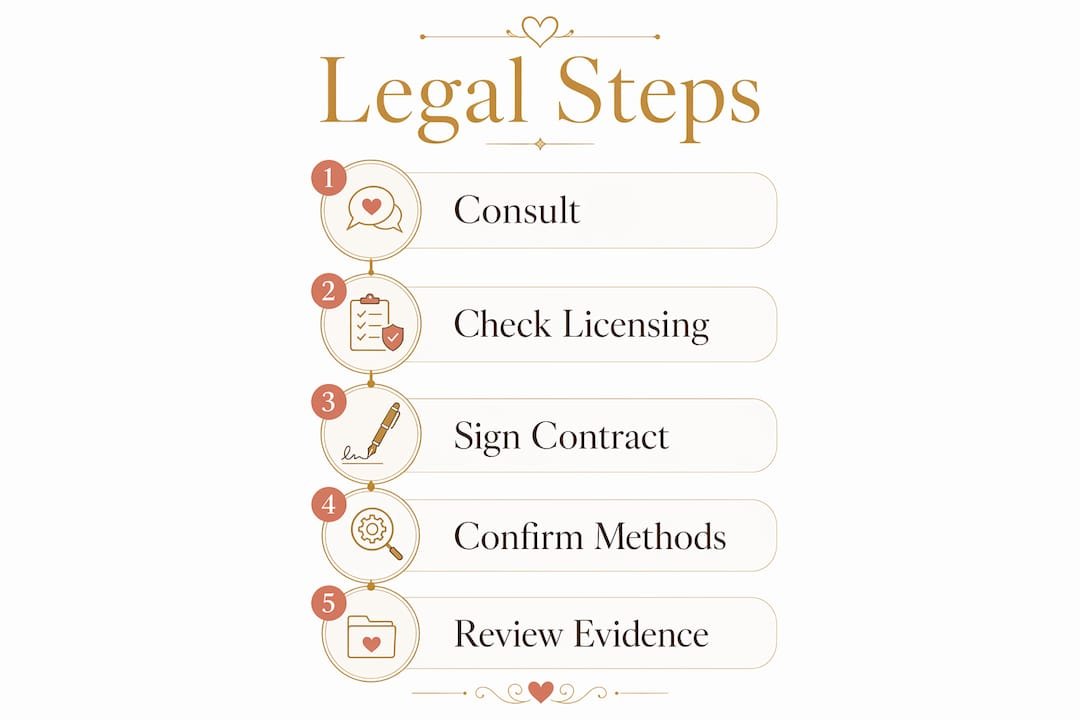
Licensing varies significantly by state. More than 40 states require PIs to hold a state-issued license, but a handful, including Alaska, Idaho, Mississippi, and Wyoming, have no state-level requirement. Even where licenses exist, requirements range from a basic background check to thousands of hours of supervised experience. Always verify a PI’s license number through your state’s regulatory portal before signing anything.
Recording laws are where clients most often get burned. 12 states require all-party consent for recorded conversations: California, Connecticut, Delaware, Florida, Illinois, Maryland, Massachusetts, Montana, Nevada, New Hampshire, Pennsylvania, and Washington. A recording made without proper consent in those states is both illegal and worthless as evidence.
- Verify the PI’s license number with your state’s licensing board before any agreement.
- Get every detail in writing: scope, methods, fees, and legal boundaries.
- Ask explicitly whether GPS tracking is legal in your state for your specific situation.
- Never instruct a PI to access email accounts, phones, or cloud storage. That is a federal crime regardless of state.
- Repeated accusations without evidence can constitute psychological abuse under family law. Have a reasonable basis before acting.
How to recognize real signs of infidelity in your spouse
No single behavior proves infidelity. Cheating is best identified by clusters of behavioral changes sustained over time, not isolated red flags. A spouse who suddenly starts going to the gym three times a week might be having an affair, or might be managing stress. The pattern across multiple areas is what matters.
Fixating on one suspicious moment distorts your judgment and can push you toward decisions you will regret. Relationship psychologists consistently point to sustained, multi-domain shifts as the more reliable signal.
Common behavioral indicators that warrant closer attention:
- Increased secrecy around phone, email, or social media use
- Unexplained changes in schedule or frequent “working late” without prior pattern
- Reduced physical or emotional intimacy without a clear reason
- New financial expenditures that do not match stated activities
- Inconsistent or evasive answers when asked about specific times or people
- Sudden interest in appearance or fitness with no stated motivation
- Emotional withdrawal or unusual irritability at home
If several of these persist over weeks, that is a pattern worth taking seriously. One or two in isolation rarely justify surveillance.
The emotional cost of suspicion and what to try before surveillance
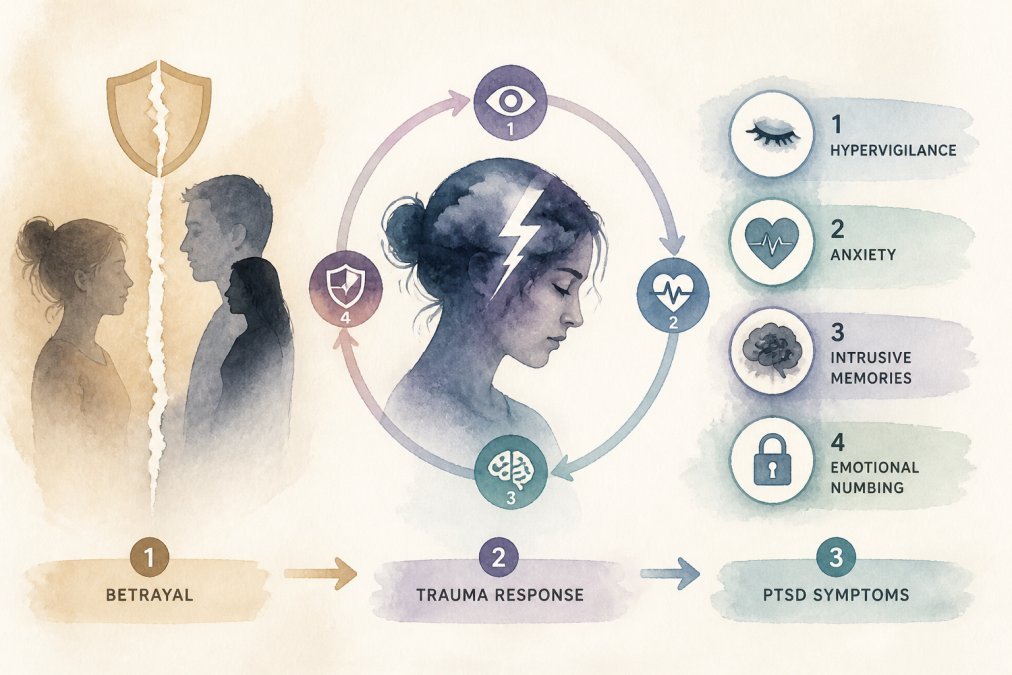
Suspicion alone is traumatic. The anxiety, hypervigilance, and obsessive checking that accompany it can cause significant emotional harm before any investigation even begins. Adding surveillance to that mix, especially if the results confirm your fears, often deepens the trauma rather than resolving it.
Psychological guidance consistently recommends non-accusatory dialogue and professional counseling before any surveillance. A structured conversation, one where you express how behavioral changes have made you feel rather than launching accusations, can surface the truth without the legal and financial cost of a PI. If your spouse is not cheating, you preserve the relationship. If they are, you may get an admission that makes investigation unnecessary.
Aftertheaffair’s evidence-informed resources on betrayal trauma healing address exactly this stage: the period before you have certainty, when the emotional weight is heaviest and the decisions carry the most long-term consequence.
Pro Tip: Before hiring anyone, try one structured, calm conversation using “I feel” statements. A therapist can help you prepare for it. The outcome of that conversation often determines whether investigation is even necessary.
- Individual therapy gives you a space to process suspicion without acting impulsively.
- Marriage counseling can surface honesty in a structured, safe environment.
- Tools like CheaterDetector AI can help you organize behavioral observations before deciding whether to escalate.
- Surveillance pursued only for reassurance, with no legal or practical decision attached, tends to drain finances and extend emotional suffering.
What a private investigation actually costs and how long it takes
A typical infidelity investigation costs between $1,250 and $4,500, with complex cases involving travel or multiple agents pushing higher. Most run 10–30 hours of surveillance, though that range expands quickly if your spouse has an unpredictable schedule or the PI needs extended observation windows.
Court testimony adds cost. If the investigator needs to appear as a witness, preparation and courtroom time are typically billed at the standard hourly rate, sometimes at a premium.
- Set a firm budget ceiling before signing a retainer and tell the PI that number upfront.
- Ask for milestone approvals before the investigation expands beyond the initial scope.
- Confirm what happens to unused retainer funds if the case closes early.
- Request timestamped logs and secure digital storage as part of the standard agreement.
- Factor in attorney review time if the report is intended for court use.
The emotional cost is harder to budget for. Seeing documented proof of infidelity, even when you suspected it, tends to hit differently than suspicion. Build in support, whether therapy or a trusted confidant, before the report arrives.
How to choose a reputable and qualified private investigator
Experience in your specific case type matters more than general credentials. A PI who specializes in insurance fraud is not the right fit for a marital surveillance case, even if their license is current. Look for investigators with a documented track record in family law and infidelity cases specifically.
Ask every candidate these questions before committing:
- What is your license number and which state board oversees you?
- Have you testified in divorce or custody proceedings? How recently?
- What methods will you use, and are all of them legal in this state?
- Who will actually work my case, and what is their experience level?
- Do you carry professional liability insurance?
No legitimate investigator can guarantee results. Any PI who promises to catch your spouse cheating before starting the work is either planning to fabricate evidence or cut legal corners. Walk away immediately.
A written contract is non-negotiable. It should specify scope, hourly rate, legal methods only, reporting format, and a clear stop point. If a PI resists putting any of this in writing, that tells you everything.
Risks and limitations you need to understand before you commit
The biggest legal risk is vicarious liability. If your PI trespasses, records conversations illegally, or accesses accounts without authorization, you can face civil or even criminal exposure, not just the investigator. The fact that you did not personally break the law offers limited protection when you hired and directed the person who did.
Evidence collected improperly does not just get excluded. It can give your spouse grounds to file claims against you, turning your intended advantage into a liability. Courts have seen this pattern often enough that judges are not sympathetic.
Operational risk is real too. An investigator who gets spotted by your spouse ends the investigation permanently. Once a subject knows they are being watched, they change their behavior, swap phones, and stop meeting anyone connected to the affair. You rarely get a second chance at the same evidence window.
Finally, the emotional reality: a PI report is not closure. Many people expect that confirmed evidence will bring relief. Often it brings a new, sharper wave of grief that requires its own recovery process. The stages of healing after an affair do not begin with the evidence. They begin with what you decide to do next.
How to handle and use the evidence legally and ethically
Evidence is only useful if it meets chain-of-custody standards. That means the PI can account for who handled every photo, video, and document, when it was collected, and how it was stored from collection through presentation. Gaps in that chain give opposing attorneys grounds to challenge the entire file.
Share the report with your attorney before doing anything else. Your lawyer determines what is admissible, what is relevant to your specific proceedings, and how to introduce it without procedural errors. Using evidence yourself, confronting your spouse with it, or sharing it publicly before legal review can damage your case and potentially expose you to harassment claims.
Evidence of infidelity can support alimony arguments, custody decisions, and asset division negotiations in states where conduct is legally relevant. In purely no-fault states, its value shifts to negotiation leverage rather than courtroom weight. Your attorney will know which applies to you.
For the longer work of healing, Aftertheaffair’s infidelity recovery checklist offers a structured path through the decisions and emotional stages that follow, whether or not you pursued an investigation.

Key Takeaways
Hiring a private investigator can provide legally usable evidence of infidelity, but only when pursued after legal consultation, with a licensed PI, a clear evidence goal, and realistic emotional preparation.
| Point | Details |
|---|---|
| Consult an attorney first | A family law attorney clarifies whether infidelity evidence matters in your state before you spend anything. |
| Verify PI licensing | More than 40 states require a state-issued license; always confirm through the state’s regulatory portal. |
| Know the recording laws | 12 states require all-party consent; recordings made without it are illegal and inadmissible. |
| Budget realistically | Typical investigations cost $1,250–$4,500 and run 10–30 hours, with additional fees if court testimony is needed. |
| Consider alternatives first | Structured conversations and counseling often surface the truth at far lower emotional and financial cost. |
FAQ
Should I hire a private investigator before talking to a divorce attorney?
No. Consulting a family law attorney first is strongly advised so you understand whether infidelity evidence is legally relevant in your state and what specific documentation would actually help your case.
What evidence can a private investigator legally collect?
A licensed PI can legally gather timestamped photos and video from public spaces, documented surveillance logs, and public record searches. They cannot access private accounts, install unauthorized GPS trackers, or record conversations without proper consent under your state’s laws.
How much does a cheating spouse investigation typically cost?
Most infidelity investigations run between $1,250 and $4,500, depending on hours and complexity, with court testimony adding further fees billed at the investigator’s standard hourly rate.
Can I be held legally responsible for my PI’s illegal actions?
Yes. Vicarious liability means you can face civil or criminal exposure if your investigator trespasses, records illegally, or accesses accounts without authorization, even if you did not personally direct those specific actions.
What are the best alternatives to hiring a private investigator?
Individual therapy, marriage counseling, and structured non-accusatory conversations are the most recommended alternatives. They can surface honesty, support emotional recovery, and often resolve uncertainty at significantly lower financial and psychological cost.
Recommended
- Why Do Cheaters Stay? The Truth About What Your Spouse Really Wants – After the Affair Series
- Should Your Cheating Spouse Change Jobs to Heal?
- Individual or Couples Therapy After Infidelity? – After the Affair Series
- After Cheated: Now What? – After the Affair Series