TL;DR:
- A marriage can survive lying and betrayal if the unfaithful partner completely stops the harmful behavior and consistently demonstrates trustworthy actions. Recovery relies on building new safety through proof of work over months or years, not just promises or apologies. Trust is restored gradually as both partners follow a structured process guided by therapy and observable, repeatable behavior.
- How to fix a marriage after lying and betrayal: what actually works
- What to do in the first hours and days after discovery
- A therapist-style roadmap for rebuilding your marriage
- What each partner’s role actually looks like
- How long does repair take, and what does it cost?
- When do you need professional help, and how do you choose the right therapist?
- Evidence-informed resources that support recovery
- The emotional reality most guides skip over
- Aftertheaffair has structured tools for every stage of repair
- FAQ
Yes, a marriage can survive lying and betrayal — but only if the partner who lied stops the behavior completely and begins building what therapists call proof of work: small, repeated, verifiable actions that give the betrayed partner’s nervous system new evidence of safety. Words and apologies alone don’t move that needle. Behavior does, and it takes months, not days.
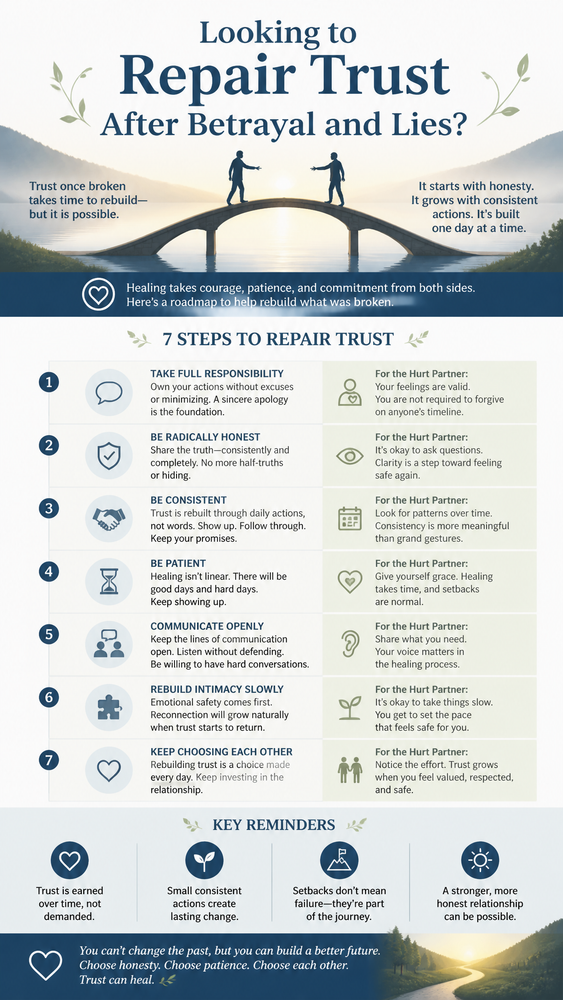
The single most important principle: consistent, observable behavior over time is the currency of repair. Not a grand gesture. Not a tearful confession. A pattern your partner can see, predict, and rely on.
Your first 24–72 hours:
Stop the harmful behavior entirely and permanently, right now
Tell the truth about what happened, at a level your partner can absorb today (not everything at once)
Create a brief safety script: “I am not going anywhere. I want to fix this. I will answer any question you have.”
Remove or pause contact with any third party involved in the betrayal
Contact a therapist who specializes in infidelity or betrayal trauma — even a single intake call counts as a first step
If children are in the home, agree on one simple co-parenting rule:
no conflict in front of them this wee
Repair is possible. It is not fast, and it is not easy. But couples who commit to a structured, therapist-guided process and stay in it long enough do rebuild — often into something stronger than what existed before.
How to fix a marriage after lying and betrayal: what actually works
Trust is not rebuilt through promises. It is rebuilt through repeated trustworthy actions that accumulate over weeks and months until the betrayed partner’s nervous system stops bracing for the next blow.
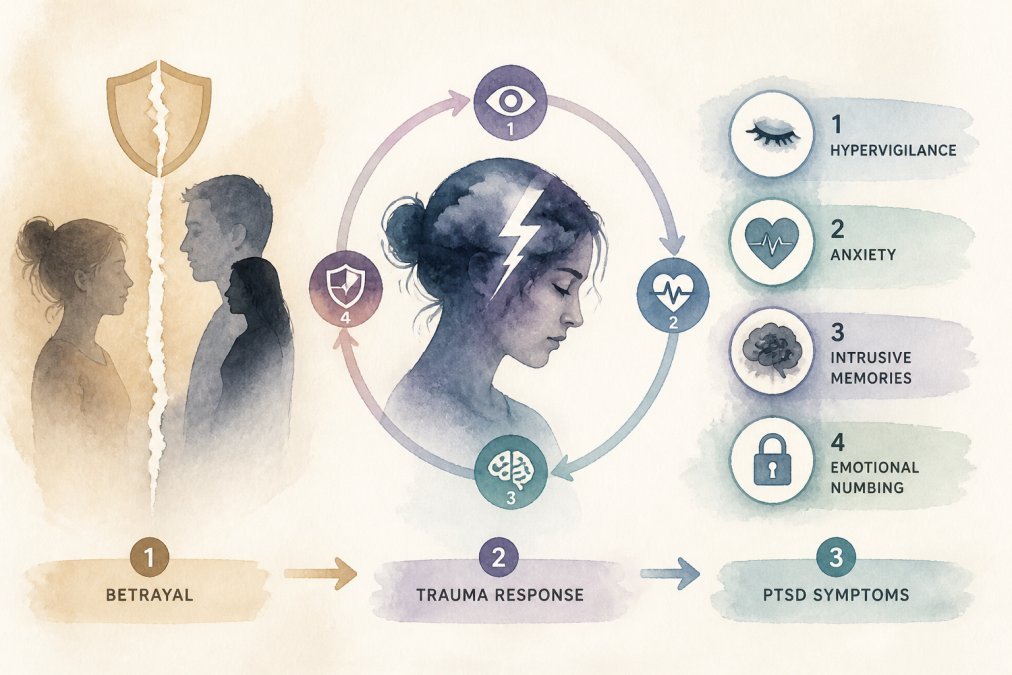
That phrase “nervous system” is not metaphorical. Betrayal activates the same threat-detection pathways as physical danger. The betrayed partner’s brain shifts into hypervigilance: scanning for inconsistency, replaying the timeline, struggling to sleep. This is not irrational behavior. It is biology doing exactly what it was designed to do after a safety threat. The implication is that nervous-system regulation must come before any productive conversation about what happened or what comes next. Trying to negotiate a repair plan while both partners are flooded with cortisol is like trying to build a house during an earthquake.
The “proof of work” principle comes directly from attachment theory. A betrayed partner’s internal ledger of safety updates only through lived experience, not through reassurance. Each time the offending partner does what they said they would do, shows up when expected, answers a question honestly without defensiveness, or sits with their partner’s pain without deflecting, the ledger shifts slightly. Over hundreds of those small moments, the nervous system begins to relax. That is when genuine reconnection becomes possible.
What proof of work looks like in practice:
- Sharing location without being asked
- Answering questions about the timeline fully, once, in writing when possible
- Attending therapy consistently, not just when things feel tense
- Initiating check-ins rather than waiting to be confronted
- Tolerating the betrayed partner’s anger without shutting down or retaliating
Pro Tip: If you are the partner who lied, structure your early transparency around written communication whenever possible. A written account of what happened reduces the number of times your partner has to ask the same question aloud, which reduces retraumatization for both of you. A Letter of Accountability is a practical first tool.
Repairing a marriage after betrayal also means accepting that you are not restoring the old relationship. That version is gone. What you are building is a new one, with renegotiated roles, clearer boundaries, and a different kind of honesty. Couples who try to simply “get back to normal” almost always stall, because normal is where the problem lived. The goal is something better, not something familiar. This distinction, that betrayal isn’t just an affair but a rupture in the entire relational contract, shapes every step of the repair process.
What to do in the first hours and days after discovery
The immediate window after discovery is the most volatile. Both partners are in acute stress. Decisions made here set the tone for everything that follows.
Three-tiered checklist for the first 72 hours:
Tier 1: Immediate safety
- Confirm physical safety for both partners and any children in the home
- If there is any risk of violence or self-harm, call 988 (Suicide and Crisis Lifeline) or 911 immediately
- Agree on a temporary sleeping arrangement if needed — physical separation for a night or two is not the end of the marriage; it is a pressure valve
Tier 2: Communication scripts
For the partner who lied:
- “I am not going to minimize what I did. I take full responsibility. I will answer your questions.”
- “I understand if you need space right now. I am not leaving. I will be here when you are ready.”
For the betrayed partner:
- “I need 24 hours before we talk about this. I am not ready yet.”
- “I need you to stay in the house / leave the house tonight so I can think.”
- “I need to know [specific question]. I am not ready for the full story yet.”
Tier 3: Emergency boundaries
- Pause or end contact with any third party involved
- Agree on a temporary financial transparency measure (shared access to accounts) if financial deception was part of the betrayal
- Set a rule about who you each tell in the next 48 hours — premature disclosure to family or friends can complicate repair significantly
“A broken relationship is not repaired by one perfect apology. It is repaired by a clearer conversation, cleaner ownership, and repeated behavior that makes the old injury less likely to repeat.” — Caleb Merridan, relationship therapist
Stopping the harmful behavior is the non-negotiable first step before any other repair work can begin. Practitioner guides are consistent on this point: there is no path to rebuilding trust while the breach is still ongoing. Everything else in this article assumes that step has been taken.
A therapist-style roadmap for rebuilding your marriage
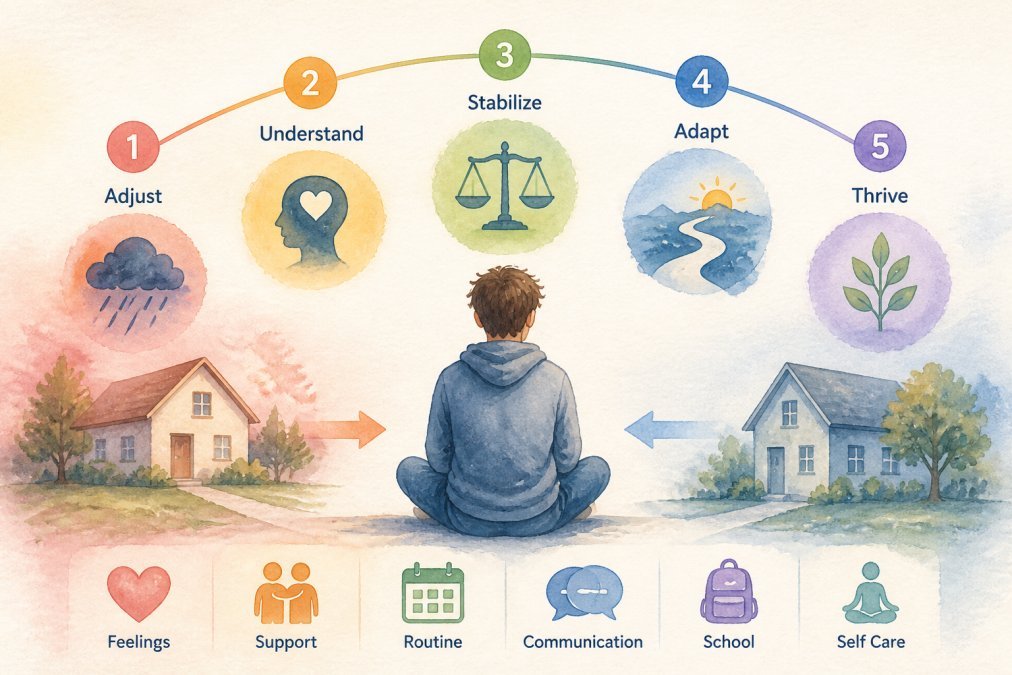
Therapists who specialize in betrayal trauma generally use a staged protocol. The order matters. Skipping stages, particularly trying to jump to problem-solving before both partners are regulated, is the most common reason couples stall or regress.
The five stages:
- Stabilize and regulate — Stop the behavior, establish basic safety, begin individual therapy if needed. Goal: both partners can be in the same room without acute flooding.
- Connection-first — Rebuild basic emotional presence before any cognitive processing. Daily check-ins, physical proximity without pressure, listening without defending.
- Cognitive access — Once both partners are regulated, begin structured conversations about what happened, why, and what it meant. This is where the Letter of Accountability and timeline conversations belong.
- Agreement building — Renegotiate roles, boundaries, and expectations. What does transparency look like going forward? What are the new rules? What does each partner need?
- Integration — The betrayal becomes part of the couple’s shared story rather than an open wound. Trust is no longer a daily project; it is a background assumption again.
Weekly and monthly exercises by stage:
- Weeks 1–4: Daily 10-minute check-ins (no problem-solving, just presence). Written timeline from the offending partner. Individual therapy intake for both.
- Months 1–3: Letter of Accountability drafted and shared. Structured transparency routines (location sharing, open phone access). Weekly couples session.
- Months 3–6: Narration scripts — the betrayed partner tells the story of the impact; the offending partner listens without defending. Begin reducing surveillance as trust accumulates.
- Months 6–12: Renegotiation conversations. New relationship agreements. Gradual reduction in therapy frequency as stability holds.
Proof of work milestones:
| Milestone | Observable indicators |
|---|---|
| 1 month | Behavior has stopped; basic daily routines are stable; both partners attending therapy |
| 3 months | Letter of Accountability complete; transparency routines consistent; fewer daily check-ins needed |
| 6 months | Betrayed partner initiating some positive contact; triggers still present but less frequent |
| 12 months | Couples able to discuss the betrayal without acute flooding; new relationship agreements in place |
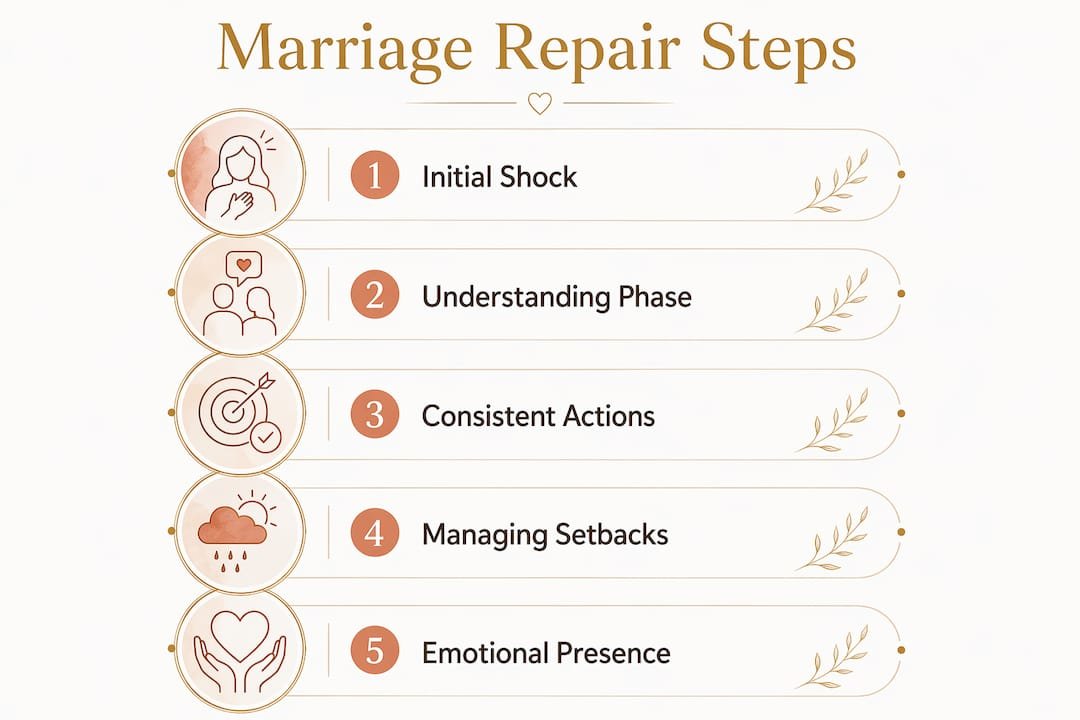
A staged timeline used by many clinicians shows initial shock lasting weeks, an understanding phase spanning roughly 1–6 months, active rebuilding from 6 months to 2 years, and integration extending to 4 years for serious breaches. These are ranges, not deadlines. Progress is non-linear, and a bad week at month eight does not mean you are back at day one.
Managing setbacks: When a trigger fires or a conversation goes sideways, use a reset protocol rather than treating it as evidence the repair has failed. Name what happened (“I got flooded and shut down”), take a timed break (20–30 minutes minimum, not hours), and return with a repair attempt. The stages of healing are not a straight line — they loop, and that is normal.
What each partner’s role actually looks like
Repair requires two people doing different but equally demanding work. Vague good intentions on both sides are not enough. Concrete, daily behavior is.
The partner who lied must:
- Stop the behavior completely and permanently
- Take full ownership without qualifications (“I’m sorry you felt hurt” is not ownership)
- Offer radical transparency as a temporary bridge, not a permanent surveillance arrangement — share location, phone access, and financial information for a defined period as trust rebuilds
- Attend individual therapy to understand why the betrayal happened
- Sit with the betrayed partner’s pain without becoming defensive, minimizing, or retaliating
- Initiate accountability conversations rather than waiting to be confronted
The betrayed partner may reasonably ask for:
- Full disclosure of what happened, delivered in a format they can manage (written, in session, in stages)
- Temporary verification measures (location sharing, account access)
- Time to process without being pressured toward forgiveness on a timeline
- Consistent availability from their partner, not just when things feel calm
- Space to express anger, grief, and confusion without their partner shutting down
Low-friction transparency practices:
- Shared calendar with real-time updates
- Open phone policy (not demanded indefinitely, but offered proactively in early months)
- A brief daily “accountability check-in”: what did I do today that I want you to know about?
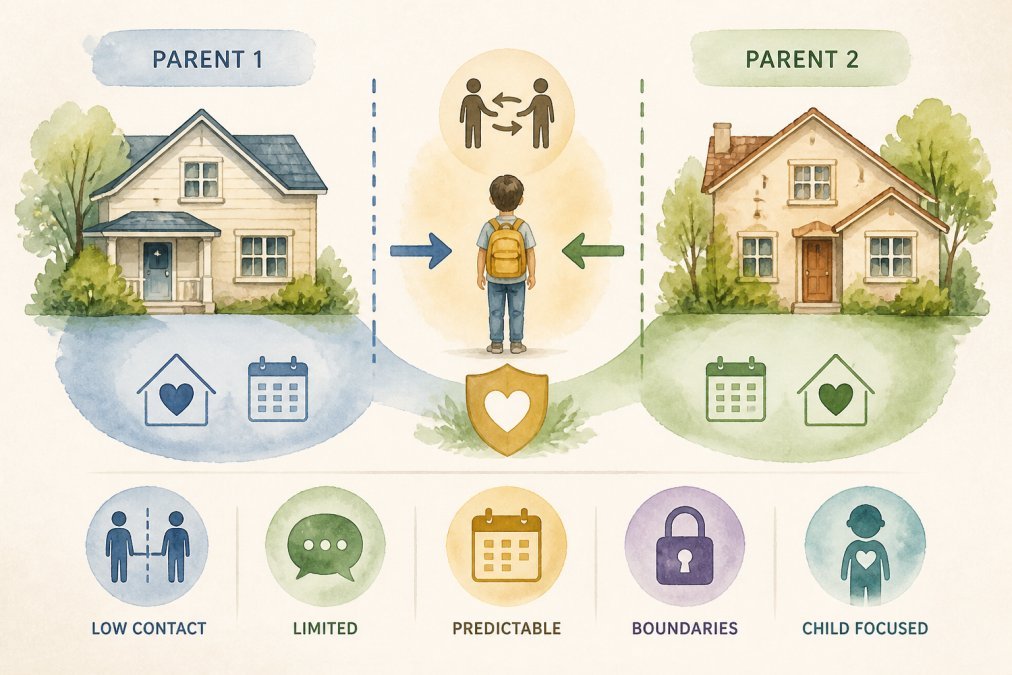
Co-parenting during repair: If children are in the home, agree on a single rule and stick to it: they do not witness conflict.
Use written communication for co-parenting logistics when verbal conversations are too charged. Boundaries that actually work during this period are specific and behavioral, not emotional demands.
Pro Tip: There is a real difference between verification and punishment. Verification is time-limited, consensual, and aimed at building safety. Punishment is indefinite, escalating, and aimed at making the offending partner suffer. If check-ins start feeling like interrogations, bring that observation to a therapist — it is a signal the process needs recalibration, not that repair has failed.
Emotional presence from the offending partner is one of the primary drivers of healing. Clinical reports consistently highlight listening, sitting with pain, and not defending as core reparative actions. Showing up emotionally, day after day, is the proof of work that actually changes things.
How long does repair take, and what does it cost?
Realistic timelines are one of the things couples most need and least want to hear. Repair after serious betrayal is measured in months to years, not weeks.
General timeline bands:
| Phase | Typical timeframe | Key behavioral markers |
|---|---|---|
| Initial stabilization | Weeks 1–4 | Behavior stopped; basic safety established; therapy started |
| Active rebuilding | 6–18 months (non-infidelity lies) | Transparency routines consistent; Letter of Accountability complete |
| Deeper betrayal recovery | 12–36 months (affairs, sustained deception) | Triggers reducing; new relationship agreements in place |
| Integration | 2–4 years for serious breaches | Betrayal part of shared story; trust no longer a daily project |
Therapists estimate 6–18 months for recovery from significant non-infidelity lies, and 12 months or longer for affairs and deep deception, often extending further when complex trauma is present. The rebuilding trust timeline varies by the depth of the breach, the consistency of the offending partner’s behavior, and whether both partners are engaged in structured support.
Typical U.S. therapy costs:
- Private couples therapist (generalist): $150–$250 per session
- Infidelity-specialized couples therapist: $200–$350 per session
- Individual trauma therapy (EMDR, trauma-informed CBT): $120–$250 per session
- Recommended frequency: weekly couples sessions in the first 3–6 months, tapering to biweekly as stability holds
Lower-cost options:
- Community mental health centers: sliding-scale fees, often $20–$80 per session based on income
- University training clinics: supervised graduate students offering sessions at reduced rates ($30–$60 typical)
- Online therapy platforms: generally $60–$100 per session; useful for access and scheduling flexibility
- Structured self-help programs (books, digital courses, guided workbooks): $20–$150 one-time cost, used alongside or between therapy sessions
Recovery is possible for many couples, but it depends on accountability, willingness, and the absence of ongoing dishonesty. Sometimes separation is the correct decision. If the offending partner continues the behavior, refuses therapy, or cannot offer genuine accountability, the honest clinical guidance is that repair cannot proceed. Staying in a relationship where the breach is ongoing is not repair — it is prolonged harm.
When do you need professional help, and how do you choose the right therapist?
Most couples attempting repair after serious betrayal need professional support. The question is not whether, but when and what kind.
Clear signals that professional help is needed now:
- Either partner is experiencing persistent trauma symptoms (flashbacks, inability to sleep, intrusive thoughts lasting more than a few weeks)
- Conversations consistently escalate into retaliation or contempt
- The offending partner cannot stop the behavior without external accountability
- Either partner has thoughts of self-harm
- Children are showing behavioral changes
Therapy modalities that work for betrayal trauma:
- EMDR (Eye Movement Desensitization and Reprocessing): targets trauma memories directly; particularly useful for the betrayed partner experiencing intrusive symptoms
- Trauma-informed CBT: helps both partners identify and interrupt thought patterns that fuel hypervigilance or avoidance
- Attachment-focused couples therapy: addresses the relational rupture at the level of the attachment bond, not just the behavior
Specialized infidelity-trained therapists are more effective for betrayal trauma than generalist couples therapists. The betrayed partner often needs individual trauma work running alongside couples sessions, and a generalist may not be equipped to hold both tracks simultaneously.
Vetting checklist — questions to ask a prospective therapist:
- How many couples have you worked with specifically around infidelity or betrayal trauma?
- What training do you have in trauma-informed approaches (EMDR, somatic work, attachment theory)?
- Do you see both partners individually as well as together, and how do you manage confidentiality across those sessions?
- What does your typical treatment arc look like for a couple in early recovery?
- How do you handle it if one partner is not fully committed to the process?
Online programs vs. in-person specialists: Online therapy is a legitimate option, particularly for couples with scheduling constraints or limited local access to infidelity specialists. The key is finding a provider with demonstrated expertise in betrayal trauma, not just general relationship counseling. Online marriage counseling after infidelity has become a credible route to specialist access for couples who cannot find qualified local therapists.
Aftertheaffair resources, including structured workbooks and the Partner Accountability Conversation Guide, are designed to complement therapy, not replace it. They work best when used between sessions to maintain momentum and structure the homework a therapist assigns. The benefits of therapy are well-documented, and structured self-help tools extend the value of each session.
Evidence-informed resources that support recovery
The research on betrayal trauma recovery points consistently toward structured, evidence-based approaches over general relationship advice. A few resources stand out for their clinical grounding.
High-value resources:
- After the Affair by Janis Abrahms Spring: one of the most clinically respected books on infidelity recovery, used by therapists as a client resource
- Not “Just Friends” by Shirley Glass: addresses the psychology of how affairs develop and how couples rebuild; particularly useful in the cognitive-access stage
- Healing from Infidelity by Michele Weiner Davis: practical, solution-focused, and accessible for couples in early recovery
- The Gottman Institute’s research on repair attempts: describes the concrete moves that help couples de-escalate, which underpins much of the proof-of-work framework
How Aftertheaffair products fit into a structured plan:
The Aftertheaffair series is organized around the actual stages of recovery, which means the right resource depends on where you are in the process.
- Survival phase (first 30 days): The 7-step infidelity recovery checklist gives an immediate, structured framework for the crisis window. The Partner Presentation Playbook provides Letter of Accountability templates that reduce the need for repeated verbal retellings.
- Months 3–12: The Partner Accountability Conversation Guide structures the accountability conversations that belong in the cognitive-access and agreement-building stages.
- Long-term growth: The relationship growth resources address the integration phase, when the work shifts from crisis management to building something genuinely new.
“The clearest signal is usually the repeated pattern, not one good day or one bad conversation. Repair works best when both people can name the pattern and change one visible habit.” — Caleb Merridan
A brief example of how this works in practice: a couple in the stabilization phase used the Letter of Accountability template in week two to create a written record of what had happened. This reduced the betrayed partner’s need to ask the same questions repeatedly, which in turn reduced the offending partner’s defensive responses. By month three, they were able to enter the cognitive-access stage with a therapist because the acute flooding had reduced. The written record functioned as a shared reference point rather than a contested narrative.
Usage guide:
- First 30 days: crisis checklist, Letter of Accountability template, individual therapy intake
- Months 3–12: accountability conversation guide, structured transparency routines, couples therapy weekly
- Beyond 12 months: integration resources, personal growth materials, tapering therapy frequency
Key Takeaways
Fixing a marriage after lying and betrayal requires the offending partner to stop the behavior completely, begin consistent proof of work, and sustain it for months to years alongside professional support.
| Point | Details |
|---|---|
| Proof of work, not promises | Repeated, verifiable behavior changes the betrayed partner’s nervous system; words alone do not. |
| Regulate before you process | Nervous-system stabilization must come before productive conversations about what happened. |
| Expect a timeline of months to years | Serious betrayals typically require a multi-year period of active rebuilding; non-infidelity lies often require a shorter but still extended period of rebuilding. |
| Both partners have distinct roles | The offending partner owns accountability and transparency; the betrayed partner sets boundaries and requests. |
| Aftertheaffair supports each stage | Structured tools, from the 7-step checklist to the Partner Accountability Conversation Guide, map to survival, rebuilding, and growth phases. |
The emotional reality most guides skip over
The hardest part of repairing a marriage after betrayal is not the logistics. It is the sustained emotional labor of staying present when every instinct says to either flee or fight.
Most articles on this topic present repair as a clean sequence of steps. In practice, it is messier. The betrayed partner will have days when the progress of the past three months feels meaningless because a song came on the radio. The offending partner will have moments of resentment about the ongoing scrutiny, even when they know intellectually that they caused it. Both of those experiences are normal, and neither one means the repair is failing.
The three most common behavioral traps I see couples fall into are the apology trap, the intimacy rush, and defensive answering. The apology trap is when the offending partner delivers a sincere, emotional apology and then expects the relationship to reset. It doesn’t. One apology, however genuine, is the beginning of the process, not the end of it. The intimacy rush is when one partner (usually the offending one) tries to re-establish physical or emotional closeness before the betrayed partner has rebuilt enough safety to receive it. That pressure, even when well-intentioned, reads as another boundary violation. Defensive answering is the subtlest trap: when the betrayed partner asks a question and the offending partner answers it technically but without emotional presence. The words are correct; the body language says “I want this conversation to be over.”
The alternative to all three is the same: slow down, regulate first, and lead with presence rather than performance.
Pro Tip: Before any high-stakes conversation about the betrayal, both partners should spend five minutes doing slow, deliberate breathing (four counts in, six counts out). This is not a wellness cliché. It activates the parasympathetic nervous system and makes it physically possible to listen rather than react. Trying to do cognitive repair work while flooded is like trying to thread a needle with boxing gloves on.
The couples who make it through are not the ones who feel the least pain. They are the ones who stay in the process long enough for the nervous system to accumulate new evidence. That takes time, structure, and usually professional support. But it is possible.
Aftertheaffair has structured tools for every stage of repair
Recovery from betrayal does not follow a single path, and the resources you need in week two are different from the ones you need in month nine. Aftertheaffair is built around exactly that reality: a series of structured, evidence-informed tools mapped to the actual stages of recovery, from the first days of crisis through long-term growth.

In the survival phase, the 7-step infidelity recovery checklist gives you an immediate framework when everything feels chaotic. The Partner Presentation Playbook includes Letter of Accountability templates that reduce the painful cycle of repeated verbal retellings. As you move into active rebuilding, the Partner Accountability Conversation Guide structures the accountability conversations your therapist will likely assign as homework. Every resource is designed to work alongside professional therapy, not as a substitute for it.
These tools are used by individuals, couples, and therapists who want structured materials to support the work between sessions. If you are in the first weeks after discovery, the checklist is the right place to start. Download it now and take one concrete step today.
Useful sources and further reading
The following sources informed this article and are worth reading directly for deeper study.
- Mayo Clinic: Infidelity — Clinical overview of infidelity recovery; particularly useful for understanding when specialist therapy is needed and what to expect from the process.
- Empathi: How to Rebuild Trust After Lying — Therapist-authored roadmap covering the proof-of-work principle, nervous-system regulation, and realistic timelines. Supports the BLUF, roadmap, and timeline sections of this article.
- Empathi: How to Fix a Broken Relationship — Explains the Connection-First Protocol (safety → connection → cognitive access → problem-solving) and why skipping stages causes re-escalation.
- reVIBE Mental Health Therapy: How to Rebuild Trust in Marriage — Practical clinical guidance on transparency as a time-limited bridge, the Letter of Accountability, and when separation is the right decision.
- TherapyDen: Healing After Infidelity — Therapist-authored piece on emotional presence and availability as primary drivers of healing; supports the roles-and-responsibilities section.
- MarriageQuest: Rebuild Trust After Lying to Your Spouse — Practitioner guide covering the immediate steps after discovery; supports the crisis checklist and BLUF.
- Caleb Merridan: How to Repair a Relationship — Detailed breakdown of clean ownership, repair conversations, and small proof; particularly useful for the communication techniques and scripts sections.
- Rabiya Younas: How to Rebuild Trust in a Marriage — Staged timeline framework with phase descriptions and behavioral markers; supports the timeline and roadmap sections.
This article is general information, not professional advice. For guidance specific to your situation, consult a licensed therapist or mental health professional.
FAQ
How long does betrayal trauma last?
Betrayal trauma typically lasts months to years depending on the severity of the breach. Therapists estimate 6–18 months for significant non-infidelity lies, and 12–36 months for affairs and sustained deception, often extending further when complex trauma is present.
Can a relationship work after trust is broken?
Yes, many couples recover after serious betrayal when both partners commit to a structured process and the offending partner demonstrates consistent, verifiable behavioral change over time. Recovery depends on accountability, willingness, and the absence of ongoing dishonesty.
Can a relationship go back to normal after lying?
Not to the same normal, and that is actually the goal. Effective repair means building a new relationship with renegotiated roles and clearer boundaries, not restoring the pre-betrayal status quo, which is where the conditions for the breach often existed.
How do you love again after betrayal?
Love after betrayal returns gradually as the betrayed partner’s nervous system accumulates new evidence of safety through repeated, trustworthy behavior from their partner. Structured therapy, clear accountability, and time are the three factors most consistently associated with renewed emotional connection.
What is the “proof of work” principle in marriage repair?
Proof of work refers to the small, repeated, verifiable actions the offending partner takes over months that give the betrayed partner’s nervous system new evidence of safety. It is the behavioral counterpart to an apology, and it is what actually changes the relational dynamic over time.
Recommended
- Top marriage healing strategies to rebuild trust after infidelity
- How to Cope After Infidelity – After the Affair Series
- Ways to Rebuild Trust After Betrayal: Real Steps That Work
- How to repair relationship trust after infidelity