Discovering infidelity, or living with the secret of one, is one of the most destabilising experiences a person can face. Getting help quickly matters, but walking into a local therapy office carries its own risks: neighbours in the car park, a waiting room in a town where everyone knows everyone. Virtual Counselling and Online therapy for infidelity removes those barriers without removing the quality of care. This article explains why virtual counselling is a clinically sound choice, what to expect from remote sessions, and how to take the first step.
- Why Online Therapy for Infidelity Is a Genuine Option
- The Privacy and Accessibility Benefits of Virtual Counselling
- What to Expect From Online Couples Therapy After an Affair
- Individual vs. Couples Online Therapy: Choosing the Right Format
- Is Online Therapy as Effective as In-Person for Affair Recovery?
- How to Get Started With Online Infidelity Therapy
Why Online Therapy for Infidelity Is a Genuine Option
Many people still wonder whether remote therapy is “proper” therapy. The short answer: yes. Regulatory bodies in the UK, including the British Association for Counselling and Psychotherapy (BACP), have published clear ethical frameworks for online practice, and accredited practitioners work within those standards regardless of format.
Couples therapy after infidelity delivered via video uses the same evidence-based models, Emotionally Focused Therapy (EFT), Gottman Method, systemic approaches, as in-person work. The platform changes; the clinical framework does not.
The shift toward telehealth infidelity support
That normalisation matters. Therapists are experienced working online, platforms are stable and secure, and the awkwardness of a first video session has largely disappeared. Telehealth infidelity support has moved from an emergency measure to a preferred route for a significant share of clients.
Telehealth adoption for mental health and relationship counselling accelerated sharply after 2020 and has stayed elevated through 2026. Most UK counselling directories now list the majority of their practitioners as offering online sessions. Virtual counselling is no longer a niche workaround, it is how many couples first access professional support after an affair.
The Privacy and Accessibility Benefits of Virtual Counselling
Privacy is rarely discussed openly in therapy marketing, but it is the deciding factor for many people seeking infidelity support. Virtual counselling for infidelity offers two clear advantages: anonymity from anyone in your social circle, and the ability to attend from a location you control.
Reaching support when geography or stigma gets in the way
A betrayed partner living in a small town, where the local therapist might know them, their partner, or even the affair partner, faces a genuine confidentiality risk the moment they park outside a clinic. Online therapy eliminates this entirely. You can choose a qualified practitioner anywhere in the UK without worrying about who sees you walk through the door.
Attending from home also removes the waiting room. Clients frequently describe sitting in a private room at home, rather than in a shared space, as a significant factor in feeling safe enough to open up in those raw early weeks after discovery. That sense of safety is not incidental; it directly affects how honestly and quickly a client can engage with the work.
Distance counselling also removes the post-session drive. Leaving a clinic after a painful session and sitting in traffic, or bumping into someone, can undo the careful regulation a therapist has helped you build. Logging off and staying in your own space preserves that.
Distance counselling for couples in different locations
Affairs often destabilise living arrangements. One partner may have moved out, or a couple may be living temporarily in different cities while they decide what to do. In-person couples therapy becomes practically impossible in those circumstances.
Distance counselling makes joint sessions viable regardless of geography. Both partners log on from their own devices, different rooms, different homes, even different countries, and the session runs as normal. The therapist facilitates dialogue between two separate screens just as effectively as across a shared sofa.
What to Expect From Online Couples Therapy After an Affair
The unknown is one of the biggest reasons people delay booking a first session. Here is what the experience actually looks like.
Your first session: goals and ground rules
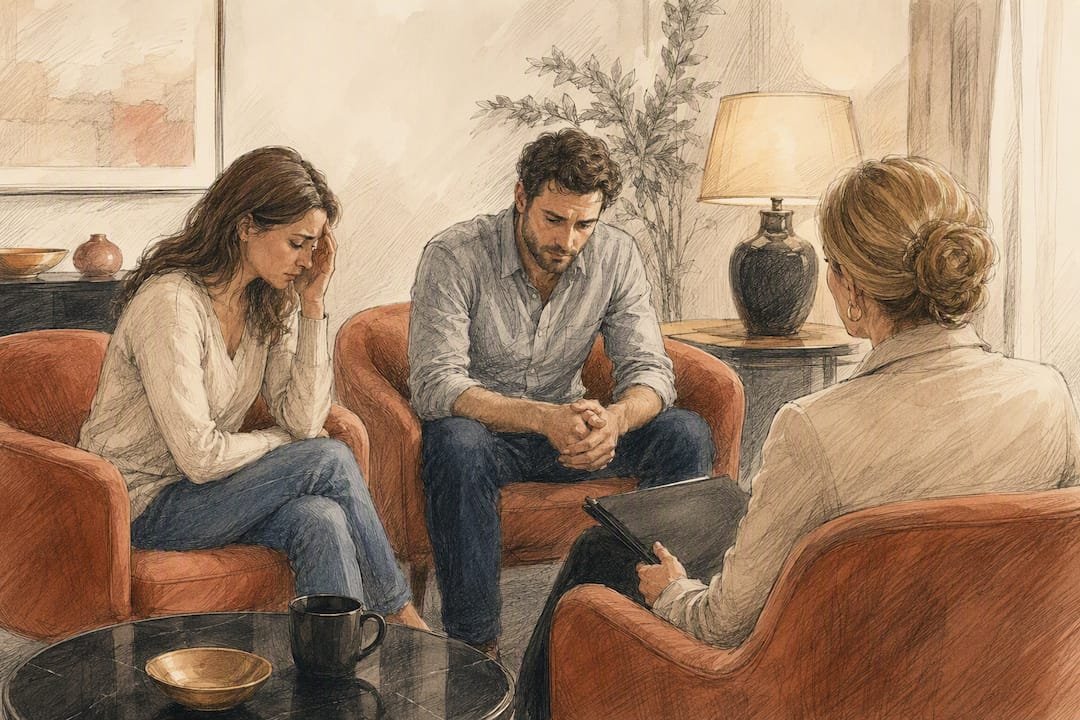
The first session is an assessment, not a crisis intervention. Your therapist will introduce the platform, confirm confidentiality arrangements, and explain how they work. They will ask about the current situation, when the affair was discovered or disclosed, what the immediate needs are, and whether both partners want to continue the relationship.
Safety and stabilisation come first. Before exploring the affair itself, the therapist will want to understand whether there is emotional safety in the room, or in this case, in both screens. They will set ground rules around communication during sessions and may ask each partner to agree on basic conduct for the weeks between appointments.
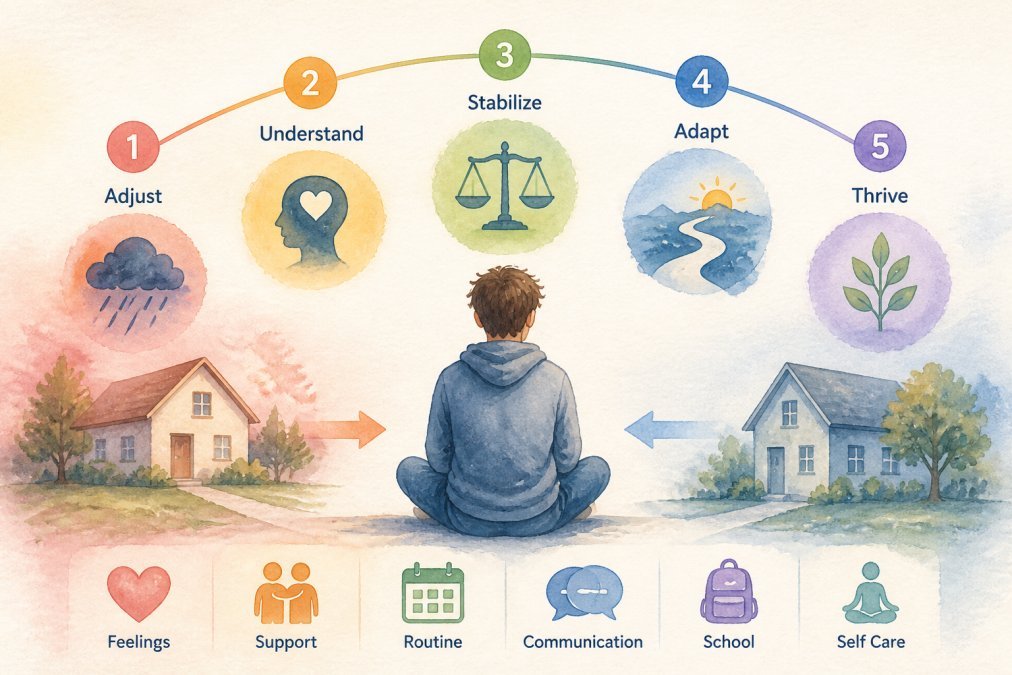
Understanding the stages of affair recovery helps frame what the therapist is assessing: are you in acute crisis, early stabilisation, or beginning to rebuild? The answer shapes everything that follows.
How remote therapy affair recovery sessions are structured
A standard online session runs 50–60 minutes. Most therapists working on infidelity recommend weekly sessions in the early phase, moving to fortnightly once stability is established. A typical course of couples work runs 12–20 sessions, though this varies significantly by circumstance.
Sessions follow a loose structure: check-in on the week, focus on a specific issue or pattern, then a closing period to regulate before logging off. The therapist manages turn-taking carefully, video calls remove some of the non-verbal cues that signal a speaker’s transition, and guides pacing to prevent one partner dominating or shutting down.
Emotionally Focused Therapy (EFT), one of the best-evidenced approaches for couples recovering from infidelity, has been successfully adapted for video delivery. Partners can attend from the same sofa or from separate rooms on their own devices, the model works either way because the therapist is tracking emotional cycles, not seating plans.
Individual vs. Couples Online Therapy: Choosing the Right Format
Not every situation calls for joint sessions from the outset, and sometimes individual work runs alongside couples therapy throughout recovery.
For the betrayed partner, the trauma response to discovering an affair can be acute, intrusive thoughts, hypervigilance, dissociation. Betrayal trauma counselling in individual sessions allows that person to process shock and stabilise without the complicating dynamics of the unfaithful partner being present. It creates space to explore feelings that may feel too vulnerable to voice in joint sessions.
For the unfaithful partner, individual therapy provides a space to examine why the affair happened without the pressure of managing a partner’s distress in the same session. Honest self-examination is harder in a joint setting where shame is amplified.
Coping strategies for the betrayed partner are often best developed one-to-one before being tested in couples sessions.
Online couples therapy is appropriate when both partners have decided, at least provisionally, that they want to explore staying together. It works best once the acute crisis has settled enough that both people can remain regulated for 50 minutes. A skilled therapist will advise on timing, sometimes recommending a few individual sessions first, then moving to joint work once both partners are ready.
Running individual and couples sessions simultaneously is possible and often clinically valuable, provided the therapists co-ordinate or at least operate with clear boundaries around what is shared.
Is Online Therapy as Effective as In-Person for Affair Recovery?
This is the most common concern, and the evidence is reassuring. Research into therapeutic alliance, the single strongest predictor of therapy outcomes, consistently shows that clients form strong working relationships with therapists they meet only via video, comparable in depth to face-to-face encounters. The emotional intensity of infidelity work does not require physical co-presence to be held safely.
Both EFT and Gottman-based approaches, the two most widely used frameworks for affair recovery counselling in the UK, have been delivered online by trained practitioners for several years with no clinical consensus that outcomes are inferior to in-person delivery. Meta-analyses of videoconferencing psychotherapy consistently find that alliance and outcomes transfer well across the format.
What matters most is the therapist’s competence and the quality of the relationship you build with them, not the room you are sitting in.
How to Get Started With Online Infidelity Therapy
Finding the right therapist takes a little groundwork, but it is straightforward. Look for a practitioner accredited with a recognised UK body, BACP, UKCP, or NCS are the main ones. Check that they have specific experience with infidelity and couples work, not just general relationship counselling. A trained EFT therapist or Gottman-trained practitioner signals evidence-based practice.
When you book a first session, ask the therapist about their approach to infidelity specifically, how they handle sessions if one partner is uncertain about staying, and what platform they use for video sessions. Reputable practitioners use encrypted, GDPR-compliant platforms, not standard consumer video calls.
The first step is smaller than it feels. A free initial assessment, taken from your own home, on your own device, without anyone else knowing, lets you establish whether the therapist feels right before committing to a full course of work. You are not signing up to anything irrevocable. You are simply opening a door.
If you are ready to explore your options, a structured affair recovery programme can provide a clear, supported path forward. The process of reconnecting after infidelity is not linear, but it begins with one private, low-commitment conversation, one you can have from the safety of home.
Book a free initial assessment at aftertheaffair.uk and take that first step on your own terms.