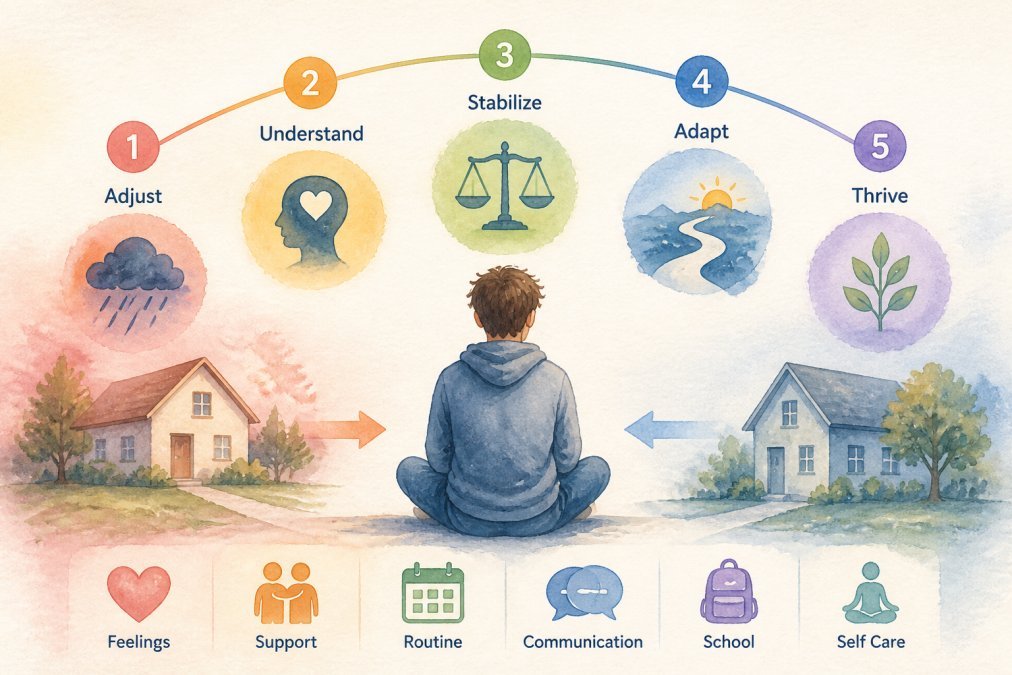
Reconnecting after infidelity is possible, but it is rarely straightforward, and it is never instant. Many couples who commit to the process do rebuild genuine closeness, sometimes deeper than what existed before. The journey demands patience, honesty, and a willingness from both partners to move forward incrementally. This guide sets out practical, gradual exercises and affair recovery stages to help you understand where reconnection fits into the wider healing process.
- Why Reconnection After Infidelity Feels So Hard
- The Foundations You Need Before Rebuilding Connection
- Emotional Reconnection Strategies: Step-by-Step Exercises
- Relationship Rebuilding Activities That Restore Closeness
- Restoring Physical Closeness Without Pressure
- When to Bring in Professional Support for Affair Recovery
Why Reconnection After Infidelity Feels So Hard
Infidelity does not just damage trust. It dismantles the felt sense of safety that makes closeness possible in the first place. Many betrayed partners describe a disorienting double loss: the person they turned to for comfort is now the source of their pain. The unfaithful partner, meanwhile, often carries shame and guilt that make authentic intimacy feel dangerous too.
The Broken Bond: What Betrayal Does to Closeness
Emotionally Focused Therapy (EFT), developed by Dr. Sue Johnson, frames infidelity as an attachment injury, a rupture to the fundamental felt sense of security with a partner. In this model, reconnection is not simply about rebuilding trust in the abstract. It is about rebuilding secure attachment: the body-level confidence that your partner is a safe place to land.
This dual wound, emotional and physical simultaneously, is what makes reconnection after infidelity feel categorically different from recovering after other relationship ruptures. Both partners are in pain. Both need something from a partner who is struggling to give it. Acknowledging that reality, without blame, is itself the first act of reconnection.
The Foundations You Need Before Rebuilding Connection
Jumping into reconnection exercises before the ground is stable can cause more harm. The exercises in this guide work best when certain preconditions are in place.
Readiness: Knowing When You’re Both Ready to Reconnect
Three things need to be true before structured reconnection is safe to attempt:
- The affair has ended completely. This includes no-contact with the affair partner, unless a genuinely unavoidable professional relationship exists, and even then, with full transparency.
- Basic honesty is established. The betrayed partner needs enough factual clarity to stop their mind filling gaps with imagined worst-cases. Full disclosure does not mean every graphic detail; it means no more active deception.
- Emotional flooding has reduced enough to hold a conversation. Neither partner needs to be fully healed. But if every interaction ends in crisis, stabilisation work, individually or with a therapist, should come first.
Reconnection is a mutual decision, not a pressure campaign. If one partner is not ready, that timeline deserves respect. Coping strategies for the betrayed partner can support individual stabilisation while the couple works toward readiness together.
Boundaries and Agreements That Make Reconnection Safe
Before beginning any exercises, agree on a few ground rules:
- Affair-free zones. Designate specific conversations, particularly the structured exercises below, as spaces where affair details are off the table. This protects the reconnection space from becoming an interrogation.
- A pause signal. Agree on a word or gesture either partner can use to pause an exercise without it meaning failure or avoidance.
- Frequency expectations. Decide how often you will practise together, and keep the commitment realistic. Two or three times a week is more sustainable than daily if daily feels overwhelming.
Rebuilding trust after infidelity runs in parallel with these reconnection efforts, the two processes feed each other, but they are not the same thing.

Emotional Reconnection Strategies: Step-by-Step Exercises
Research by Snyder, Baucom, and Gordon, authors of the empirically supported affair recovery framework in Getting Past the Affair, consistently finds that structured, guided reconnection improves relationship satisfaction over time, with forgiveness emerging as a mediator of reconnection rather than a prerequisite. You do not need to feel forgiveness before beginning. You need willingness.
Daily Check-In Rituals
The Gottman Method uses what it calls “State of the Union” meetings, a structured weekly ritual for checking in on the relationship in a contained, low-conflict format. For couples in early infidelity recovery, a lighter daily version is often more effective.
How to run a daily check-in (10–15 minutes):
- Sit facing each other, phones away.
- Each partner shares one feeling from the day, not about the affair, but about life: work, a frustration, something small that went well.
- The listening partner reflects back what they heard, without advice or problem-solving.
- Close with one specific thing you appreciated about your partner that day. It can be tiny: “You made coffee without being asked.”
The structure matters. It keeps the conversation emotionally present without opening the wound every time you speak.
Vulnerability Sharing and the ‘One True Thing’ Practice
This exercise builds gradual emotional intimacy by creating a short, low-stakes moment of honest disclosure each day.
How it works:
- Once a day, often works well at bedtime, each partner says one true thing about how they are feeling right now. Not a complaint. Not a reassurance. Just a real internal state: “I feel scared that we won’t get through this” or “I felt something soften today when you laughed.”
- The other partner says only: “Thank you for telling me that.” Nothing else. No response, no defence, no reassurance yet.
- Over days and weeks, the practice trains both partners to be honest without it triggering a crisis.
Couples frequently report that genuine emotional reconnection first arrives not in a dramatic conversation but in a small, unplanned moment, a shared laugh, a quiet act of care. These exercises create the conditions for those moments to occur.
Relationship Rebuilding Activities That Restore Closeness
Structured exercises build the container. Activities fill it with positive shared experience. Both matter.
Bonding Activities for Infidelity Recovery
Rebuilding connection after an affair works best when activities are:
- Low-stakes, no pressure to feel a particular way
- Side-by-side rather than face-to-face, parallel activity reduces the intensity of eye contact and makes presence feel safer
- Repeatable, rituals gain power through repetition
Effective options include:
- Walking together. Twenty minutes, side by side, no agenda. Movement regulates the nervous system and the side-by-side position reduces confrontational pressure.
- Cooking a meal together. A shared task with a concrete outcome. It creates natural conversation without requiring emotional depth.
- A weekly watch ritual. Choosing a series to follow together creates anticipation and shared reference points.
- Revisiting a shared favourite. A restaurant you both loved, a playlist from early in your relationship. Nostalgia can gently reactivate positive association, not to pretend nothing happened, but to remind both partners the relationship had genuine good in it.
Creating New Shared Memories
Esther Perel, couples therapist and author of The State of Affairs, argues that genuine reconnection requires couples to grieve the relationship they had and, where possible, consciously build something new, rather than attempting to return to what existed before. This is why novelty matters.
Doing something neither of you has done together before, a day trip somewhere new, a class, a project, creates memories that belong to the post-affair relationship rather than the pre-affair one. Novel experiences also produce mild positive arousal, which research on couple bonding links to increased feelings of closeness.
Think of one activity you have never done together. Plan it for within the next two weeks. Keep it simple.
Restoring Physical Closeness Without Pressure
Physical reconnection after infidelity is not a destination you can schedule. For many betrayed partners, touch that once felt natural now feels complicated, it can trigger intrusive images, grief, or a profound sense of unreality. This is normal, and it does not mean physical closeness is impossible.
The path back usually starts with non-sexual physical contact: sitting close on a sofa, a hand on the shoulder, a brief hug that neither partner rushes out of. These small gestures rebuild the body’s sense of safety with another person before any expectation of greater intimacy.
A few principles:
- The betrayed partner sets the pace, always. The unfaithful partner’s job here is patient availability, not initiation.
- Name what feels okay. Some betrayed partners find it helpful to say explicitly what kind of touch feels manageable today. This gives the other partner clear guidance and removes the guesswork that creates anxiety.
- Regression is normal. A week of feeling closer may be followed by a week of needing distance. This is not failure, it is how nonlinear healing works. A step back is not the end of progress.
When both partners feel ready to explore restoring physical and sexual intimacy after an affair, moving at a pace that feels genuinely safe, rather than expected, is what makes renewed intimacy sustainable.
On timelines: there is no universal answer to how long reconnection takes. The pace is shaped by the length of the affair, whether it was disclosed or discovered, each partner’s attachment history, and the quality of support available. Expecting a fixed endpoint tends to create pressure that slows progress. Focus on direction, not speed.
When children are involved: reconnection efforts need to account for the energy both parents are already spending on maintaining stability for their children. Shorter, more frequent exercises often work better than longer sessions. Some couples find that co-parenting effectively, showing up reliably for children together, itself becomes a meaningful bonding activity during recovery.
Managing infidelity triggers is worth reading before beginning physical reconnection exercises, as touch can unexpectedly surface triggers that feel overwhelming without preparation.
When to Bring in Professional Support for Affair Recovery
Self-guided reconnection is a valid starting point. For many couples it produces real progress. But there are clear signs that it has reached its limit and professional support is the right next step, not a failure, but a practical tool.
Consider seeking professional support if:
- The same argument or accusation loops repeatedly without resolution, despite genuine effort from both partners.
- One or both partners experience emotional flooding, a physiological shutdown or explosion that makes productive conversation impossible, most of the time you try to connect.
- The betrayed partner is experiencing persistent intrusive thoughts, hypervigilance, or sleep disruption that is not reducing over time. These can be signs of trauma responses that benefit from individual therapeutic support alongside couples work.
- Progress has stalled for several weeks and neither partner can identify why.
- There is an impasse about whether to stay or leave that neither partner feels equipped to navigate alone.
Couples therapy after infidelity outlines what EFT, the Gottman Method, and structured affair recovery programmes offer in practice. Structured programmes give both partners a clear framework, pacing, and professional containment, making it easier to do the difficult work without it destabilising daily life.
If you are unsure whether your reconnection efforts are on track, AfterTheAffair’s free assessment tool can help clarify where you are in the process and what kind of support fits your situation. It is a practical starting point, not a commitment, and for many couples, it is where genuine recovery begins to accelerate.
Can a couple genuinely reconnect after infidelity? Yes, with honesty, mutual willingness, and the right support in place, many do. The damage is real, but it is not always permanent. What exists after the work is done is rarely a return to what was there before. It is, if both partners choose it, something more consciously built.