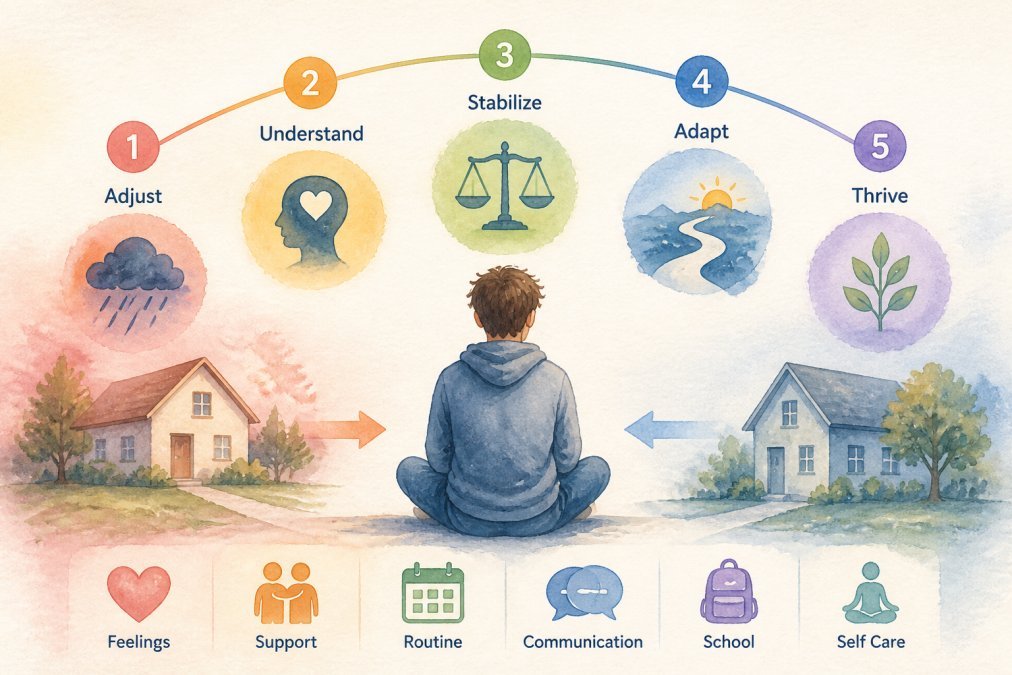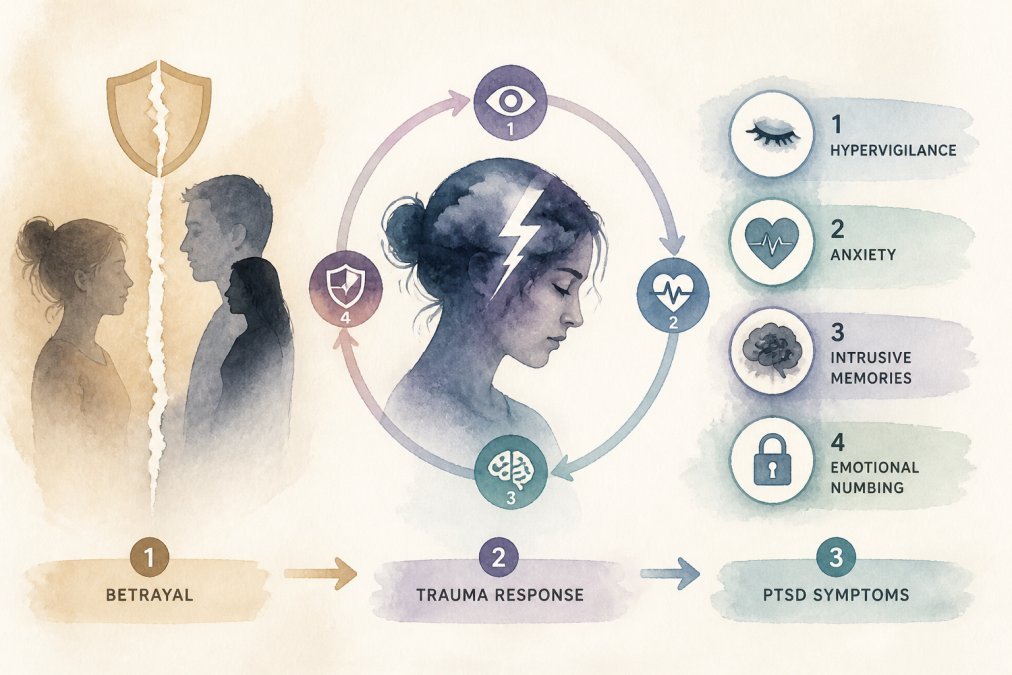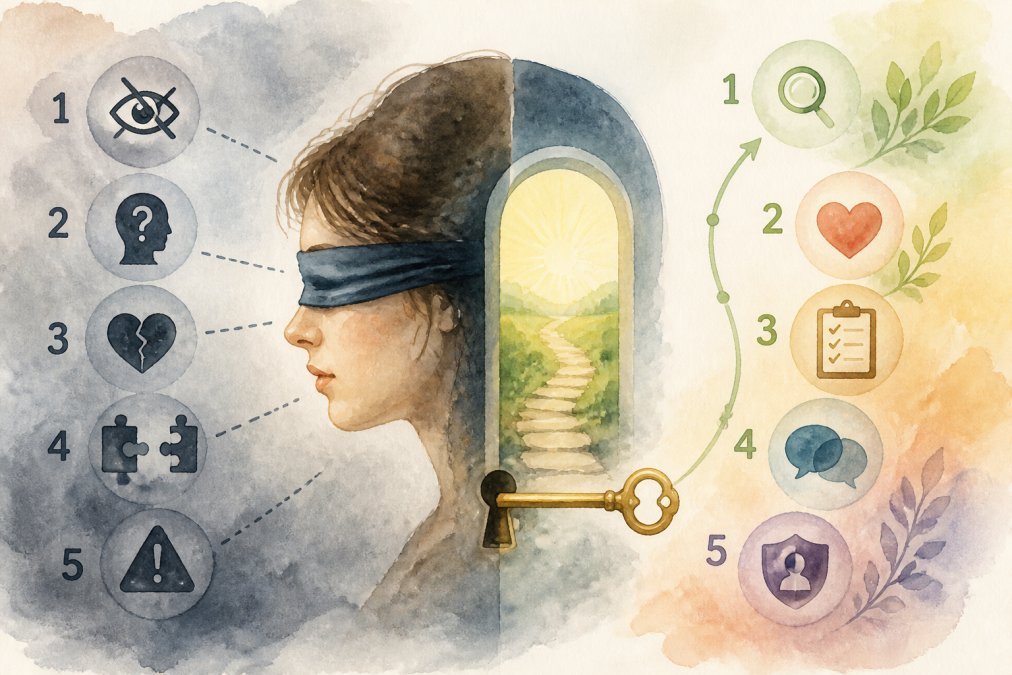
When infidelity shatters the relationship, it often shatters the self-story alongside it. This is the wound that recovery plans most often miss.
TL;DR:
Infidelity does not only break a relationship. It breaks a narrative — the story a person has been telling about their life, their partnership, their choices, and who they are. In the aftermath, many survivors find themselves not just grieving what they have lost, but genuinely disoriented about who they are without the version of themselves that existed inside that story. This is identity rupture, and it is one of the most significant and least-addressed dimensions of betrayal trauma. This article explains what identity rupture looks like after infidelity, why it happens, and what the process of rebuilding a sense of self actually involves.
Key Takeaways
| Point | What this means for you |
|---|---|
| Infidelity ruptures identity as well as relationship | The self-story built inside and around the partnership is part of what is destroyed. |
| “I don’t recognise myself” is a clinical description, not a metaphor | Identity disruption is a documented feature of complex trauma. |
| This is not the same as grief | Grief is the response to losing something external. Identity rupture is the loss of an internal framework. |
| Recovery is not about returning to who you were | The pre-betrayal self existed inside a story that was not wholly true. Recovery builds something more honest. |
| Identity rebuilding is active work, not passive recovery | It does not happen by waiting for the pain to reduce. It requires deliberate engagement with the question of who you are becoming. |
The Self-Story That Infidelity Destroys
We all carry a story about our own life. It is not always conscious. It is rarely examined in detail. But it is the underlying narrative that gives our choices meaning, our relationships context, and our sense of self continuity over time.
For most people in long-term relationships, that story is woven through the partnership. Not entirely — people are not only their relationships — but substantially. The partner is part of how the story makes sense. Shared history. Shared decisions. The future that was being built together.
When infidelity is discovered, it does not just interrupt that story. It retroactively destabilises a significant portion of it.
The holiday that existed as a happy memory is recontextualised. The period when you felt closest is now the period when you were most deceived. The version of your partner you thought you were building a life with turns out to contain a dimension you were not given access to. The future you were planning was being planned inside a framework that was not, in important ways, real.
This is not metaphorical. The narrative collapse that follows discovery is a genuine rupture in the story a person has been using to understand their own life. And when the story breaks, the identity that was organised around it becomes unstable.
What Identity Rupture Actually Feels Like
Survivors describing identity rupture often use language that sounds extreme and is actually accurate.
“I don’t know who I am anymore.”
“I feel like a stranger in my own life.”
“Everything I thought was true about myself turns out to have been built on something false.”
“I don’t know what I want. I don’t even know if I know what I want.”
“I look in the mirror and I don’t recognise the person looking back.”
These are not dramatic overstatements. They are descriptions of a genuine experience of self-discontinuity — the feeling that the person you were, the one who made those choices and lived that life and had those certainties, is no longer accessible in the way they were before.
Identity rupture looks different from grief. In grief, you know who you are. You are a person who has lost something. The self is intact; it is mourning. In identity rupture, the self itself is what has become uncertain. You are not just mourning what was lost externally. You are disoriented about the internal structure that the loss was built around.
Why This Is Not Just Grief
Grief is the appropriate and healthy response to loss. It has a recognisable shape, a process, a direction — even if a non-linear one. Most models of recovery from infidelity treat what survivors experience primarily as a grief process, and grief is certainly part of it.
But identity rupture is a distinct phenomenon that requires different attention.
When a relationship ends through death, the bereaved person grieves an external loss. Their sense of self, though altered by the loss, remains fundamentally intact. They know who they are; they are a person navigating life without someone they loved.
When infidelity ruptures both the relationship and the self-story, the survivor is not just navigating life without someone. They are navigating life without the version of themselves that was organised around that story. They have lost, in some important sense, a self they were inhabiting — and they have not yet found or built the one that replaces it.
This is the distinction that matters. Grief resolves by processing the loss. Identity rupture resolves by building something. Those are different tasks, and they need different support.
The Specific Dimensions of Identity Most Affected
Identity as a partner. For most people in long-term relationships, being someone’s partner is a significant part of their self-concept. Infidelity disrupts this whether the relationship continues or ends. If it ends, the role is gone. If it continues, the role is profoundly altered — you are still a partner, but what that means is different now, and the old version of it is no longer available.
Identity as someone with good judgment. Many survivors describe a deep uncertainty about their capacity to assess people, situations, and relationships accurately. If I was wrong about this, what else am I wrong about? This connects closely to the self-trust collapse covered in the first article in this series, but it has an identity dimension specifically: “being a person with good instincts” may have been a significant part of how the survivor understood themselves.
Identity built around the shared future. The plans, the goals, the vision of what the life was moving toward — these were part of the self-story. Children, homes, careers shaped around the partnership, plans that made sense inside the relationship context. When the relationship ruptures, those futures rupture with it, and with them a significant piece of the self-narrative that was organised around them.
Identity as someone who was chosen and valued. Infidelity carries an implicit message that can feel, however inaccurately, like a verdict on the survivor’s worth. Even survivors who intellectually understand that the affair was about the partner’s choices rather than their value still find this dimension affecting their sense of themselves. The experience of being replaced, even partially and secretly, leaves a mark on how the self is perceived.
Identity built around certainty about the relationship. Some survivors had a significant part of their self-understanding invested in the quality or solidity of the partnership. “We are solid.” “We are the couple that made it work.” “I know my relationship.” The discovery does not just shatter the relationship. It shatters the certainty itself as a feature of the person’s identity.
Common Ways Identity Rupture Shows Up in Recovery
Not knowing what you want. Decisions that felt clear before — about the relationship, about the future, about ordinary preferences — become opaque. This is partly the dissociation and dysregulation of the trauma. It is also partly that the self that used to have clear wants is temporarily inaccessible.
Loss of interest in things that previously mattered. Hobbies, friendships, professional goals, activities that used to carry meaning — these can feel empty or irrelevant in the aftermath of infidelity. This overlaps with depression, but it also reflects the genuine reality that many of those things carried meaning within a self-story that has now been disrupted.
A sense of being in someone else’s life. Dissociation and derealization are recognised trauma symptoms. The specific flavour of them in identity rupture is the experience of going through the motions of a life that no longer feels authentically yours — as though you are performing the role of yourself in a play whose script no longer makes sense.
Difficulty making decisions about the future. Because the future was organised around a narrative that is now broken, constructing a new vision for it requires first establishing a new identity framework to organise it around. Many survivors find themselves paralysed at this point — not because they lack the capacity to plan, but because the self who would be doing the planning feels uncertain.
An uncomfortable relationship with the pre-betrayal self. Some survivors find themselves estranged from who they were before — as though that version of themselves, the one who existed inside the pre-discovery story, is both deeply familiar and impossibly naive. This can produce a specific kind of grief: mourning a version of yourself, not just a version of the relationship.
What Rebuilding Identity After Infidelity Actually Involves
Accepting that the pre-betrayal self is not coming back. This sounds harsh. It is actually liberating. The pre-betrayal self existed inside a story that was not wholly accurate. Returning to that person is not the goal and not the possibility. The goal is building someone more grounded, more honestly self-aware, and more securely themselves than the person who went into that relationship.
Deliberately engaging with who you are outside the relationship narrative. What are your values, separate from who you were as this person’s partner? What matters to you that predates this relationship or exists independently of it? What have you always believed, wanted, been drawn toward — that has nothing to do with the story that was just broken? These are not rhetorical questions. They are the beginning of an identity reconstruction process.
Treating the rupture as information, not only as loss. The collapse of the self-story is painful. It is also, in a specific and uncomfortable sense, honest. The story it disrupted contained false elements. A self rebuilt in its aftermath is one built on a more accurate understanding of both yourself and of what relationships can and cannot guarantee. That is not a consolation prize. It is a genuine gain, though it tends to be visible only from the other side of the pain.
Allowing the new self to be different. Many survivors find that the person emerging from betrayal trauma is different from the one who went in — in values, in what they find important, in what they are no longer willing to accommodate, in what they now know about themselves. This is not damage. It is growth that was produced by adversity, and it belongs to you.
Not rushing the construction. Identity rebuilding is not something that can be forced. It happens in the space created by surviving something hard, by gradually re-engaging with what matters, by accumulating new experiences and small recoveries of self. Therapy can support and accelerate it. It cannot substitute for the time it takes.
My Perspective
Of all the dimensions of betrayal trauma I have worked alongside and thought about, the identity question is the one I find most important to address explicitly — and the one most recovery approaches leave implicit.
Most frameworks focus on the relationship: can it be repaired, how, over what timeline. Or they focus on the symptoms: the hypervigilance, the intrusive thoughts, the nervous system dysregulation. All of that work matters enormously.
But underneath it is a person who is trying to rebuild a sense of who they are in the aftermath of something that broke not just their relationship but their story about themselves. And if that is not addressed — if the work stops at symptom management and relational repair without ever reaching the identity question — then recovery is incomplete in a specific way that tends to show up later.
It shows up as a persistent sense of emptiness that the reduced symptoms did not fill. As a flatness in the rebuilt life that was supposed to feel better than this. As a difficulty fully investing in the future because the self who would inhabit it does not yet feel solid.
You are not who you were before. That person lived in a story that has been broken. But the breaking of that story is not the end of yours. It is the point where you get to write the next part more honestly, with more information, and with a self that has been through something hard enough to know what it is made of.
That is not a small thing.
— S.J.Howe
FAQ
Is it normal to feel like I don’t know who I am after my partner’s affair? Yes. Identity disruption is a recognised feature of complex and relational trauma. The sense of not recognising yourself, or of feeling like a stranger in your own life, is a genuine and common experience after infidelity — not a sign of pathology or exaggeration.
Will I ever feel like myself again? You will feel like a self again. Whether it feels like the same self is a more complicated question. Most survivors describe feeling more grounded and more authentically themselves over time, but different from who they were before. Not diminished — different. The pre-betrayal self existed inside a story that contained false elements. The post-recovery self tends to be built on more honest foundations.
Why have I lost interest in things I used to care about? This connects to both the depressive dimension of betrayal trauma and the identity rupture specifically. Many of the things that carried meaning did so within a self-narrative that has been disrupted. As a new narrative gradually forms, meaning tends to return — sometimes to the same things, sometimes to different ones.
I feel like I don’t know what I want anymore. Is that normal? Yes, and it makes sense. Wanting requires a self that has preferences, values, and a sense of what it is moving toward. When the identity framework becomes unstable, access to clear wants tends to go with it. This returns as the identity stabilises. It is not permanent.
Should I make major life decisions while I am in this state? Where possible, delaying major irreversible decisions during the acute phase is wise. The identity instability of the immediate aftermath is not the best condition for making choices that will significantly shape what comes next. That said, some decisions cannot wait. In those cases, working with a therapist to separate trauma-driven impulse from genuine values-based direction is important.