TL;DR:
- Serial cheating involves deliberate, repeated infidelity driven by secrecy and emotional disconnection, not a single mistake. Early warning signs include emotional withdrawal, device hiding, and resistance to therapy, with neurochemical addiction reinforcing the behavior; genuine change requires structural transparency and observable consistency over at least 90 days. Managing ongoing coworker contact and prioritizing self-protection through testing, therapy, boundaries, and patience are essential steps, as trust rebuilding can take years and demands realistic expectations.
If you’ve found yourself wondering whether your partner’s infidelity is a pattern rather than a mistake, you are not alone, and your instincts deserve to be taken seriously. The question of whether your partner is a serial cheater carries a specific weight that a single discovered affair does not. Serial cheating, known clinically as compulsive infidelity or philandering behavior, is a fundamentally different beast from a one-time situational affair. It involves practiced deception, emotional compartmentalization, and often a neurological pull that promises alone cannot break. This guide will help you recognize the signs, understand the psychology, and decide what to do next.
- Key Takeaways
- Is your partner a serial cheater? Understanding what that means
- Warning signs of a serial cheater that go beyond the obvious
- The neuroscience behind why serial cheaters keep cheating
- When the affair partner is a coworker
- Protecting yourself and beginning to heal
- My perspective: what I’ve learned about trusting your gut
- FAQ
Key Takeaways
| Point | Details |
|---|---|
| Serial cheating is distinct | It follows a repeated, high-frequency pattern driven by compartmentalization, not a single lapse in judgment. |
| Emotional withdrawal is the earliest warning | Reduced check-ins, fading intimacy, and defensiveness often precede physical evidence of cheating. |
| Brain chemistry plays a role | Dopamine and secrecy-driven reward loops make serial cheating neurochemically similar to addiction. |
| Coworker affairs need specific boundaries | Ongoing proximity to an affair partner at work requires direct conversations about contact and may justify a job change. |
| Recovery requires structure, not just promises | Lasting change demands external accountability and observable behavioral shifts over at least 90 days. |
Is your partner a serial cheater? Understanding what that means
Serial cheating is not simply cheating more than once. It is a behavioral pattern where infidelity becomes a practiced skill, complete with systems of secrecy, emotional disconnection from the primary relationship, and the ability to maintain two separate emotional worlds simultaneously. Psychologist Dr. Shirley Glass described this as “philandering patterns,” distinguishing them sharply from situational affairs that arise from circumstance, vulnerability, or crisis.
To understand the difference, consider this: a situational affair often involves one connection, frequently accompanied by guilt, disclosure, and genuine disruption to the person’s sense of self. A serial cheater, by contrast, has typically repeated infidelity 15 to 20 times in a given year, built separate emotional compartments, and developed a practiced fluency in deception that feels almost automatic.
“The problem isn’t just the cheating. It’s the architecture of secrets they’ve built around it.” This distinction matters enormously for how you approach recovery, because the tools that help after a situational affair, such as time, apology, and couples therapy, are rarely sufficient on their own when the pattern runs this deep.
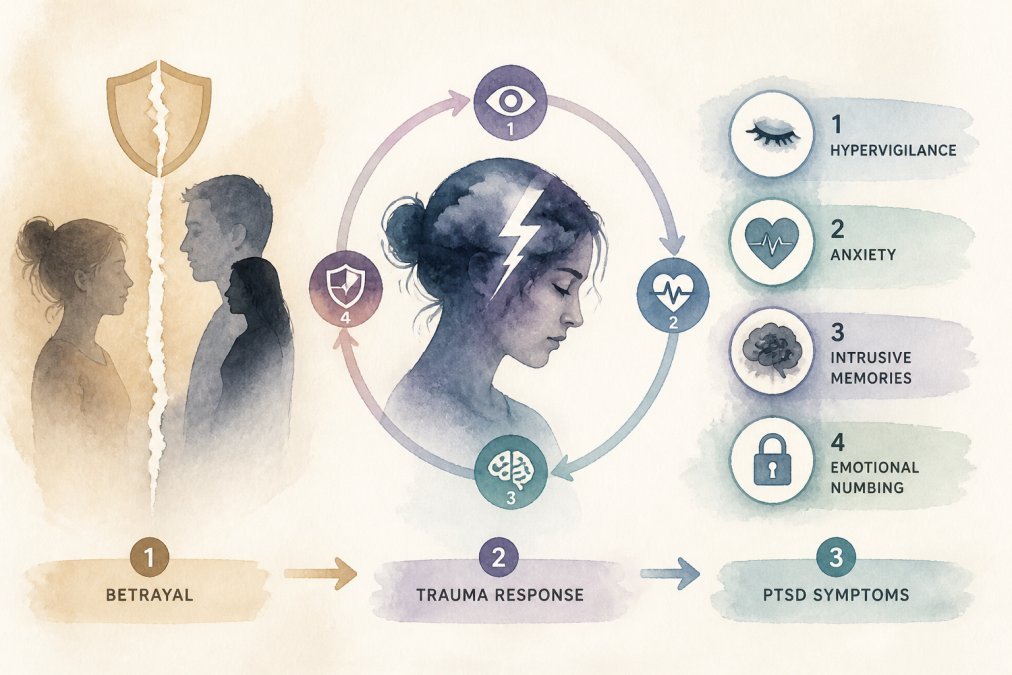
What makes serial cheating particularly confusing for the betrayed partner is the concept of betrayal blindness. Your mind resists seeing what contradicts the relationship you believe you have. The compartmentalization your partner has mastered works partly because it exploits that resistance. Recognizing these systemic deception patterns, rather than isolated incidents, is the first step toward clarity.
Warning signs of a serial cheater that go beyond the obvious
Most people imagine discovering cheating through a found text message or a suspicious receipt. But the signs of a cheating partner who operates serially tend to be subtler and more behavioral than evidential, especially in the early stages.
Emotional withdrawal is consistently the earliest and most reliable red flag, more so than any physical evidence. When your partner stops checking in during the day, becomes less curious about your life, and withdraws physical affection without a clear external reason, their emotional energy is likely engaged somewhere else. This shift in reciprocity often precedes any discoverable physical evidence by weeks or months.
Beyond emotional distance, watch for these specific warning signs of cheating:
- A history of cheating in previous relationships. People who have cheated once are three times more likely to cheat again, independent of relationship satisfaction.
- Device hiding and sudden privacy around phones or laptops, especially paired with explanations that don’t quite fit.
- Minimizing or rationalizing past infidelities, framing them as “not that serious” or “a long time ago.”
- Resistance to therapy or mental health support. Serial cheating is often tied to untreated psychiatric conditions like ADHD, attachment disorders, or impulse control issues, and resistance to addressing these is a significant pattern.
- An attitude that monogamy is unrealistic, expressed subtly or outright.
- Lying about intimacy with you, including claims about frequency or satisfaction that don’t match your experience.
Pro Tip: Pay less attention to what your partner says they feel and more attention to what they consistently do. Serial cheaters are often skilled at verbal reassurance. Behavior over time is the real data.
Early emotional disengagement shows up as decreased reciprocity, fading shared plans, and less personal disclosure from your partner toward you. These are not ambiguous signals. They are a diagnostic pattern worth trusting.
The neuroscience behind why serial cheaters keep cheating
Understanding why serial cheating continues despite remorse is one of the most clarifying things you can do for yourself. It shifts the question from “why don’t they just stop?” to “what would actually need to change for them to stop?”
The short answer: promises are not enough, because the problem is neurological.
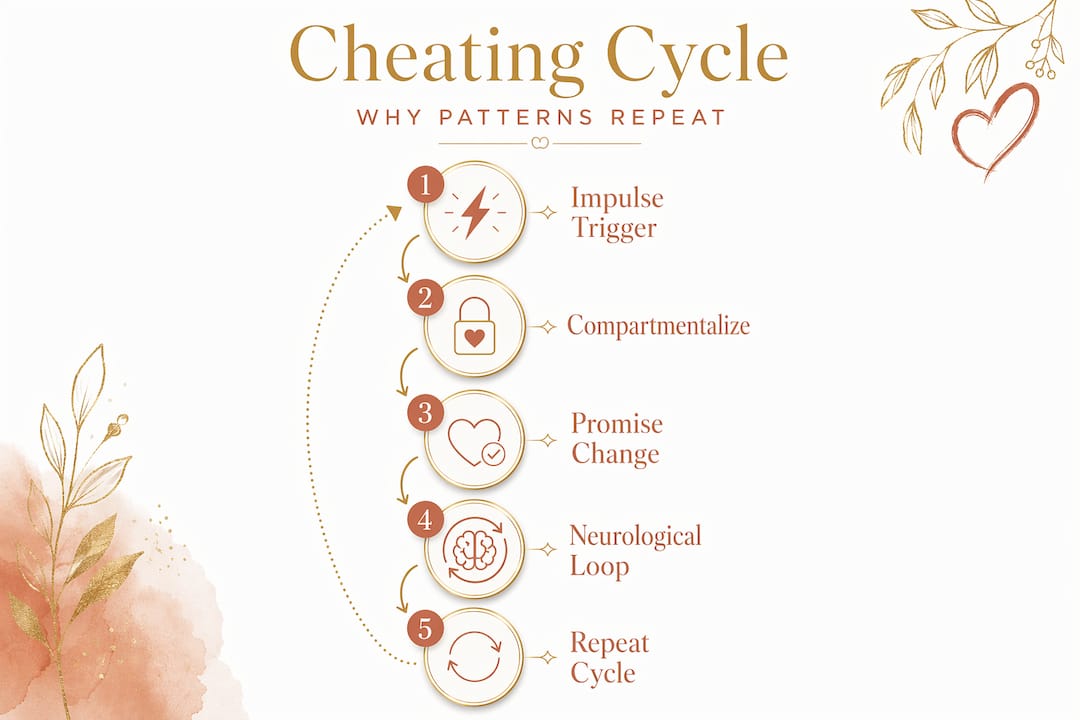
The brain’s reward system is activated powerfully by the specific cocktail of secrecy, novelty, and risk that serial cheating provides. Dopamine, norepinephrine, endorphins, and oxytocin flood the brain in this context, creating a loop that functions much like a substance addiction. The neural pathways that have been reinforced through repeated behavior don’t simply rewire because someone feels bad about what they’ve done.
Here is what genuine change actually requires:
- Removal of secrecy at a structural level. This means no private devices, transparent location sharing, and open access to communication tools — not as punishment, but as conditions that interrupt the neurochemical loop.
- External accountability. Internal remorse alone does not produce lasting behavioral change. External social consequences, a therapist, a support group, or a formal accountability structure are all necessary.
- Observable behavioral consistency over at least 90 days. New neural pathways take time to establish. Any therapist or researcher working in this space will tell you that change cannot be verified in days or weeks.
- Treatment of underlying conditions. If impulse control or untreated mental health issues are contributing, therapeutic intervention must address those specifically, not just the cheating behavior.
Suppressing behavior is not the same as changing it. A partner who stops cheating because they fear getting caught again is managing behavior. A partner who is genuinely changing is rebuilding the internal and external structure of their life around transparency.
This distinction matters because it helps you evaluate what you’re actually seeing when your partner says they’ve changed. Real change is visible and verifiable. You should not have to take it on faith.
When the affair partner is a coworker
Affairs with coworkers introduce a layer of complexity that deserves its own attention. Ongoing proximity to an affair partner makes recovery harder by design. You are not being unreasonable if you find yourself asking whether your partner should change jobs. That question is valid, and it reflects a real understanding of what healing requires.
Managing ongoing contact with an affair partner at work is genuinely one of the most difficult aspects of post-infidelity recovery. Here is what to consider:
- Contact frequency matters. Daily one-on-one interaction with an affair partner at work is not the same as working in the same company. Be specific about what contact actually looks like.
- Is a job change realistic? This question requires a direct, non-accusatory conversation. Asking “what would it take for you to move to a different role or team?” is more productive than an ultimatum delivered in crisis.
- What conversations need to happen? After a coworker affair, you have the right to ask directly: what is the communication policy at work, who knows about the affair, and what boundaries will exist going forward.
- Recovery timelines are longer with ongoing contact. Trust rebuilding when an affair partner remains present daily is genuinely slower, and it is fair to factor that into your decisions.
Pro Tip: If your partner refuses to discuss workplace boundaries at all, that refusal tells you something important. Willingness to have hard conversations, even uncomfortable ones, is one of the clearest indicators of genuine commitment to change.
It is not unreasonable to ask your partner to change jobs after cheating when the coworker affair created the conditions for serial infidelity. Whether they are willing to consider that request is a piece of information you need.
Protecting yourself and beginning to heal
Discovering that your partner is unfaithful, especially when it’s a pattern rather than a single event, demands that you treat yourself as a priority from day one. The following steps are grounded in what therapists consistently recommend.
- Stop sexual intimacy immediately and get tested. This is a health decision, not a punishment. Therapists recommend pausing intimacy and seeking STI testing without waiting for a full confession. Protect yourself first.
- Begin individual therapy. Your own processing needs to happen in a space that is entirely yours. Individual therapy gives you clarity that couples therapy, which focuses on the relationship, cannot always provide.
- Consider couples therapy carefully. Couples therapy after infidelity works best when the unfaithful partner is genuinely accountable, not still minimizing. Starting too soon, before accountability is established, can actually entrench harmful dynamics.
- Set and communicate your boundaries. Boundaries are not about controlling your partner. They are about defining what you need to feel emotionally safe. For practical guidance on what boundaries actually look like, Aftertheaffair offers a dedicated resource on setting effective boundaries post-infidelity.
- Pause major future plans. Vacations, financial commitments, and life decisions made in a state of betrayal trauma rarely reflect your true needs. Give yourself permission to put those on hold.
- Lean on your support network. Isolation makes recovery slower. Trusted friends, family, or a peer support group matter more than most people allow themselves to admit.
| Action | Why it matters |
|---|---|
| Get STI tested immediately | Repeated infidelity carries real health risks that cannot wait |
| Start individual therapy | Builds your own clarity separate from the relationship dynamic |
| Establish written boundaries | Verbal agreements after betrayal are too easily minimized or misremembered |
| Pause major decisions | Betrayal trauma distorts long-term judgment temporarily |
| Track behavioral consistency | Lasting change shows up in behavior over months, not words over days |
The rebuilding trust timeline after serial infidelity is measured in years, not months. That is not pessimistic. It is realistic, and realistic expectations protect you from premature reconciliation and preventable re-injury.

My perspective: what I’ve learned about trusting your gut
In my experience working with people rebuilding after infidelity, the detail that most people say in hindsight is this: “I knew something was wrong before I had any proof.” Emotional withdrawal was the signal they felt but talked themselves out of trusting. The discomfort of that knowing, of living with suspicion while wanting to be wrong, is one of the heaviest burdens the betrayed partner carries.
What I’ve found consistently is that the hardest part isn’t discovering serial cheating. It’s deciding what to do with that knowledge when your partner seems genuinely remorseful. Remorse is real and still insufficient. That combination is what makes this so difficult.
I’ve also seen the trap that many betrayed partners fall into: becoming the watchdog in their own relationship. Checking phones, tracking movements, demanding daily proof. I understand why it happens. But it is exhausting and ultimately corrosive to your own sense of self. The goal is not to become the enforcement mechanism for your partner’s integrity. Real change has to be their work to do, with accountability built into the structure of their life, not into your vigilance.
What I most want you to hear is this: you deserve a relationship where you don’t have to police the person you love. Deciding whether to stay or go requires you to honestly assess not just whether your partner can change, but whether what they are offering is actually enough for you.
— S.J.Howe
Ready to take your next step in recovery?
Discovering serial cheating is one of the most disorienting experiences a person can go through, and knowing where to start your recovery matters. Aftertheaffair has developed structured, evidence-informed resources to guide you through every stage of this process. The 7-step infidelity recovery checklist is an excellent starting point, walking you through the most critical decisions and self-care actions in the right order. For couples who want to understand what rebuilding actually looks like, the relationship growth after infidelity guide offers grounded, practical strategies. You don’t have to figure this out alone, and you don’t have to start from zero.
FAQ
What makes someone a serial cheater?
A serial cheater engages in repeated infidelity as a pattern rather than a single lapse, often involving compartmentalization and practiced deception rather than situational vulnerability.
What is the most reliable early sign of a cheating partner?
Emotional withdrawal is consistently the earliest and most reliable indicator, including reduced check-ins, decreased intimacy, and growing defensiveness.
Can a serial cheater genuinely change?
Change is possible but requires structural transparency, external accountability, and treatment of underlying issues. It takes measurable behavioral consistency over at least 90 days, not just remorse.
Is it reasonable to ask my partner to quit their job if they cheated with a coworker?
Yes. Ongoing daily contact with an affair partner at work significantly slows recovery, and asking for a role or workplace change is a legitimate boundary, not an overreaction.
How long does recovery from serial infidelity take?
Recovery is typically measured in years rather than months, especially when the infidelity was repeated. A realistic trust rebuilding timeline helps you set expectations that protect your emotional health.
Recommended
- Spotting the signs of infidelity: Key patterns and how to cope
- After Cheated: Now What? – After the Affair Series
- Will a Married Partner Leave Their Spouse? A Realistic Guide – After the Affair Series
- Serial Cheating vs. Opportunistic Affairs – After the Affair Series