Managing your partner’s family after they cheated comes down to three things: controlling what you share, setting firm limits on how family members engage with your relationship, and protecting your own healing above all else. The family dynamics that follow infidelity can be just as destabilizing as the affair itself. You are already carrying a trauma load. The last thing you need is a mother-in-law who won’t stop relitigating the affair at Sunday dinner, or a sibling-in-law who treats your partner like a permanent outcast while you’re actively trying to rebuild.
- How do you handle your partner’s family after they cheated?
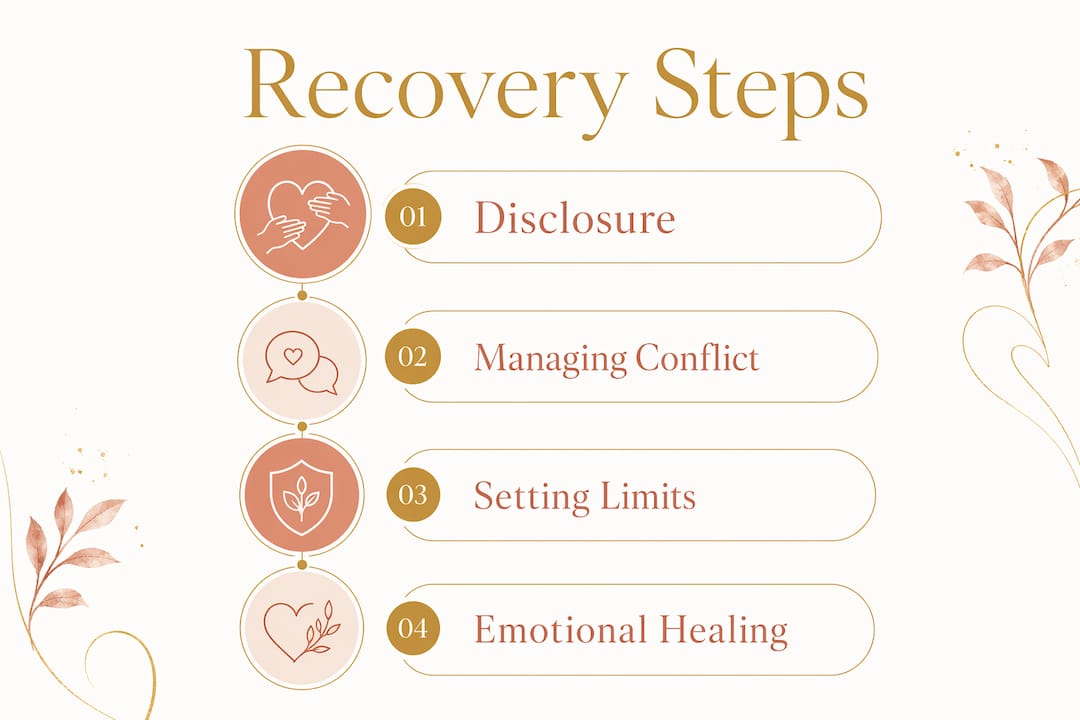
- 1. Deciding whether and how to tell your partner’s family about the affair
- 2. Navigating disapproval and conflict from your partner’s family
- 3. Setting and maintaining healthy limits with your partner’s family
- 4. Supporting emotional healing while managing family interactions
- Key Takeaways
- The part of this conversation most guides skip
- FAQ
How do you handle your partner’s family after they cheated?
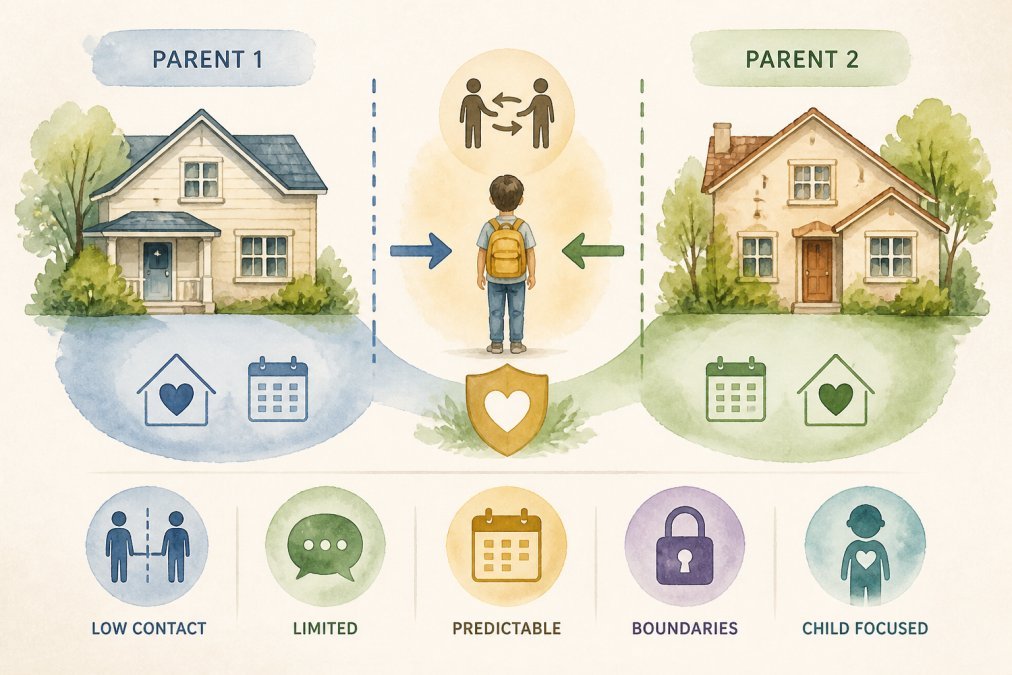
The most effective starting point is a united front with your partner, agreed upon before any family member gets involved. That means deciding together what to share, who to tell, and what kind of support you’re actually asking for. Without that agreement, family members fill the silence with their own narratives, and those narratives rarely serve your recovery.
Here is what that looks like in practice:
- Agree on a scripted message. Keep it brief: you’re working on your relationship, you’d appreciate support, and you’re not sharing details. That’s it.
- Limit the circle. The fewer people who know the specifics, the fewer opinions you have to manage. Infidelity recovery requires making major decisions without external interference pulling you in different directions.
- Ask explicitly for positive support. Don’t assume family members know what helpful looks like. Tell them directly.
- Set boundaries before the first family interaction. Reactive boundary-setting, done in the heat of a tense dinner, rarely lands well. Decide in advance what topics are off-limits.
- Have your partner handle their own family. The unfaithful partner needs to independently repair relationships with their own family members, not rely on you to smooth things over.
- Recognize when professional help is needed. If family conflict is escalating or undermining your recovery, couples therapy is the most effective tool for navigating that terrain.
Pro Tip: Before any family gathering, agree on a code word with your partner. When one of you says it, you leave within 15 minutes, no questions asked. This exit strategy removes the pressure of having to endure a situation that’s actively harming your healing.
1. Deciding whether and how to tell your partner’s family about the affair
The decision to disclose is not binary. You can acknowledge that something serious happened in your relationship without handing over every detail. Experts recommend scripting what you share with family and asking specifically for positive support, rather than opening the floor to opinions and judgment.
The case for limited disclosure is strong. Once information is out, you cannot take it back. Family members who learn the full story often carry their own anger long after you’ve moved toward healing, and that anger becomes your problem to manage at every holiday, birthday, and family event. The betrayed partner may eventually feel protective of their partner, and then find themselves in the strange position of defending the person who hurt them to the very people who were supposed to be supportive.
What a controlled disclosure looks like:
- Choose one or two trusted family members, not a group announcement.
- Use a prepared statement: “We’ve been going through something serious, we’re working on it together, and we’d appreciate your support without pressure for details.”
- Emphasize the work being done, not the event itself.
- Make clear that you’ll update them when there’s something to update, and that further questions aren’t helpful right now.
- Keep the story consistent across anyone who is told, to prevent conflicting versions from circulating.
The timing matters too. Disclosing in the immediate aftermath, when emotions are still raw and decisions haven’t been made, often leads to oversharing. Waiting until you and your partner have at least a basic plan gives you more control over the narrative and reduces the risk of family members trying to influence a decision you haven’t made yet.
One more thing worth naming: if the relationship ends, the calculus changes. You don’t owe anyone a sanitized version of events. But even then, the goal of disclosure should be clarity and closure for yourself, not a campaign to assign blame.
2. Navigating disapproval and conflict from your partner’s family
Family members who learn about an affair often respond with moral certainty. They’ve decided who the villain is, and they’re not interested in nuance. That can be directed at the unfaithful partner, which is uncomfortable but understandable. It can also, surprisingly, be directed at the betrayed partner for choosing to stay, which is a particular kind of cruelty that many people don’t anticipate.
The emotional intensity from family is real, and it tends to peak early. What makes it complicated is that the betrayed partner’s feelings toward family criticism are rarely straightforward. You might feel grateful that someone is angry on your behalf, and then furious when that same anger makes your partner’s presence at family events unbearable. Both responses are valid. They just don’t coexist easily.
Strategies for managing family conflict:
- Don’t engage with criticism in the moment. Prepared responses like “This isn’t something I’m comfortable discussing right now” or “We can talk about this another time” shut down escalation without creating new conflict.
- Coordinate with your partner before any family interaction. Agree on what you will and won’t respond to, so you’re not improvising under pressure.
- Avoid trying to convince resistant family members that your decision is right. Setting strong boundaries sometimes means accepting that certain family members won’t come around, and arguing with them only prolongs the conflict.
- Present a united front. When family members see division between you and your partner, they often feel licensed to push harder.
- If hostility is persistent and affecting your recovery, family therapy or a professional mediator can help navigate what direct conversation cannot.
Pro Tip: Write out two or three responses to the most likely comments before any family event. Rehearsing them out loud makes them easier to deliver calmly when the moment arrives.
The hardest part is often not the family member who’s openly hostile. It’s the one who frames their interference as concern, who asks pointed questions under the guise of caring, or who rallies other family members behind the scenes. That kind of behavior requires the same firm response, just delivered more quietly.
3. Setting and maintaining healthy limits with your partner’s family
Boundaries after infidelity are not about punishment. They’re about creating the conditions under which healing is actually possible. Without them, family members who mean well can still cause harm, and family members who don’t mean well will cause harm reliably.
The most effective boundaries are specific and framed around your own needs rather than demands on others’ behavior. Psychology Today’s guidance on post-infidelity boundaries makes this distinction clearly: a boundary that says “you cannot talk about the affair” is a demand on someone else’s behavior. A boundary that says “when the affair is brought up at family events, we will leave” is a statement about what you will do. The second one is far more enforceable and far less likely to generate resentment.
Practical boundary-setting after infidelity:
- Identify the specific interactions that are harming your recovery. Is it a particular family member? A recurring topic? Certain events?
- Communicate limits clearly and once. You don’t need to justify them at length or repeat them every time.
- Your partner enforces limits with their own family. This is not optional. A partner who won’t advocate for your healing with their own relatives is a partner who isn’t fully committed to the repair process.
- Well-reasoned boundary requests focused on self-preservation are far less likely to make family members feel attacked or manipulated than demands framed as rules they must follow.
- Adjust limits as healing progresses. What you need in the first three months is different from what you need at the one-year mark.
- Recognize when limiting contact is the right call. Sometimes a family member’s behavior is consistently harmful enough that reducing or temporarily ending contact is the only way to protect your recovery.
Boundaries are also an act of integrity. Trying to convince a family member who doesn’t believe the affair happened, or who insists you should have left, is almost always a losing effort. The boundary-setting approach that works is one grounded in your own values and actions, not in winning an argument.
One thing that catches people off guard: the betrayed partner sometimes needs limits not just with the unfaithful partner’s family, but with their own. Well-meaning relatives who keep the wound open with constant questions, or who pressure you to leave when you’ve decided to stay, can be just as destabilizing. The same principles apply.
4. Supporting emotional healing while managing family interactions
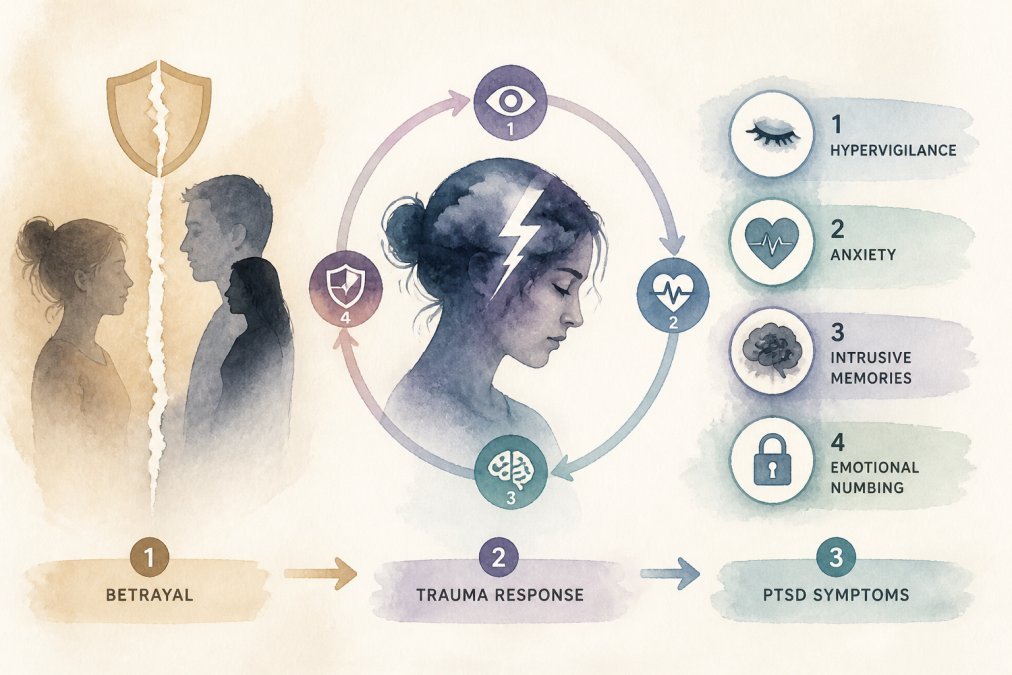
Betrayed partners frequently experience PTSD symptoms after infidelity, including hypervigilance, intrusive thoughts, and emotional flooding. This is not weakness or drama. It’s a predictable neurological response to a profound breach of safety. Family interactions can trigger those symptoms in ways that are hard to anticipate, particularly when family members say things that minimize the betrayal or rush the healing timeline.
The unfaithful partner’s role in family interactions is not passive. Radical accountability means acknowledging to family members that their actions caused harm beyond the couple, including to people who cared about both of them. Family members who feel like collateral damage, who are hurt and confused and don’t know how to act around either of you, deserve acknowledgment from the person who created the situation. That’s an independent responsibility, not something the betrayed partner should manage or facilitate.
Pro Tip: Before family gatherings, the betrayed partner should identify one or two grounding strategies, whether that’s a brief walk outside, a text to a trusted friend, or a specific breathing technique. Having a concrete plan reduces the risk of being emotionally overwhelmed in a setting where you have limited control.
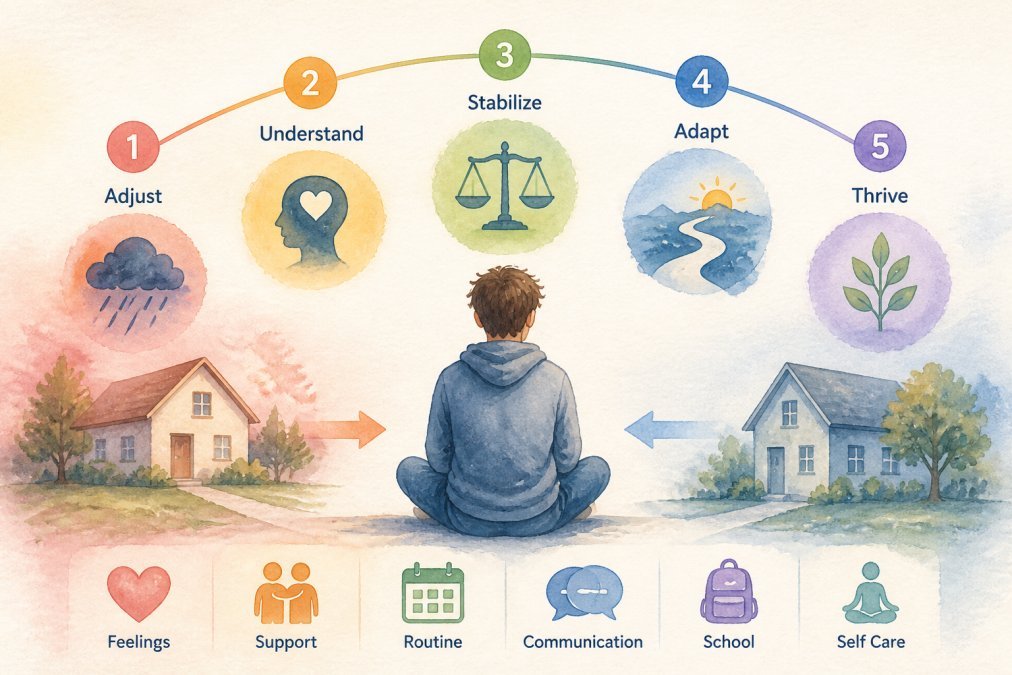
Mismatched healing timelines create some of the most persistent family conflict. The unfaithful partner may be further along in processing the affair, while the betrayed partner is still in acute pain. Family members often mirror the unfaithful partner’s timeline, assuming that because things seem calmer, the crisis is over. It isn’t. Couples therapy is particularly useful here because it gives both partners a shared framework for communicating where they actually are in the process, which in turn helps family members calibrate their behavior more accurately.
Forgiveness has no fixed timeline. The NPR interview with infidelity recovery specialist Talal Alsaleem makes this point directly: healing cannot be put on a calendar, and pressure from family members to “move on” or “get over it” is actively harmful to recovery. When family members push that narrative, the betrayed partner needs their partner to push back, clearly and without ambiguity.
For family gatherings specifically, the exit strategy discussed in the opening section is not a last resort. It’s a standard tool. Knowing you can leave removes the trapped feeling that makes these events so draining, and often makes it possible to stay longer than you otherwise would.
Key Takeaways
Handling your partner’s family after infidelity requires a united communication strategy, firm self-preserving limits, and consistent support for the betrayed partner’s healing throughout every family interaction.
| Point | Details |
|---|---|
| Agree on a scripted message | Decide with your partner what to share before any family member is told, and keep it brief. |
| Limit who knows | Fewer people informed means fewer opinions to manage during an already fragile recovery. |
| Frame limits around your behavior | Boundaries stated as your own responses are more enforceable and less likely to create resentment. |
| Unfaithful partner repairs independently | The unfaithful partner must address family members they’ve hurt directly, without relying on the betrayed partner to mediate. |
| Seek professional support early | Couples therapy is the most effective tool for navigating family conflict during infidelity recovery. |
The part of this conversation most guides skip
Most advice on handling a partner’s family after an affair focuses on the betrayed partner’s experience, and that focus is warranted. But there’s a dynamic that gets almost no attention: the betrayed partner’s complicated feelings toward family members who are critical of the unfaithful partner.
Here’s what actually happens. A family member says something cutting about the unfaithful partner at a family dinner. The betrayed partner, who has every right to be furious at their partner, suddenly feels protective of them. They defend the person who hurt them. Then they feel confused and even ashamed about that impulse. This is not irrational. It reflects the reality that healing is not linear, that love and anger coexist, and that the betrayed partner’s relationship with their partner is theirs to define, not the family’s.
The in-law’s role in this situation is genuinely difficult. They’re being asked to hold the unfaithful partner accountable without rejecting them, to support the betrayed spouse without pressuring them, and to stay involved without overstepping. Most families don’t have the emotional vocabulary for that kind of nuance. They default to taking sides, which almost always makes things worse.
What I think gets underestimated is the unfaithful partner’s independent responsibility to their family. Not to explain themselves, not to seek absolution, but to acknowledge that their actions caused harm to people beyond their partner. The collateral damage framing from Alsaleem’s work is exactly right: in-laws who feel hurt and confused by the affair deserve a direct conversation with the person who created the situation, not a managed PR message filtered through the couple’s recovery process. That conversation is hard. It’s also necessary.
The other thing worth saying plainly: attempting to convince a family member who has decided the relationship is wrong is almost always a waste of emotional energy that you cannot afford right now. Boundary-setting as integrity means accepting that some people won’t change their position, and choosing your own actions accordingly. That’s not defeat. It’s clarity.
If you’re navigating the early months of this and feeling completely overwhelmed by the family dimension on top of everything else, Aftertheaffair’s infidelity recovery checklist offers a structured, step-by-step framework for working through exactly this kind of layered complexity.

FAQ
Should I tell my partner’s family about the affair?
You don’t have to, and in most cases, limiting disclosure protects your recovery. If you do share, keep the message brief, scripted, and focused on the support you’re asking for rather than the details of what happened.
What is the 80/20 rule in infidelity?
The 80/20 rule in infidelity refers to the idea that an unfaithful partner often pursues someone who offers what their relationship lacks, while overlooking what their primary relationship provides. It’s a framework for understanding why affairs happen, not a justification for them.
Is cheating the end of a relationship?
Not necessarily. Recovery is possible when both partners are committed to transparency, accountability, and professional support. The Gottman Institute’s Trust Revival Method, studied in a randomized clinical trial, outlines a structured path through atonement, attunement, and attachment for couples who choose to rebuild.
How do you fix a relationship after cheating and lying?
Rebuilding requires full disclosure done once, consistent and observable behavioral change over time, and professional guidance. Trust returns through reliable behavior across months, not through promises or grand gestures, and couples therapy significantly improves outcomes for couples attempting repair.
How do you forgive infidelity in a marriage?
Forgiveness has no fixed timeline and cannot be forced. Infidelity recovery specialist Talal Alsaleem describes forgiveness as something that must be earned, and notes that forgiving does not mean forgetting. With time and support, the memory of the betrayal tends to become more distant and carry less weight in daily life.
Recommended
- Confronting a Cheating Partner: A Step-by-Step Guide
- After Cheated: Now What? – After the Affair Series
- How to Cope When Your Spouse Works With Their Affair Partner
- How to Guide Clients After Infidelity for Healing – After the Affair Series